A record from 1964
The all-tackle world record is 132 lb 0 oz (59.87 kg), caught by Howard Hahn at La Paz, Baja California Sur, on July 21, 1964. It has stood for more than 60 years.
Source ↗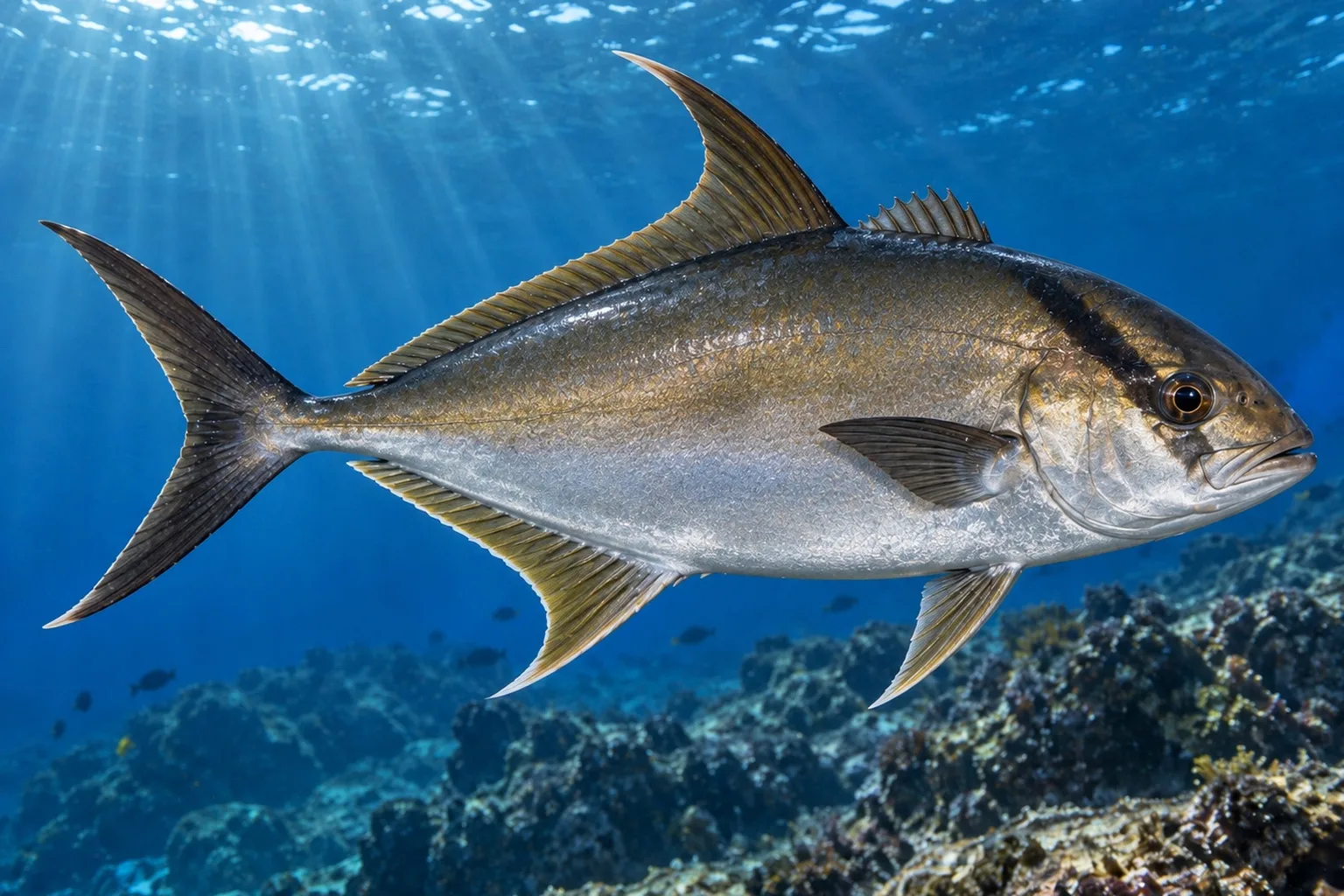
Baja calls it pez fuerte, the strong fish. It’s a deep-bodied cousin of the yellowtail that lives on offshore banks and pinnacles, and the all-tackle world record has come from La Paz since 1964.
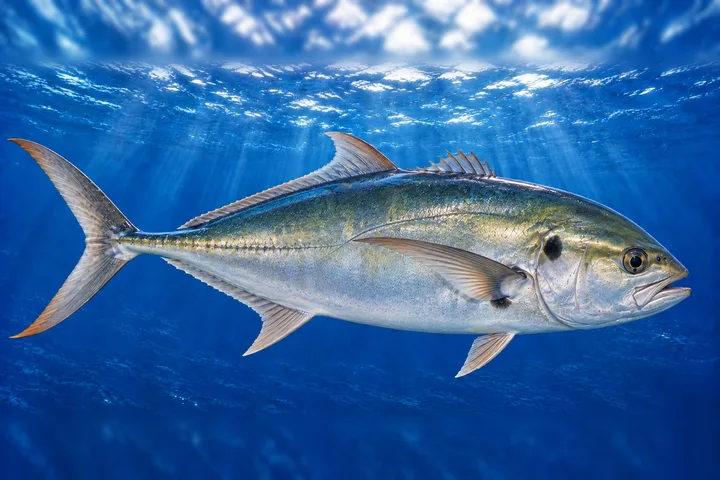
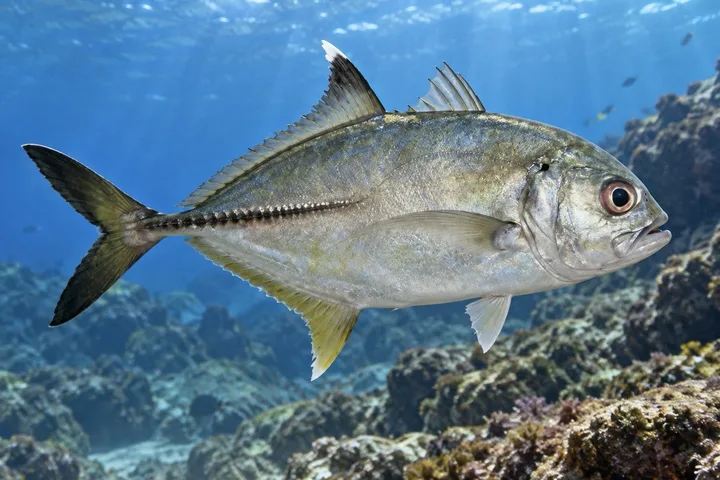
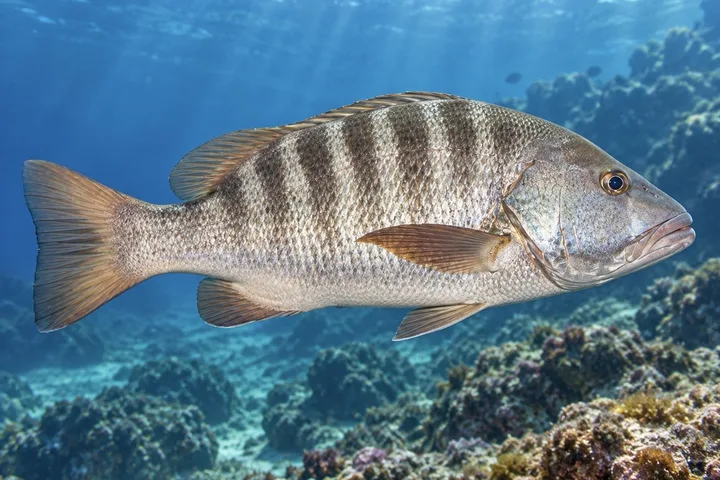
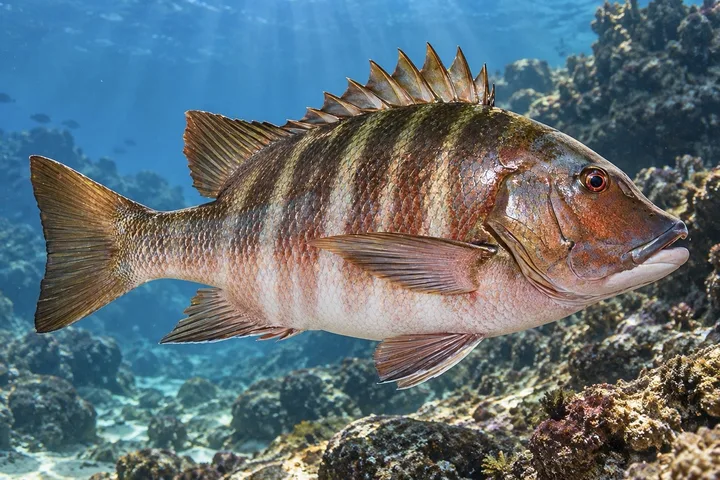
Deep, flattened body with the back more arched than the belly. Bluish, greenish or brownish above and silvery below, with a dark diagonal band from the nape through the eye. The front of the second dorsal and anal fins rises into long, sickle-shaped lobes, and the upper jaw reaches the middle of the eye.
The almaco jack lives in tropical seas around the world, except the Red Sea and French Polynesia. In the eastern Pacific it ranges from Southern California to Peru, including the southwestern Gulf of California and the oceanic islands. Adults stay over outer reef slopes and offshore banks, from 3 to 340 m deep, usually in small groups, and are rarely caught close to shore.
It feeds mainly on fish, plus shrimp, crabs and squid. Its eggs float in the open sea, and young fish drift far offshore under floating objects. It commonly reaches about 60 cm, but grows to at least 160 cm and about 60 kg.
The all-tackle world record is 132 lb 0 oz (59.87 kg), caught by Howard Hahn at La Paz, Baja California Sur, on July 21, 1964. It has stood for more than 60 years.
Source ↗That’s its FAO name, and it fits: the lobe of its second dorsal fin is 1.3 to 1.6 times as long as its pectoral fin, about a fifth of its fork length.
Source ↗A 2020 genetic study led from CIBNOR in La Paz found a separate almaco jack population on the Pacific coast of Baja California Sur, distinct from the rest of the eastern Pacific, central Pacific and western Atlantic.
Source ↗Young almaco jacks up to about 18 cm wear a dark bar across the nape and six dark bars on the body, plus a seventh on the tail base, and hide under floating objects far from land.
Source ↗The same species is raised as kampachi in an offshore farm near La Paz, about four miles from the coast in water over 230 ft deep. In 2019 it stocked its net pens with more than 100,000 hatchery-raised juveniles.
Source ↗In a hatchery study, almaco jacks caught wild in La Paz Bay outperformed first-generation farmed fish from Hawaii: higher fertilization, more spawns and more eggs, under the same conditions.
Source ↗Local reports from the San José del Cabo panga fleet, which calls it amberjack, show it all year on rocky banks and pinnacles from Palmilla Point to Gorda Banks, San Luis and Vinorama, with the most reports from March to July. In good weeks fish of 30 to 80 lb come in; a 92-pounder was weighed in June 2024.
Most are caught on jigs dropped to the bottom or on live bait drifted near the structure: caballito, chihuil or a small bonito. Big ones often grab a bonito already hooked on a jig. Once hooked it dives for the rocks, so the first runs decide the fight.
Good eating, with moist white meat; Baja guides rate it highly, including as sashimi (local report). Farmed almaco jack is sold as sashimi-grade kampachi, raised in Hawaii’s offshore pens since 2005. FishBase lists reports of ciguatera, mainly from coral reef areas.
| Daily limit (NOM-017-PESC-1994) | Up to 5 per angler per day, within the 10-fish total |
|---|---|
| IUCN Red List | Least Concern (2012) |
| IGFA all-tackle record | 132 lb 0 oz (59.87 kg), La Paz, B.C.S., 1964 |
| Yellowtail (jurel) | Different species, counted separately under the same 5-fish rule |
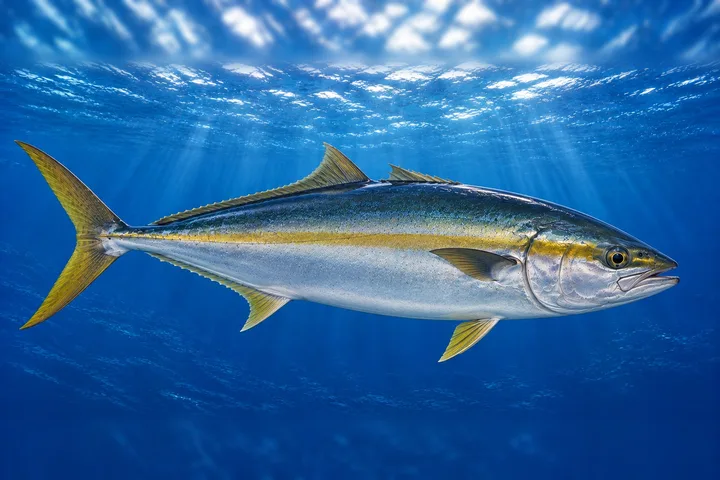
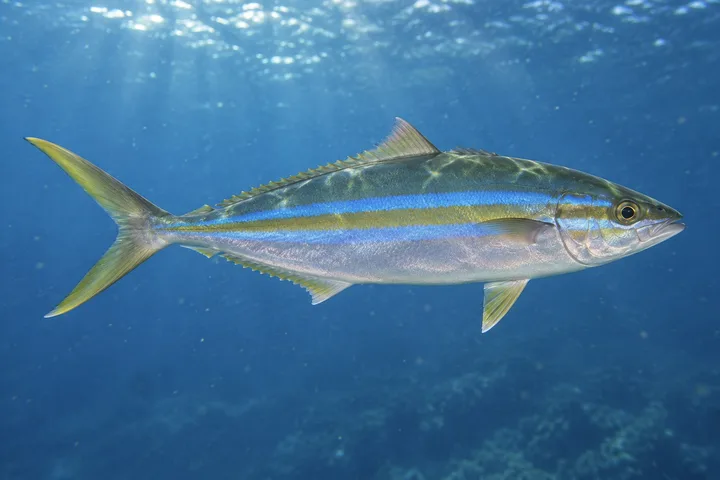
Yellowtail (jurel, Seriola dorsalis) is slimmer, with back and belly curving about equally, a bronze-to-yellow stripe along the side, a yellow tail and fins, and a mouth that ends below the front of the pupil. The almaco is deeper and more arched on top, has long sickle-shaped dorsal and anal lobes and a dark band from nape to eye, and its jaw reaches the middle of the pupil. Some almacos show a faint yellow stripe too, so go by shape and fins.
How to tell yellowtail, almaco jack and Cabo’s jacks apart ›
No. Both are Seriola jacks, but the almaco is deeper-bodied, with long sickle-shaped fin lobes and a dark band through the eye. Yellowtail are slimmer, with yellow tails.
The IGFA all-tackle record is 132 lb 0 oz (59.87 kg), caught at La Paz, Baja California Sur, in 1964.
They’re caught all year, but local reports from the San José del Cabo fleet mention them most from March to July.

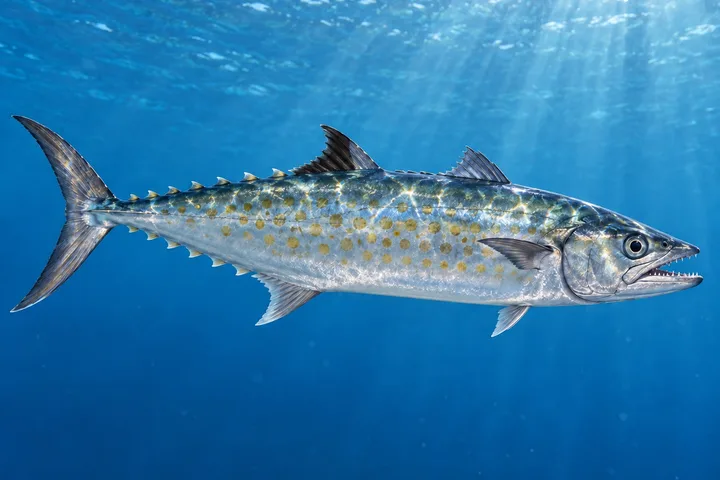
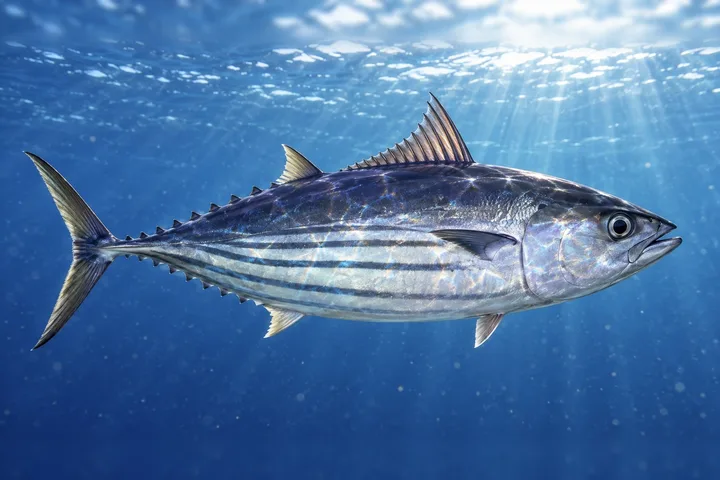
Top illustration: Top Anglers. Photos: iNaturalist contributors, credited on each photo.
Sportfishers with the range to reach the offshore banks. From $799 with license included.