They have names
Each dolphin develops its own signature whistle, and dolphins recognize who is calling from the whistle's shape alone. Only dolphins and humans have been shown to do this.
Source ↗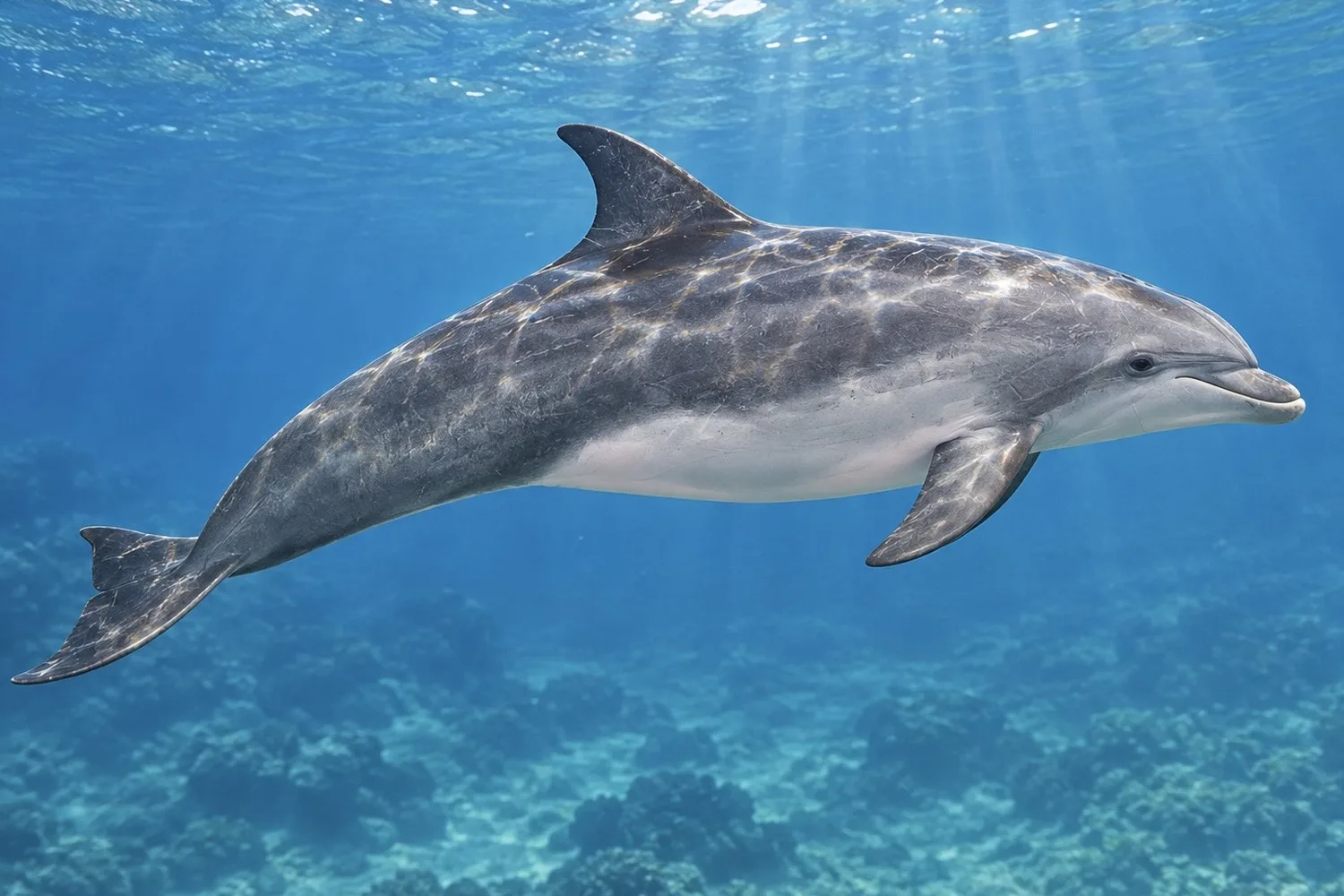
The dolphins that ride the bow on the way to the fishing grounds. Bottlenose dolphins call each other by name, sleep with half their brain, and in the Gulf of California come in two very different types.
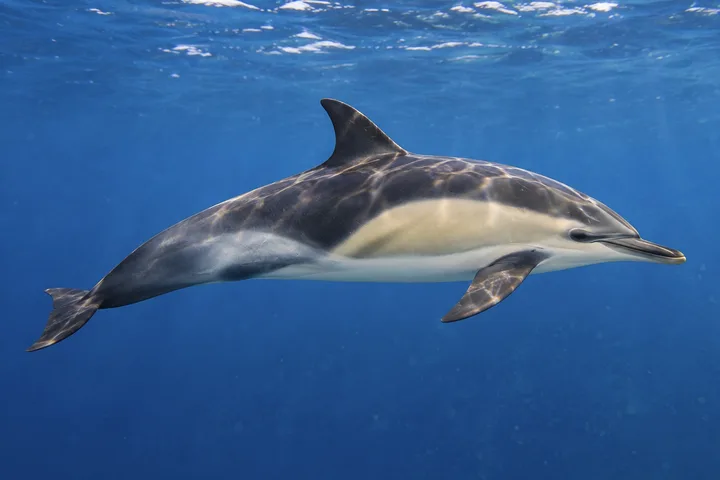
Plain gray, darker on the back and pale on the belly, with a short, thick beak and a tall, curved dorsal fin. It's larger and less patterned than the other dolphins usually seen off Cabo.
Bottlenose dolphins eat fish, squid and crustaceans, swallowing fish whole, head first, and they hunt together by herding fish into tight balls. They travel alone or in groups that constantly split and regroup.
In the Gulf of California there are two types that rarely mix. Coastal dolphins are larger and stockier, live within about 1 km of shore in water under 60 m, and travel in small groups. Offshore dolphins live more than 4 km out, specialize in hunting jumbo squid and travel in much larger groups. Genetically, the two differ more from each other than populations within each type.
Each dolphin develops its own signature whistle, and dolphins recognize who is calling from the whistle's shape alone. Only dolphins and humans have been shown to do this.
Source ↗Dolphins recognized the whistles of former companions after being apart for at least 20 years: the longest social memory recorded in an animal other than humans.
Source ↗Dolphins sleep with one half of the brain at a time, and the eye linked to the awake half stays open almost the whole time.
Source ↗Nicklo, a wild dolphin in Sarasota Bay, Florida, was born in 1950 and last seen at 67, after more than 820 sightings.
Source ↗Coastal and offshore bottlenose dolphins in the Gulf of California differ in size, color, habitat and diet, and even in the pitch of their whistles.
Source ↗Riding a boat's pressure wave gives dolphins extra speed for less effort.
Source ↗Dolphins are seen year-round off Los Cabos and often ride the bows of boats. In the eastern tropical Pacific, schools of yellowfin tuna travel with certain dolphins, mainly spotted and spinner dolphins, which is why captains watch for them.
There are no specific Mexican rules for watching dolphins, so common sense applies: let them come to the boat, keep a steady speed and course, don't chase or try to swim with them, and never feed them.
| Mexico (NOM-059) | Subject to special protection (Pr) |
|---|---|
| General Wildlife Law, art. 60 bis | No marine mammal may be captured or taken |
| IUCN Red List | Least Concern |
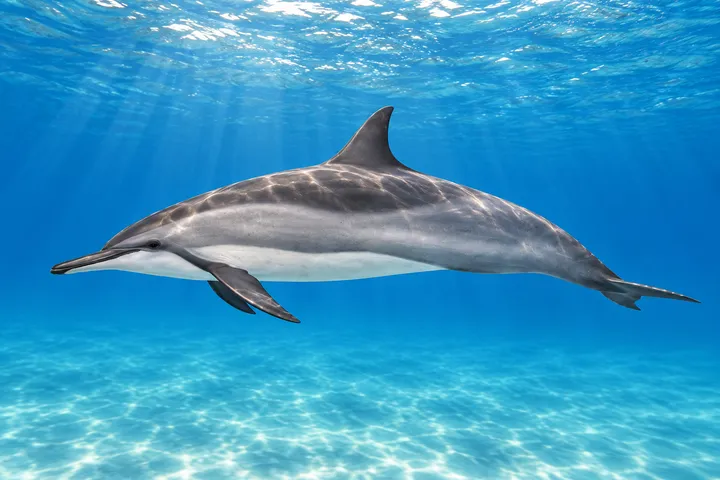
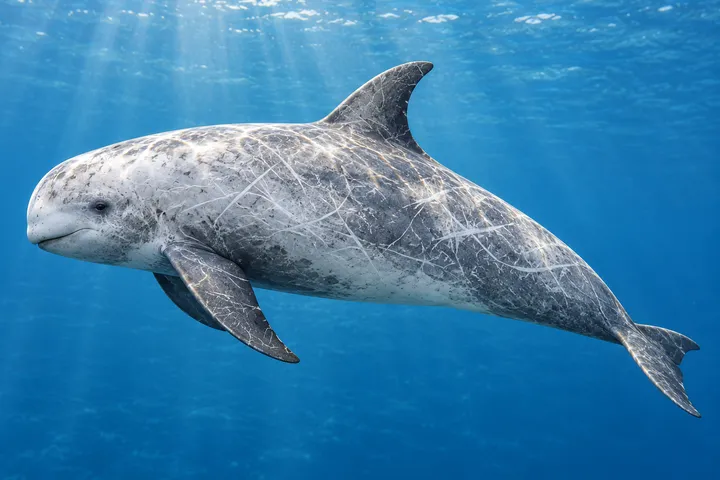
The common dolphin has an hourglass pattern with a yellowish front panel and travels in groups of hundreds. The spinner dolphin is slender, with a long thin beak, and spins as it leaps. The spotted dolphin becomes covered in spots with age. Risso's dolphin has no beak and is pale and heavily scarred.
Often. Dolphins are around all year and frequently ride the bows of boats.
In the eastern tropical Pacific, yellowfin tuna often swim under schools of certain dolphins.
Wild dolphins shouldn't be chased or approached in the water. Let them come to the boat.

Top illustration: Top Anglers. Photos: iNaturalist contributors, credited on each photo.
Our charters leave the Cabo San Lucas marina every morning. From $799 with license included.