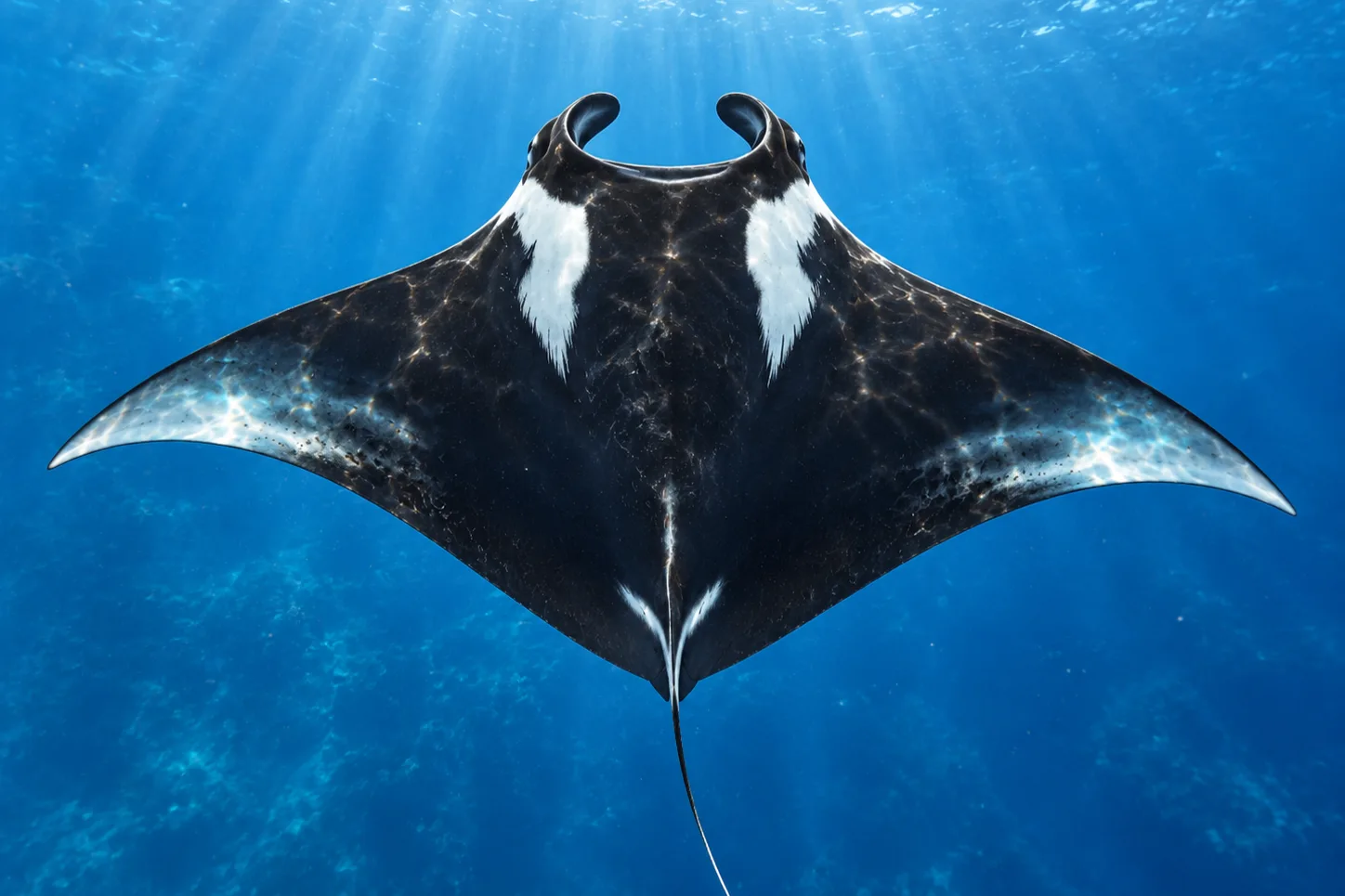
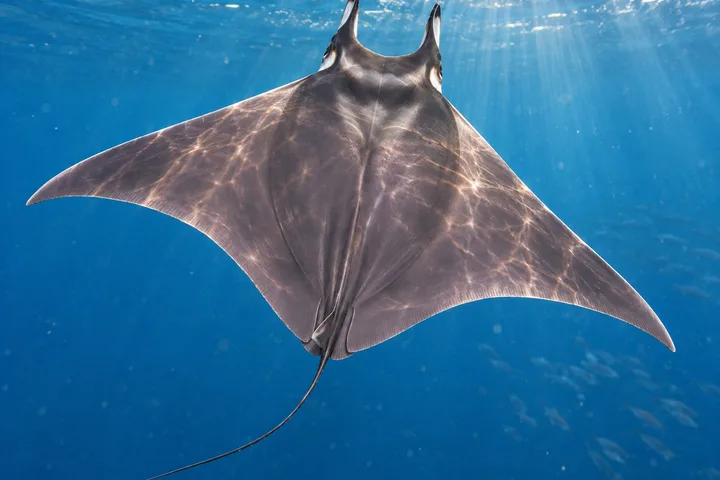
Giant manta ray (Mobula birostris), illustration
Protected Mobula birostris(formerly Manta birostris)

Giant manta ray in Los Cabos

The largest ray in the world, up to 7 m from wingtip to wingtip. Off Cabo it’s a rare, lucky sighting; its stronghold is the Revillagigedo Islands, 386 km southwest, where researchers have identified more than 1,300 individuals.

Up to 7 mWingspan
1 pupEvery few years
~45 yearsEstimated lifespan
EndangeredIUCN Red List

When to see them

●● best months · ● regular · · occasional. Based on scientific studies and local reports; it changes year to year.

Tap a month to see everything biting in Cabo that month ›

How to recognize it

Black on top with two sharp-edged white shoulder patches shaped like mirror-image right triangles, leaving a black “T” between them. The mouth sits at the very front of the head, not underneath, and its inside and the head fins are usually black. The belly is white with dark shading along the back edge of the wings; spots, if any, cluster on the lower belly, rarely between the gill slits. Some are all black.

Biology

Giant mantas live in tropical and temperate seas worldwide, along coasts with upwelling, around oceanic islands and over seamounts, from the surface down to about 1,000 m. They filter large amounts of zooplankton, such as krill, copepods, mysids and shrimp larvae, and come into shallow water to visit cleaning stations, where small fish pick off their parasites.

They live slowly. Females mature at around 8 to 9 years, and have a single pup 1.2 to 2 m wide after a pregnancy of about a year, only every few years. The IUCN estimates an average female has just 4 to 7 pups in her life. Where they’re fished for meat or for their gill plates, sold in Asian markets, sightings have fallen 71 to 95% in less than a generation.

Things you probably didn't know

01

The biggest brain of any fish

Mantas have the largest brain of any fish. Shown a mirror, two giant mantas in an aquarium didn’t treat their reflection as another ray: they repeated unusual movements and blew bubbles while watching it, behaviors linked to self-awareness. Scientists still debate what it means.

Source ↗
02

29 years between sightings

Researchers have identified more than 1,300 giant mantas at Revillagigedo by their belly spots, with records back to 1978; some individuals have been resighted 29 years apart.

Source ↗
03

A nursery near La Paz

Over 9 years, researchers identified 53 young mantas, all immature, at La Reina in the southwestern Gulf of California, between July and November. Tagged ones stayed up to 55 days in a row: a likely nursery for the species.

Source ↗
04

Island-hoppers

Tagged and photo-identified mantas move between Revillagigedo, the Gulf of California and the mainland coast, up to about 560 km; two traveled from Isla Cerralvo to Revillagigedo.

Source ↗
05

Feeding in the deep

Tags at Revillagigedo showed mantas gradually shifting from the surface to 100–150 m, following zooplankton, and a submersible filmed one feeding at depth. NOAA notes they can dive beyond 1,000 m.

Source ↗
06

One pup every few years

With one pup at a time and a generation length of about 29 years, the giant manta has one of the slowest population growth rates of any shark or ray, so losses take decades to recover.

Source ↗

Photos

Alicia Christman · iNaturalist · CC BY 4.0
Ewout Knoester · iNaturalist · CC BY-SA 4.0

Seeing them from the boat

Off Los Cabos, according to local crews, a giant manta is an occasional, lucky sighting on offshore trips rather than something to plan around. Look for a huge dark diamond cruising just under the surface, or wingtips breaking the water. The famous encounters are at the Revillagigedo Islands, 386 km southwest of Cabo, where fishing is banned and visits are by liveaboard dive boat.

Watch without chasing it or driving over it. If one is foul-hooked or tangled in line, keep it in the water, never gaff it or lift it by the head fins, gills or mouth, and use the leader to hold it alongside. Cut the line as close to the hook as you can, leaving less than 1 m, and keep any cut line or net on board. Mexican law requires releasing it.

Rules & conservation

Capture (NOM-029)Catching or keeping giant mantas is banned, alive or dead, whole or in parts; any caught by accident must be returned to the water
Mexico (NOM-059)Subject to special protection (Pr)
Revillagigedo National Park (2017)All fishing banned across about 14.8 million hectares
IUCN Red ListEndangered (2020 assessment, amended 2022)
CITESAppendix I since 2026 (Appendix II 2014–2026)
CMS (Bonn Convention)Appendices I and II since 2011
United States (ESA)Threatened since 2018

Don't confuse it with

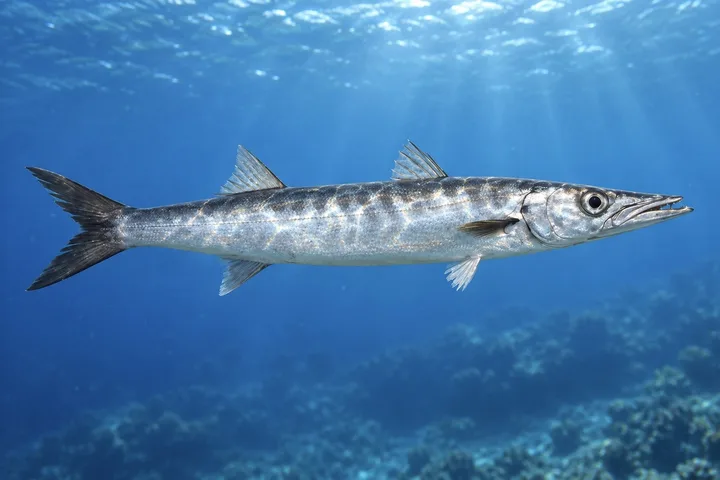
Munk’s devil ray reaches only about 1.1 m across, travels in big leaping schools and, like all devil rays, has its mouth underneath the head instead of at the front. The spinetail devil ray grows to about 5 m but has a black crescent across the shoulders, a white-tipped dorsal fin and a mouth under the head. The reef manta has a fuzzier, V- or Y-shaped shoulder pattern and often spots between the gill slits.

Questions

Can you see giant manta rays in Cabo San Lucas?

Occasionally, on offshore trips, according to local crews. The reliable place is the Revillagigedo Islands, 386 km southwest of Cabo.

Are giant manta rays dangerous?

No. They feed on plankton and have no working stinger, only a small knob at the base of the tail.

Can you fish for manta rays in Mexico?

No. Mexican law bans catching or keeping them, and any caught by accident must be released.

By Max VargasTop Anglers, Cabo San Lucas · international judge at big game fishing world championships · reviewed October 2026

Sources

Top illustration: Top Anglers. Photos: iNaturalist contributors, credited on each photo.

See Cabo from the water

Our charters leave the Cabo San Lucas marina every morning. From $799 with license included.
More species

Pacific sierra
Pacific sierra
Scomberomorus sierra
California yellowtail
Seriola dorsalis
Pacific crevalle jack
Caranx caninus
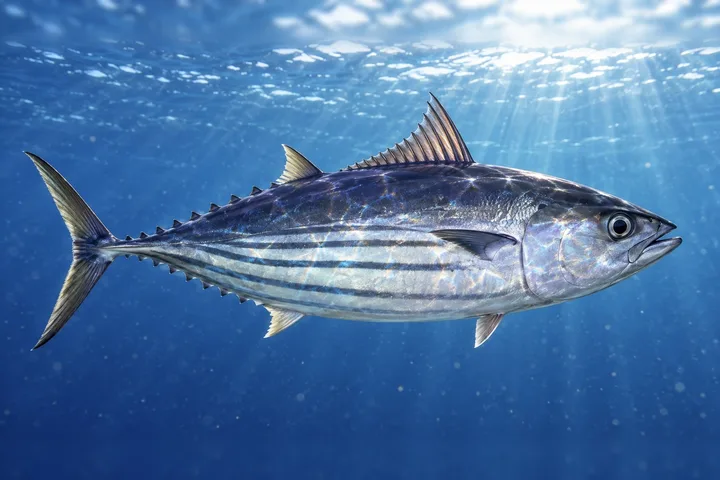
Skipjack tuna
Skipjack tuna
Katsuwonus pelamis
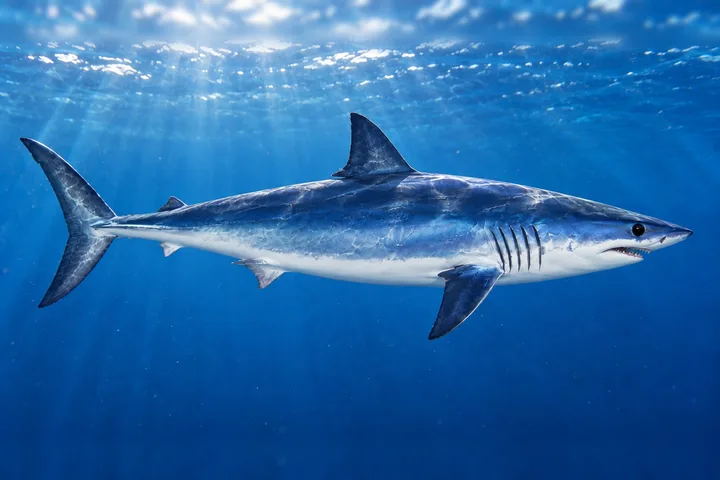
Shortfin mako
Shortfin mako
Isurus oxyrinchus
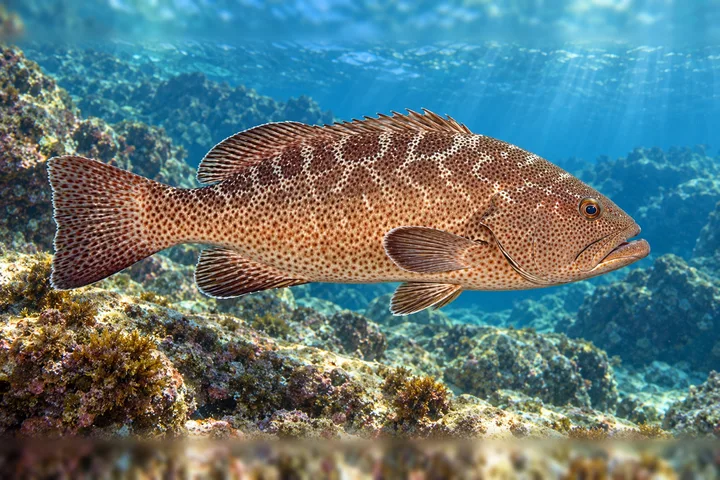
Leopard grouper
Leopard grouper
Mycteroperca rosacea
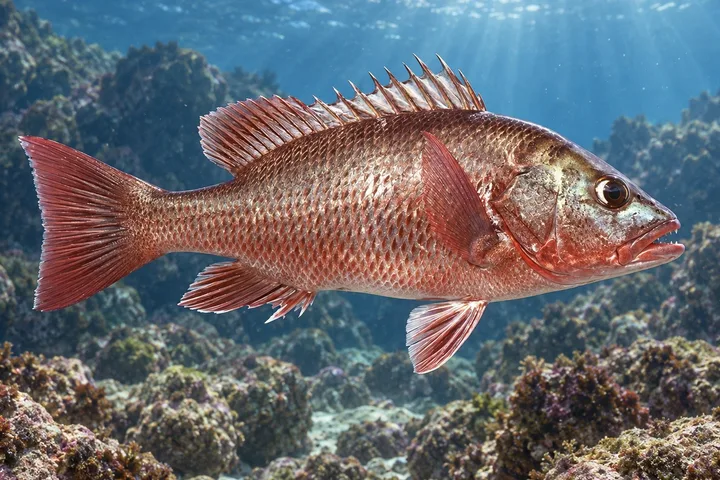
Colorado snapper
Colorado snapper
Lutjanus colorado
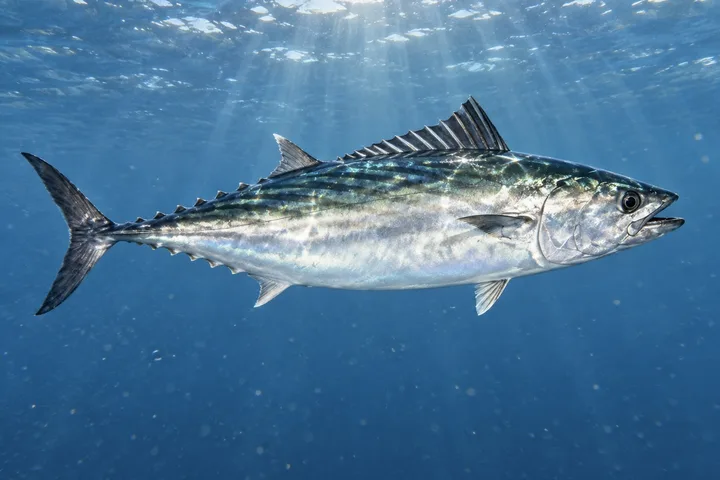
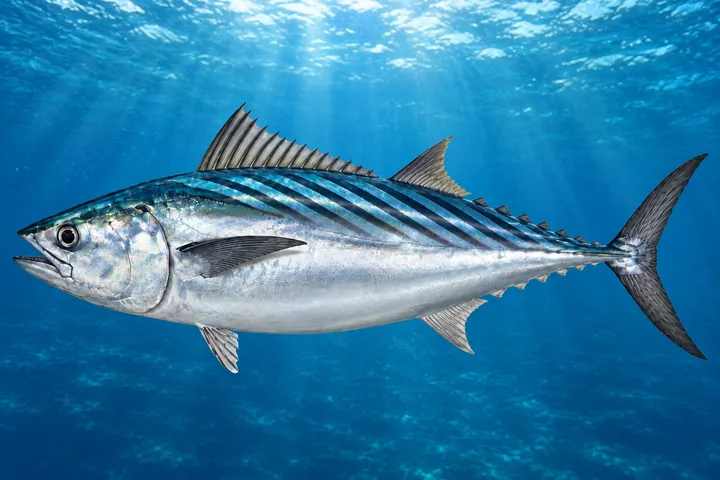
Striped bonito
Striped bonito
Sarda orientalis
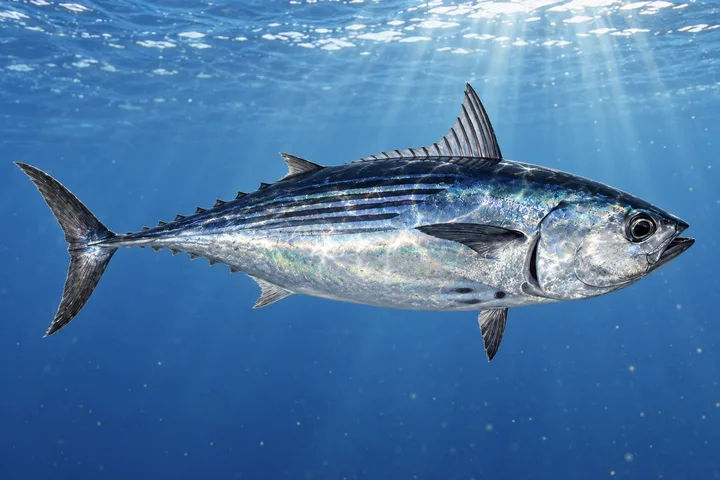
Black skipjack
Black skipjack
Euthynnus lineatus
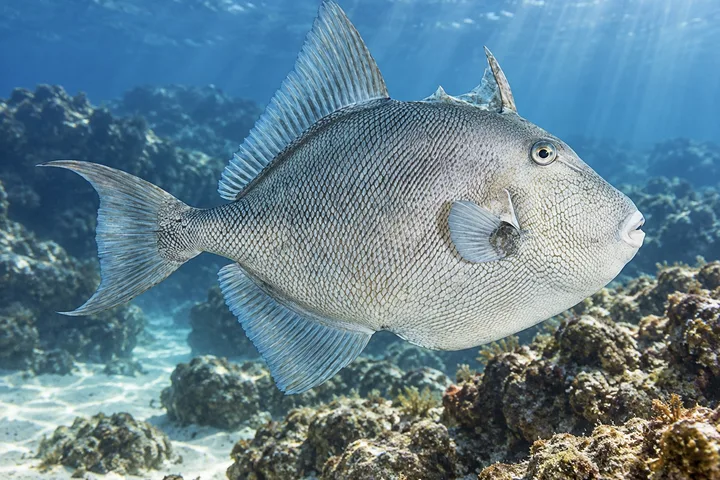
Finescale triggerfish
Balistes polylepis
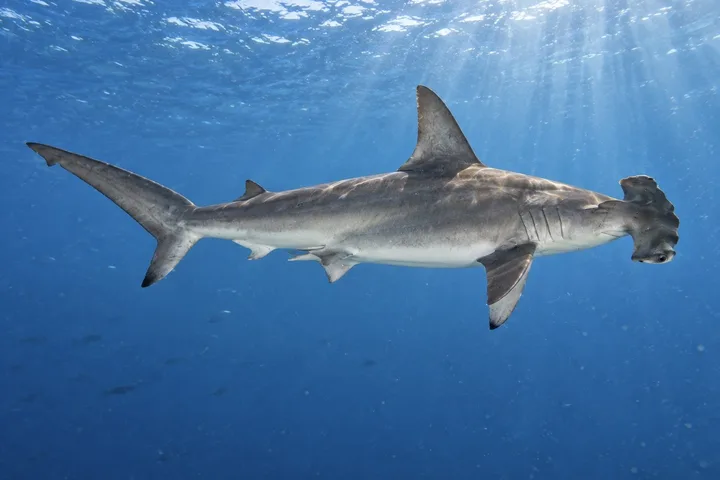
Scalloped hammerhead
Sphyrna lewini
Humpback whale
Humpback whale
Megaptera novaeangliae
Gray whale
Gray whale
Eschrichtius robustus
California sea lion
California sea lion
Zalophus californianus
Whale shark
Whale shark
Rhincodon typus
Olive ridley sea turtle
Lepidochelys olivacea
Bottlenose dolphin
Bottlenose dolphin
Tursiops truncatus
Munk's devil ray (mobula)
Mobula munkiana
Swordfish
Swordfish
Xiphias gladius
Almaco jack
Almaco jack
Seriola rivoliana
Bigeye trevally
Bigeye trevally
Caranx sexfasciatus
Spotted cabrilla
Spotted cabrilla
Epinephelus analogus
Pacific dog snapper
Pacific dog snapper
Lutjanus novemfasciatus
Barred pargo
Barred pargo
Hoplopagrus guentherii
Blue whale
Blue whale
Balaenoptera musculus
Green sea turtle (black turtle)
Chelonia mydas
Leatherback sea turtle
Dermochelys coriacea
Rainbow runner
Rainbow runner
Elagatis bipinnulata
Gulf grouper
Gulf grouper
Mycteroperca jordani
Yellow snapper
Yellow snapper
Lutjanus argentiventris
Pacific white snook
Pacific white snook
Centropomus viridis
Mexican barracuda
Mexican barracuda
Sphyraena ensis
Silky shark
Silky shark
Carcharhinus falciformis
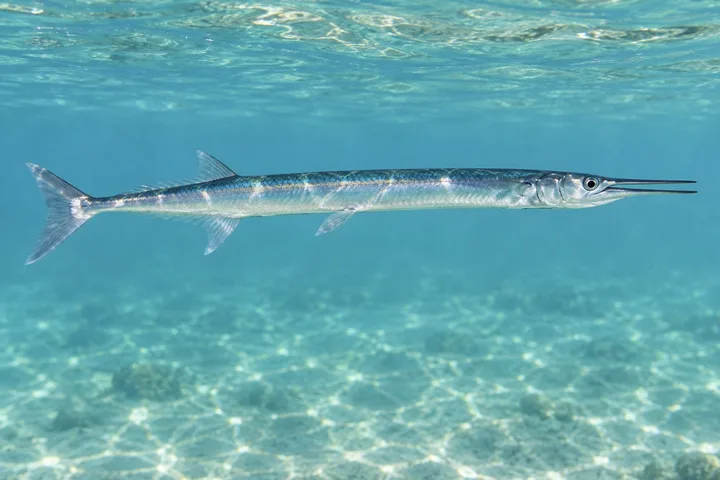
Mexican needlefish
Mexican needlefish
Tylosurus fodiator
Humboldt squid
Humboldt squid
Dosidicus gigas
Fin whale
Fin whale
Balaenoptera physalus
Orca (killer whale)
Orca (killer whale)
Orcinus orca
Hawksbill sea turtle (carey)
Eretmochelys imbricata
Brown pelican
Brown pelican
Pelecanus occidentalis
Magnificent frigatebird
Fregata magnificens
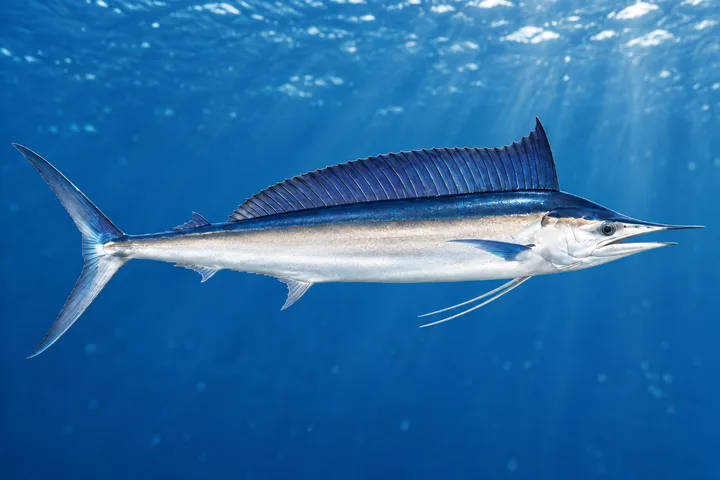
Shortbill spearfish
Shortbill spearfish
Tetrapturus angustirostris
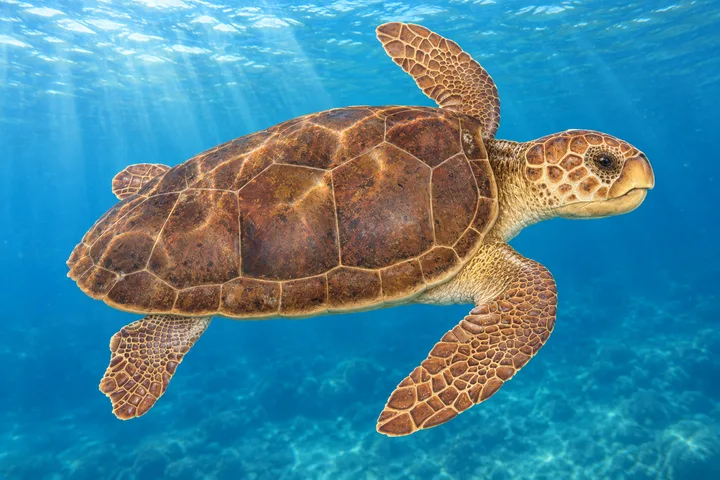
Loggerhead sea turtle (caguama)
Caretta caretta
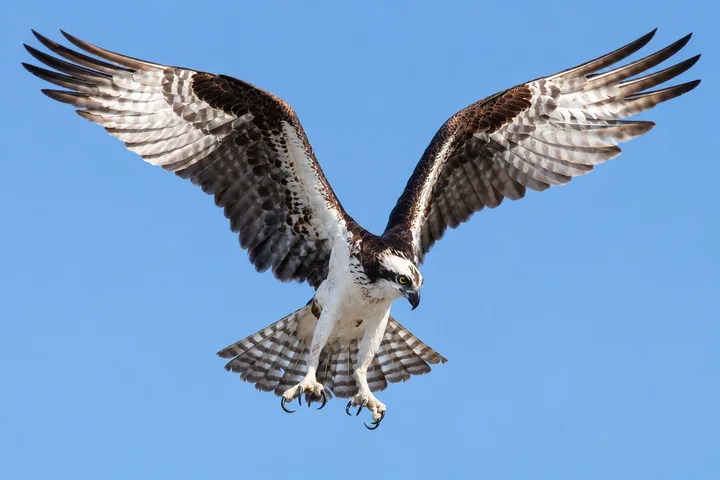
Osprey
Osprey
Pandion haliaetus
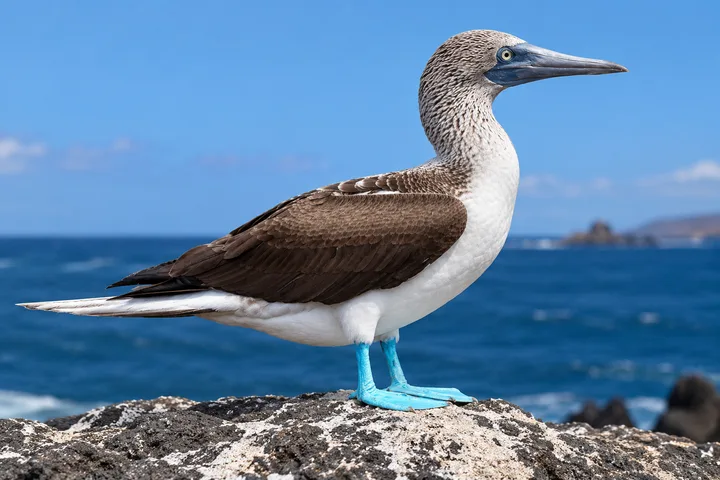
Blue-footed booby
Blue-footed booby
Sula nebouxii
Common dolphin
Common dolphin
Delphinus delphis
Oarfish
Oarfish
Regalecus russelii
Heermann’s gull
Heermann’s gull
Larus heermanni
Yellow-footed gull
Yellow-footed gull
Larus livens
Ocean sunfish
Ocean sunfish
Mola mola
Sperm whale
Sperm whale
Physeter macrocephalus
Sally Lightfoot crab
Grapsus grapsus
Blue spiny lobster
Blue spiny lobster
Panulirus inflatus
Chocolate clam
Chocolate clam
Megapitaria squalida
Pelagic red crab
Pelagic red crab
Grimothea planipes
Hubbs’ octopus
Hubbs’ octopus
Octopus hubbsorum
Jewel moray
Jewel moray
Muraena lentiginosa
Panamic green moray
Panamic green moray
Gymnothorax castaneus
Spinner dolphin
Spinner dolphin
Stenella longirostris
Risso’s dolphin
Risso’s dolphin
Grampus griseus
Short-finned pilot whale
Globicephala macrorhynchus
Bigeye tuna
Bigeye tuna
Thunnus obesus
Pelagic thresher
Pelagic thresher
Alopias pelagicus
Blue shark
Blue shark
Prionace glauca
Giant hawkfish
Giant hawkfish
Cirrhitus rivulatus
Pacific bonito
Pacific bonito
Sarda lineolata
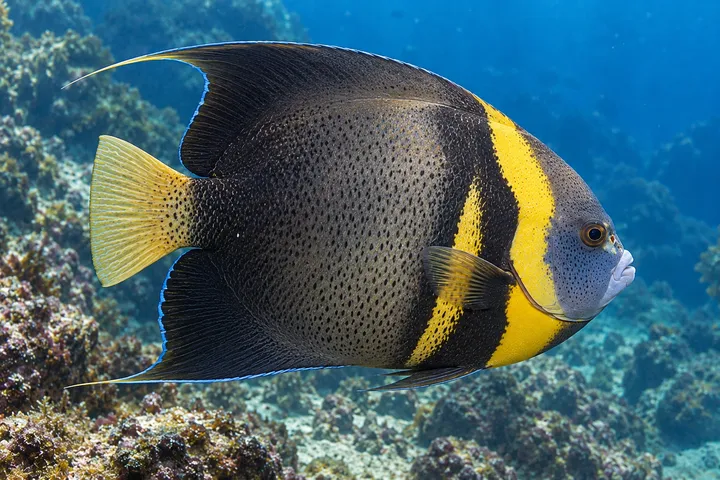
Cortez angelfish
Cortez angelfish
Pomacanthus zonipectus
Talk to the family

Questions? Message the family

The Vargas family answers personally. 7 days a week, 5 AM – 6 PM Cabo time.