Giant by name
Ingens is Latin for gigantic. It is one of the largest seahorses, reaching about 30 cm.
Source ↗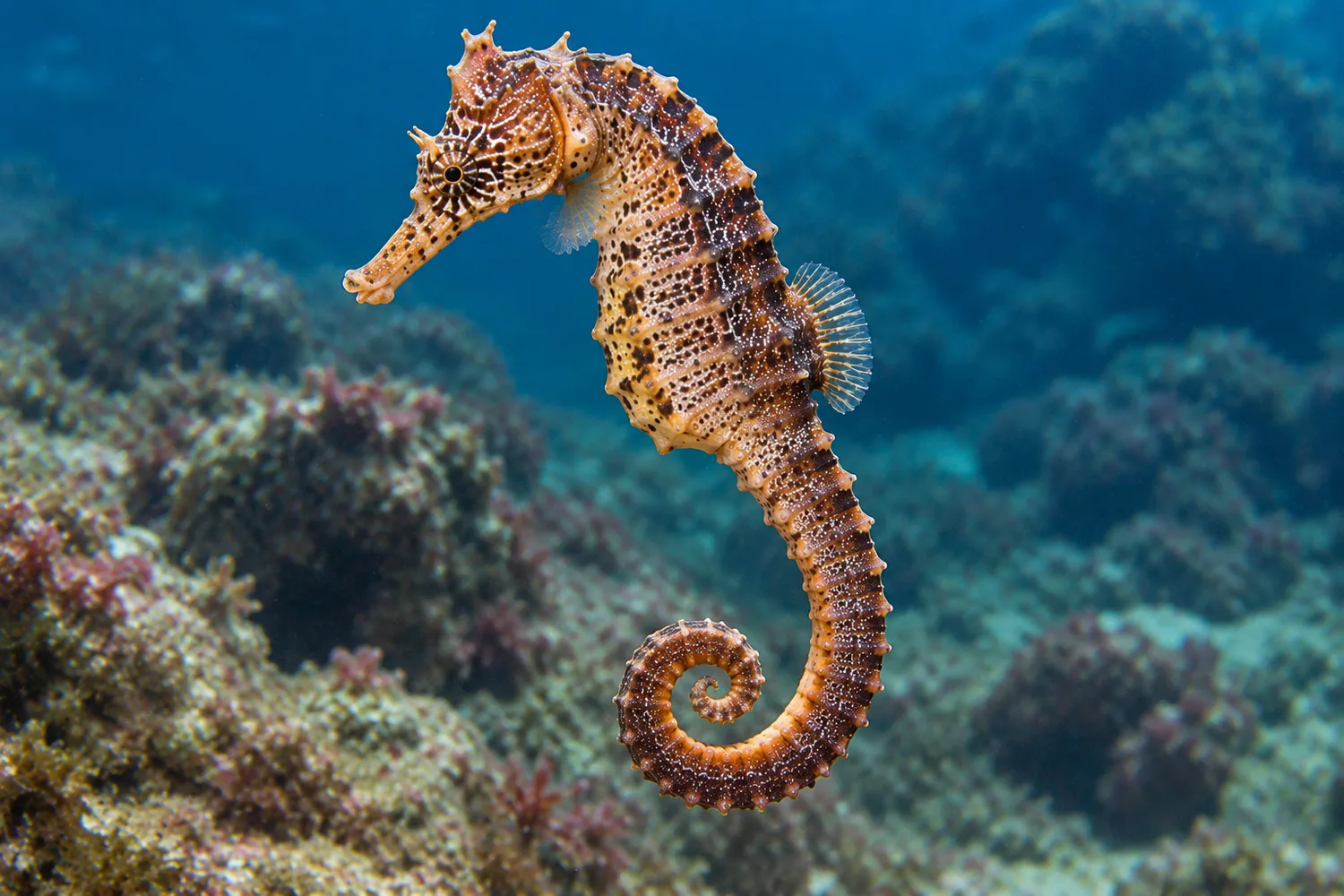
The only seahorse on this coast and one of the largest in the world, growing to about 30 cm. It hangs on to sea fans and weed with its tail and is hard to spot. In Mexico it is a protected species.
Unmistakable: a horse-like head held at about a right angle to the body, a long tube snout, and a curling, grasping tail with no tail fin. On top of the head is a moderately high crown (coronet) with five points, and there are prominent spines over the eye and on the cheek. The body is made of bony rings, usually with well-developed knobs that fade in big males. Males have a slight keel on the chest and a brood pouch on the belly. Color changes with the surroundings: red, yellow, tan, brown, gray, black or green, often with small blackish and white spots or pale crossbands and lines.
The Pacific seahorse lives only in the eastern Pacific, from southern California through the Gulf of California to Peru and Chile, including the Galápagos, Cocos and Malpelo islands. It lives in weed beds, among sea whips and gorgonians and on rocky reefs, from about 1 to 107 m, usually in shallow water. It has been photographed at Cabo San Lucas and recorded at Cabo Pulmo, but it is rare and easy to miss: Reef Life Survey divers find it at only about 4% of the sites they survey in its range.
It is mostly active at night and eats small bottom-dwelling animals such as tiny shrimp and plankton, sucked in through its snout. The female lays her eggs in the male's brood pouch, and he carries them for about 14 to 15 days, depending on water temperature, before giving birth. It also drifts with floating debris: it has been collected at the surface and found in the stomachs of tunas.
Ingens is Latin for gigantic. It is one of the largest seahorses, reaching about 30 cm.
Source ↗The male carries the eggs in a brood pouch under his body. The pregnancy lasts about 14 to 15 days, depending on temperature.
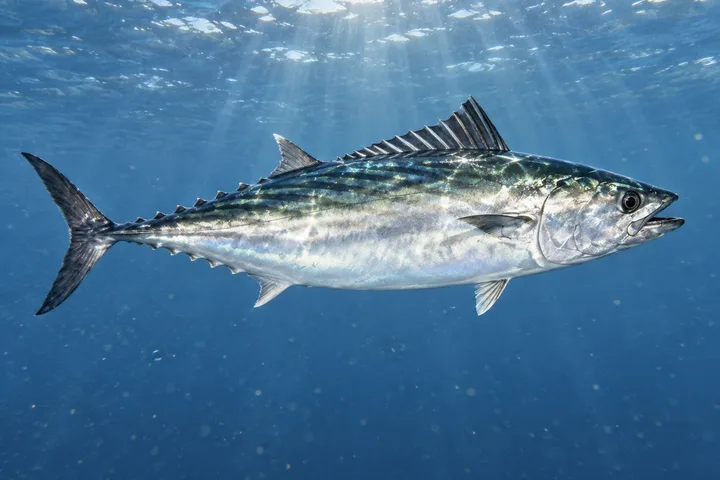
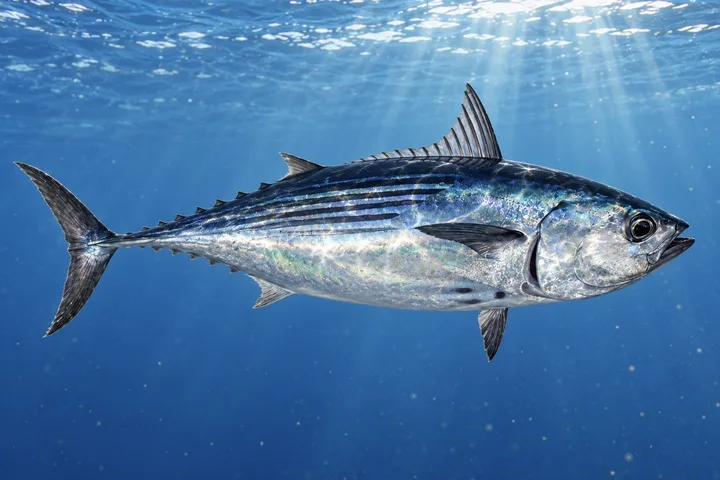
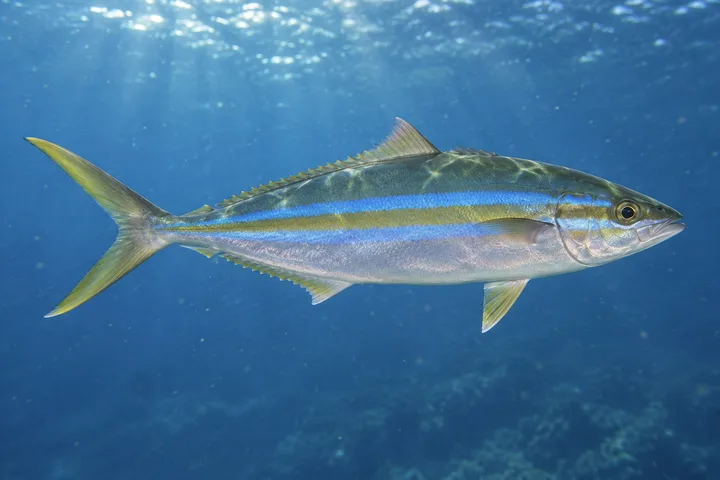
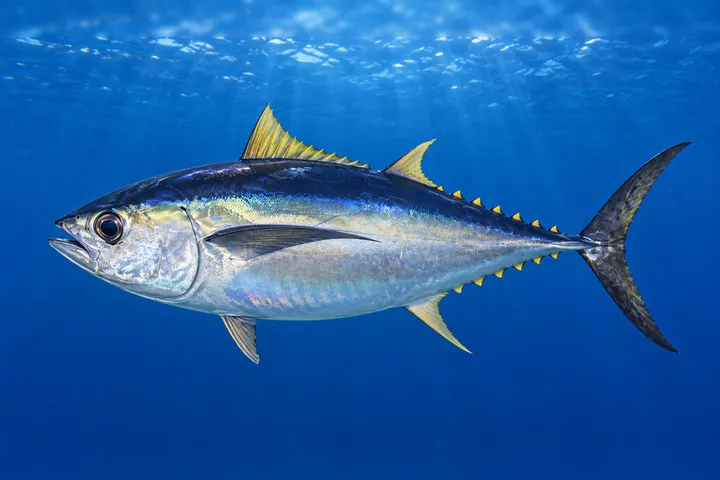
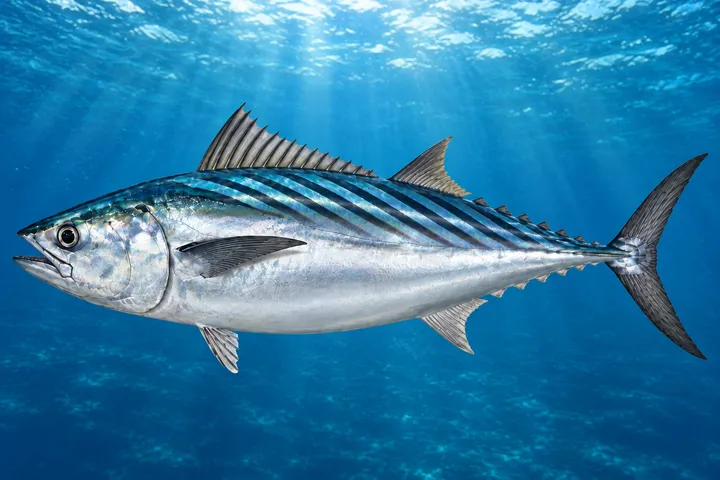
Source ↗It sometimes travels with flotsam: it has been collected at the surface and found in the stomachs of yellowfin and bluefin tuna.
Source ↗It is often taken as bycatch in shrimp fisheries in Mexico and other Latin American countries; surveys estimated 199,000 to 380,000 seahorses caught on the Pacific coast each year.
Source ↗All seahorses went on CITES Appendix II on 15 May 2004. CITES advisers suggested a minimum height of 10 cm for wild seahorses in trade.
Source ↗From 2001 to 2019, 95,589 seahorses were seized or intercepted while being illegally exported from Mexico, according to Profepa records reported by Mongabay.
Source ↗The Pacific seahorse is a fish for divers and snorkelers to find, not a fishing species. Around Los Cabos look for it wrapped around sea fans, sea whips, weed or rope on rocky reefs; it stays still and changes color to match, so it is easy to swim past. Look closely, don't touch, and don't move it for a photo.
It is protected in Mexico. Catching, keeping, transporting or selling one without federal authorization is a crime. If one ever comes up tangled in a line or on an anchor, put it straight back in the water. Do not buy dried seahorses as souvenirs: export needs CITES permits. Sport fishing is not allowed inside Cabo Pulmo National Park.
| Mexico (NOM-059-SEMARNAT-2010) | Subject to special protection (Pr) |
|---|---|
| Capture, possession and trade | Only with federal wildlife authorization from SEMARNAT under an approved management plan (Ley General de Vida Silvestre, arts. 85 and 87) |
| Without authorization | Federal crime: 1 to 9 years in prison, with up to 3 more if done for trade or in a protected area (Código Penal Federal, art. 420) |
| CITES | Appendix II (since 2004) |
| IUCN Red List | Vulnerable (assessed 2016) |
| Cabo Pulmo National Park | Sport fishing not allowed |
Protected in Mexico. Look, don't touch, and never take one.
It is the only seahorse found along this coast, so any seahorse you see in Los Cabos is this species. Its closest look-alikes are pipefishes, such as the bluestripe pipefish (Doryrhamphus melanopleura): they are relatives with the same tube snout, but their bodies are straight and they have a small fan-shaped tail fin instead of a curling tail.
Yes. The Pacific seahorse lives around Los Cabos and has been photographed at Cabo San Lucas and recorded at Cabo Pulmo, but it is rare and well camouflaged, so finding one is a lucky dive.
Yes. The female puts her eggs in the male's pouch and he carries them for about two weeks before the young are born.
No. It is protected in Mexico (Pr), and catching, keeping or selling one without federal authorization is a crime. International trade also needs CITES permits.

Top illustration: Top Anglers. Photos: iNaturalist contributors, credited on each photo.
Our charters leave the Cabo San Lucas marina every morning. From $698 with license included.