How to recognize it
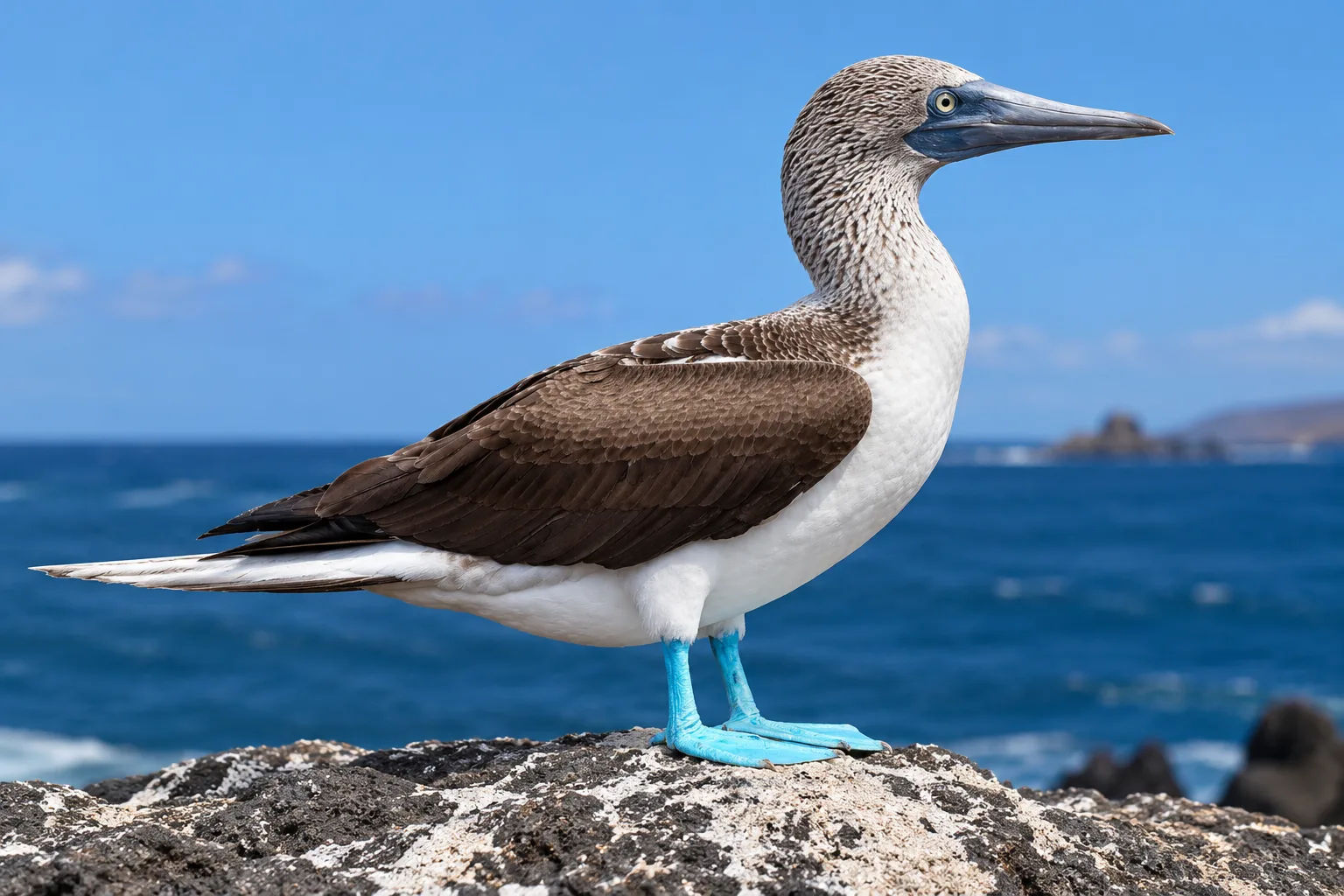
A slim, brown-and-white seabird with long, pointed wings, a wedge-shaped tail, a long, pointed grayish-blue bill, yellow eyes and bright blue feet. The pale head and neck are finely streaked grayish brown, the back is brown and the belly white, with a white patch on the hindneck and a narrow white band across the rump. Females are larger, on average about 27% heavier, and their pupil looks bigger and star-shaped; the sexes also sound different, the female’s voice deeper and coarser, the male’s much weaker. Young birds are browner, with darker streaking on the head, neck and chest and dull, brownish feet instead of bright blue ones.
Biology
Blue-footed boobies live in the eastern Pacific from the Gulf of California to northern Peru, including the Galápagos. In Mexico they nest on Gulf of California islands such as San Pedro Mártir, San Pedro Nolasco, San Jorge, San Ildefonso and Farallón de San Ignacio, and on the Pacific side at Isla Isabel, the Marías, the Marietas and San Benedicto. They nest on the ground on arid, rocky islands with little vegetation, in a shallow scrape ringed with guano. They aren’t true migrants, but young and non-breeding birds wander, sometimes as far as California.
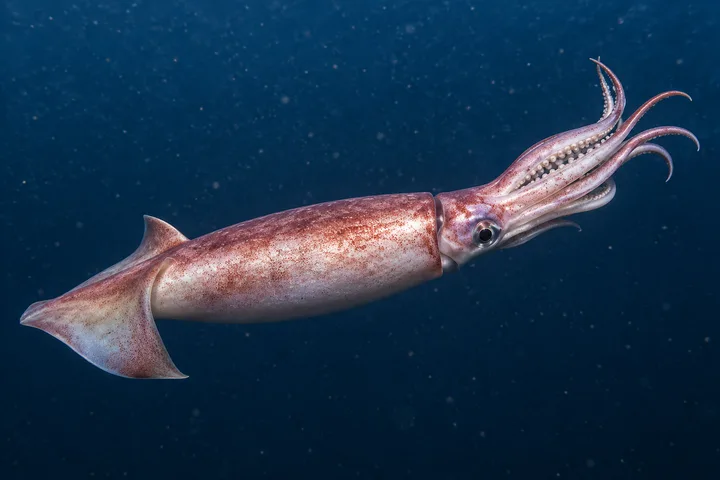
They feed on anchovies, sardines, mackerel, flying fish and other small fish, plus squid, often fishing in flocks. Females lay one to three pale bluish eggs and both parents incubate. The eggs hatch about four days apart, so the oldest chick is much bigger than its siblings and sometimes attacks them; when food runs short, its attacks intensify and a younger chick may starve or be pushed out of the nest.