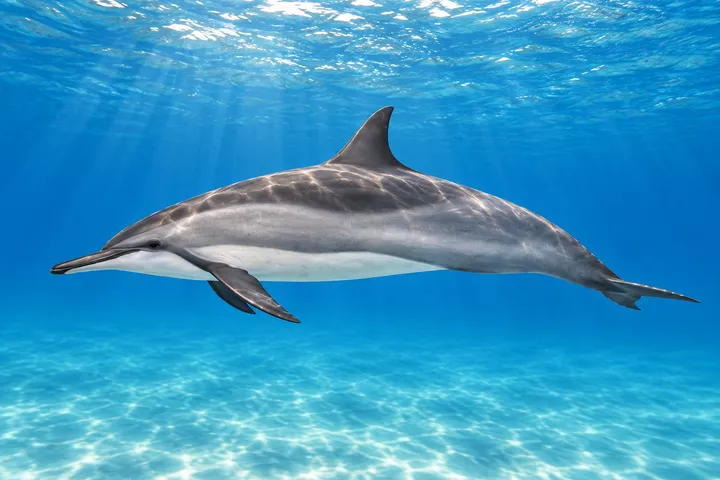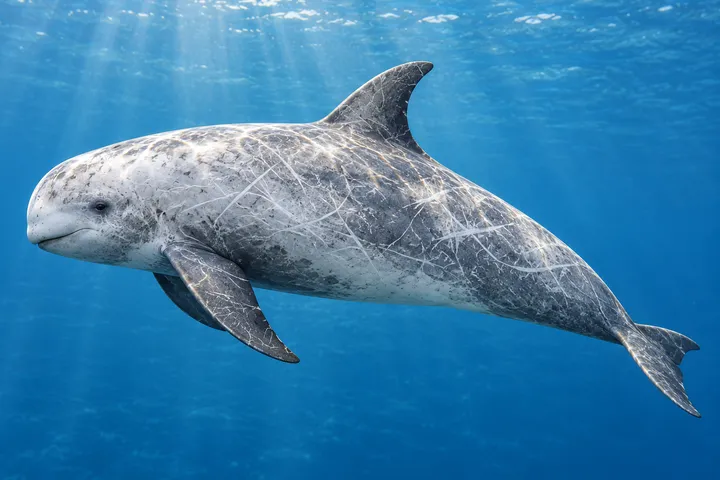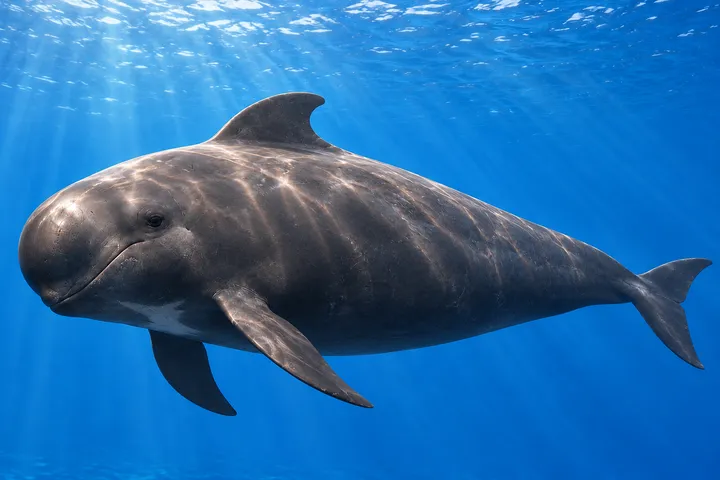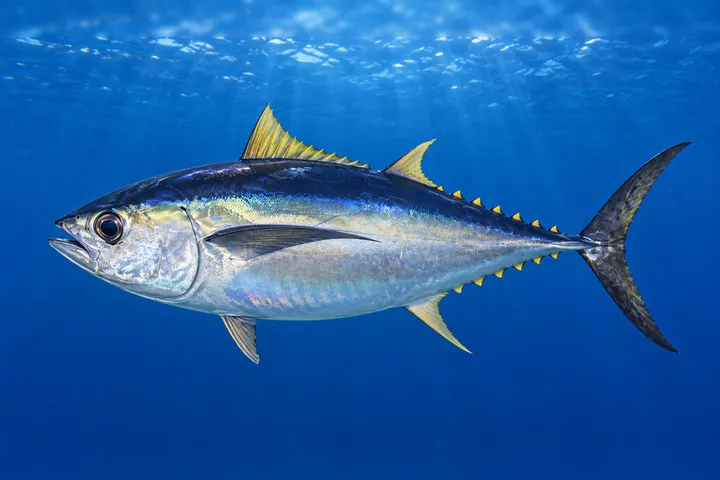
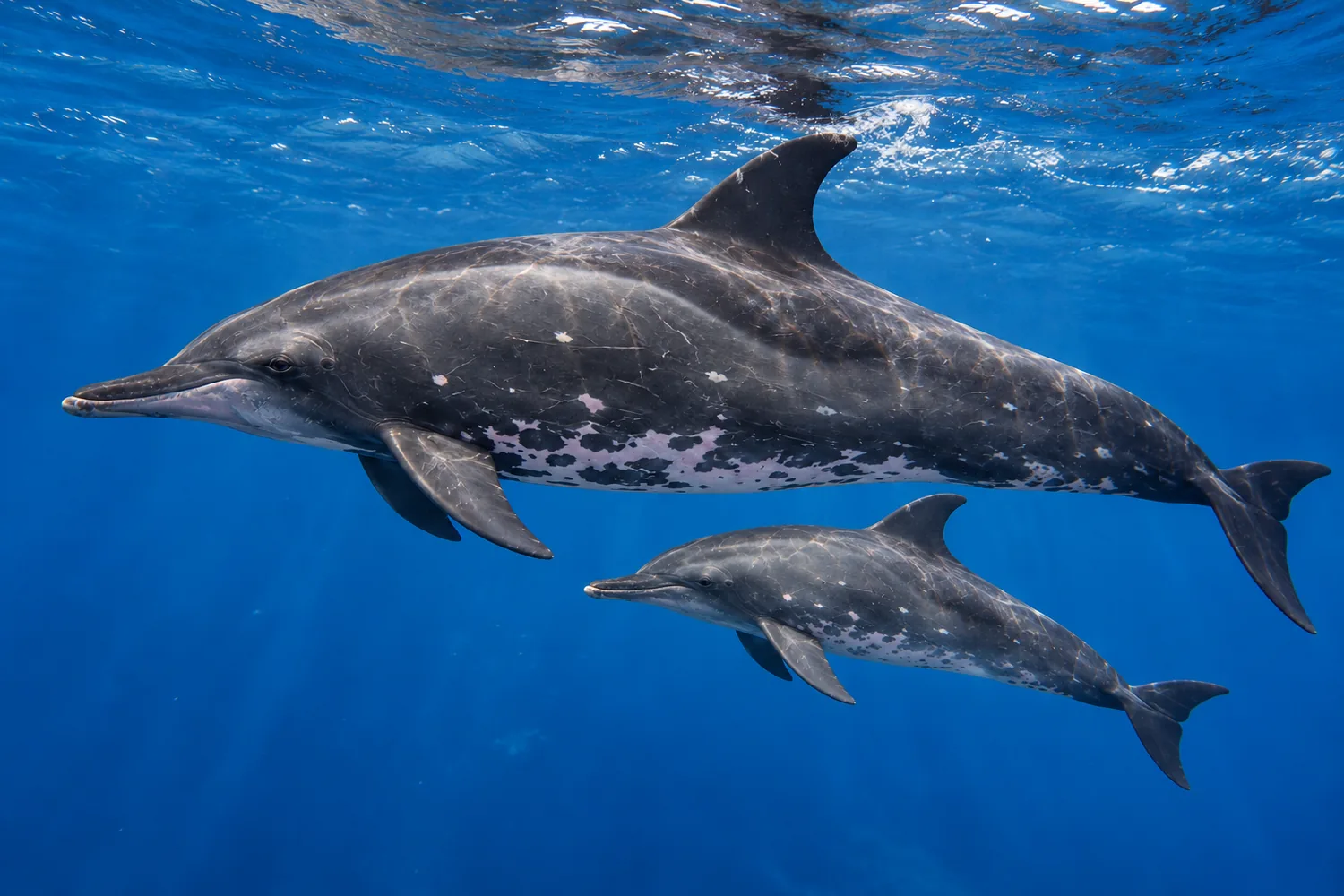
Rough-toothed dolphin (Steno bredanensis), illustration
Protected Steno bredanensis

Rough-toothed dolphin in Los Cabos

With its long, sloping snout and no forehead bump, the rough-toothed dolphin looks almost reptilian. It lives in deep, warm water, its teeth carry fine vertical ridges found in no other dolphin, and in the eastern Pacific it has been seen hunting adult dorado.

2.5–2.8 mAdult length (8–9 ft)
~160 kgWeight (350 lb)
20–27Ridged teeth in each row
Up to 15 minTime underwater

When to see them

●● best months · ● regular · · occasional. Based on scientific studies and local reports; it changes year to year.

Tap a month to see everything biting in Cabo that month ›

How to recognize it

A medium-sized, dark-gray dolphin with a conical head: the forehead slopes smoothly into a fairly long beak, with no crease between them. The lips and throat are white or pinkish, and the belly usually has white or pinkish blotches and spots. A narrow dark cape runs along the back from the blowhole to the dorsal fin. The dorsal fin is tall and the flippers are large and set well back. Up close, the 20 to 27 teeth in each row show fine vertical wrinkles.

Biology

Rough-toothed dolphins live in deep oceanic water in tropical and warm temperate seas, from about 40°N to 35°S. In the eastern Pacific they range from southern Baja California south to Colombia and Ecuador, and in Mexico there are records from the Pacific coast of Baja California and Baja California Sur, the Gulf of California, Sonora and Nayarit. Groups usually hold 10 to 20 animals, often swimming in tight subgroups, and they often travel with other species such as short-finned pilot whales, bottlenose dolphins, spotted dolphins and spinners.

They eat squid and fish, and observations in the eastern Pacific and Hawaii suggest they may specialize in large mahimahi (dorado). They can stay underwater for up to 15 minutes and can live 36 years or more, maturing at 10 to 14 years. When travelling fast they often skim along the surface with the chin and head out of the water.

Things you probably didn't know

01

Teeth with ridges

The name comes from the teeth: each row holds 20 to 27, and their crowns have fine vertical wrinkles or ridges.

Source ↗
02

Dorado hunters

Off Acapulco and far off Costa Rica, researchers watched rough-toothed dolphins carrying adult mahimahi about 1 to 1.5 m long. One fish had its flesh stripped off one side, as if neatly filleted.

Source ↗
03

They share the catch

In Hawaii, one dolphin carried a big mahimahi while others in the school took turns holding it and peeling off pieces of flesh.

Source ↗
04

The driftwood dolphin

Of 250 sightings during NOAA dolphin surveys in the eastern tropical Pacific over 25 years, 43 (17%) were next to floating objects such as logs, dead whales or pallets, the same places big dorado gather.

Source ↗
05

Mass strandings in Baja

On 7 December 2015, 21 rough-toothed dolphins and 2 common dolphins stranded at Playa San Lázaro on Bahía de Ulloa, BCS; 7 were returned to the sea and 16 died. In October 2014, 12 stranded at El Mogote, La Paz, and 11 were rescued.

Source ↗
06

Built for skimming

At speed they often move with the chin and head above the surface, a distinctive skimming style.

Source ↗

Seeing them from the boat

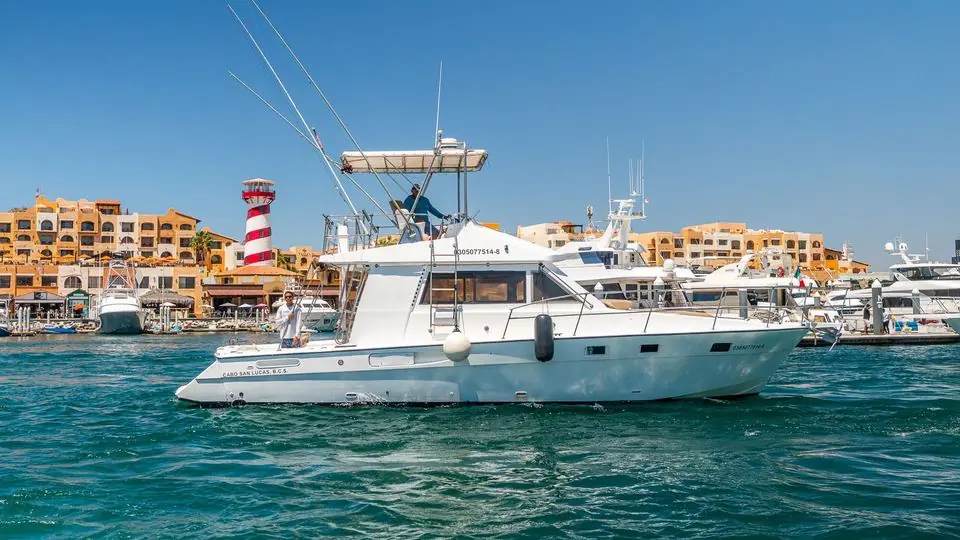
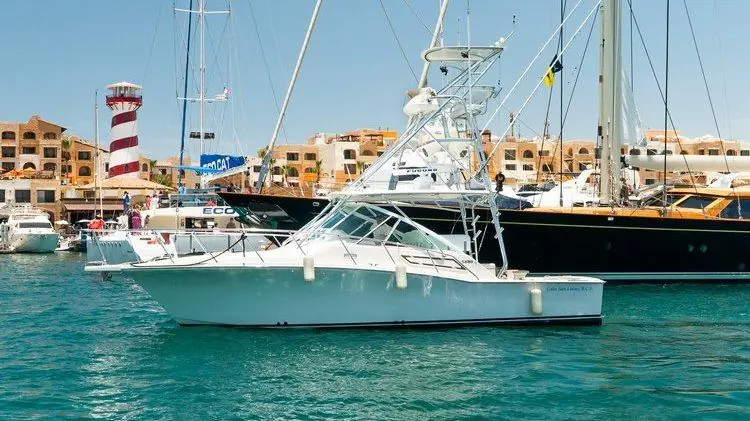
Rough-toothed dolphins are an occasional, offshore sighting around Cabo. CONANP lists them among the marine mammals of the Cabo San Lucas protected area, and they have stranded in Baja California Sur, but they live in deep blue water and their small groups are easy to miss. You are most likely to meet them far out, often near floating debris.

Dorado fishermen have a reason to look twice: these dolphins hunt big mahimahi, and they like the same floating logs and debris. Enjoy them from the boat, keep lines and baits away from them, don’t chase or split up a group, and never feed them or try to swim with them.

Rules & conservation

Mexico (NOM-059)Subject to special protection (Pr)
Ley General de Vida Silvestre, art. 60 BisNo extractive use or possession of any marine mammal, except authorized research and conservation
Federal Penal Code, art. 4201 to 9 years in prison for unlawfully capturing, harming or killing a marine mammal
Whale-watching rules (NOM-131)Do not apply: NOM-131 covers only baleen whales and the sperm whale
IUCN Red ListLeast Concern (2018)

Don't confuse it with

The bottlenose dolphin has a short, thick beak with a clear crease where it meets the rounded forehead, and no white lips or belly blotches. The spinner dolphin is smaller and slimmer, with a needle-thin beak, and spins as it leaps. The common dolphin has a crisscross hourglass pattern of tan and gray on its sides. The pantropical spotted dolphin is spotted, with a white-tipped beak. Risso’s dolphin has no beak at all and a pale, heavily scarred body.

Questions

Can you see rough-toothed dolphins in Cabo San Lucas?

Occasionally. They live offshore in deep water and are listed for the Cabo San Lucas protected area, but they are much less common than bottlenose or common dolphins.

Why is it called rough-toothed?

Its teeth have fine vertical ridges on the crowns, which no other dolphin has.

Do rough-toothed dolphins eat dorado?

Researchers have seen them carrying and eating adult mahimahi in the eastern Pacific and Hawaii, and think they may specialize in big dorado.

By Max VargasTop Anglers, Cabo San Lucas · international judge at big game fishing world championships · reviewed October 2026

Sources

Top illustration: Top Anglers. Photos: iNaturalist contributors, credited on each photo.

See Cabo from the water

Our charters leave the Cabo San Lucas marina every morning. From $1,174 with license included.
More species

Pacific sierra
Pacific sierra
Scomberomorus sierra
California yellowtail
Seriola dorsalis
Pacific crevalle jack
Caranx caninus
Skipjack tuna
Skipjack tuna
Katsuwonus pelamis
Shortfin mako
Shortfin mako
Isurus oxyrinchus
Leopard grouper
Leopard grouper
Mycteroperca rosacea
Colorado snapper
Colorado snapper
Lutjanus colorado
Striped bonito
Striped bonito
Sarda orientalis
Black skipjack
Black skipjack
Euthynnus lineatus
Finescale triggerfish
Balistes polylepis
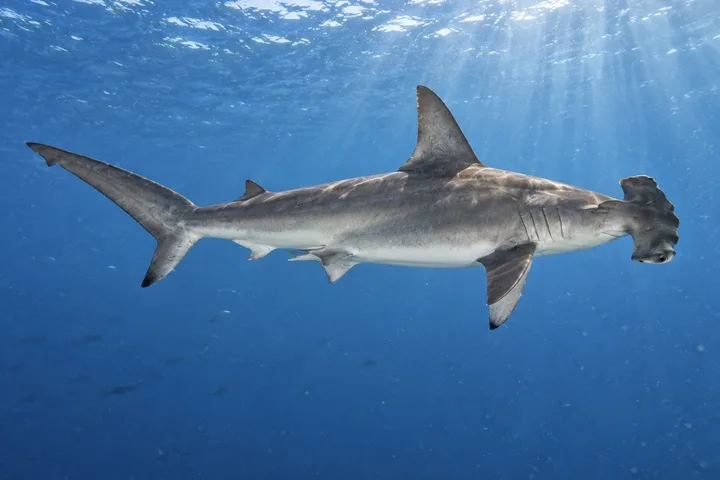
Scalloped hammerhead
Sphyrna lewini
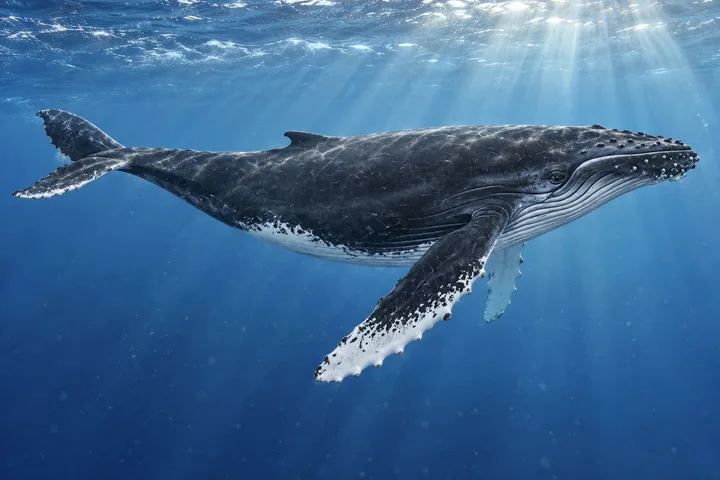
Humpback whale
Humpback whale
Megaptera novaeangliae
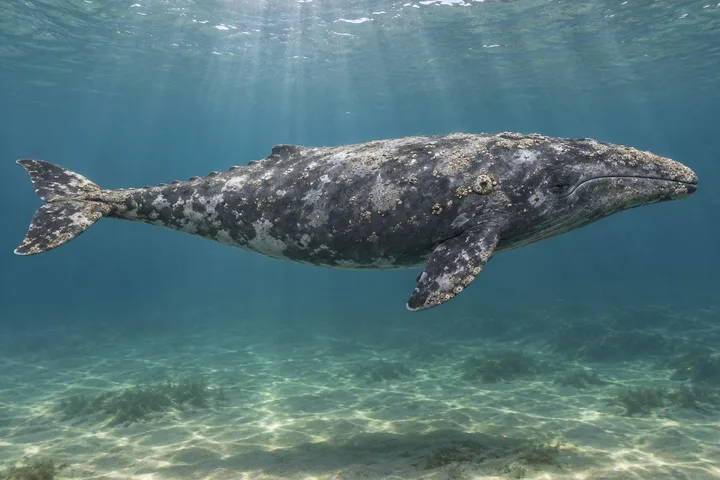
Gray whale
Gray whale
Eschrichtius robustus
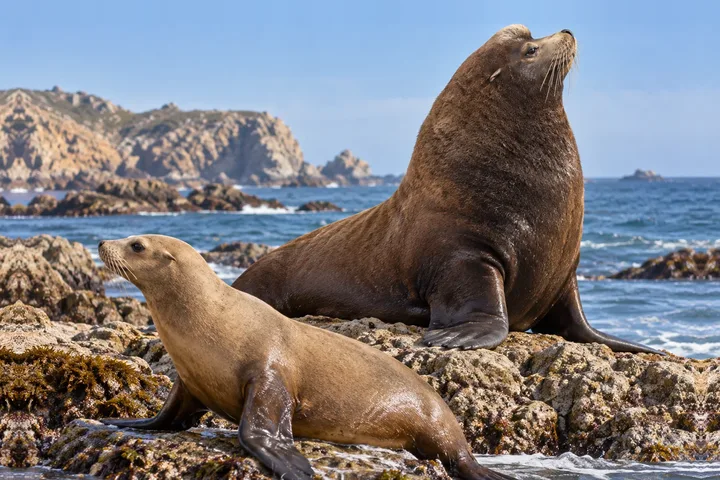
California sea lion
California sea lion
Zalophus californianus
Whale shark
Whale shark
Rhincodon typus
Olive ridley sea turtle
Lepidochelys olivacea
Bottlenose dolphin
Bottlenose dolphin
Tursiops truncatus
Munk's devil ray (mobula)
Mobula munkiana
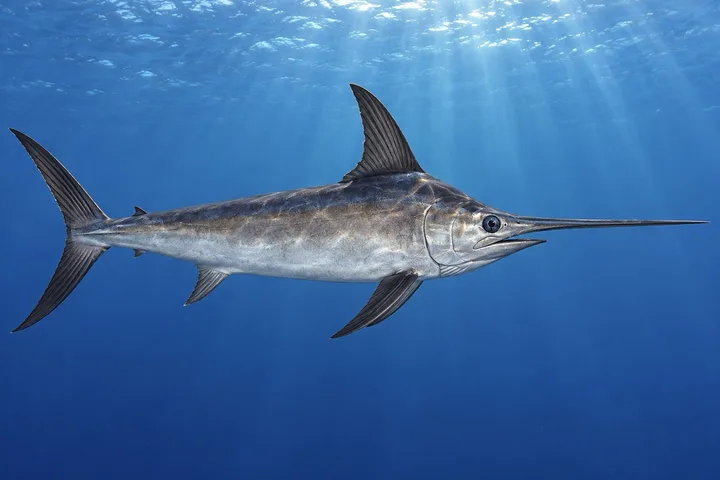
Swordfish
Swordfish
Xiphias gladius
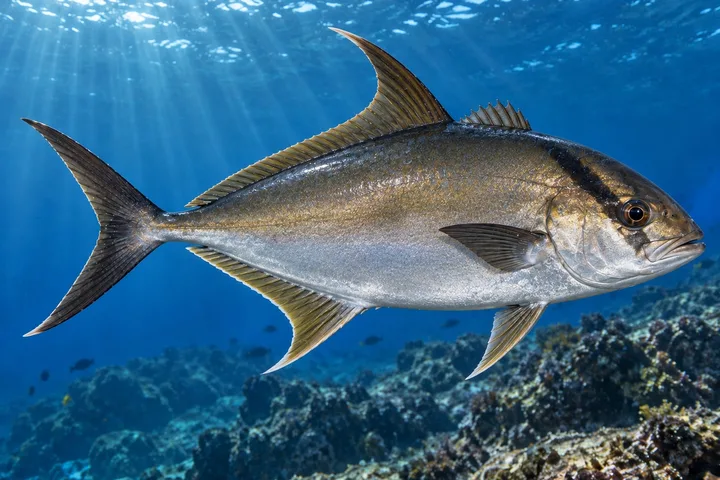
Almaco jack
Almaco jack
Seriola rivoliana
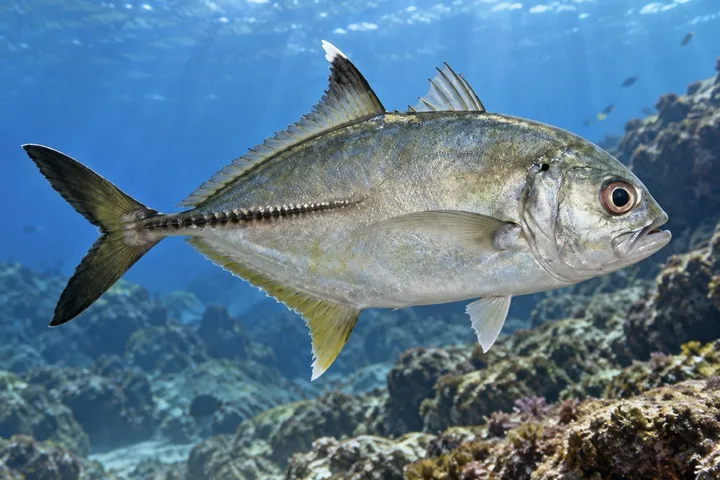
Bigeye trevally
Bigeye trevally
Caranx sexfasciatus
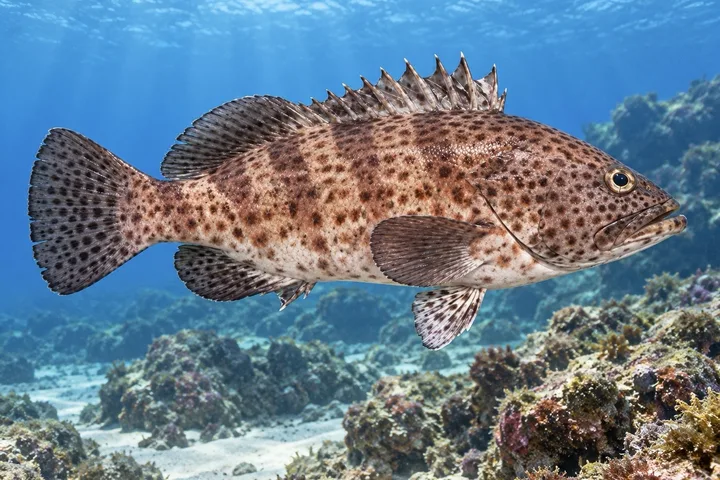
Spotted cabrilla
Spotted cabrilla
Epinephelus analogus
Pacific dog snapper
Pacific dog snapper
Lutjanus novemfasciatus
Barred pargo
Barred pargo
Hoplopagrus guentherii
Blue whale
Blue whale
Balaenoptera musculus
Green sea turtle (black turtle)
Chelonia mydas
Leatherback sea turtle
Dermochelys coriacea
Rainbow runner
Rainbow runner
Elagatis bipinnulata
Gulf grouper
Gulf grouper
Mycteroperca jordani
Yellow snapper
Yellow snapper
Lutjanus argentiventris
Pacific white snook
Pacific white snook
Centropomus viridis
Mexican barracuda
Mexican barracuda
Sphyraena ensis
Silky shark
Silky shark
Carcharhinus falciformis
Mexican needlefish
Mexican needlefish
Tylosurus fodiator
Humboldt squid
Humboldt squid
Dosidicus gigas
Giant manta ray
Giant manta ray
Mobula birostris
Fin whale
Fin whale
Balaenoptera physalus
Orca (killer whale)
Orca (killer whale)
Orcinus orca
Hawksbill sea turtle (carey)
Eretmochelys imbricata
Brown pelican
Brown pelican
Pelecanus occidentalis
Magnificent frigatebird
Fregata magnificens
Shortbill spearfish
Shortbill spearfish
Tetrapturus angustirostris
Loggerhead sea turtle (caguama)
Caretta caretta
Osprey
Osprey
Pandion haliaetus
Blue-footed booby
Blue-footed booby
Sula nebouxii
Common dolphin
Common dolphin
Delphinus delphis
Oarfish
Oarfish
Regalecus russelii
Heermann’s gull
Heermann’s gull
Larus heermanni
Yellow-footed gull
Yellow-footed gull
Larus livens
Ocean sunfish
Ocean sunfish
Mola mola
Sperm whale
Sperm whale
Physeter macrocephalus
Sally Lightfoot crab
Grapsus grapsus
Blue spiny lobster
Blue spiny lobster
Panulirus inflatus
Chocolate clam
Chocolate clam
Megapitaria squalida
Pelagic red crab
Pelagic red crab
Grimothea planipes
Hubbs’ octopus
Hubbs’ octopus
Octopus hubbsorum
Jewel moray
Jewel moray
Muraena lentiginosa
Panamic green moray
Panamic green moray
Gymnothorax castaneus
Spinner dolphin
Spinner dolphin
Stenella longirostris
Risso’s dolphin
Risso’s dolphin
Grampus griseus
Short-finned pilot whale
Globicephala macrorhynchus
Bigeye tuna
Bigeye tuna
Thunnus obesus
Pelagic thresher
Pelagic thresher
Alopias pelagicus
Blue shark
Blue shark
Prionace glauca
Giant hawkfish
Giant hawkfish
Cirrhitus rivulatus
Pacific bonito
Pacific bonito
Sarda lineolata
Cortez angelfish
Cortez angelfish
Pomacanthus zonipectus
African pompano
African pompano
Alectis ciliaris
Barberfish
Barberfish
Johnrandallia nigrirostris
Black jack
Black jack
Caranx lugubris
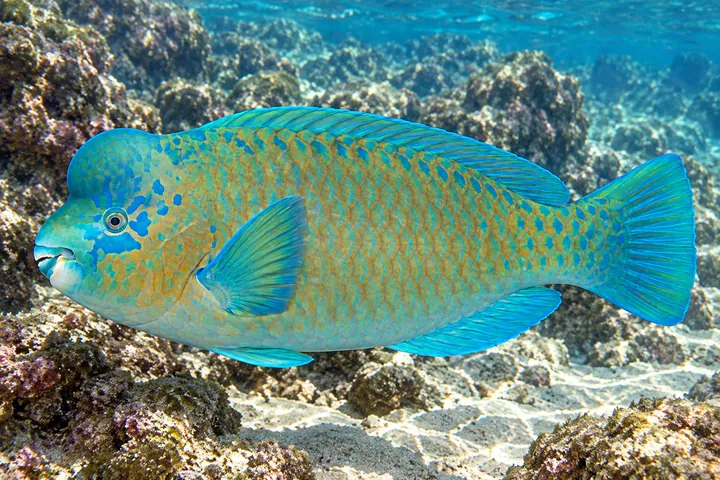
Bumphead parrotfish
Bumphead parrotfish
Scarus perrico
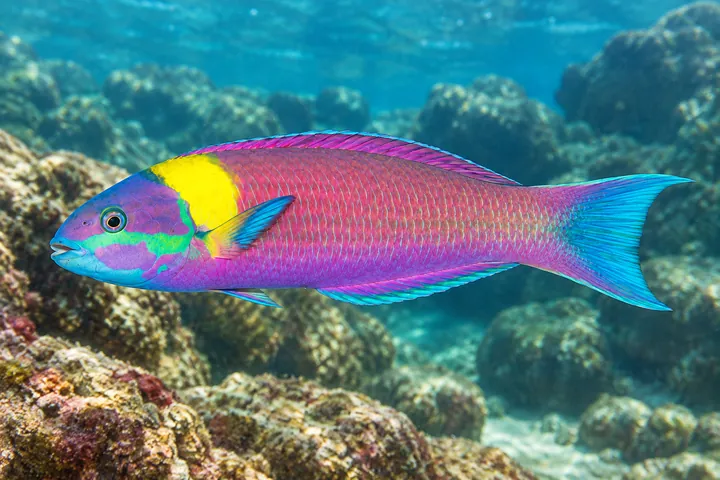
Cortez rainbow wrasse
Thalassoma lucasanum
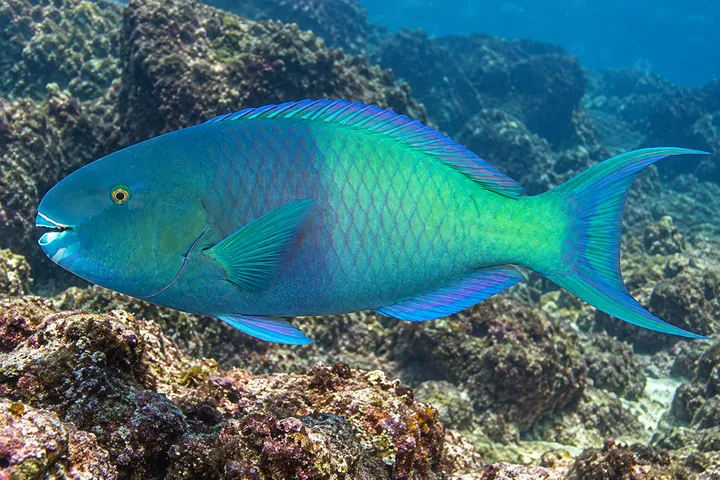
Ember parrotfish
Ember parrotfish
Scarus rubroviolaceus
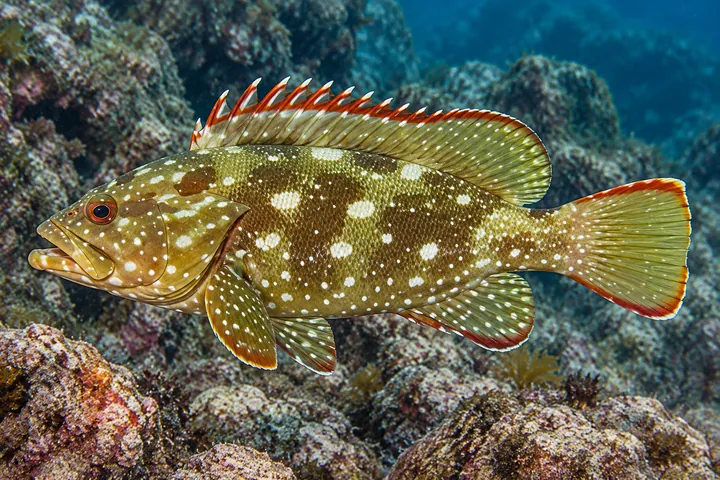
Flag cabrilla
Flag cabrilla
Epinephelus labriformis
Golden trevally
Golden trevally
Gnathanodon speciosus
King angelfish
King angelfish
Holacanthus passer
Mexican hogfish
Mexican hogfish
Bodianus diplotaenia
Moorish idol
Moorish idol
Zanclus cornutus
Pacific creolefish
Pacific creolefish
Cephalopholis colonus
Pacific red snapper
Pacific red snapper
Lutjanus peru
Pacific seahorse
Pacific seahorse
Hippocampus ingens
Sanguine frogfish
Sanguine frogfish
Abantennarius sanguineus
Spotted rose snapper
Lutjanus guttatus
Threeband butterflyfish
Chaetodon humeralis
Yellowtail surgeonfish
Prionurus laticlavius
Spinetail devil ray
Spinetail devil ray
Mobula mobular
Golden cownose ray
Golden cownose ray
Rhinoptera steindachneri
Round stingray
Round stingray
Urobatis halleri
Pacific spotted eagle ray
Aetobatus laticeps
Whitetip reef shark
Whitetip reef shark
Triaenodon obesus
Pacific nurse shark
Pacific nurse shark
Ginglymostoma unami
Tiger shark
Tiger shark
Galeocerdo cuvier
Bull shark
Bull shark
Carcharhinus leucas
Bryde’s whale
Bryde’s whale
Balaenoptera edeni
Cauliflower coral
Cauliflower coral
Pocillopora verrucosa
Panamic porites coral
Porites panamensis
Giant pavona
Giant pavona
Pavona gigantea
Blue sea star (tan sea star)
Phataria unifascialis
Long-spined sea urchin
Diadema mexicanum
Cocos booby
Cocos booby
Sula brewsteri
Talk to the family

Questions? Message the family

The Vargas family answers personally. 7 days a week, 5 AM – 6 PM Cabo time.