How it's caught in Los Cabos
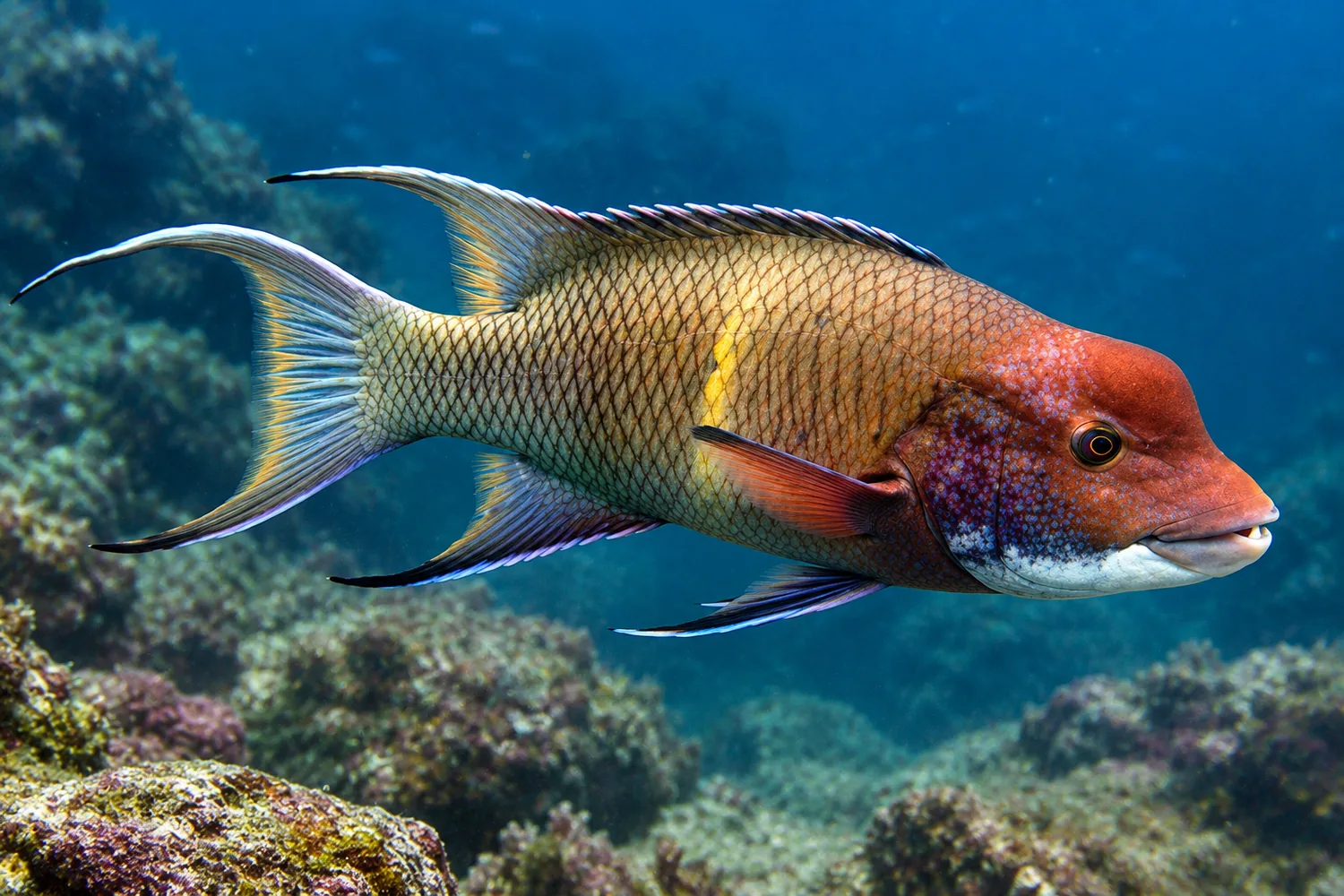
The Mexican hogfish is commonly seen on rocky reefs, and it has been photographed by divers around Los Cabos, so it is a fish for snorkelers and divers as much as for anglers. Big streamer-finned males are easy to recognize by their red-brown head and white chin.
Anglers catch it near shore and from the beach while bottom fishing with cut bait close to rocky structure; local catch records include fish from Punta Palmilla and Cabo Real. It is a strong fighter that dives for the rocks. Most local anglers release it. Sport fishing is not allowed inside Cabo Pulmo National Park.
On the table
Edible and sold fresh in parts of its range, but in Los Cabos it is not highly regarded as a food fish and is usually released.
Rules, records & conservation
| Daily limit (NOM-017-PESC-1994) | Up to 5 per angler per day, within the 10-fish total |
|---|
| Mexico (NOM-059-SEMARNAT-2010) | Not listed |
|---|
| IUCN Red List | Least Concern (assessed 2007) |
|---|
| IGFA all-tackle record | 4 lb 4 oz (1.93 kg), Los Buzos, Panama, 2023 (a 7 lb 3 oz fish from Isla Magdalena, Mexico, was pending in 2026) |
|---|
| Cabo Pulmo National Park | Sport fishing not allowed |
|---|
Don't confuse it with
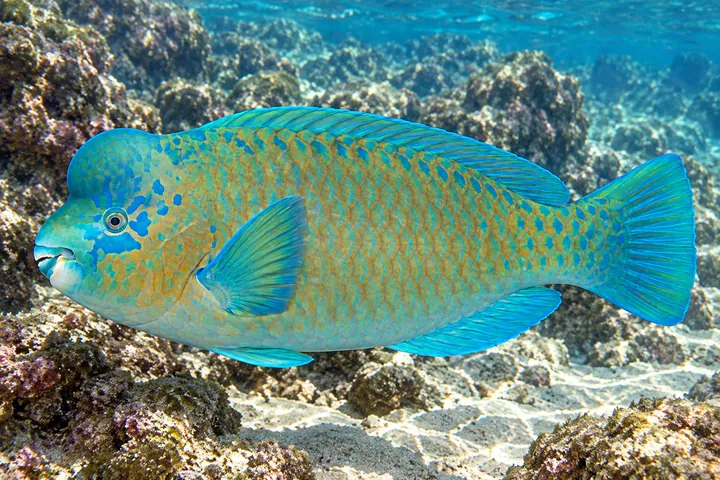
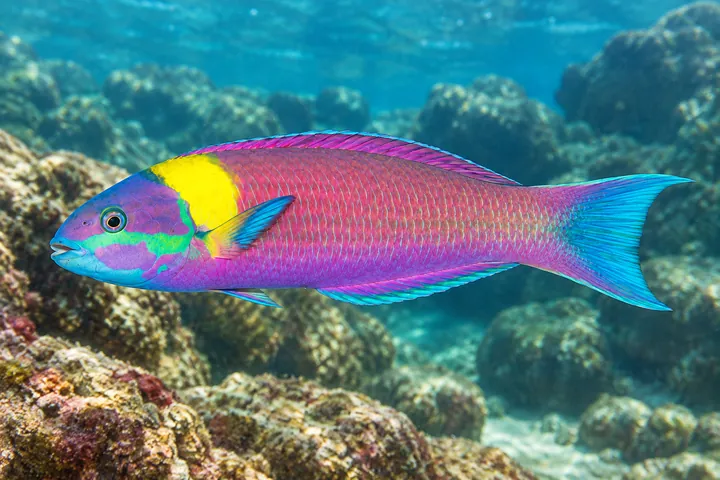
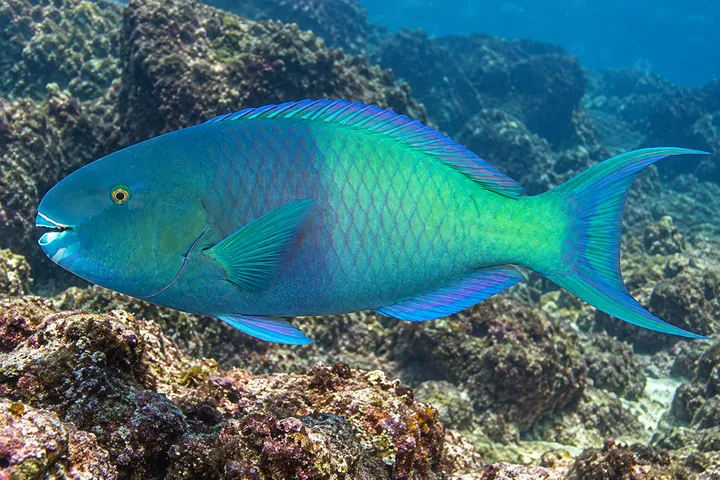
The bumphead parrotfish (Scarus perrico) also has a hump on the forehead, but it is green to blue-green with a beak of fused teeth, a blunt tail and no fin streamers. The California sheephead (Bodianus pulcher), a close relative that lives mostly farther north on Baja's Pacific coast and in the western and central Gulf, has a black head and black rear body with a pink to red middle and no long fin filaments. Initial-phase Mexican hogfish are easy to tell by the reddish front, yellow rear and two dark stripes.
Questions
Is the Mexican hogfish a male or a female?
Both, at different times. All hogfish start as females, and some later change into males, which develop the forehead hump and long fin streamers.
Can you eat Mexican hogfish?
It is edible and sold in some places, but in Los Cabos most anglers release it.
Where can I see one in Cabo?
On rocky reefs, usually between 5 and 18 m deep. It is commonly seen there, so it is one of the easier big reef fish to find.

By Max VargasTop Anglers, Cabo San Lucas · international judge at big game fishing world championships · reviewed October 2026
Sources
Top illustration: Top Anglers. Photos: iNaturalist contributors, credited on each photo.