The trigger
The first dorsal spine locks upright, held in place by the second spine, the "trigger". It only folds back when the trigger is pressed down.
Source ↗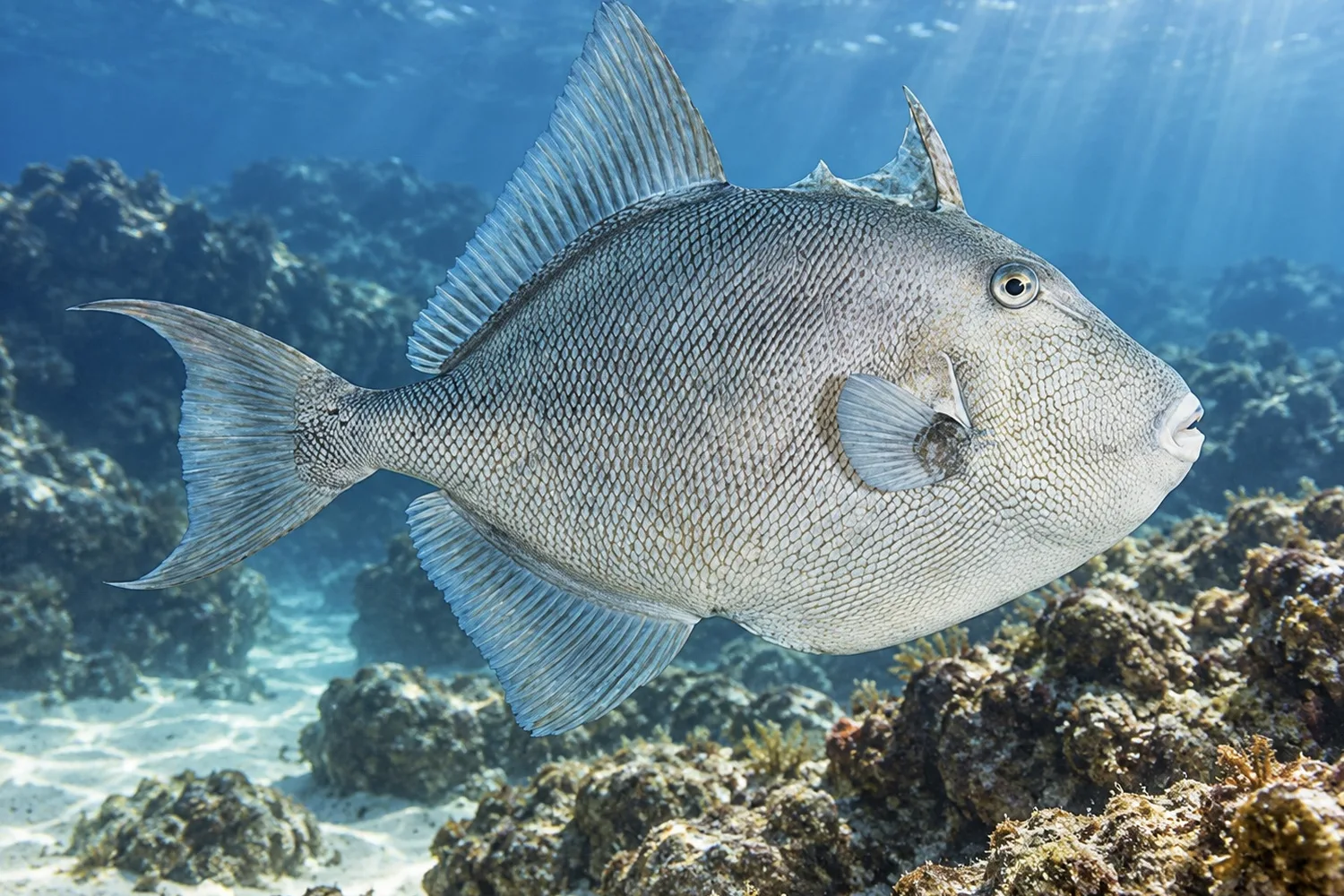
A bait thief with a locking spine and teeth that crush shells. The cochito lives on Cabo's rocky reefs all year, and in Baja it's the classic fish for ceviche.
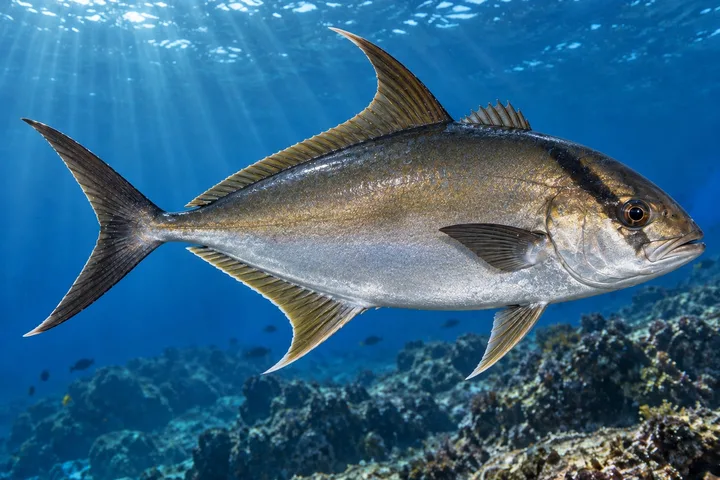
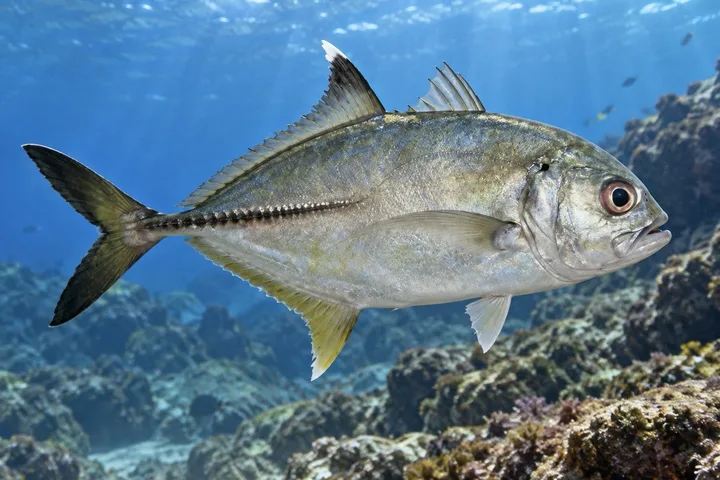
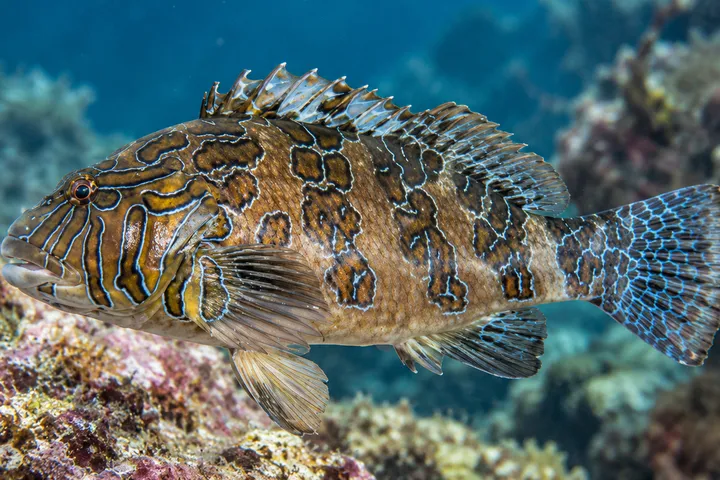
A tall, flat, diamond-shaped fish, plain olive-brown to blue-grey with no markings, tough leathery skin, a fully scaled snout, a small mouth and long tips on the tail. The first dorsal spine can be locked upright.
Cochito live on rocky reefs, boulder slopes and nearby sand, from northern California to Chile, including the Gulf of California, the Galápagos and Hawaii. The young drift in open water before settling on the bottom as adults.
They eat sea urchins, crabs, shrimp, snails and other shellfish, tubeworms and some seaweed. Males build nests on the bottom; the female cares for the eggs while the male chases off intruders. In the Gulf of California this happens from May to October. Studies disagree on lifespan, with estimates from about 5 to 21 years.
The first dorsal spine locks upright, held in place by the second spine, the "trigger". It only folds back when the trigger is pressed down.
Source ↗Triggerfish swim mainly by rippling their dorsal and anal fins; the style is called "balistiform" after their family.
Source ↗Each jaw has eight heavy, notched teeth, strong enough to crack urchins and shells, and to wreck ordinary hooks.
Source ↗The male builds and defends the nest; the female tends the eggs.
Source ↗In the warm 1982–83 El Niño, large numbers were caught off southern California; in 2011 the first ones were recorded near San Quintín, Baja California.
Source ↗The world record comes from Hawaii, not Mexico, and the species may be establishing a population there.
Source ↗Cochito are caught on the bottom near rocks with cut bait and chum. Use small but extra-strong hooks, because their teeth destroy ordinary ones, and expect to lose bait: they're famous bait thieves. They're around all year, including on the rocks near the Arch.
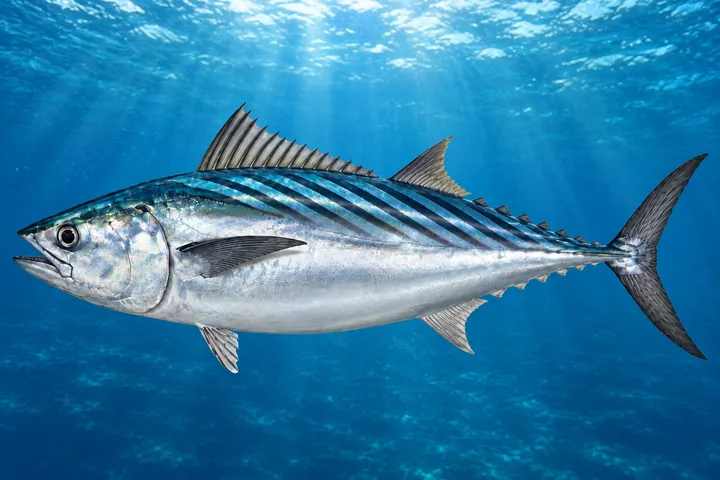
Chunks of black skipjack are considered one of the best baits for them.
White, mild, firm fillets with little fat. The skin is like leather, so it takes a sharp knife. In Baja California Sur it's above all a ceviche fish.
| Daily limit (NOM-017-PESC-1994) | Up to 5 per angler per day, within the 10-fish total |
|---|---|
| IUCN Red List | Least Concern |
| IGFA all-tackle record | 16 lb 4 oz (7.37 kg), Kaena Point, Oahu, Hawaii, 2013 |
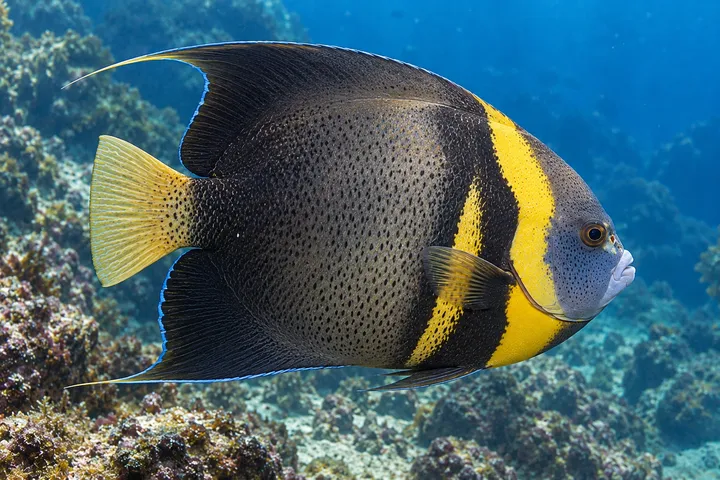
The orangeside triggerfish is dark above and yellow-orange below, with a yellow bar from the mouth. The redtail triggerfish has a crosshatch pattern and a red or yellow edge on the tail. The black durgon is black with a pale blue line along the fins. The blunthead triggerfish has light and dark bars.
Its first dorsal spine locks upright and only releases when the second spine, the "trigger", is pressed.
Yes. It has white, mild fillets and is the classic ceviche fish in Baja; the leathery skin takes a sharp knife.
Up to 5 per angler per day, within the overall limit of 10 fish.

Top illustration: Top Anglers. Photos: iNaturalist contributors, credited on each photo.
Pangas and small boats that work the beaches, points and rocky reefs. From $453 with license included.