Alaska to Cabo
The humpbacks that spend the winter in Mexico feed in summer anywhere from California to the Aleutian Islands of Alaska.
Source ↗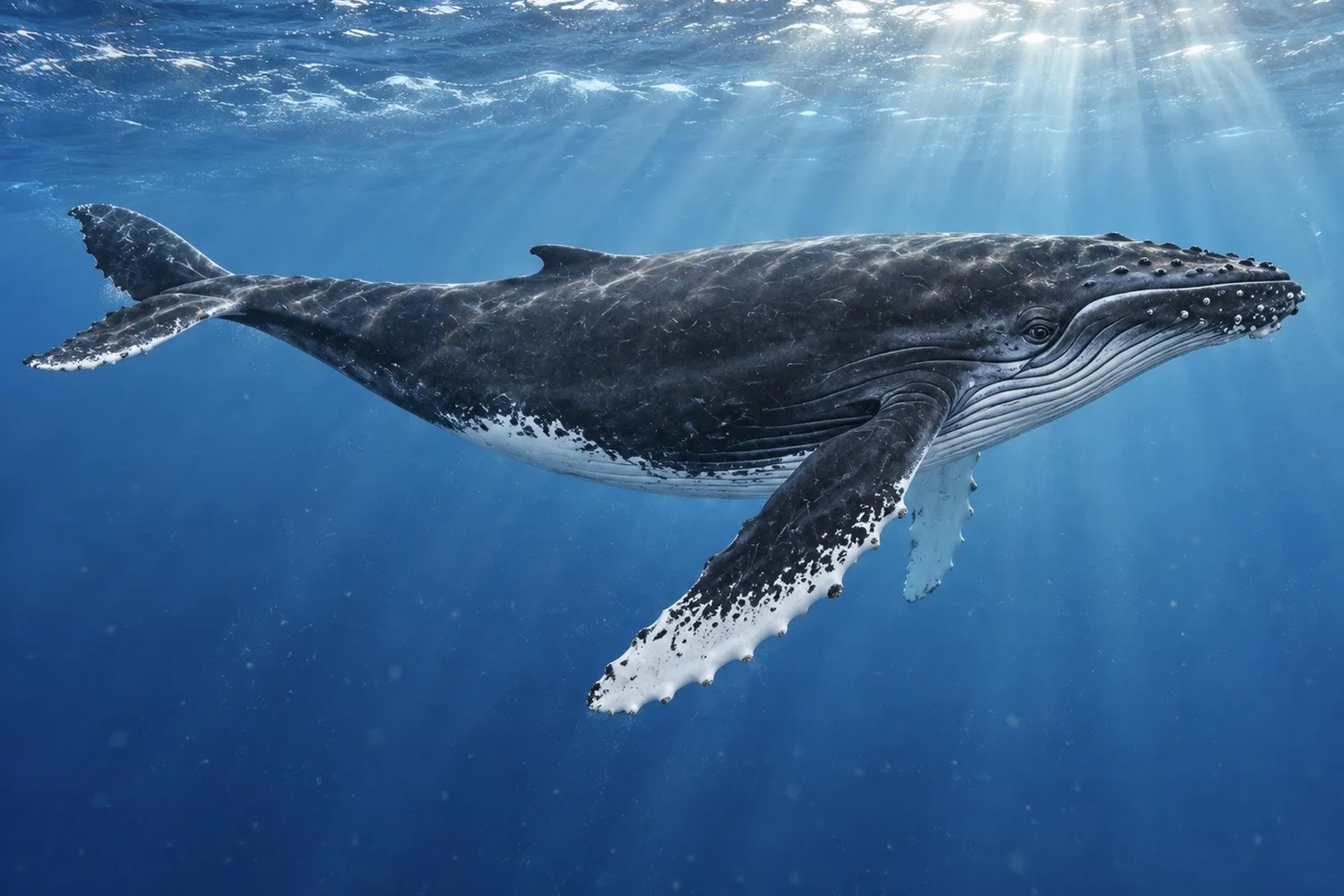
Every winter, humpbacks swim south from as far as Alaska to mate and give birth off the tip of the Baja peninsula. From December to April they breach, slap their tails and sing within sight of Land's End.
Mostly black, with very long pectoral fins (often white underneath), knobs on the head and a small dorsal fin on a hump. Before a deep dive it lifts its tail, and the black-and-white pattern under the tail is unique to each whale.
Mexico has three main winter gatherings of humpbacks in the Pacific: along the Pacific coast of the Baja peninsula, from Isla Cedros south to Los Cabos; on the mainland coast, from Sinaloa to Bahía de Banderas; and around the Revillagigedo Islands. A 2004 count estimated about 5,900 humpbacks in the Mexican Pacific, roughly 2,450 of them around Baja.
Humpbacks feed in cold, rich water in summer and travel to warm water in winter to mate and calve. The whales that winter in Mexico feed from California all the way to the Aleutian Islands. A calf is born after an 11-month pregnancy, already 13 to 16 ft (4 to 5 m) long. Humpbacks are filter feeders: they eat krill and small schooling fish.
The humpbacks that spend the winter in Mexico feed in summer anywhere from California to the Aleutian Islands of Alaska.
Source ↗After an 11-month pregnancy, a humpback calf is born already 13 to 16 ft long.
Source ↗Mexico's Pacific humpbacks gather in three areas: southern Baja, the mainland coast from Sinaloa to Bahía de Banderas, and the Revillagigedo Islands.
Source ↗The pattern under each humpback's tail is unique, which is how researchers follow individual whales for decades.
Source ↗In a study of 368 tail photos from Mexico, about 42% of the whales showed a high probability of having been entangled in fishing gear.
Source ↗Under U.S. law, the humpbacks that winter in Mexico are listed as threatened; those that winter in Central America, as endangered.
Source ↗From December to April, humpbacks use the same waters off Land's End and along both coasts where we fish, and they can often be seen from boats heading out of Cabo. Breaches, tail slaps and the tail lifted before a deep dive are the moments to watch for; males also sing long, complex songs in winter.
A fishing charter is not a whale-watching tour, so our captains slow down, keep their distance and never chase or surround a whale.
| Closest approach (NOM-131) | 60 m for boats under 10 m, 80 m for larger boats; 240 m waiting distance for all other boats |
|---|---|
| Boats per whale or group | 4 at most, for 30 minutes at most |
| Speed near whales | Under 5 knots, under 2 knots inside the watching zone |
| Not allowed | Fishing, swimming, diving, chasing, splitting up groups, getting between mother and calf |
| Mexico (NOM-059) | Subject to special protection (Pr) |
If you see an entangled whale, keep your distance and report it; don't try to free it yourself.
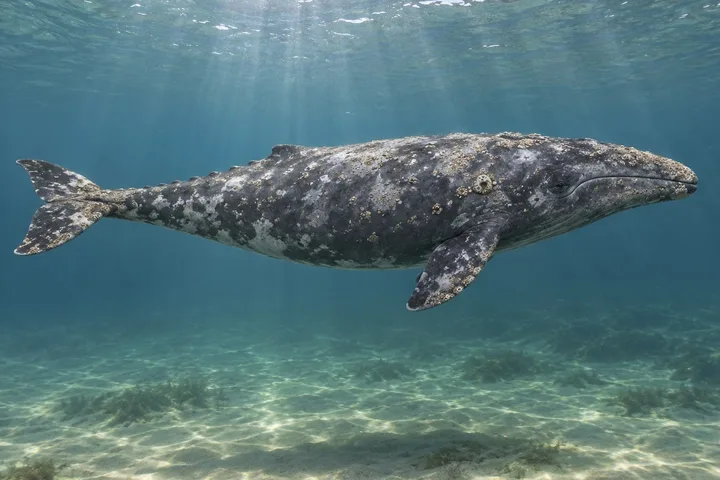
The gray whale is mottled gray, has no dorsal fin (just a hump and a row of knuckles) and is covered in barnacles.
SEMARNAT sets the official whale-watching season each year; for 2025–26 it runs in Los Cabos from December 15 to April 30. Humpbacks are most abundant from January to March.
Often, in winter: they use the same waters off Land's End where we fish. Our captains slow down and keep their distance.
To mate and give birth in warm water, after feeding all summer in cold water as far north as Alaska.

Top illustration: Top Anglers. Photos: iNaturalist contributors, credited on each photo.
Our charters leave the Cabo San Lucas marina every morning. From $799 with license included.