No swim bladder
Bonitos have no swim bladder, the gas-filled bag most fish use to float, and they have an unusually large spleen.
Source ↗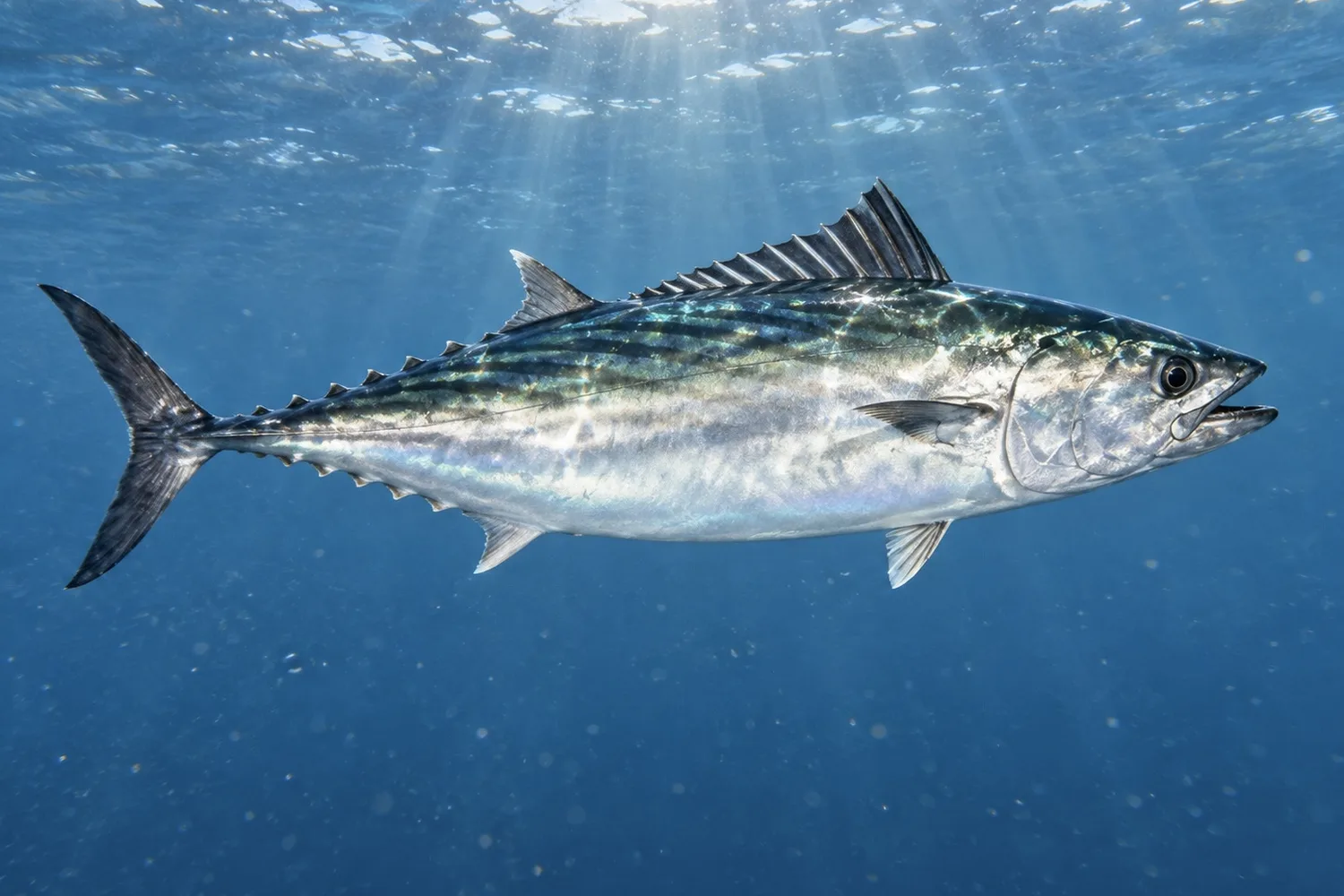
Fast, toothy and always in a hurry. Bonito school over Cabo's banks and points, hit jigs hard, and a live one is one of the baits our captains trust for marlin.
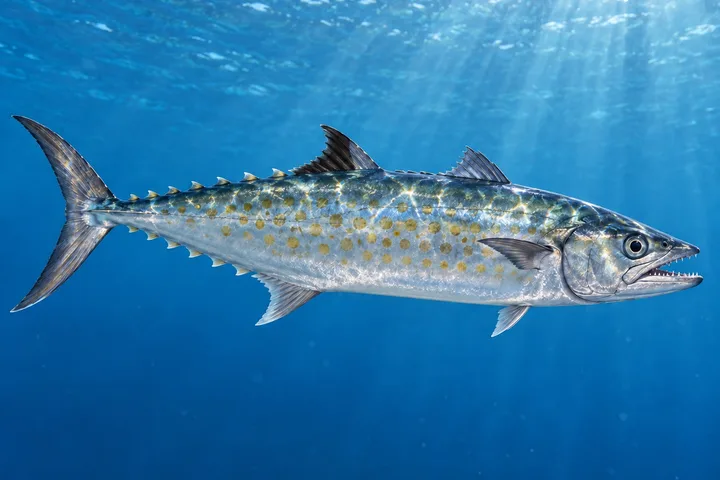
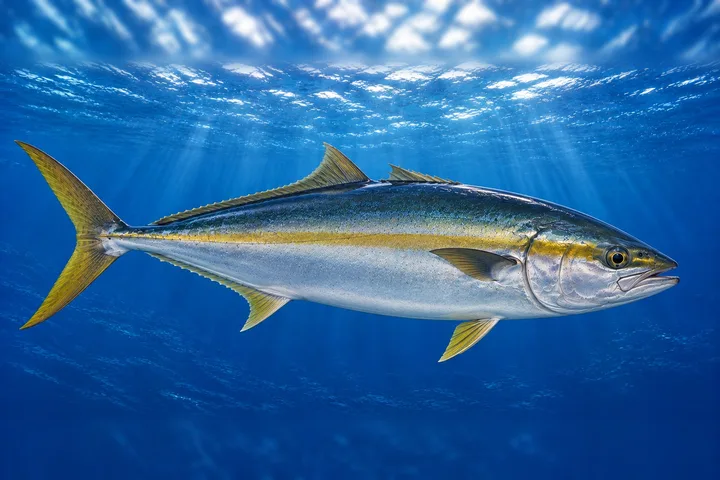
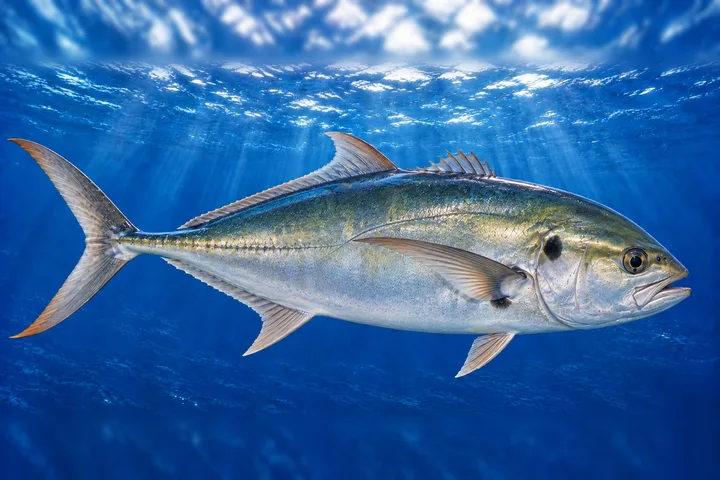
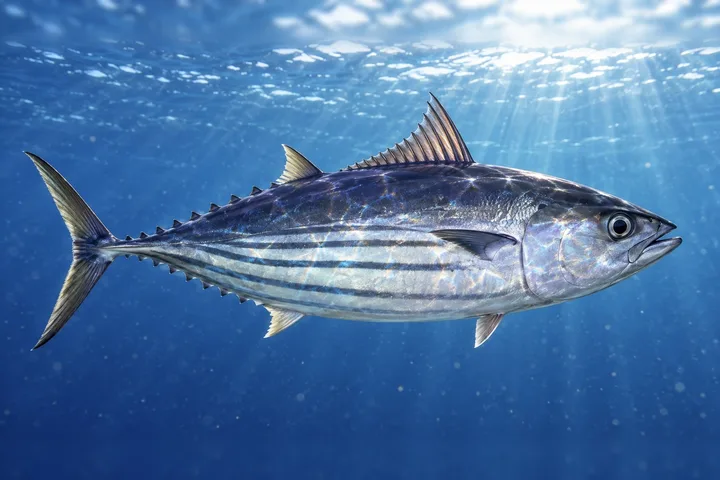
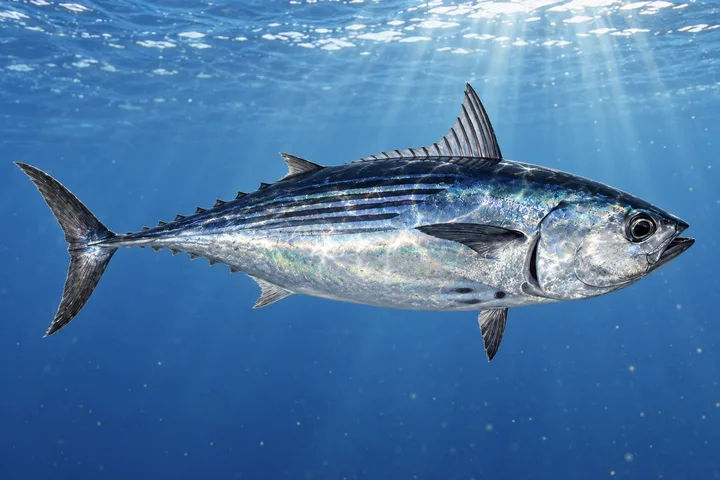
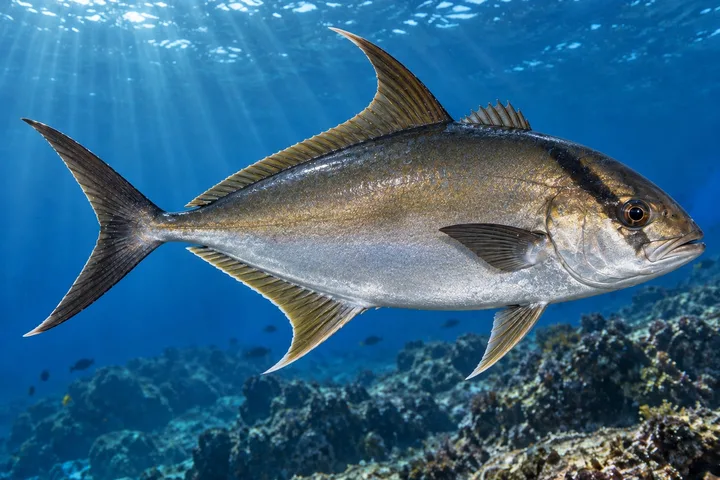
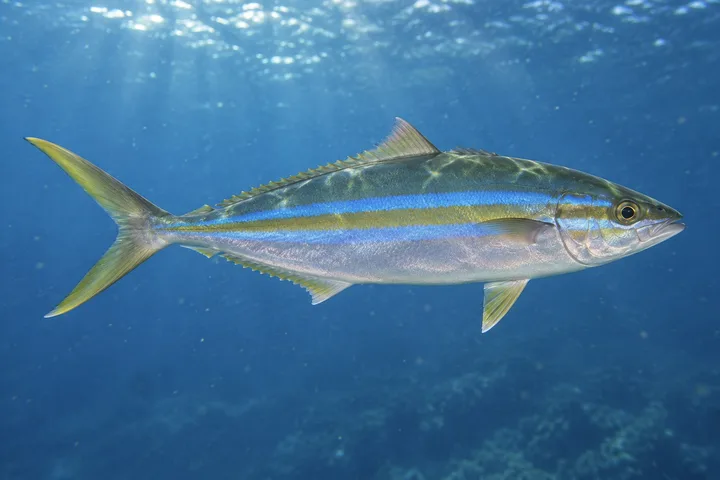
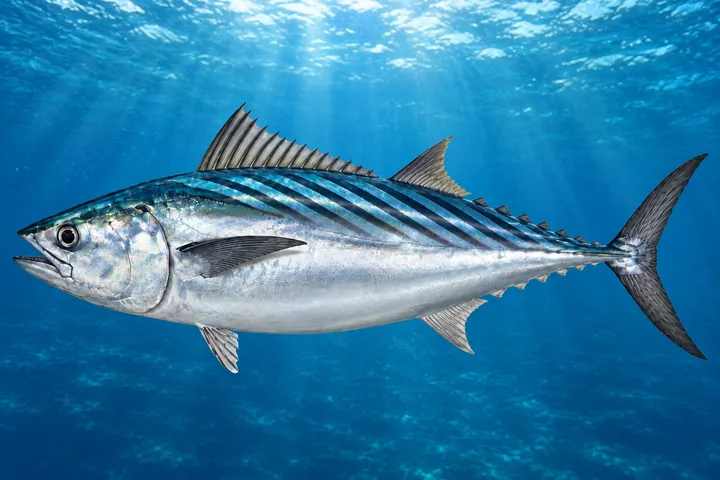
A streamlined, silvery fish with eight to eleven nearly horizontal dark stripes on the back, the lower ones broken, and no stripes on the belly. The second dorsal fin is entirely black. Unlike skipjack, bonito have large conical teeth.
Striped bonito live in coastal and open waters of the Indian and Pacific Oceans. In the eastern Pacific they range from the Gulf of California to Peru and around the oceanic islands, and they often school with small tunas. Two kinds of bonito reach Los Cabos: the striped bonito, which is the one most recorded at the tip of Baja, and the Pacific bonito, whose range ends here.
They eat sardines and other small fish, squid and crustaceans. Females mature at about 45–48 cm (18–19 in) and spawn several times a year, releasing 80,000 to 115,000 eggs.
Bonitos have no swim bladder, the gas-filled bag most fish use to float, and they have an unusually large spleen.
Source ↗Unlike tunas and skipjack, bonitos have no teeth on the tongue and a straight intestine with no folds.
Source ↗The northern Pacific bonito (Alaska to Baja) and the southern one (Peru to Chile) never meet: across the tropics in between, the striped bonito takes their place.
Source ↗The striped bonito world record, 10.65 kg, was caught in the Seychelles in 1975 and has stood for more than 50 years.
Source ↗More than 13,000 Pacific bonito were tagged in 1968. Some tagged off Baja in June were caught again near Santa Barbara, California, four to six months later.
Source ↗The genus name Sarda is linked to the island of Sardinia.
Source ↗Around Los Cabos, local reports show bonito over the banks and high spots, often the most common catch on the bottom in spring, usually on yo-yo jigs. In June 2026 our boats also found small bonito mixed with skipjack under schools of dolphins.
They're just as valuable as bait: a live bonito, or a strip cut from its belly, is one of the baits our captains use for blue marlin.
A good eating fish with rich, red meat and a bold flavor. Bleed it and put it on ice right away, and cut out the dark bloodline before cooking.
| Daily limit (NOM-017-PESC-1994) | Up to 5 per angler per day, within the 10-fish total |
|---|---|
| IUCN Red List | Least Concern (2021) |
| IGFA all-tackle record | 23 lb 8 oz (10.65 kg), Mahé, Seychelles, 1975 |
The Pacific bonito (Sarda lineolata) has about seven slightly slanted stripes and a dusky, white-tipped second dorsal fin. Skipjack have stripes on the belly, not the back. Black skipjack have stripes only on the back, dark spots under the pectoral fin and almost no scales.
No. Both are small members of the tuna family, but bonito have stripes on the back and big conical teeth; skipjack have stripes on the belly.
Mostly the striped bonito; the Pacific bonito's range ends at the tip of Baja and it shows up mainly when the water is cooler.
Up to 5 per angler per day, within the overall limit of 10 fish.

Top illustration: Top Anglers. Photos: iNaturalist contributors, credited on each photo.
Pangas and small boats that work the beaches, points and rocky reefs. From $453 with license included.