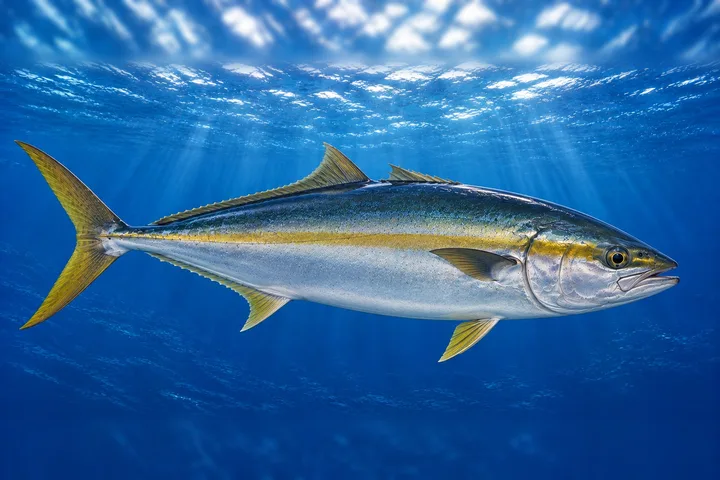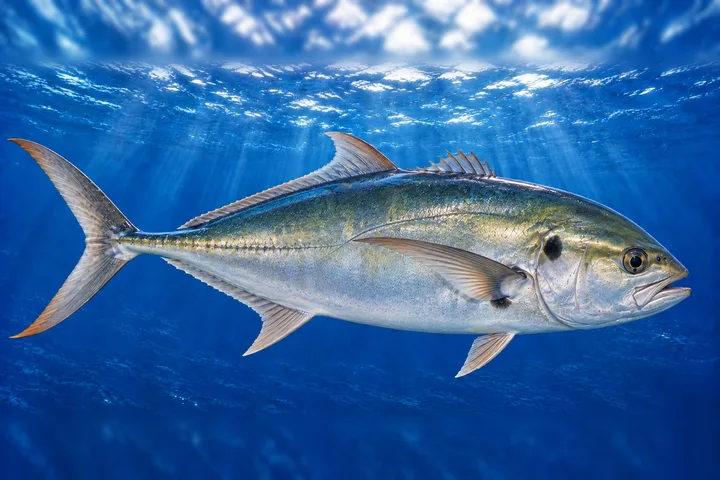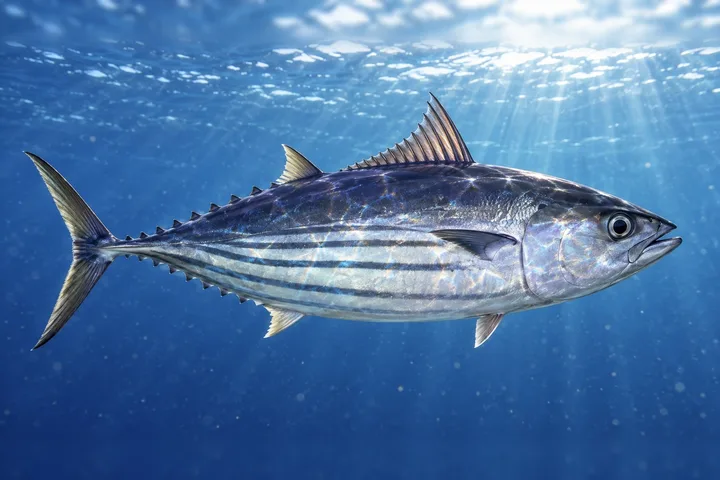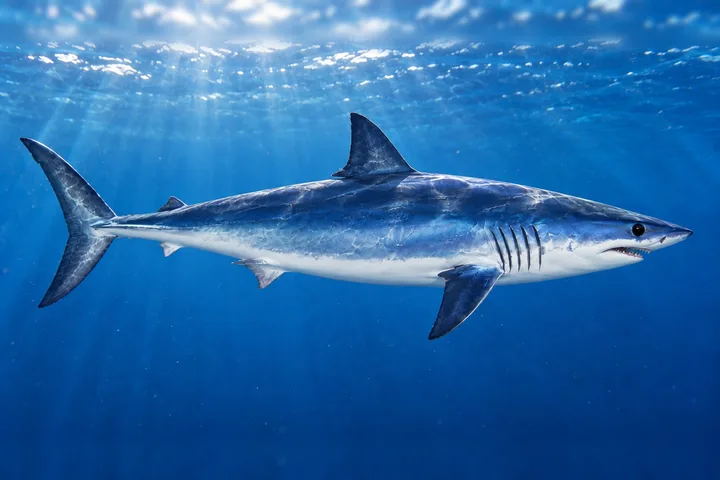
A name born in Mazatlán
The species was described in 1895 from a fish caught at Mazatlán, where "sierra" (Spanish for saw) was already the local name.
Source ↗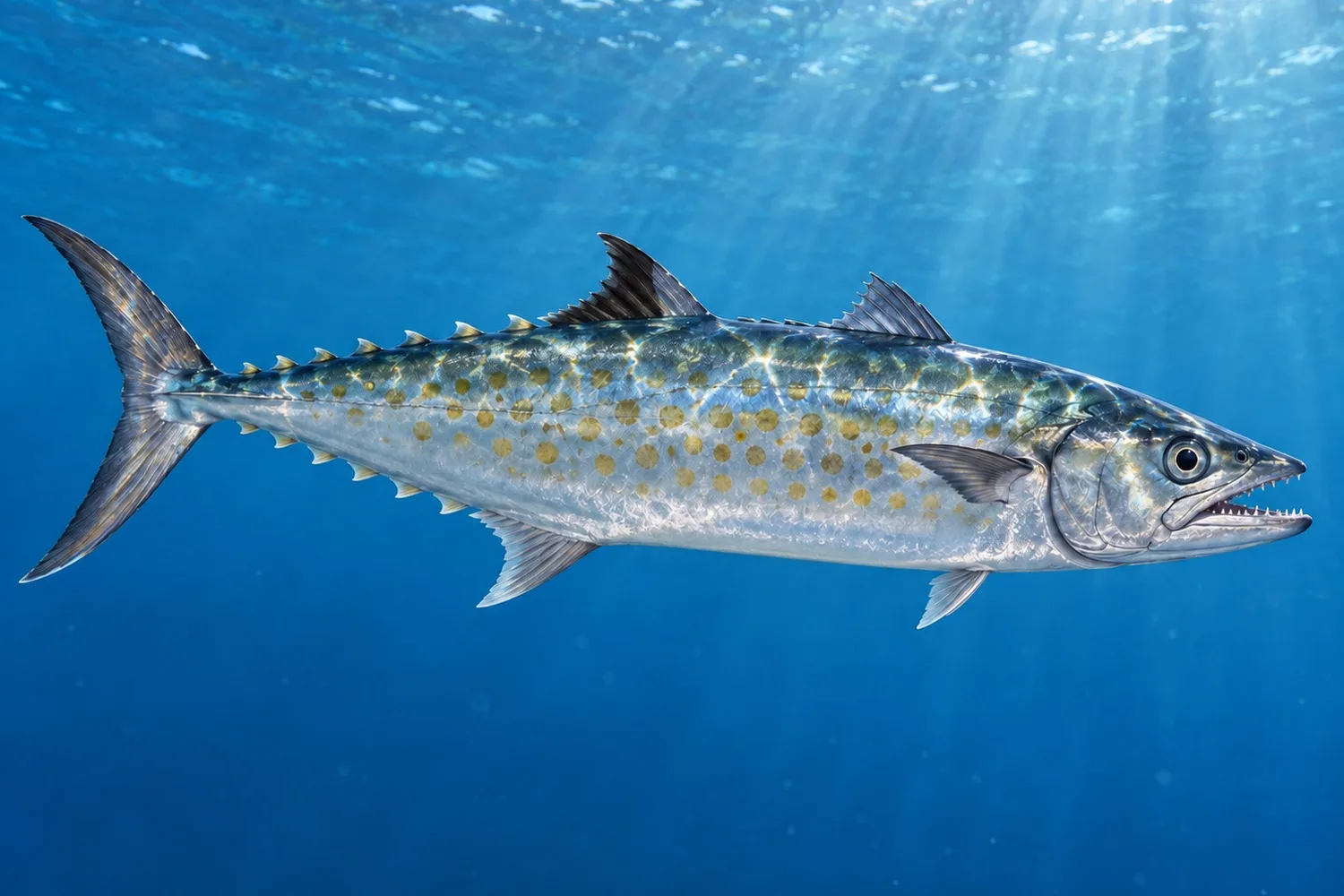
A fast, toothy coastal mackerel that slashes through sardine schools right off Cabo's beaches in winter and spring. Light tackle, quick fights and some of the best ceviche in Mexico.
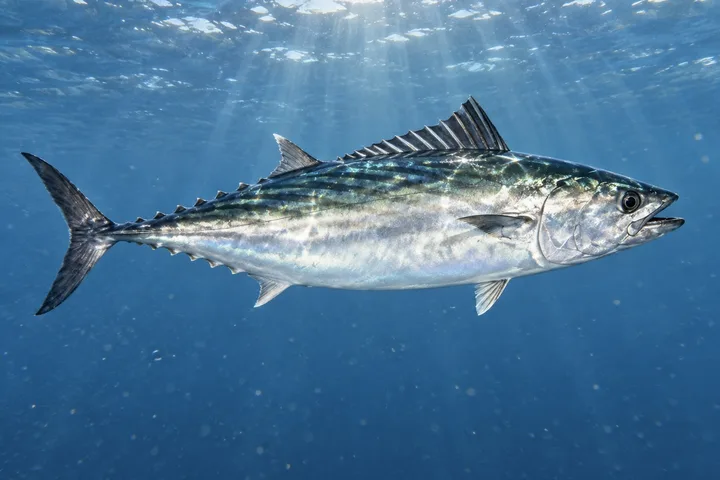
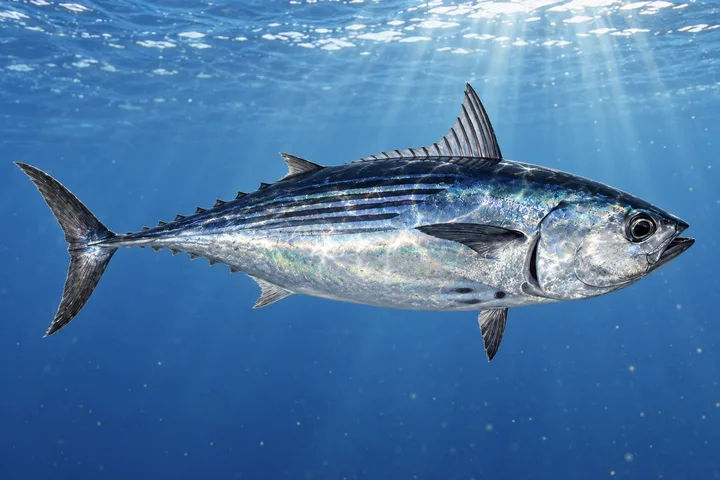
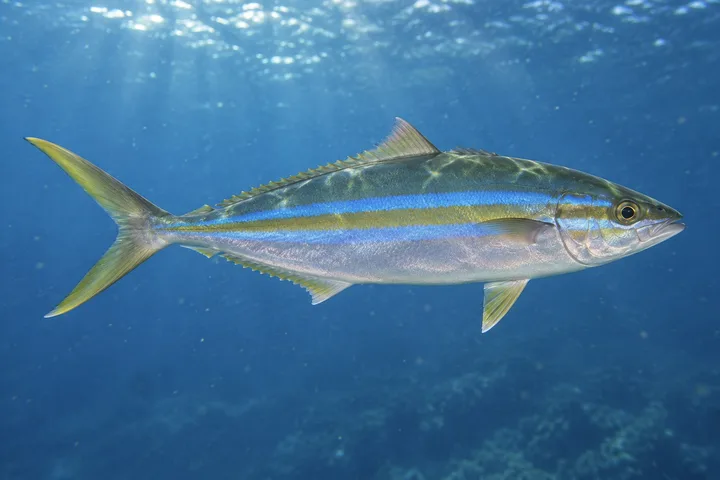
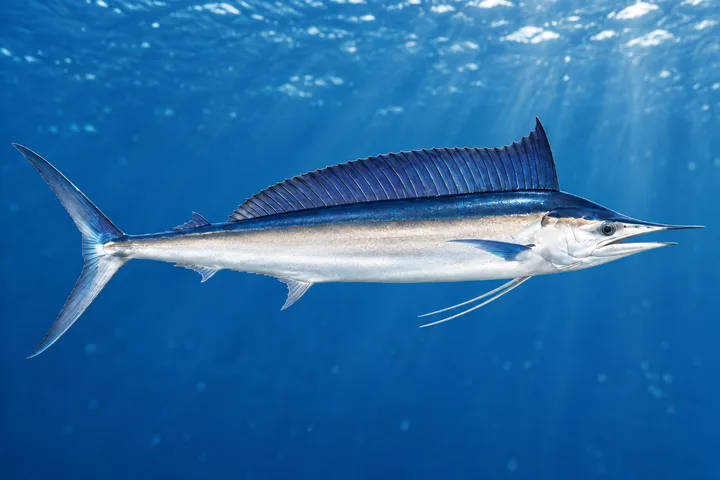
Long and slender, built for speed, with a row of small finlets ahead of the tail. The silver sides carry rows of orange to yellow-brown spots, and the front half of the first dorsal fin is jet black. The mouth is full of sharp, triangular teeth.
Sierra live near the surface over the continental shelf, from southern California to Peru, including the whole Gulf of California. They travel in schools along the coast and hunt small fish, above all anchovies and sardine-like herrings.
They spawn close to shore. In the southern Gulf of California, off Mazatlán, the main spawning is in May and June, with a second peak in October and November. A sierra matures at about 44 cm (17 in), around three years old, and releases eggs several times in one season.
The species was described in 1895 from a fish caught at Mazatlán, where "sierra" (Spanish for saw) was already the local name.
Source ↗In Cabo it's nicknamed "Mexican wahoo" for its teeth, and it really is family: sierra, wahoo and tuna all belong to Scombridae, the mackerel family.
Source ↗Its closest relative, the Serra Spanish mackerel, lives in the Atlantic. The two come from one ancestral stock that was divided when the Isthmus of Panama rose out of the sea.
Source ↗In a study of 209 sierra stomachs from Acapulco, 74.6% were empty. Young and adult fish ate the same prey, all year round.
Source ↗During the warm 2006 season, a sierra turned up inside Marina del Rey, Los Angeles: the northernmost confirmed record in California.
Source ↗The 18-lb all-tackle record was caught in Ecuador in March 1990, and tied six months later by a second 18-pounder, also from Ecuador.
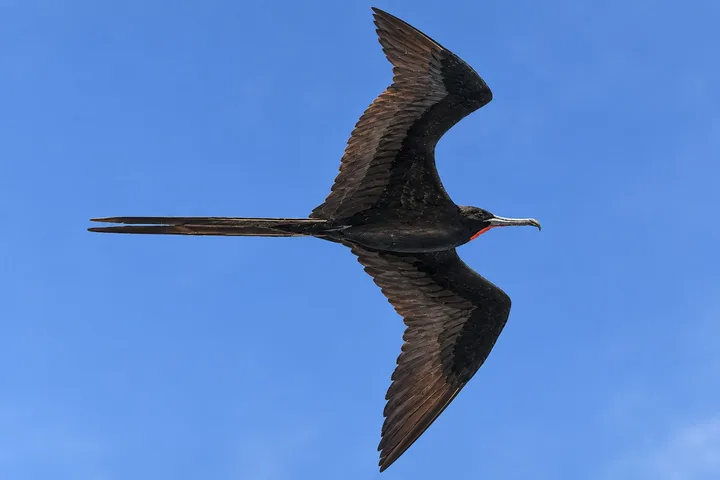
Source ↗Sierra are a winter and spring fish in Los Cabos. They show up when the water cools, usually from November, and Gordo Banks reports from 2010–2026 put the peak between January and April. They feed right along the beaches, often under diving birds and over sardine schools.
Our pangas cast or slowly troll small spoons, Rapala-type plugs and fast-sinking stickbaits on light tackle. A short wire or heavy leader prevents bite-offs, and the mouth is bony, so steady pressure works better than horsing the fish. Never grab a sierra by the mouth.
Excellent fresh. In Sinaloa and Baja it's the classic fish for ceviche: minced, cured in lime and mixed with onion, carrot and cucumber, served on a tostada. Bleed it as soon as it's caught and eat it the same day.
| Daily limit (NOM-017-PESC-1994) | Up to 5 sierra per angler per day, within the 10-fish total |
|---|---|
| Closed season | None |
| IUCN Red List | Least Concern |
| IGFA all-tackle record | 18 lb 0 oz (8.16 kg), Isla de La Plata, Ecuador, 1990 |
Mexico's fisheries chart rates sierra as fished at its maximum sustainable level, and two Mexican studies found that most commercially landed sierra were below maturity size. Releasing the small ones helps.
In the northern Gulf of California there is a second species also called sierra, the Gulf sierra (Scomberomorus concolor), which is listed as Near Threatened.
From about November to April, when the water is cooler. Local fishing reports put the peak between January and April.
Yes. It's the traditional fish for ceviche in northwest Mexico and is also good grilled or baked. Eat it fresh.
Up to 5 per angler per day, within the overall limit of 10 fish per angler per day.

Top illustration: Top Anglers. Photos: iNaturalist contributors, credited on each photo.
Pangas and small boats that work the beaches, points and rocky reefs. From $453 with license included.