The first friendly whale
In February 1972, fisherman Francisco "Pachico" Mayoral touched a gray whale in Laguna San Ignacio: the first documented friendly encounter. Today mothers and calves often approach the boats there on their own.
Source ↗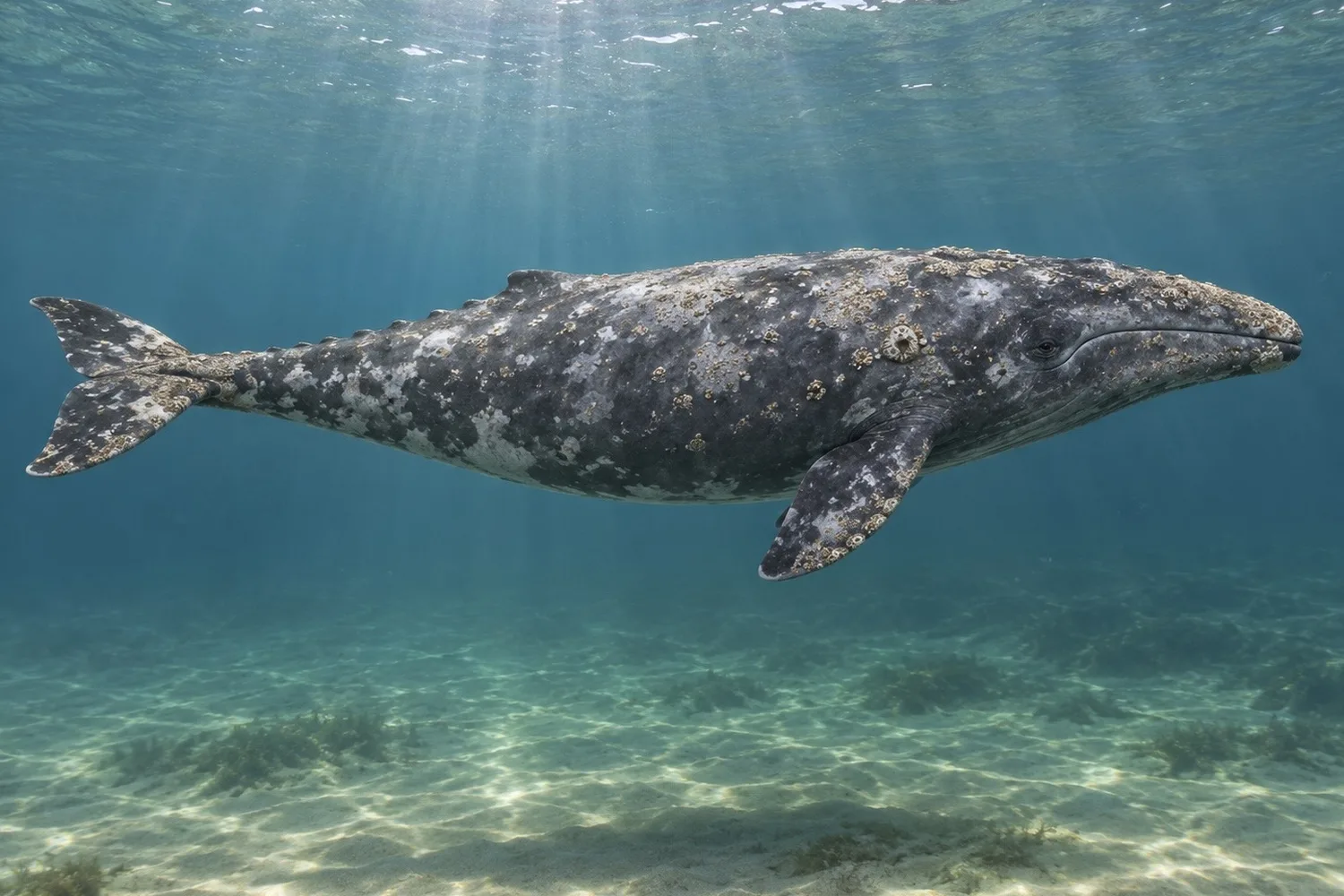
Every winter, gray whales travel about 16,000 km round trip to give birth in the lagoons of Baja California Sur. Some pass Cabo on the way, and a few have crossed half the planet.
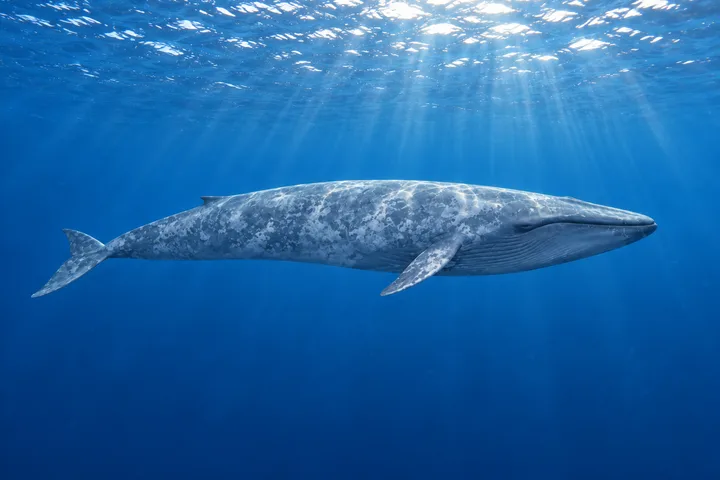
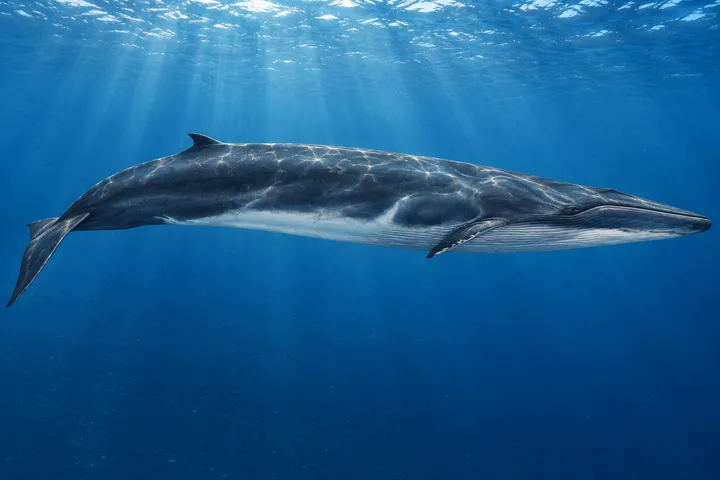
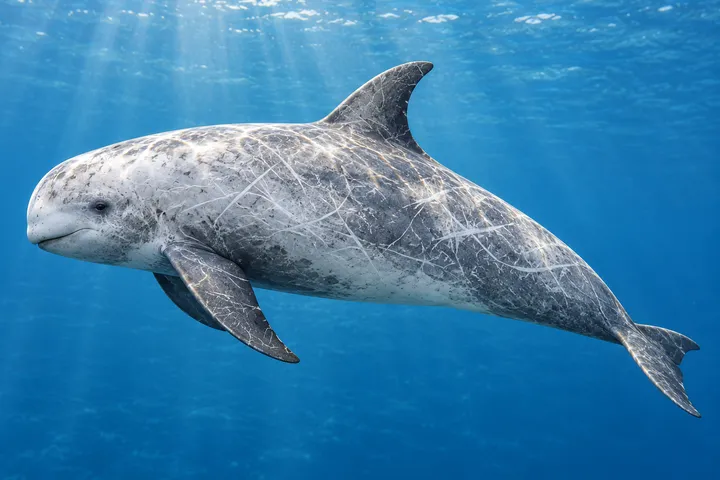
Mottled gray, covered in white and orange patches of barnacles and whale lice. It has no dorsal fin: instead there's a low hump and a row of 6 to 12 "knuckles" along the back. Its blow is low and often heart-shaped.
Gray whales feed in the Arctic in summer and migrate to Baja California Sur in winter. Calves are born from early January to mid-February in Laguna Ojo de Liebre, Laguna San Ignacio and Bahía Magdalena, and the whales head north again from mid-February to May. UNESCO calls the Whale Sanctuary of El Vizcaíno the world's most important place for their reproduction.
They're mainly bottom feeders: they roll on their side, suck up sediment from the seafloor and filter out small crustaceans through 130 to 180 baleen plates on each side of the jaw. A calf is born 4.3 to 4.9 m long and about 900 kg.
In February 1972, fisherman Francisco "Pachico" Mayoral touched a gray whale in Laguna San Ignacio: the first documented friendly encounter. Today mothers and calves often approach the boats there on their own.
Source ↗A western gray whale named Varvara swam from Sakhalin, Russia, to Baja and back, visiting all three Baja breeding areas. The researchers called it the longest documented mammal migration.
Source ↗In 2013 a gray whale appeared in Walvis Bay, Namibia, the first ever recorded in the Southern Hemisphere, after a trip of at least 20,000 km.
Source ↗A gray whale can carry more than 180 kg of barnacles and whale lice; most of its white patches are those hitchhikers.
Source ↗Whalers called them devil fish for how violently they fought back when harpooned.
Source ↗Between 2019 and 2023, 690 gray whales stranded dead, 316 of them in Mexico, mostly from malnutrition linked to changes in their Arctic feeding grounds. The population fell about 40%.
Source ↗Local reports describe gray whales passing Cabo from mid-December to April, most often between January and March and on the Pacific side, on their way to and from the lagoons farther north.
The best place to see them up close is the lagoons themselves, with authorized local guides. Off Cabo, the same rules apply as for any whale: slow down, keep your distance and never chase.
| Closest approach (NOM-131) | 60 m for boats under 10 m, 80 m for larger boats; 240 m waiting distance for all other boats |
|---|---|
| Boats per whale or group | 4 at most, for 30 minutes at most |
| Speed near whales | Under 5 knots, under 2 knots inside the watching zone |
| Not allowed | Fishing, swimming, diving, chasing, splitting up groups, getting between mother and calf |
| Lagoon season (Ojo de Liebre, San Ignacio) | December 15 – April 30 |
| Mexico (NOM-059) | Subject to special protection (Pr) |
| El Vizcaíno | Biosphere reserve (1988) and UNESCO World Heritage Site (1993) |
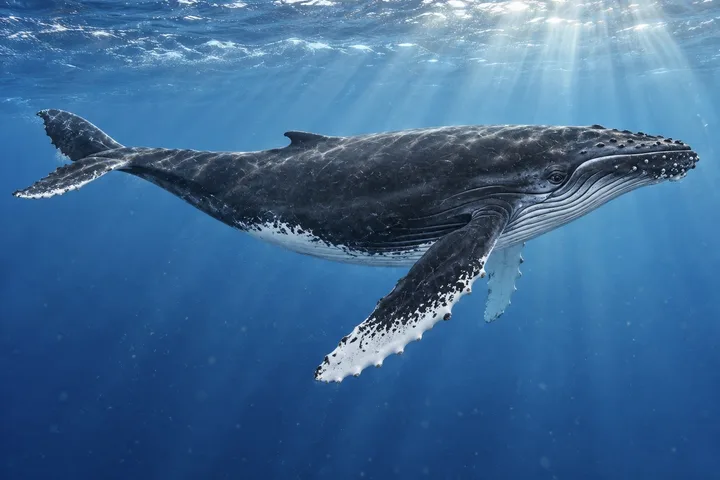
The humpback is mostly black, has very long pectoral fins and a small dorsal fin, and lifts a tail with a black-and-white pattern underneath.
Yes, mostly from January to March as they pass on the Pacific side, according to local reports. The lagoons farther north are where they gather.
In Laguna San Ignacio and Ojo de Liebre, curious mothers and calves often approach the authorized boats on their own.
The eastern population was taken off the U.S. endangered list in 1994, but it dropped about 40% between 2019 and 2023. In Mexico it's subject to special protection.

Top illustration: Top Anglers. Photos: iNaturalist contributors, credited on each photo.
Our charters leave the Cabo San Lucas marina every morning. From $799 with license included.