A toe that switches sides
The osprey’s outer toe is reversible, so it can grip with two toes in front and two behind, and barbed pads on the soles of its feet help it hold slippery fish.
Source ↗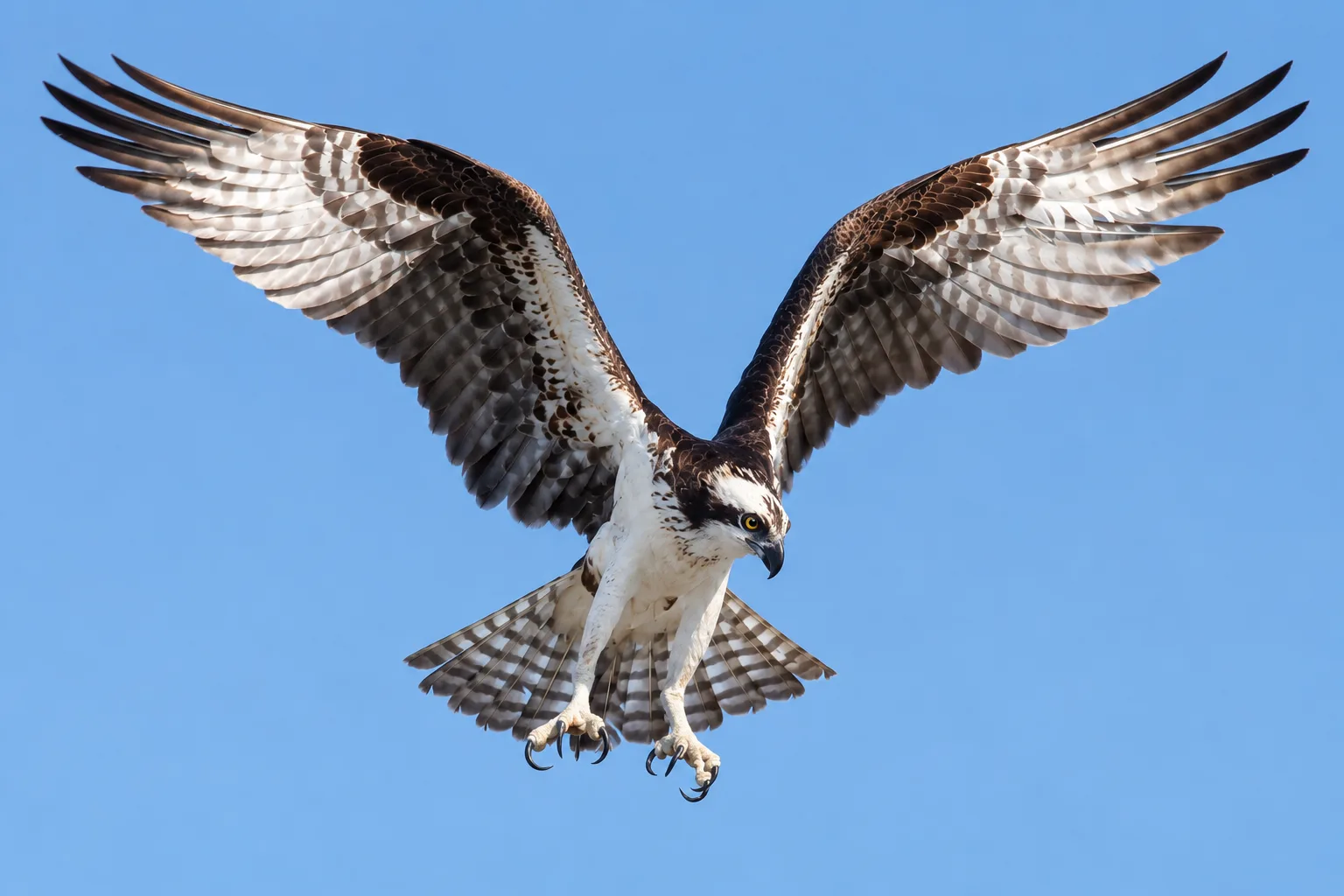
The osprey is a raptor that lives almost entirely on live fish. Around Cabo you may see one hover over shallow water and hit it feet first, and along Baja California Sur’s coasts it nests on sea cliffs, giant cardón cacti and power poles.
Brown above and white below, whiter than most raptors, with a white head crossed by a broad brown stripe through the eye. In flight its long, narrow wings bend at the wrist into an M shape seen from below, with a dark patch at each wrist, and the tail is banded. Young birds have white spots on the back.
Ospreys live on every continent except Antarctica, and they eat almost nothing but live fish: in North America, more than 80 species make up about 99% of their diet, usually fish 15 to 33 cm long. They hunt over shallow water, flying on bowed wings or circling high, hovering briefly and then diving feet first, and can only reach about a meter below the surface.
Baja California and the Gulf of California hold a large resident population: a 2006 survey estimated 1,343 nesting pairs across northwestern Mexico, 81% more than in 1977. Migrants join them in winter; in a satellite-tracking study, 88% of the adult ospreys followed from the western U.S. wintered in Mexico. A pair lays 1 to 4 eggs, incubates them for 36 to 42 days, and the chicks stay in the nest 50 to 55 days.
The osprey’s outer toe is reversible, so it can grip with two toes in front and two behind, and barbed pads on the soles of its feet help it hold slippery fish.
Source ↗When it dives, an osprey shuts its nostrils to keep water out and covers its eyes with a third eyelid, the nictitating membrane.
Source ↗After a catch, ospreys turn the fish to face forward for a more aerodynamic flight. When they hold it with both feet, the left foot is in front most of the time.
Source ↗In the 2006 survey of northwestern Mexico, 38% of osprey nests were on sea cliffs and 33% in large cacti such as the cardón. Nests on power poles and other structures jumped from 4% in 1977 to 26%.
Source ↗In 1989 there were 143 occupied osprey nests on the ground on two small islands in Laguna San Ignacio. By 2006 only 3 were left: researchers believe the birds moved to power poles and towers in nearby towns like Puerto San Carlos and Punta Abreojos.
Source ↗DDT wiped out about 90% of breeding pairs in some U.S. coastal areas. After the 1972 U.S. ban, ospreys recovered and are now considered a conservation success story.
Source ↗Around Cabo, look for ospreys over shallow water near the coast: perched on a cliff or post with a fish in its talons, or hovering before dropping feet first. The cape is the southern end of their Baja nesting range. The 2006 survey estimated about 31 pairs on the Gulf coast between Timbabichi and Cabo San Lucas, and its southernmost Baja nest was on a rock pinnacle about 53 km northeast of San José del Cabo.
In Baja California Sur they nest on sea cliffs, rock pinnacles and cardón cacti, on the ground on small lagoon islands, and more and more on power poles, towers, channel markers and even boats that sank or ran aground. Their nesting season is spread out: at Laguna San Ignacio, nests were occupied from mid-January to early June. If you spot a nest, give it space.
| Mexico (NOM-059) | Not listed as a species at risk (2019 update of the list) |
|---|---|
| Mexico–U.S. migratory bird convention | Ospreys added in 1972 to the 1936 convention |
| CITES | Appendix II since 1979 |
| Convention on Migratory Species (CMS) | Appendix II since 1979 |
| IUCN Red List | Least Concern |
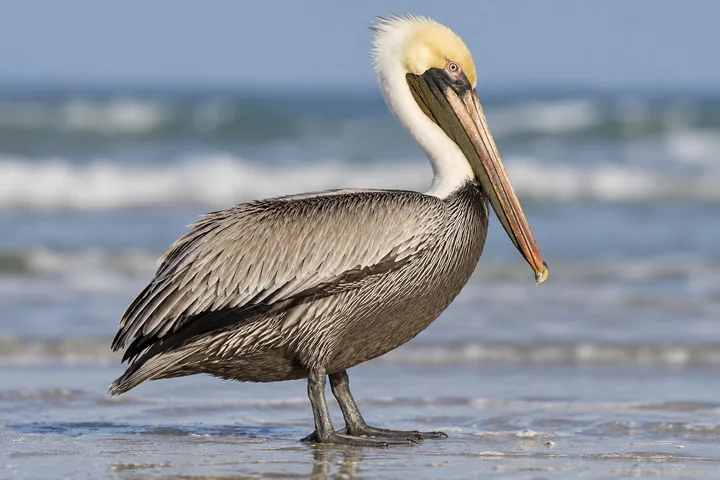
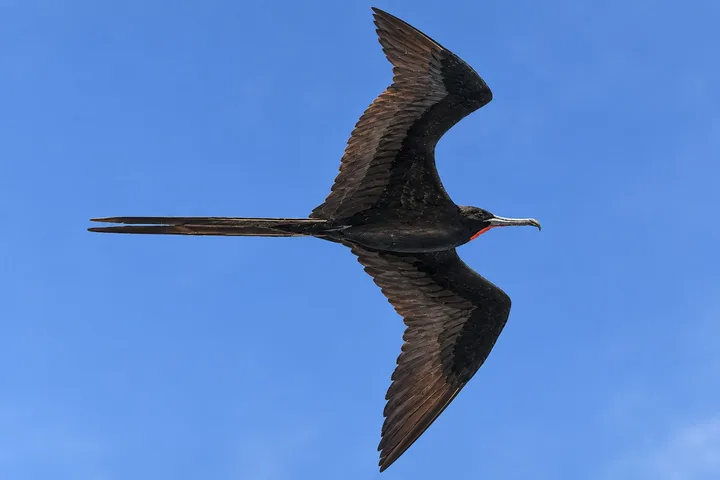
The bald eagle, rare this far south, is bigger, with a dark body and, in adults, a clean white head and tail; young bald eagles are mottled and lack the osprey’s clean white belly. The brown pelican has a big dark body and an oversized bill and plunges in from high up, stunning fish on impact. The magnificent frigatebird is mostly black, with long angled wings and a deeply forked tail, and never dives: it skims fish from the surface or steals them from other birds. The crested caracara has a black cap and yellow-orange face and often walks on the ground, and hawks like the red-tailed hawk have broader wings without the osprey’s kink at the wrist.
Yes. Baja California Sur has a resident osprey population, and the cape is the southern end of its Baja nesting range. In winter, migrants from the western U.S. also come to Mexico.
The osprey is smaller, white underneath, with a brown stripe through the eye and wings bent into an M. An adult bald eagle has a dark body with a white head and tail.
They aren’t on Mexico’s list of species at risk (NOM-059), but they’re covered by the Mexico–U.S. migratory bird convention since 1972 and listed in CITES Appendix II.

Top illustration: Top Anglers. Photos: iNaturalist contributors, credited on each photo.
Our charters leave the Cabo San Lucas marina every morning. From $453 with license included.