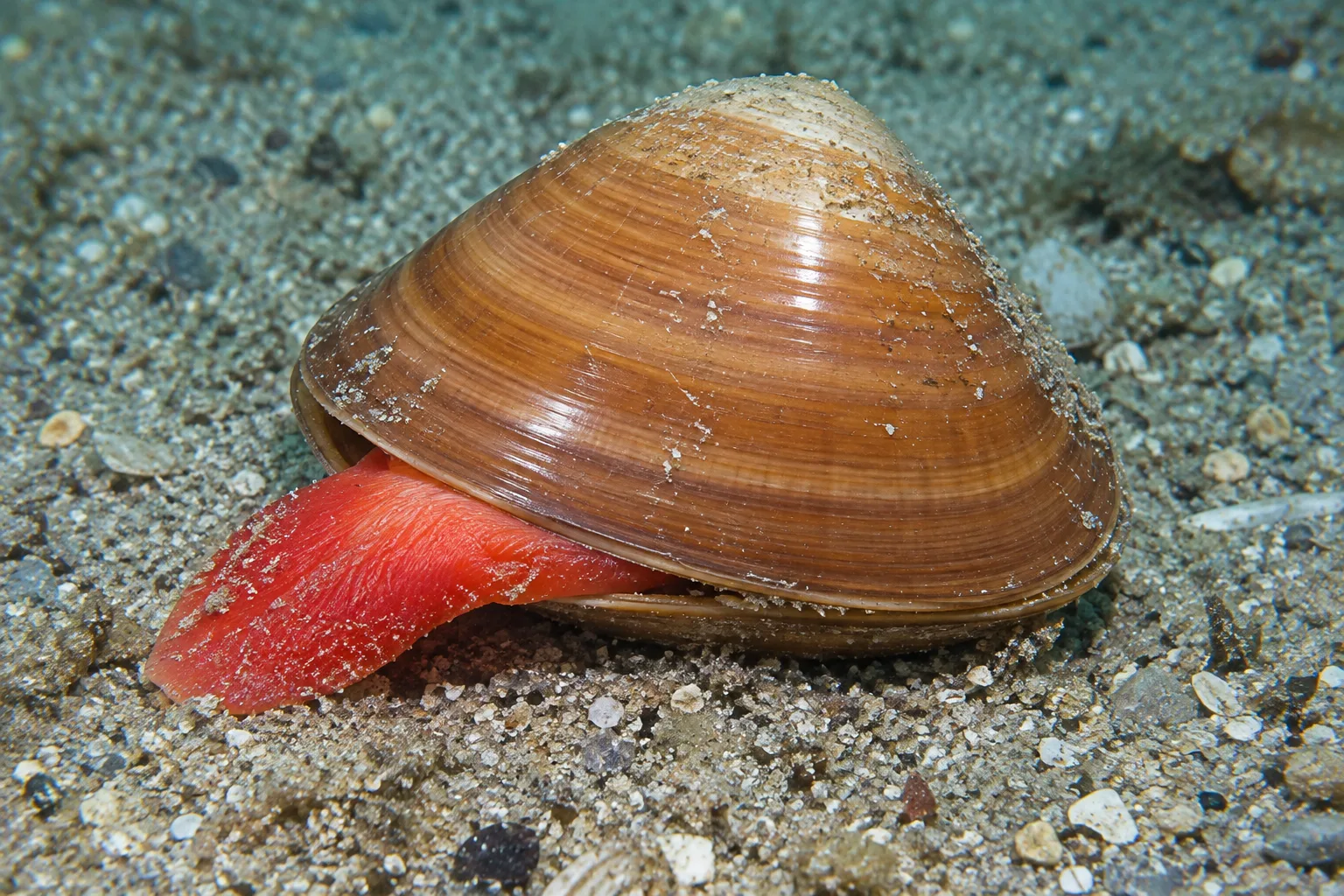
Chocolate clam (Megapitaria squalida), illustration
Commercial fishing only Megapitaria squalida

Chocolate clam in Los Cabos

The almeja chocolata is the clam of Baja California Sur: a thick, glossy brown venus clam that divers pull from sandy bottoms in La Paz, Loreto and Bahía Magdalena. In Loreto it’s cooked under burning brush and called the almeja loretana.

Up to 135 mmShell length
Up to 10 yearsAge
1–15 mUsual depth
64 mmMinimum legal size (Gulf coast of BCS)

Season in Los Cabos

●● best months · ● regular · · occasional. Based on local fishing reports; conditions change year to year.

Tap a month to see everything biting in Cabo that month ›

How to recognize it

A heavy, triangular-oval clam with a thick, porcelain-like shell covered by a smooth, glossy, greyish-brown skin (periostracum); underneath, the shell is light brown to cream. Young clams show zigzag or radiating lines, and adults often keep them near the hinge. Inside, each valve has three strong cardinal teeth and a deep, tongue-shaped pallial sinus reaching about halfway into the shell.

Biology

The chocolate clam ranges from Guerrero Negro lagoon in Baja California Sur to Máncora, Peru. It lives buried in fine sand, silty or muddy bottoms and shell-gravel, usually 1 to 15 m deep near shore, though it has been found down to 160 m. It forms large beds of its own or shares them with white clams (Dosinia ponderosa), pen shells and other bivalves, and filters phytoplankton, bacteria and detritus from the water.

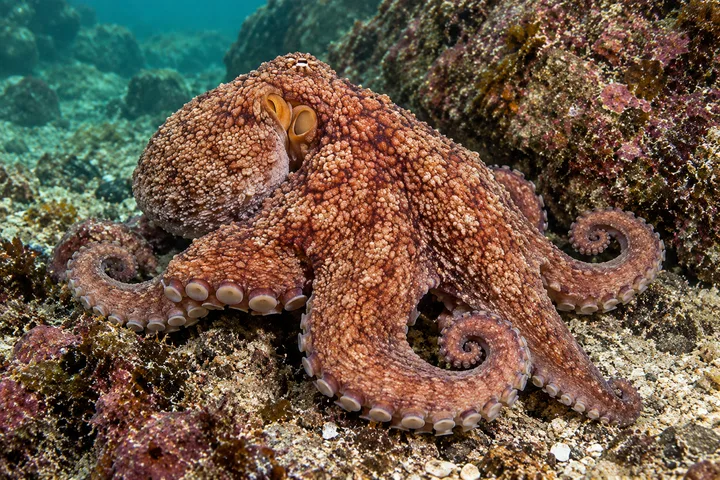
Sexes are separate and spawning goes on through much of the year, with one or two peaks. Young clams grow 3 to 5 mm a month, slowing to about 0.6 mm a month once large; in Loreto they first mature at about 63 mm. Clams up to 7 years old have been aged in Bahía de La Paz and Bahía Concepción, and up to 10 in Sonora. Their predators include murex snails (caracol chino), swimming crabs, octopus, porcupinefish and reef fish such as the pargo coconaco and the mojarra mueluda.

Things you probably didn't know

01

Cooked under burning brush

For almejas tatemadas, Loreto cooks lay a bed of gravel on the sand, set the clams in it face down, pile dry brush on top and set it alight; the clams are then opened and eaten in flour tortillas. Mexico’s cultural heritage inventory traces the dish to pre-Hispanic times.

Source ↗
02

Clams by snorkel

Loreto’s management plan counts about 20 fishers, nicknamed patitos, who gather chocolate clams with only fins, mask and snorkel and a small floating mesh bag, and sell to local restaurants on demand. Licensed boats use hookah compressors instead.

Source ↗
03

Rings like a tree

Chocolate clams lay down growth bands on the outside of the shell. Counting them under strong light, researchers in Yavaros, Sonora, found clams up to 10 years old, with an average of 6; the largest measured 104 mm.

Source ↗
04

El Niño baby boom

In Loreto spawning normally stays low, under 15% of females from April onward. During the 2015–16 El Niño, more than 40% were spawning from February to July 2015, and over 90% from January to May 2016.

Source ↗
05

A bay emptied out

By 2017 the chocolate clams of the Bahía Magdalena–Almejas lagoon system had fallen to about 10% of their estimated 2015 abundance, and Mexico closed the commercial fishery there for two years.

Source ↗
06

Toxic, but not enough

Over 2001–02, chocolate clams in Bahía de La Paz held paralytic shellfish toxins in six months of the year, from the dinoflagellate Gymnodinium catenatum, but the peak was 5.46 µg per 100 g, far below the 80 µg safety limit.

Source ↗

Photos

Andrew McKinlay · iNaturalist · CC BY 4.0
Alberto Alcalá · iNaturalist · CC BY 4.0

How it's caught in Los Cabos

Baja California Sur lands most of Mexico’s clams, and the chocolate clam is one of its key bivalve fisheries. From 1999 to 2006, Bahía de La Paz (36%), Laguna Ojo de Liebre (35%) and Bahía Magdalena (25%) supplied 96% of the state’s catch, with smaller fisheries at San Ignacio, Loreto and Santa Rosalía. Licensed divers work 2 to 10 m deep with hookah, probing the sand with a small fork, and some clams are picked by hand at low tide. Around Los Cabos there are museum and naturalist records, including a 1972 specimen from Cabo San Lucas, but no commercial beds; the clams on Cabo menus come from the bays farther north.

Recreational digging is not allowed: Mexico’s sport fishing rules ban taking any mollusk except squid, and that includes spearfishing and free diving. If you buy or order clams, red tide matters. When marine toxins pass Mexico’s limits, health authorities (COFEPRIS and the state COEPRIS) close bivalve harvest and sale in the affected zone, as with saxitoxin in Mulegé’s esteros. Cooking, freezing, pickling or smoking does not destroy shellfish toxins, so respect the closures and buy only from legal vendors.

On the table

Chocolate clams are eaten raw, opened with salt, chile, lime and crackers, as well as in escabeche, with garlic and as Loreto’s almejas tatemadas. There’s no fixed closed season in the Loreto plan; harvest runs under permits, quotas set at 20% of clams above legal size, and a 64 mm minimum. Bivalves from any zone under a sanitary closure (veda sanitaria) must not be eaten or sold.

Rules, records & conservation

Sport fishing (NOM-017-PESC-1994, 2013 update)Taking mollusks is prohibited, except squid; that includes clams
Commercial fisheryPermits with quotas set by INAPESCA per zone and bed (20% of clams above legal size)
Minimum size64 mm shell length on the Gulf coast of BCS (Carta Nacional Pesquera)
GearHookah diving; hand extraction only
Sanitary closuresCOFEPRIS/COEPRIS ban harvest and sale of bivalves where marine toxins exceed official limits
Mexico (NOM-059)Not listed
IUCN Red ListNot evaluated

Don't confuse it with

Chocolate clam beds often mix with white clams (Dosinia ponderosa) and other venus clams; the chocolate clam stands out for its heavy shell and smooth, glossy greyish-brown skin, with zigzag or radiating lines when young.

Questions

Can I dig chocolate clams on vacation in Baja?

No. Mexico’s sport fishing rules ban taking mollusks other than squid, so clams can’t be harvested recreationally, by hand or by diving. Order them from restaurants or buy from legal vendors.

Where do almejas tatemadas come from?

From Loreto, where the chocolate clam is known as the almeja loretana. The clams are set in gravel and cooked under burning brush, a method Mexico’s heritage inventory traces to pre-Hispanic times.

Is it safe to eat chocolate clams during red tide?

Only from areas that are not under a sanitary closure. Health authorities close harvest and sale when toxins exceed official limits, and cooking or freezing does not destroy shellfish toxins.

By Max VargasTop Anglers, Cabo San Lucas · international judge at big game fishing world championships · reviewed October 2026

Sources

Top illustration: Top Anglers. Photos: iNaturalist contributors, credited on each photo.

Boats for chocolate clam

Pangas and small boats that work the beaches, points and rocky reefs. From $453 with license included.
More species

Pacific sierra
Pacific sierra
Scomberomorus sierra
California yellowtail
Seriola dorsalis
Pacific crevalle jack
Caranx caninus
Skipjack tuna
Skipjack tuna
Katsuwonus pelamis
Shortfin mako
Shortfin mako
Isurus oxyrinchus
Leopard grouper
Leopard grouper
Mycteroperca rosacea
Colorado snapper
Colorado snapper
Lutjanus colorado
Striped bonito
Striped bonito
Sarda orientalis
Black skipjack
Black skipjack
Euthynnus lineatus
Finescale triggerfish
Balistes polylepis
Scalloped hammerhead
Sphyrna lewini
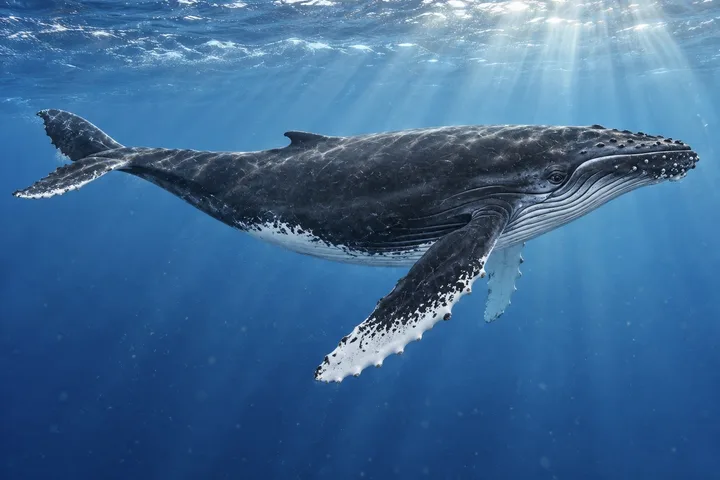
Humpback whale
Humpback whale
Megaptera novaeangliae
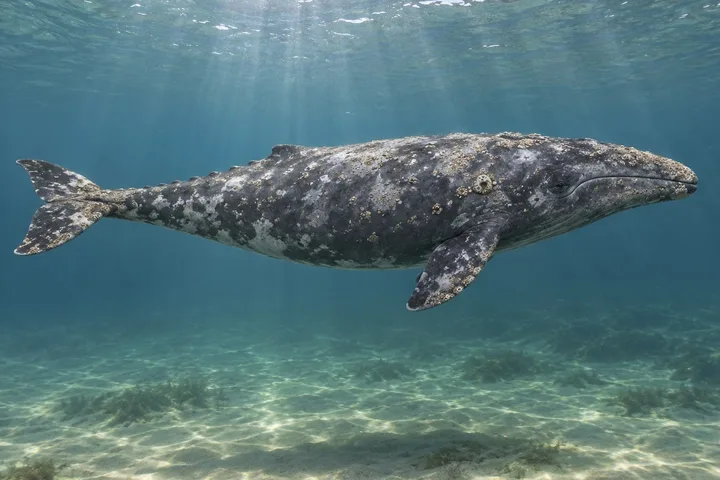
Gray whale
Gray whale
Eschrichtius robustus
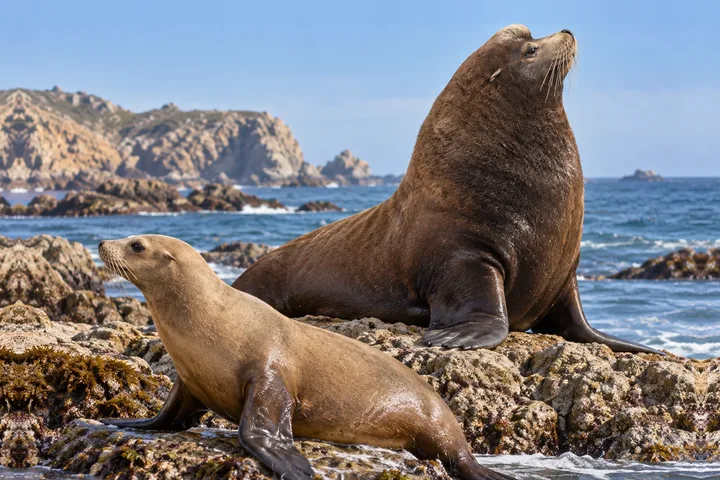
California sea lion
California sea lion
Zalophus californianus
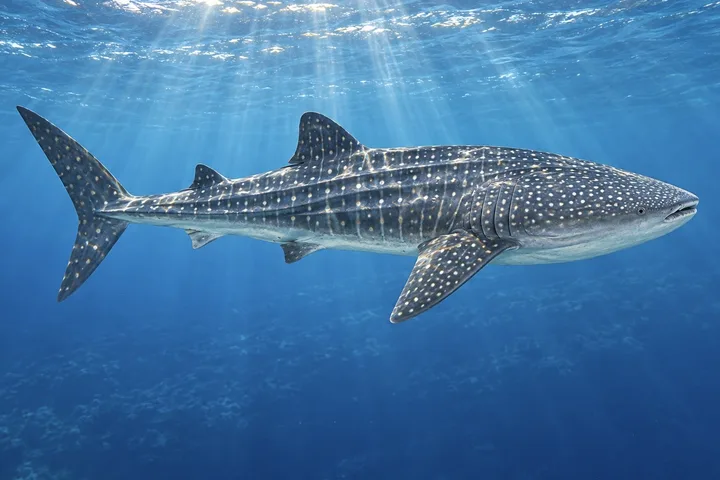
Whale shark
Whale shark
Rhincodon typus
Olive ridley sea turtle
Lepidochelys olivacea
Bottlenose dolphin
Bottlenose dolphin
Tursiops truncatus
Munk's devil ray (mobula)
Mobula munkiana
Swordfish
Swordfish
Xiphias gladius
Almaco jack
Almaco jack
Seriola rivoliana
Bigeye trevally
Bigeye trevally
Caranx sexfasciatus
Spotted cabrilla
Spotted cabrilla
Epinephelus analogus
Pacific dog snapper
Pacific dog snapper
Lutjanus novemfasciatus
Barred pargo
Barred pargo
Hoplopagrus guentherii
Blue whale
Blue whale
Balaenoptera musculus
Green sea turtle (black turtle)
Chelonia mydas
Leatherback sea turtle
Dermochelys coriacea
Rainbow runner
Rainbow runner
Elagatis bipinnulata
Gulf grouper
Gulf grouper
Mycteroperca jordani
Yellow snapper
Yellow snapper
Lutjanus argentiventris
Pacific white snook
Pacific white snook
Centropomus viridis
Mexican barracuda
Mexican barracuda
Sphyraena ensis
Silky shark
Silky shark
Carcharhinus falciformis
Mexican needlefish
Mexican needlefish
Tylosurus fodiator
Humboldt squid
Humboldt squid
Dosidicus gigas
Giant manta ray
Giant manta ray
Mobula birostris
Fin whale
Fin whale
Balaenoptera physalus
Orca (killer whale)
Orca (killer whale)
Orcinus orca
Hawksbill sea turtle (carey)
Eretmochelys imbricata
Brown pelican
Brown pelican
Pelecanus occidentalis
Magnificent frigatebird
Fregata magnificens
Shortbill spearfish
Shortbill spearfish
Tetrapturus angustirostris
Loggerhead sea turtle (caguama)
Caretta caretta
Osprey
Osprey
Pandion haliaetus
Blue-footed booby
Blue-footed booby
Sula nebouxii
Common dolphin
Common dolphin
Delphinus delphis
Oarfish
Oarfish
Regalecus russelii
Heermann’s gull
Heermann’s gull
Larus heermanni
Yellow-footed gull
Yellow-footed gull
Larus livens
Ocean sunfish
Ocean sunfish
Mola mola
Sperm whale
Sperm whale
Physeter macrocephalus
Sally Lightfoot crab
Grapsus grapsus
Blue spiny lobster
Blue spiny lobster
Panulirus inflatus
Pelagic red crab
Pelagic red crab
Grimothea planipes
Hubbs’ octopus
Hubbs’ octopus
Octopus hubbsorum
Jewel moray
Jewel moray
Muraena lentiginosa
Panamic green moray
Panamic green moray
Gymnothorax castaneus
Spinner dolphin
Spinner dolphin
Stenella longirostris
Risso’s dolphin
Risso’s dolphin
Grampus griseus
Short-finned pilot whale
Globicephala macrorhynchus
Bigeye tuna
Bigeye tuna
Thunnus obesus
Pelagic thresher
Pelagic thresher
Alopias pelagicus
Blue shark
Blue shark
Prionace glauca
Giant hawkfish
Giant hawkfish
Cirrhitus rivulatus
Pacific bonito
Pacific bonito
Sarda lineolata
Cortez angelfish
Cortez angelfish
Pomacanthus zonipectus
Talk to the family

Questions? Message the family

The Vargas family answers personally. 7 days a week, 5 AM – 6 PM Cabo time.