How to recognize it
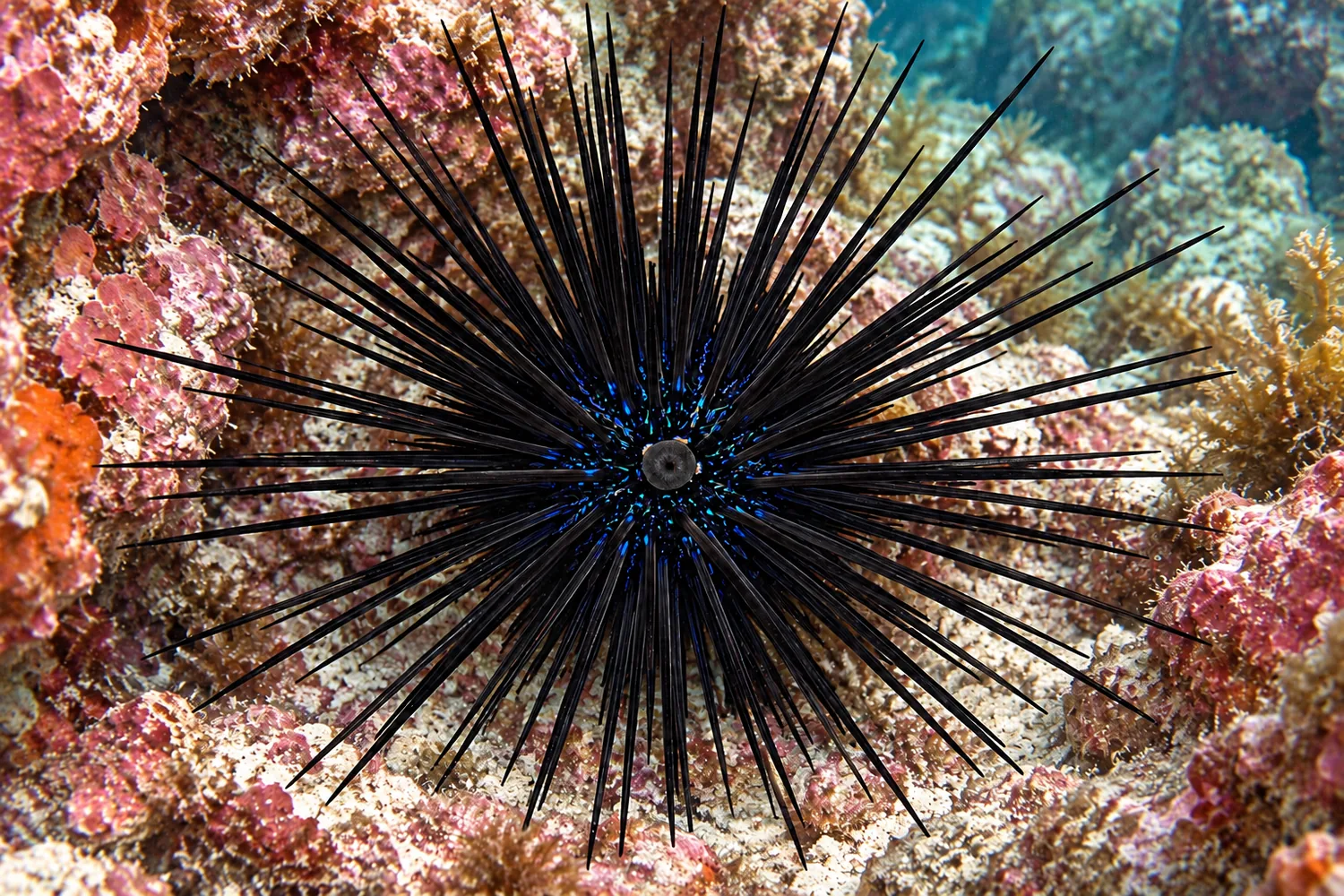
A round, black body (test) bristling with long, thin, sharp spines, black with a brown tint, that can be up to twice as long as the body is wide. The spines are hollow, fragile and lined with tiny teeth. On the body, look for two parallel lines of iridescent blue dots running from the top toward the widest point of the shell, with no white dots between them; on top sits a small black anal cone. Young urchins have banded spines in black, brown, purple and white.
Biology
Diadema mexicanum lives along the Pacific coast of the Americas from the Gulf of California to Peru, including offshore islands such as the Revillagigedos, Clipperton, Cocos, Malpelo and the Galápagos, from the shoreline down to 113 m. It shelters in crevices and holes that protect it from predators and often gathers in groups. It is a grazer: by eating algae it keeps them from smothering corals and frees space for young corals to settle, but when urchins become too many, their scraping erodes the reef itself. In the Gulf of California its numbers are usually low, from about 0.003 to 0.02 per m² at Santa Rosalía, Loreto and Isla Espíritu Santo, compared with more than 3 per m² on some reefs of Huatulco, Oaxaca.
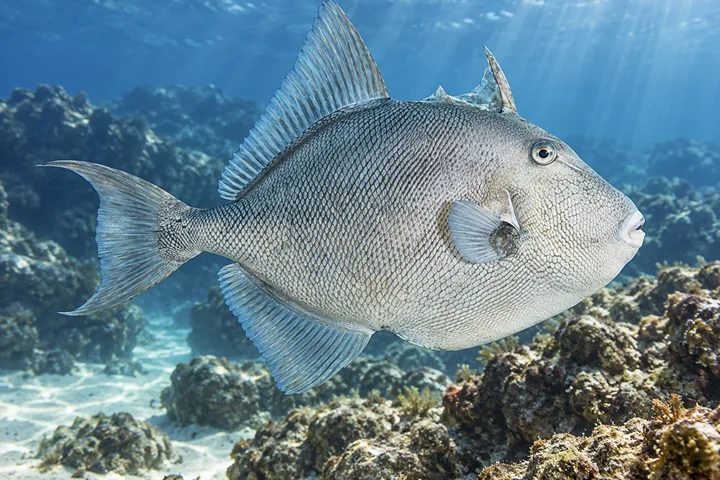
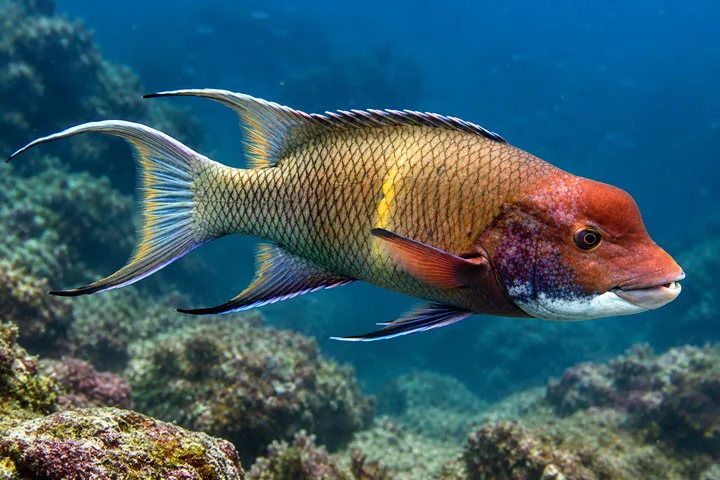
Sexes are separate. In the Gulf of California the reproductive season runs from April to November, with spawning around the full or new moon, and activity increases when the water is above 23 °C. Its predators include the guineafowl puffer (Arothron meleagris) and its relative Arothron hispidus, porcupinefish, the Mexican hogfish and several triggerfishes.