Isolated for 2,300 years
Gulf of California fin whales split from the North Pacific population about 2,300 years ago. A single mitochondrial DNA sequence accounts for about 92% of the whales sampled.
Source ↗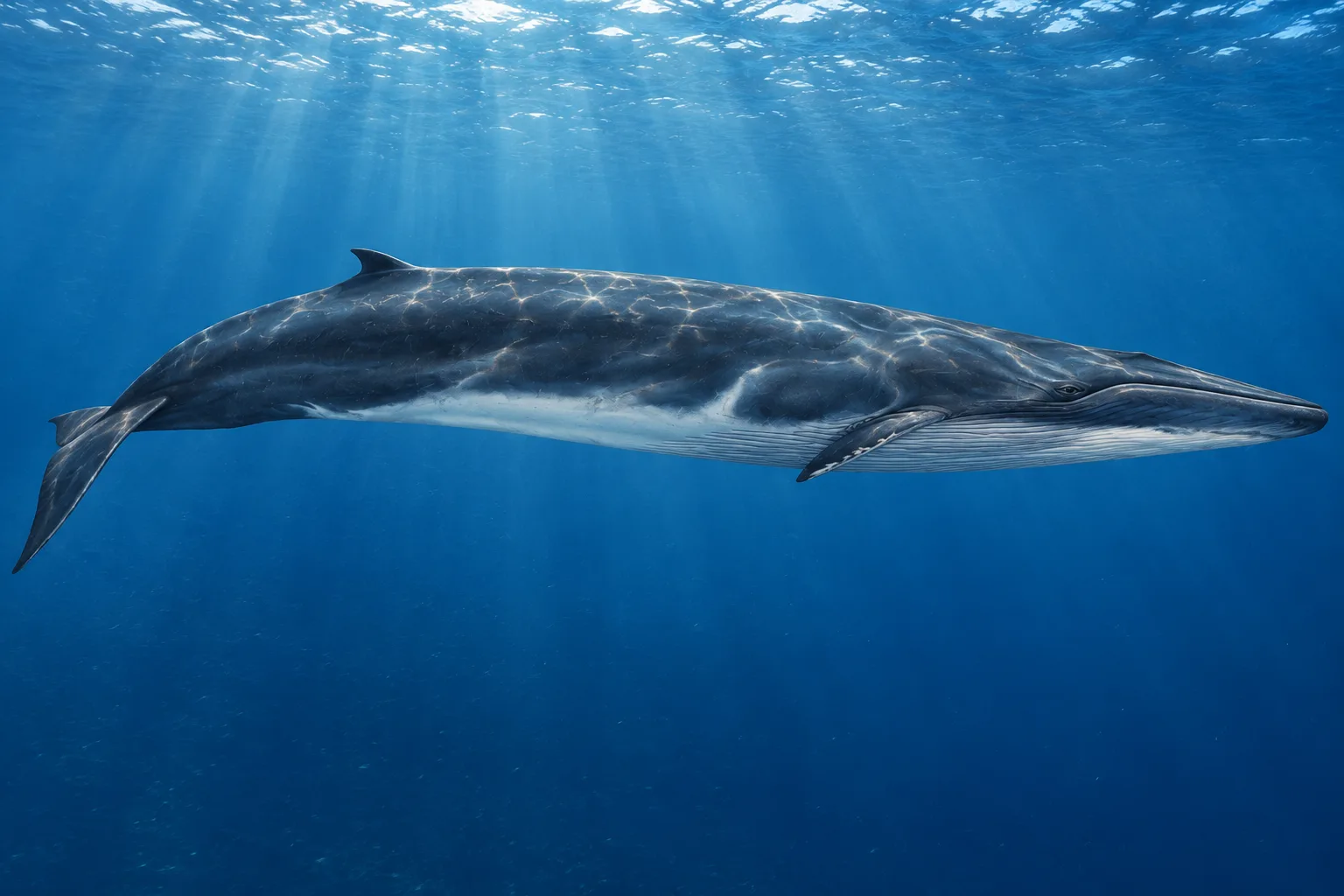
The fin whale is the second-largest animal on Earth, and the Gulf of California has its own population: a few hundred whales that live there year-round and have been genetically isolated for about 2,300 years.
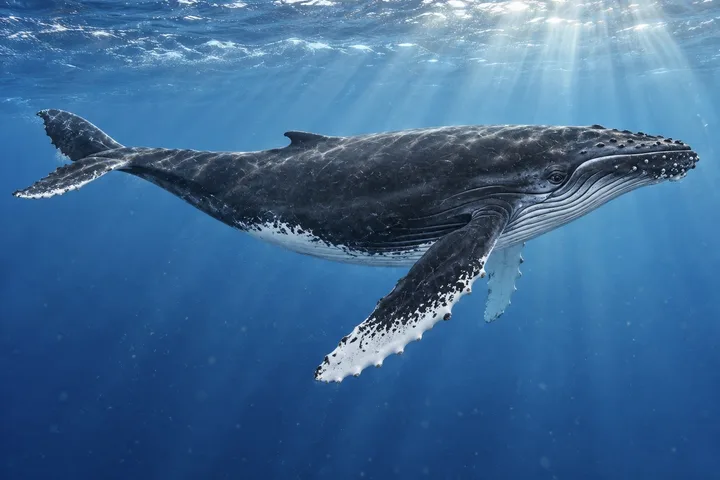
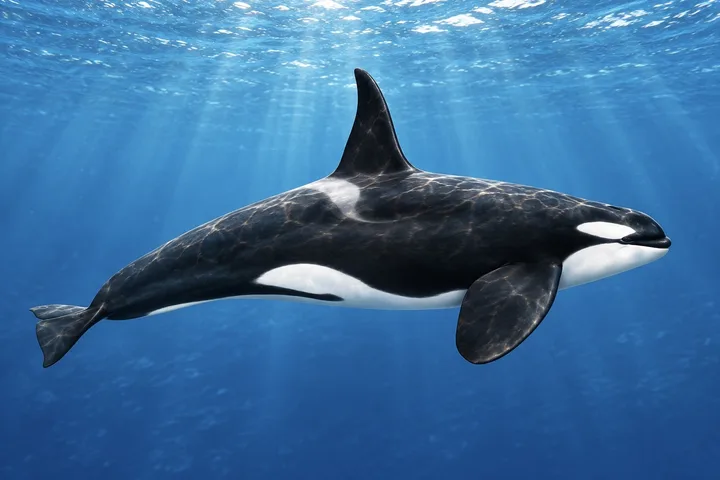
Very long, with a tall, slightly hooked dorsal fin set far back, about two-thirds of the way down the body. The giveaway is the head: the lower jaw is white or creamy yellow on the right side and dark on the left. Many have light-gray V-shaped chevrons behind the head. Its blow is tall and shaped like an inverted cone.
Fin whales live in oceans worldwide, but some groups never migrate, and the one in the Gulf of California is the best known. A 2002 genetic study found it to be a highly isolated, evolutionarily unique population of about 400 whales; a 2019 study estimated about 730. In winter and spring they feed close to shore in the Loreto–La Paz corridor, and in summer they move north to the Midriff Islands and the upper Gulf. Bahía de La Paz and the San José Channel are nursery areas.
They eat krill and small schooling fish, up to about 1.8 tonnes a day, lunging into a patch of prey with the mouth open and filtering the water out through 260 to 480 baleen plates. After 11 to 12 months of gestation, a calf is born about 5.5 m long. Fin whales can live around 90 years. Whaling killed nearly 725,000 in the Southern Hemisphere alone.
Gulf of California fin whales split from the North Pacific population about 2,300 years ago. A single mitochondrial DNA sequence accounts for about 92% of the whales sampled.
Source ↗In 2001, 11 fin whales were tagged in the southwest Gulf. One was tracked for 13,199 km, but none headed toward the mouth of the Gulf, let alone left it.
Source ↗Fin whales sing with 20 Hz pulses. Gulf of California whales mostly sing triplets with shorter gaps between pulses, while southern California whales sing doublets.
Source ↗Fin whales are nicknamed the greyhounds of the sea because they can reach about 45 km/h.
Source ↗In one lunge a fin whale can take in about 70 cubic meters of water: more than the volume of its own body, about the size of a school bus.
Source ↗Thanks to the whaling bans, the global population roughly doubled since the 1970s to about 100,000 adults, and in 2018 the IUCN moved the species from Endangered to Vulnerable.
Source ↗Fin whales are not a regular sight off Cabo. The Gulf population spends the cool months in the Loreto–La Paz corridor and the summer farther north; tagged whales never moved toward the mouth of the Gulf, and sighting records give no sign that they travel out to the Pacific. Your best chance nearby is in winter and spring, from La Paz northward.
If you see a very tall, narrow blow and a long back with the dorsal fin far behind it, look for the white right jaw. Mexican rules give fin whales and blue whales more room than other whales: slow down, keep your distance and never chase.
| Closest approach (NOM-131) | 100 m for boats under 10 m, 120 m for larger boats; 240 m waiting distance for all other boats |
|---|---|
| Boats per whale or group | 4 at most, for 30 minutes at most |
| Speed near whales | Under 5 knots, under 2 knots inside the watching zone |
| Not allowed | Fishing, swimming, diving, chasing, splitting up groups, getting between mother and calf |
| Mexico (NOM-059) | Subject to special protection (Pr) |
| Ley General de Vida Silvestre, art. 60 Bis | No marine mammal may be taken, except for authorized scientific research |
| IUCN Red List | Vulnerable (2018) |
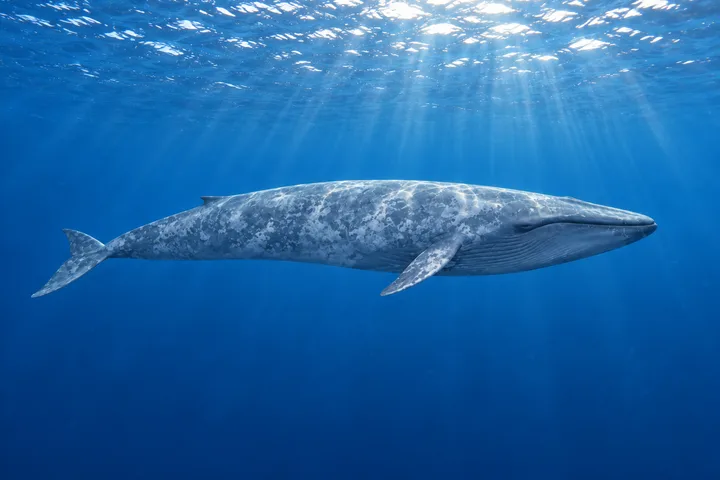
The blue whale is mottled blue-gray, with a broad U-shaped head and a very small dorsal fin. Bryde’s whale is smaller (12–17 m) and has three ridges on top of the head instead of one. The sei whale is also smaller (12–18 m) and tends to sink below the surface instead of arching its back.
Rarely. The Gulf population lives farther north, from Bahía de La Paz up to the upper Gulf, and tagged whales never moved toward the mouth of the Gulf.
Look at the head: the fin whale’s lower jaw is white on the right side and dark on the left. The blue whale is mottled blue-gray and has a much smaller dorsal fin.
The IUCN lists them as Vulnerable (2018) and the U.S. lists them as endangered throughout their range. In Mexico they’re subject to special protection, and the Gulf population is only a few hundred whales.

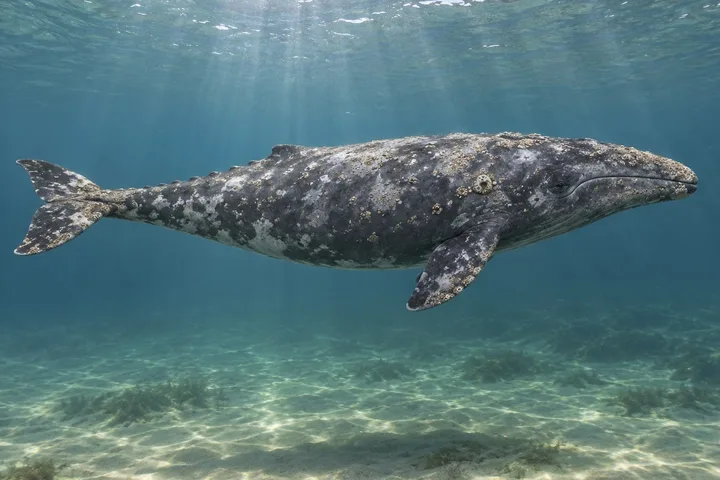
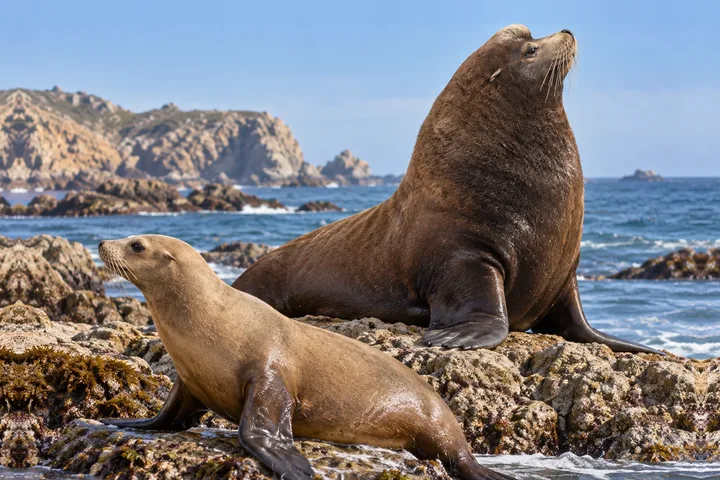
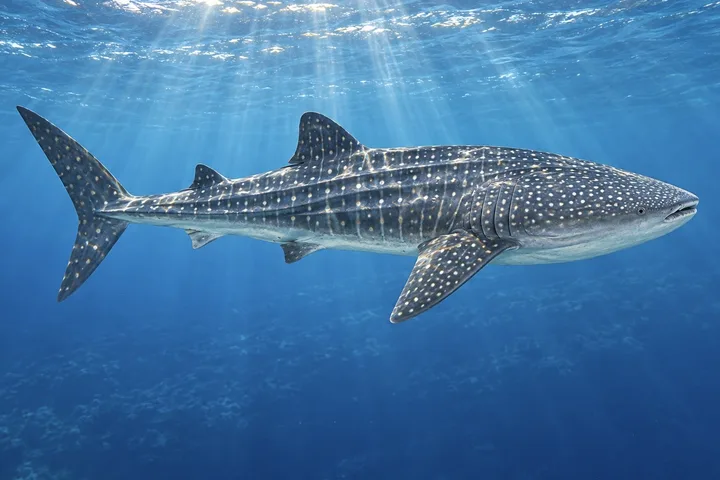
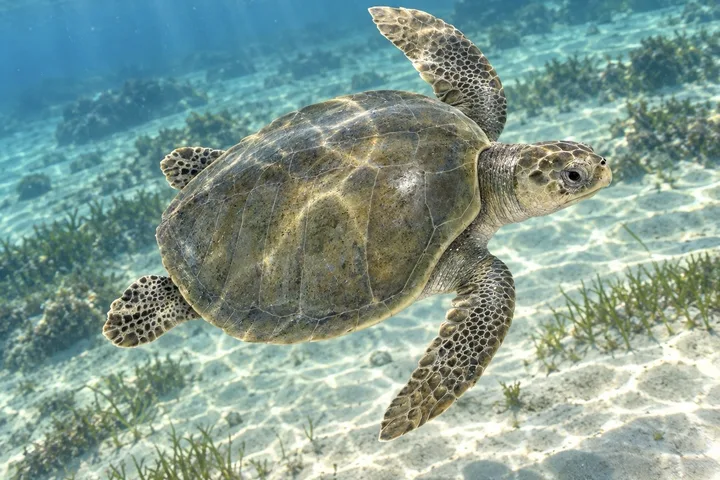
Top illustration: Top Anglers. Photos: iNaturalist contributors, credited on each photo.
Our charters leave the Cabo San Lucas marina every morning. From $799 with license included.