The shoulder fish
Humeralis means of the shoulder. The author did not explain it; it perhaps refers to the dark band that runs from the first dorsal spines down past the base of the pectoral fin.
Source ↗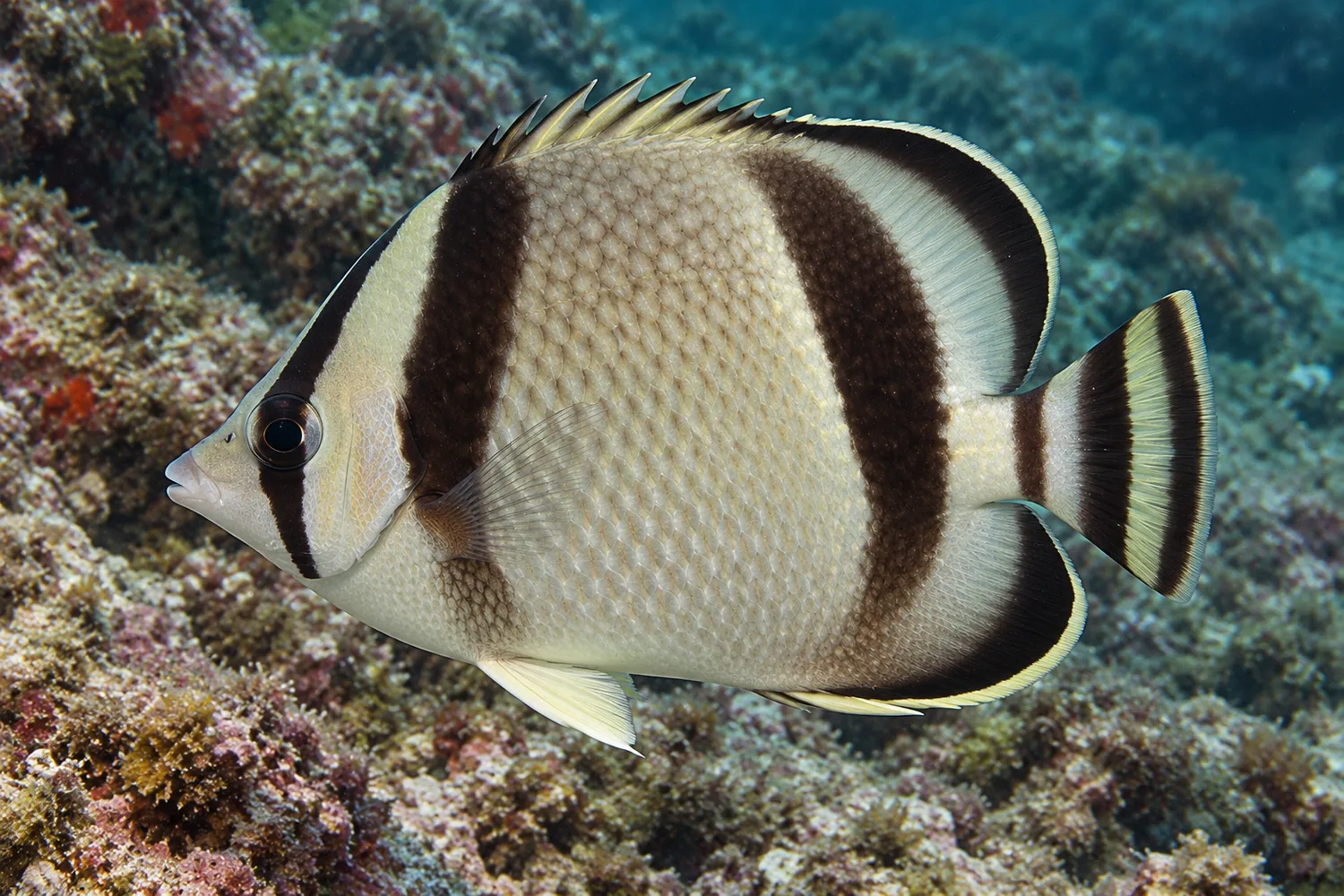
A silvery-white butterflyfish with three bold black bars: one through the eye, one behind the head and one near the tail. It is usually seen in pairs or small groups on shallow rocky reefs. It is a fish for snorkelers and divers, not anglers.
A strongly compressed, oval, disc-shaped body with a short, pointed snout and a small mouth. It is white to silvery white, sometimes with a creamy tint. Look for three black bars: one running from the throat up through the eye to the nape, a second just behind the head over the base of the pectoral fin, and a third across the rear of the body near the tail base. The dorsal, anal and tail fins carry black bands and black rear edges. The lateral line rises in a high arch and stops below the dorsal fin.
The threeband butterflyfish lives only in the eastern Pacific, from southern California and Baja through the Gulf of California to Peru and Chile, including the Cocos, Malpelo and Galápagos islands. It lives on rocky reefs from 3 to 55 m deep and is most common between 5 and 12 m, often close to shore.
It is usually seen in pairs or small groups. FishBase describes pairs as monogamous. It feeds on algae and small bottom invertebrates, and it sometimes schools with Pacific spadefish. At Cabo Pulmo it was recorded in fish counts between 1987 and 1998, but it was not among the species rated common there.
Humeralis means of the shoulder. The author did not explain it; it perhaps refers to the dark band that runs from the first dorsal spines down past the base of the pectoral fin.
Source ↗It sometimes forms schools with the Pacific spadefish (Chaetodipterus zonatus), a much bigger, also striped fish.
Source ↗It is usually found in pairs or small groups, and FishBase describes its mating as monogamous.
Source ↗It is common on rocky reefs from 3 to 55 m, but most common between 5 and 12 m, an easy depth for snorkelers.
Source ↗The threeband is not protected, but its relative the scythe butterflyfish (Prognathodes falcifer) is the one butterflyfish on Mexico's NOM-059 list, under special protection (Pr).
Source ↗FishBase gives its range as San Diego, California, to Peru, including the Galápagos.
Source ↗The threeband butterflyfish is a fish for snorkelers and divers, not anglers. Look for pairs over shallow rocky reefs around Los Cabos. It is not a sport fish.
Its mouth is small and it feeds on algae and tiny invertebrates, so it is rarely hooked. If one ever comes up, unhook it gently and put it back. Aquarium collectors need a federal fishing permit. Sport fishing is not allowed inside Cabo Pulmo National Park.
| Mexico (NOM-059-SEMARNAT-2010) | Not listed |
|---|---|
| General sport-fishing limit (NOM-017-PESC-1994) | 10 fish per angler per day, no more than 5 of one species |
| Aquarium collection | Needs a federal fishing permit (pesca de fomento, CONAPESCA) |
| IUCN Red List | Least Concern (2009) |
| Cabo Pulmo National Park | Sport fishing not allowed |
Not a sport fish. If one is ever hooked, release it.
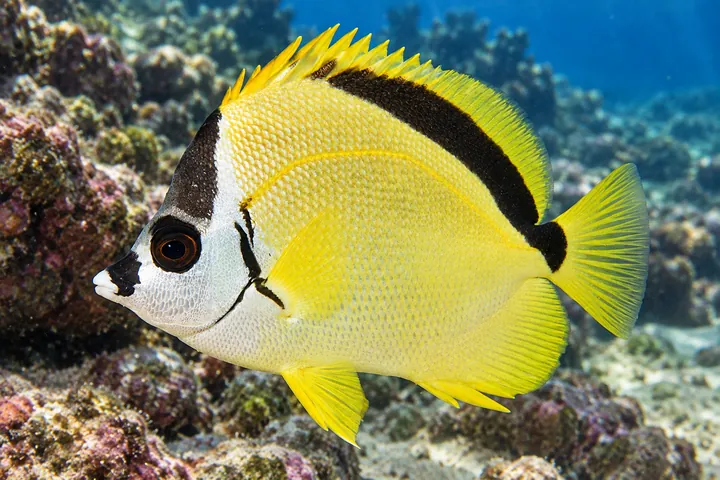
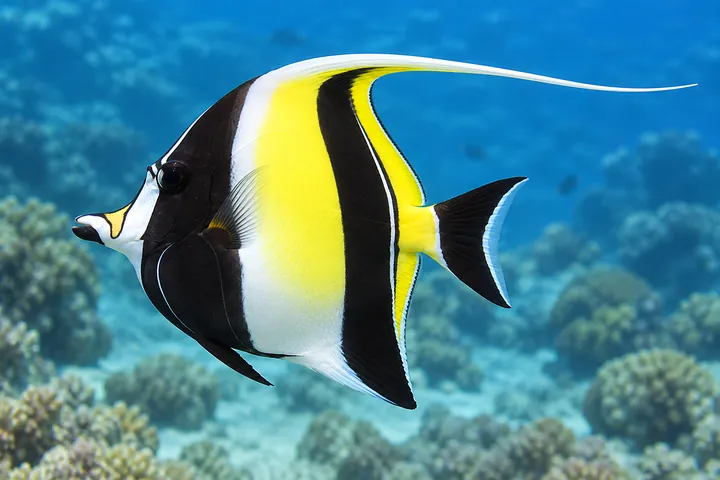
The barberfish (Johnrandallia nigrirostris) is yellow with a whitish head, a black snout and mask, and a black stripe along the base of the dorsal fin. The Pacific spadefish (Chaetodipterus zonatus) is silvery with six black bars, has a blunt snout and grows much larger, to 66 cm, usually over sand or rubble. The Moorish idol has a yellow rear body and a long white streamer from the dorsal fin.
For the three black bars on its silvery body: through the eye, behind the head and near the tail.
It is not a sport fish and is rarely hooked. If one is caught by accident, release it.
No, it is not on the NOM-059 list. Its relative the scythe butterflyfish is (Pr). Sport fishing is not allowed in Cabo Pulmo National Park.

Top illustration: Top Anglers. Photos: iNaturalist contributors, credited on each photo.
Our charters leave the Cabo San Lucas marina every morning. From $698 with license included.