One in a hundred is gold
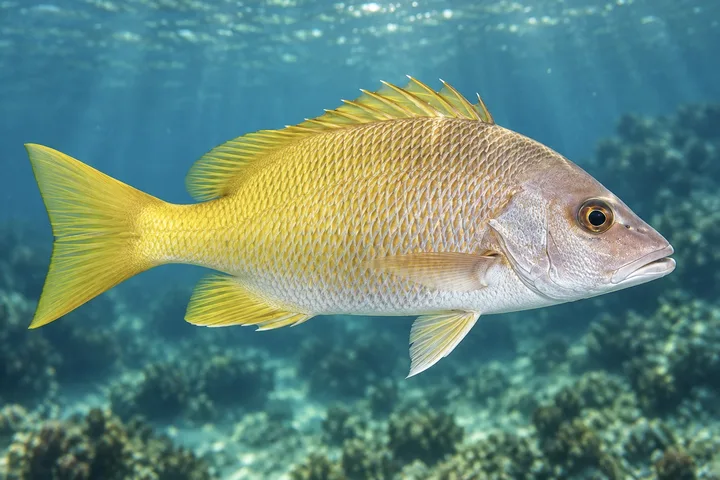
About 1% of leopard groupers are bright golden or orange, a color phase called xanthism. The cause is still unknown; in a captive study, 5 of 150 juveniles turned from brown to yellow.
Source ↗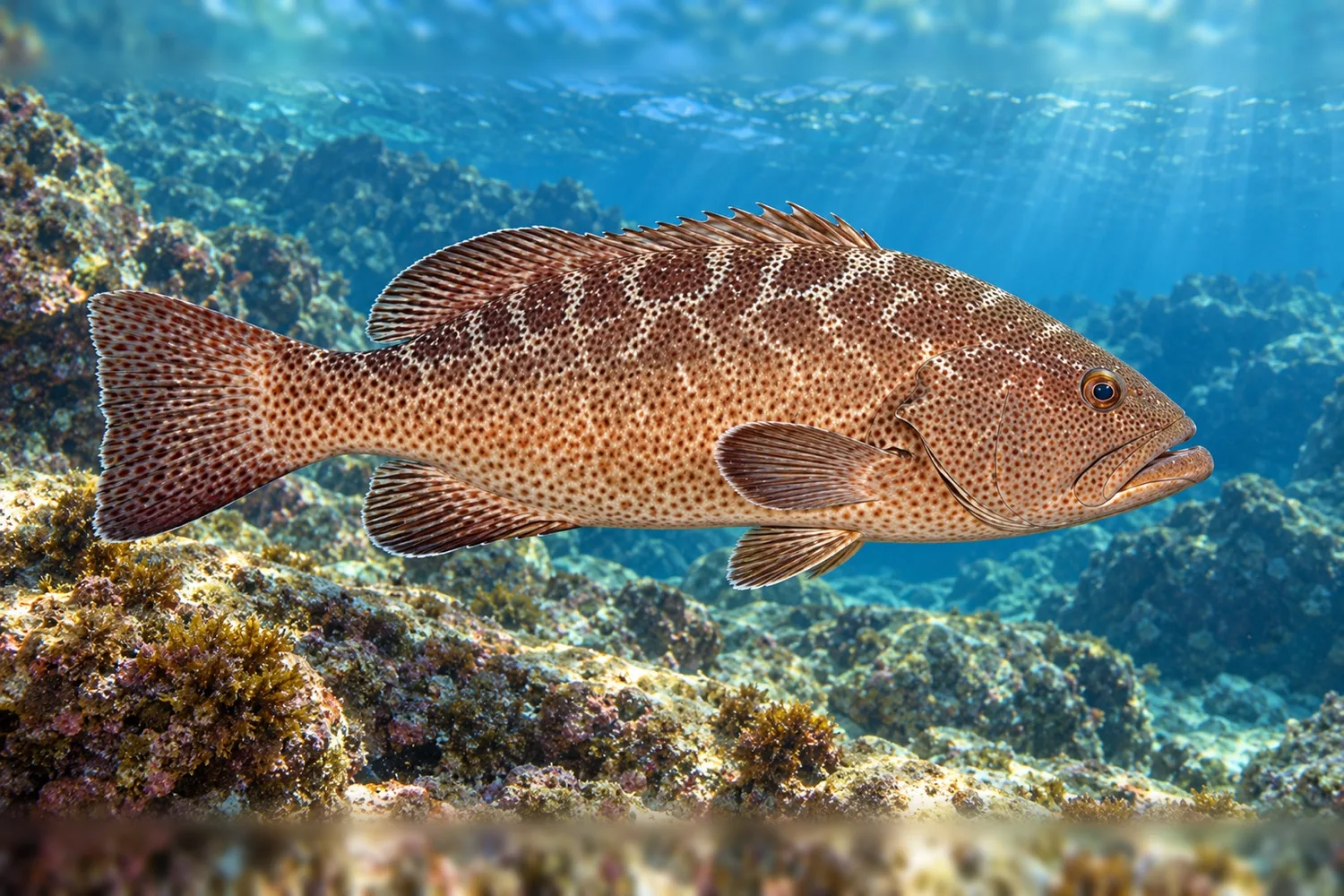
Mexico's own grouper, found nowhere else on Earth. It lives on the rocky reefs of the Gulf of California and southern Baja, and about one in a hundred is bright gold.
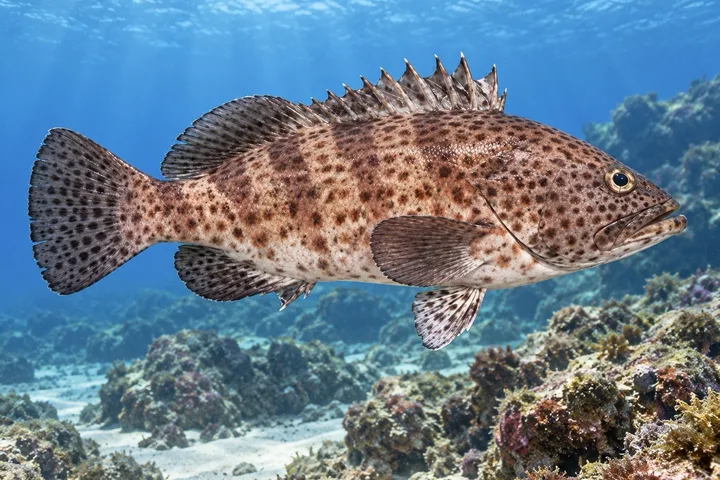
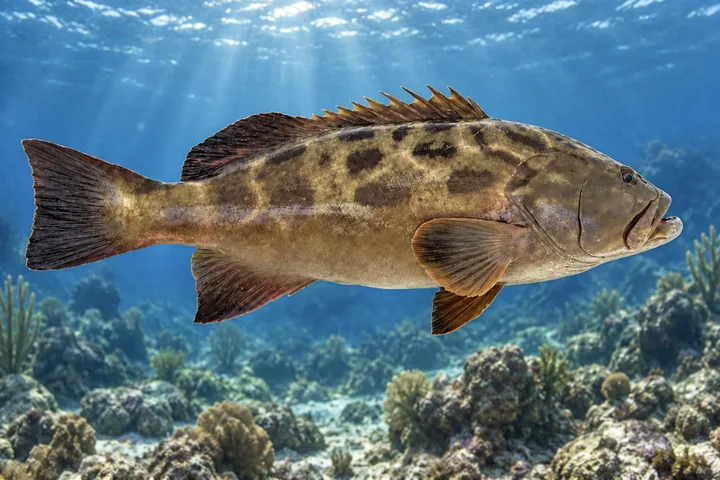
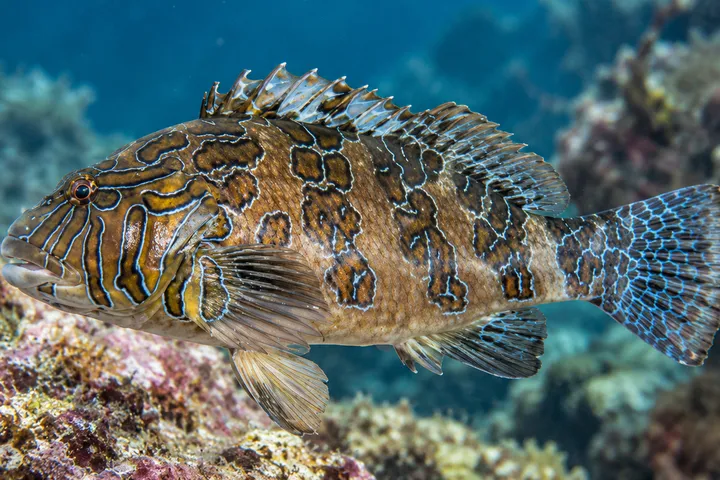
Olive-brown to reddish, covered in dark leopard-like spots and blotches, with a large mouth and a squared-off tail. About 1% of fish are entirely golden yellow or orange.
The leopard grouper is endemic to Mexico. It lives mainly in the Gulf of California, reaches the Pacific side of Baja around Magdalena Bay and extends south to Jalisco. It stays on rocky reefs from 1 to 100 m deep all year.
Adults hunt sardines, anchovies and other small fish, plus krill; feeding peaks right after sunset. Females mature at about 27 cm, males slightly smaller, at 3 to 4 years. In spring they gather in spawning crowds of 100 to 800 fish on rocky points, spawning at dusk.
About 1% of leopard groupers are bright golden or orange, a color phase called xanthism. The cause is still unknown; in a captive study, 5 of 150 juveniles turned from brown to yellow.
Source ↗Many groupers start life as females and turn male. Field studies show wild leopard groupers don't: the sexes are separate. In captivity, though, two females became functional males within about two months.
Source ↗In spring they gather by the hundreds on rocky points to spawn at sunset, and more than 40 males can surround a single female.
Source ↗Ocean currents carry the larvae mostly in one direction, from the Baja side of the Gulf toward Sonora.
Source ↗Its Spanish name means "sardine-eater", but in the central Gulf krill turned out to be one of its main foods, along with Pacific sardine.
Source ↗Cabo Pulmo has been a protected marine park since 1995; about a third is a strict no-take zone, and the community keeps almost all of it free of fishing. Between 1999 and 2009 its fish biomass rose 463%, and for many species, including groupers, the largest fish seen in the region were there.
Source ↗Leopard grouper live on rocky reefs and points year-round, from Los Cabos up the East Cape and into the Gulf. Dawn and dusk are usually best.
Cast jerkbaits and swimbaits close to the rocks in shallow water, drop yo-yo jigs in deeper water, or fish live or cut bait on the bottom. Like every grouper, it heads for a hole the moment it's hooked, so the first few seconds decide the fight. Sport fishing is not allowed inside Cabo Pulmo National Park.
An excellent food fish with mild, white, flaky meat.
| Daily limit (NOM-017-PESC-1994) | Up to 5 per angler per day, within the 10-fish total |
|---|---|
| Gulf grouper (baya) | Different species, limit 2 per day; listed as Endangered |
| IUCN Red List | Least Concern (2018) |
| IGFA all-tackle record | 28 lb 10 oz (12.98 kg), Loreto, B.C.S. |
| Cabo Pulmo National Park | Sport fishing not allowed |
"Cabrilla" is also used for the spotted cabrilla (Epinephelus analogus). The Gulf grouper or baya (Mycteroperca jordani) is a much bigger, endangered species.
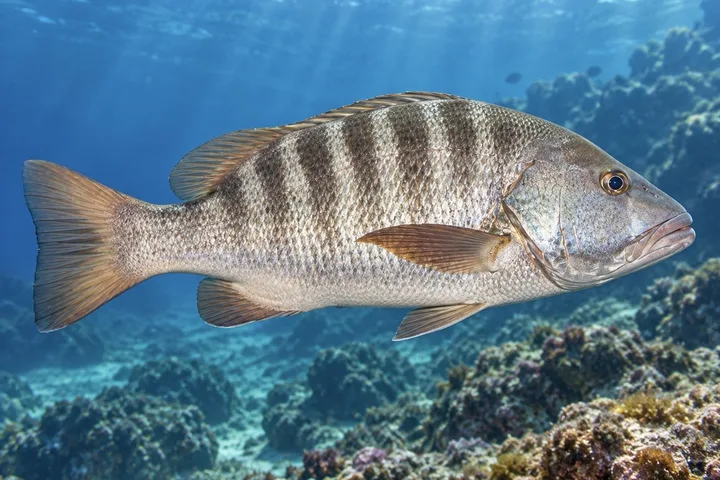
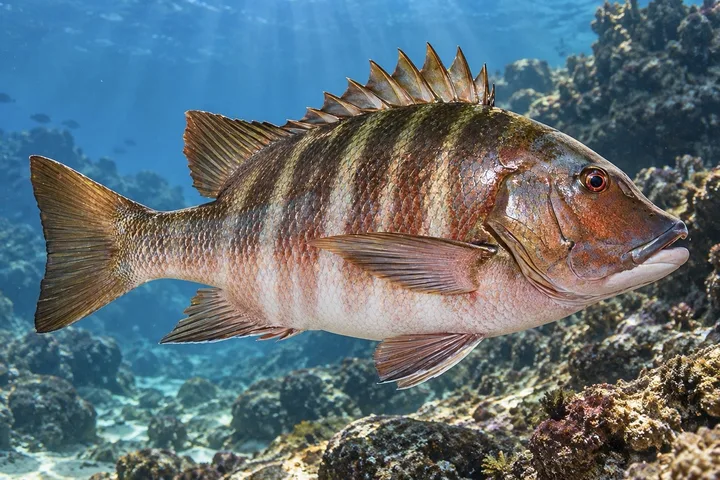
How to tell Cabo’s groupers and snappers apart ›
A leopard grouper in its rare golden color phase. About 1 in 100 is gold; the cause is still unknown.
Yes. It's endemic to Mexico, mainly the Gulf of California and southern Baja, south to Jalisco.
No. Sport fishing is not allowed in Cabo Pulmo National Park.

Top illustration: Top Anglers. Photos: iNaturalist contributors, credited on each photo.
Pangas and small boats that work the beaches, points and rocky reefs. From $453 with license included.