Named for Mexico, recorded in Central America
Every approved IGFA record for the species comes from Panama or Costa Rica. The all-tackle record, 28 lb 6 oz (12.87 kg), was caught by Jilberto Cansari at Isla Secas, Panama, on March 8, 2010.
Source ↗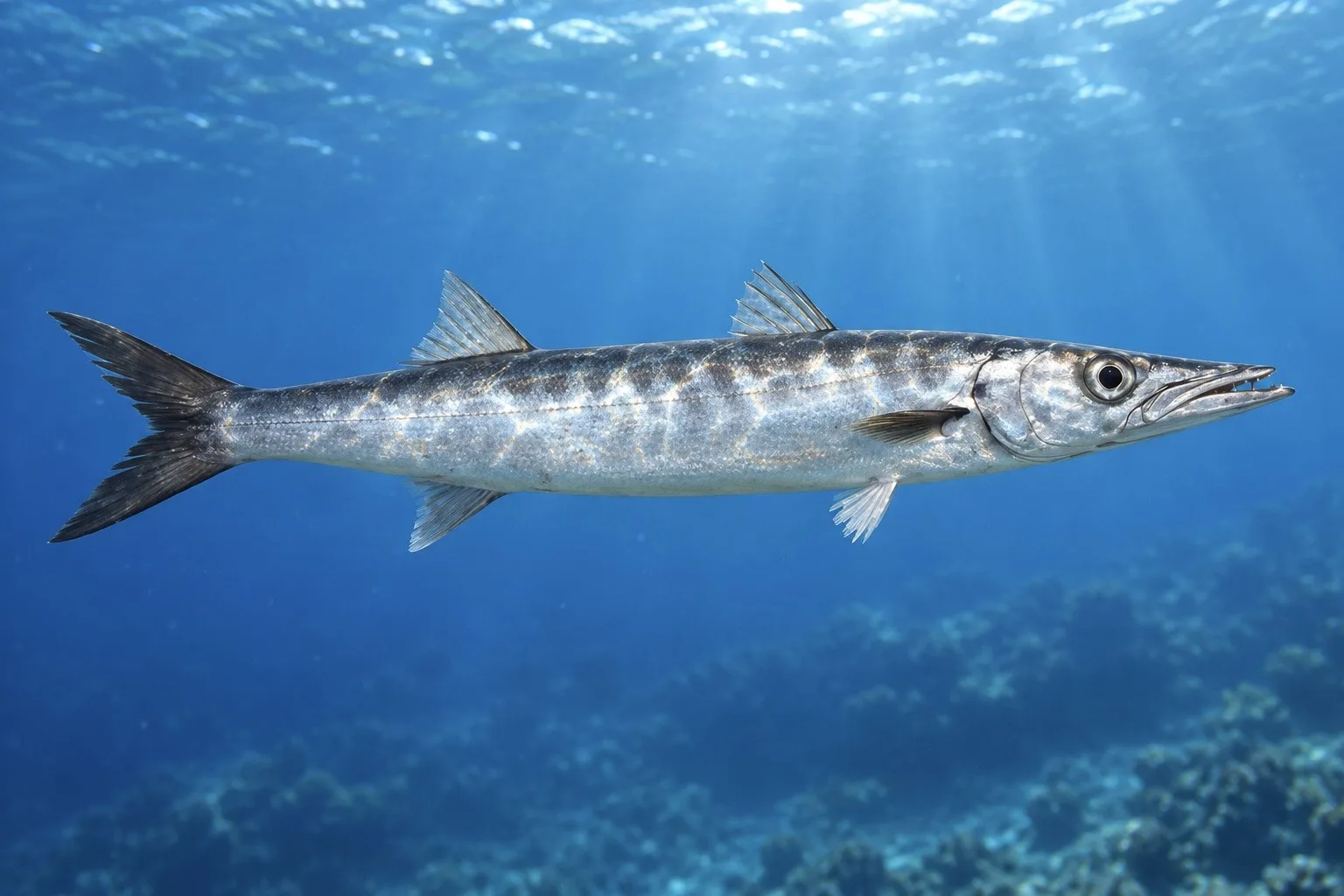
A long, silver, fang-toothed predator of the coastal eastern Pacific, marked with V-shaped bars along its back. Around Los Cabos it turns up close to shore, in surf zones and even inside the marina.
Very long body, round in front, with a long pointed snout and a lower jaw that clearly juts past the upper one. The mouth is full of long, sharp-edged teeth of unequal sizes. Silvery, with a series of chevron-shaped (V-shaped) dark bars on the upper two-thirds of the side and a grey tail. The two dorsal fins are widely separated.
The Mexican barracuda is found only in the tropical eastern Pacific, from Southern California through the Gulf of California to Chile, and rarely at Malpelo Island. It’s a coastal, open-water fish of the continental shelf, usually in shallow water; FishBase gives a depth range of 10 to 60 m.
It eats mostly small schooling fish, plus squid, octopus, shrimp and crabs. Fish taken in the fishery are usually 30 to 60 cm long, but the species grows much larger: FishBase lists a maximum of 127 cm fork length. Off Nayarit, females mature at about 38 cm and males at about 36 cm, and it spawns all year with a peak from March to June.
Every approved IGFA record for the species comes from Panama or Costa Rica. The all-tackle record, 28 lb 6 oz (12.87 kg), was caught by Jilberto Cansari at Isla Secas, Panama, on March 8, 2010.
Source ↗IGFA notes it’s often confused with the Pacific barracuda, which shares part of its range. The giveaway is the Mexican barracuda’s bold V-shaped bars and darker tail.
Source ↗In a year-long study off San Blas, Nayarit, sardines made up 71% of its diet in the dry season, while halfbeaks made up 84% in the rainy season.
Source ↗Of 367 barracudas sampled off San Blas, Nayarit, 66.5% were female, roughly two females for every male. Females also reached larger sizes.
Source ↗Off Nayarit it supports a fishery that runs all year with no specific regulation, mostly with handlines and J-hooks. Local fishermen report that both catches and fish sizes keep getting smaller.
Source ↗The famous great barracuda of the Atlantic and Indo-Pacific is just a vagrant in the eastern Pacific, recorded at the Galápagos and western Panama. Off Mexico’s Pacific coast, the barracudas you catch are other species.
Source ↗Around Los Cabos it’s a shallow-water, close-to-shore catch rather than a target for the offshore fleet. Local reports from the Gordo Banks Pangas fleet in San José del Cabo mention a “wide open barracuda bite” inside the marina in December 2015, lots of barracuda off the marina docks in November 2015, and good numbers from the surf at La Playita in September 2017. These reports don’t name the species.
Off Nayarit, where it’s an important commercial catch, it’s taken on handlines with J-hooks close to shore and by trolling. A 2010 local report from San José del Cabo also lists barracuda among the catch when live Pacific moonfish were fly-lined in the channel for roosterfish. Mind the long, sharp teeth when unhooking: use pliers, not fingers.
A food fish: researchers in Nayarit report high market demand for it, thanks to the quality of its flesh and its low price.
| Daily limit (NOM-017-PESC-1994) | Up to 5 per angler per day, within the 10-fish total |
|---|---|
| IUCN Red List | Least Concern (assessed 2008, published 2010) |
| IGFA all-tackle record | 28 lb 6 oz (12.87 kg), Isla Secas, Panama, 2010 |
| Cabo Pulmo National Park | Sport fishing not allowed |
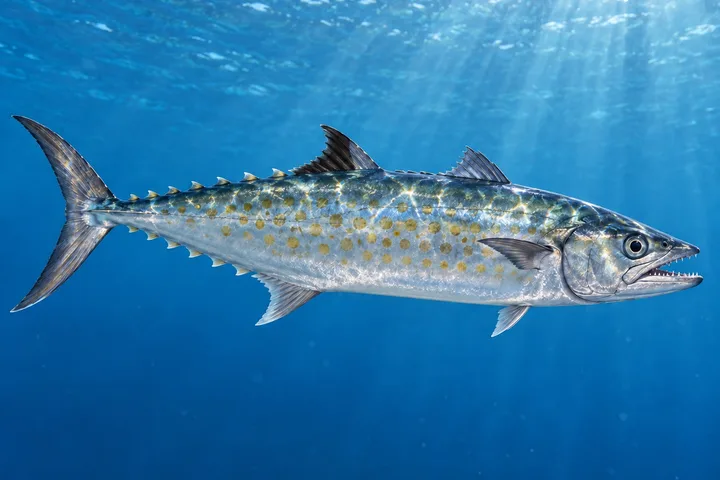
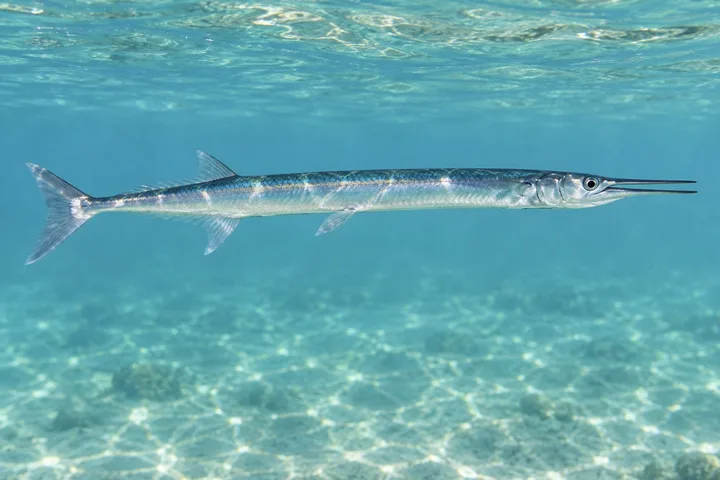
The Pacific barracuda (Sphyraena argentea) ranges from California to the tip of Baja and into the Gulf of California. It’s brownish to bluish above with only faint oblique bars, a dark lateral line and a tail with yellowish membranes; the Mexican barracuda has bold chevrons and a grey tail. The great barracuda (S. barracuda) has scattered black blotches and is only a rare vagrant in the eastern Pacific. Sierra (Scomberomorus sierra) has rows of round orange spots, a black front to the first dorsal fin Needlefish have both jaws drawn out into a long, slender beak.
The Mexican barracuda has prominent V-shaped bars and a darker tail. The Pacific barracuda has faint bars at most, a dark lateral line and a tail with yellowish membranes.
The IGFA all-tackle record is 28 lb 6 oz (12.87 kg), caught at Isla Secas, Panama, in 2010.
Yes, close to shore. Local reports from San José del Cabo mention them in the surf at La Playita and around the marina, mostly from September to December.

Top illustration: Top Anglers. Photos: iNaturalist contributors, credited on each photo.
Pangas and small boats that work the beaches, points and rocky reefs. From $453 with license included.