Named for its scale edges
Rubroviolaceus combines the Latin ruber (red) and violaceus (violet), after the red-violet edges of the scales, presumably on terminal males.
Source ↗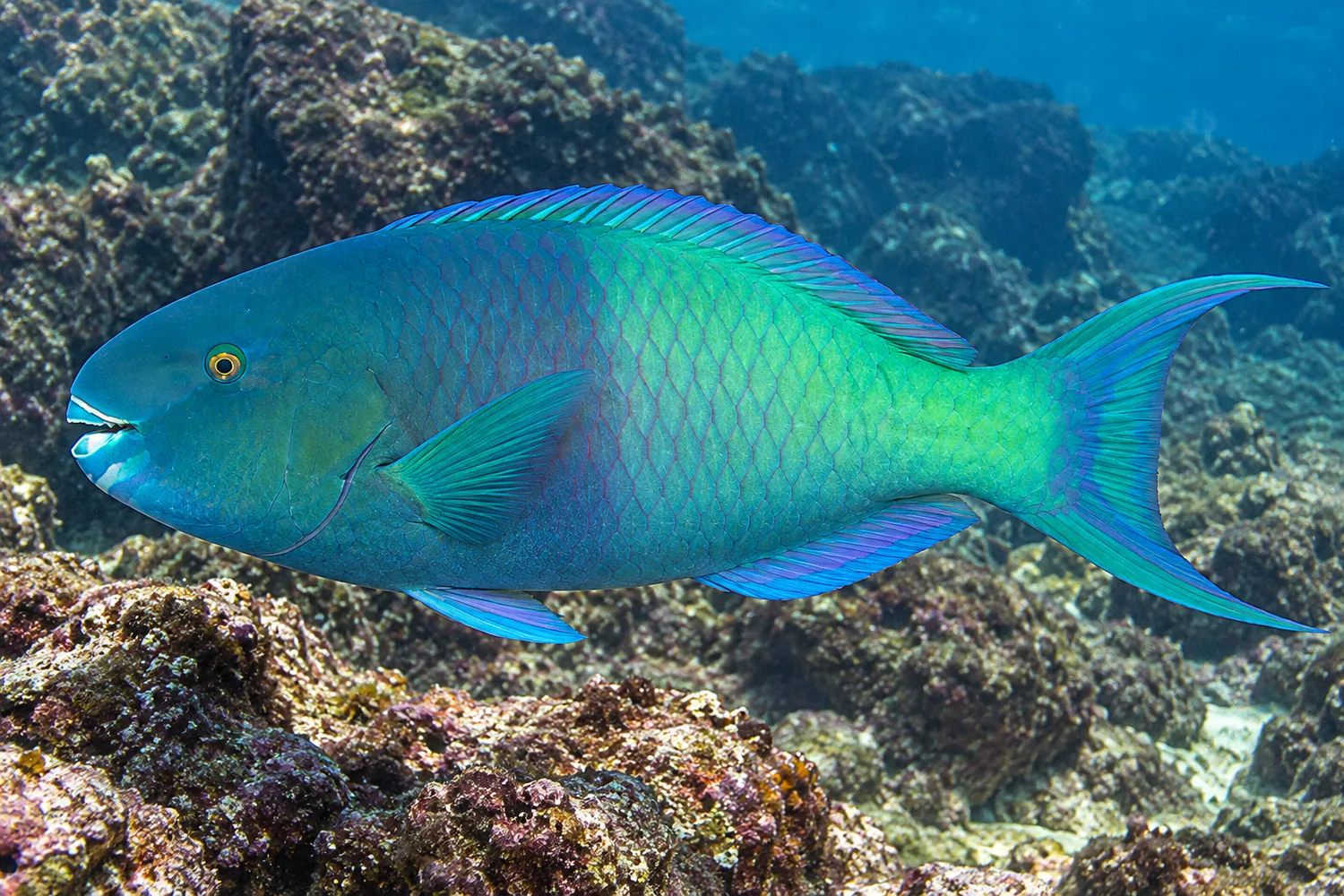
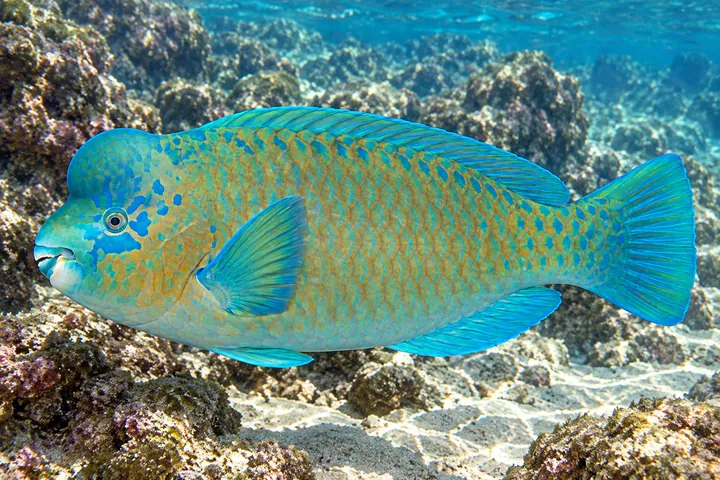
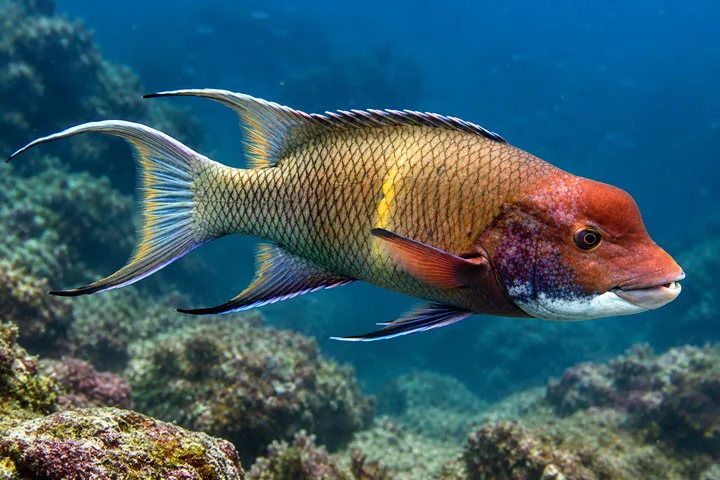
A large Indo-Pacific parrotfish whose range reaches the Gulf of California. Males are green with a darker front half and a deeply forked tail; females are gray and whitish with black speckles and red fins. Around Cabo it is less common than the other big parrotfish.
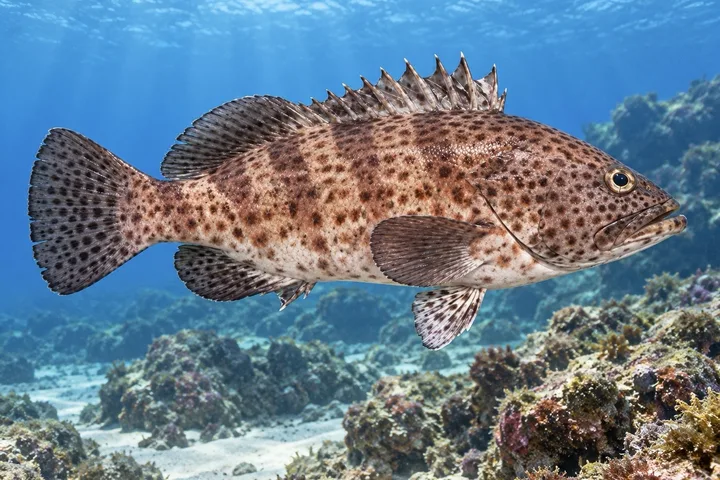
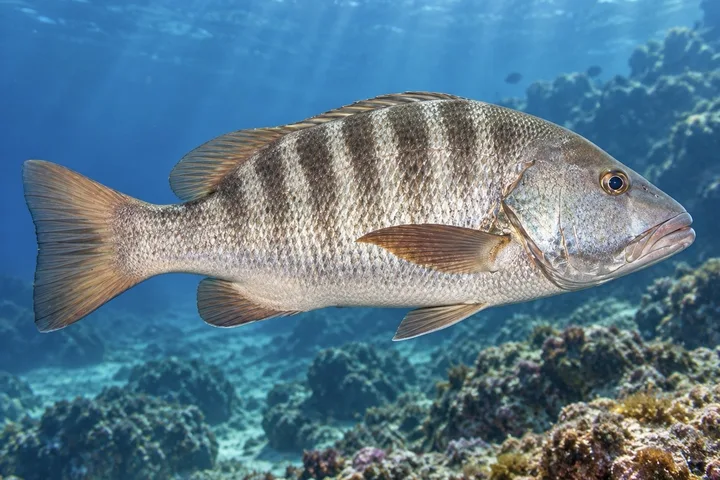
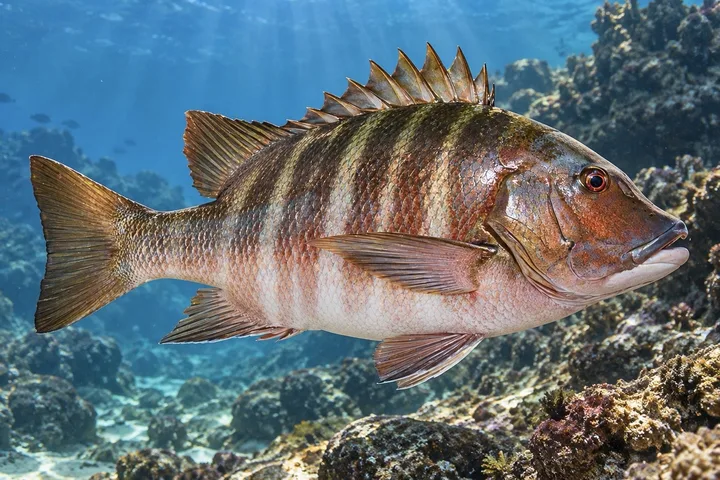
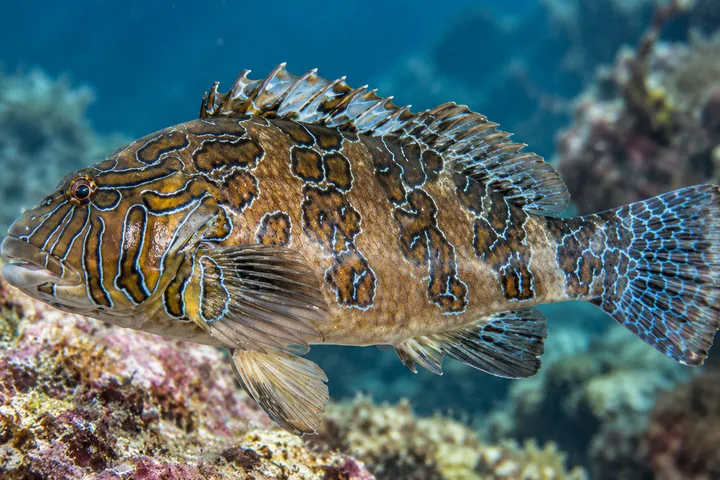
Elongate, oval, compressed body with a steep, blunt snout that becomes angular in big males. The teeth are fused into a beak. Terminal-phase males are mainly green to bluish green, sometimes purplish on the front half, which gives a strong two-tone look, with a pair of blue bands on the chin and a blue-green beak; their tail is deeply concave with long tips. Initial-phase fish are gray on the front half and whitish behind, with small black spots, dark lines on the sides and red fins. Larger juveniles are whitish with three brown to olive stripes, scattered white spots and a white blotch at the base of the tail.
The ember parrotfish is one of the most widespread parrotfish: it ranges from East Africa across the Indian and Pacific Oceans to the Americas. In the eastern Pacific it is found from the central Gulf of California to Colombia, plus the Revillagigedo, Clipperton, Cocos, Malpelo and Galápagos islands. It lives on shallow reefs and their edges, 1 to 35 m deep, usually alone or in pairs. FishBase calls it uncommon, and in the Gulf of California the bumphead and bluechin parrotfish are the dominant species.
It feeds on algae scraped from rock and coral. It is a protogynous hermaphrodite: fish start as females and the largest become terminal males. FishBase cites a study in which sex change happened at about 37 cm and 13 years of age, and the species can live 20 years.
Rubroviolaceus combines the Latin ruber (red) and violaceus (violet), after the red-violet edges of the scales, presumably on terminal males.
Source ↗In Hawaii, the largest ember parrotfish (45–54 cm fork length) wore away up to 380 kg of reef per fish per year. Together with one other parrotfish, they consumed 60% of the carbonate the fore reef produced.
Source ↗The same Hawaii study found erosion depends on size, with the biggest ember parrotfish doing a disproportionate share, so the authors recommended protecting the larger size classes.
Source ↗FishBase cites sex change at 37.4 cm and 13 years of age, and a maximum age of 20 years.
Source ↗At Islas Marietas, Nayarit, it had one of the lowest densities recorded (0.01 fish per 10 m²), yet it was one of two parrotfish documented grazing on live coral there for the first time.
Source ↗The ember parrotfish is a fish for snorkelers and divers, not a sport fish. It is less common around Cabo than the bumphead and bluechin parrotfish, so a big two-tone male is a good find on a shallow reef dive.
It feeds by scraping algae off rock and coral, so it seldom takes baits or lures. If one is hooked by accident, release it. It is not protected under NOM-059, but sport fishing is not allowed inside Cabo Pulmo National Park.
Edible. FishBase lists it in commercial fisheries across its range.
| Daily limit (NOM-017-PESC-1994) | General rule: up to 5 per angler per day, within the 10-fish total |
|---|---|
| Mexico (NOM-059-SEMARNAT-2010) | Not listed |
| IUCN Red List | Least Concern (2009) |
| CITES | Not listed |
| Cabo Pulmo National Park | Sport fishing not allowed |
Not a sport fish. If one is hooked by accident, release it.
The bluechin parrotfish (Scarus ghobban) male also has a deeply concave tail, but it is blue-green on the back with salmon-pink scale edges and a mostly salmon-pink lower side. The bumphead parrotfish (Scarus perrico) has a hump on the forehead, a blunt rounded tail and only 2 rows of cheek scales. The azure parrotfish (Scarus compressus) is green with orange-brown scale outlines and a straight to slightly concave tail. A green male with a darker front half and long tail tips is the ember parrotfish.
Terminal males are often darker or purplish on the front half and lighter green behind, giving a two-tone look.
Females and young males are gray in front and whitish behind with black speckles and red fins. The largest fish change sex and turn into green terminal males.
It is not a sport fish and seldom takes a bait. It is not protected in Mexico, but sport fishing is not allowed in Cabo Pulmo National Park.

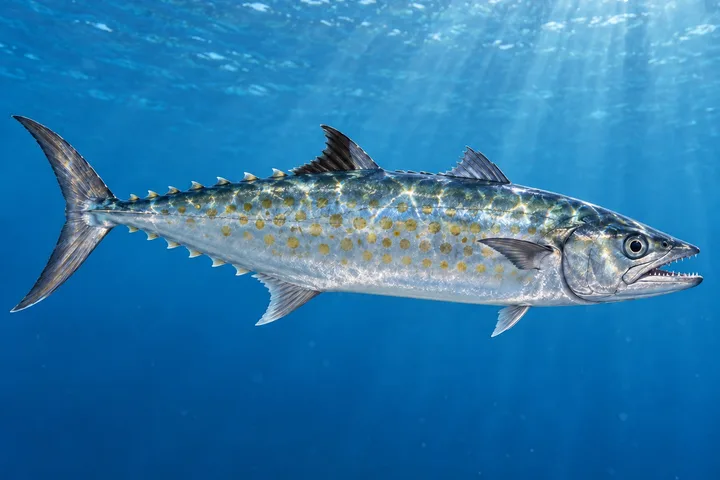
Top illustration: Top Anglers. Photos: iNaturalist contributors, credited on each photo.
Our charters leave the Cabo San Lucas marina every morning. From $698 with license included.