They hunt the world’s largest fish
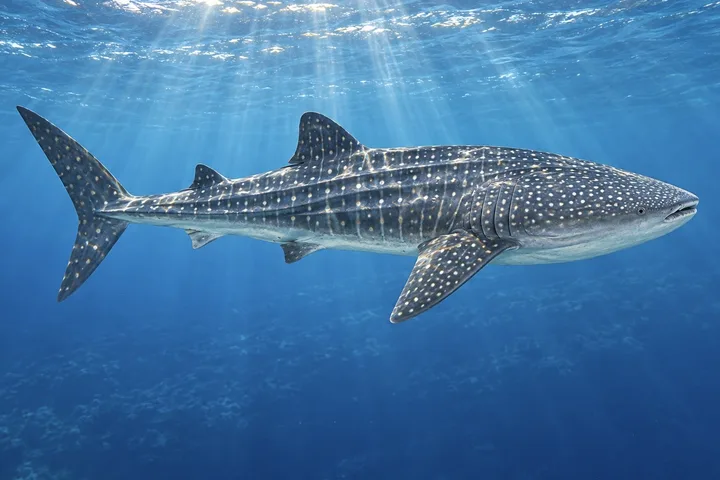
Between 2018 and 2024, orcas were filmed killing whale sharks four times in the southern Gulf of California. They ram the shark, flip it belly up and attack the pelvic area to reach its lipid-rich liver.
Source ↗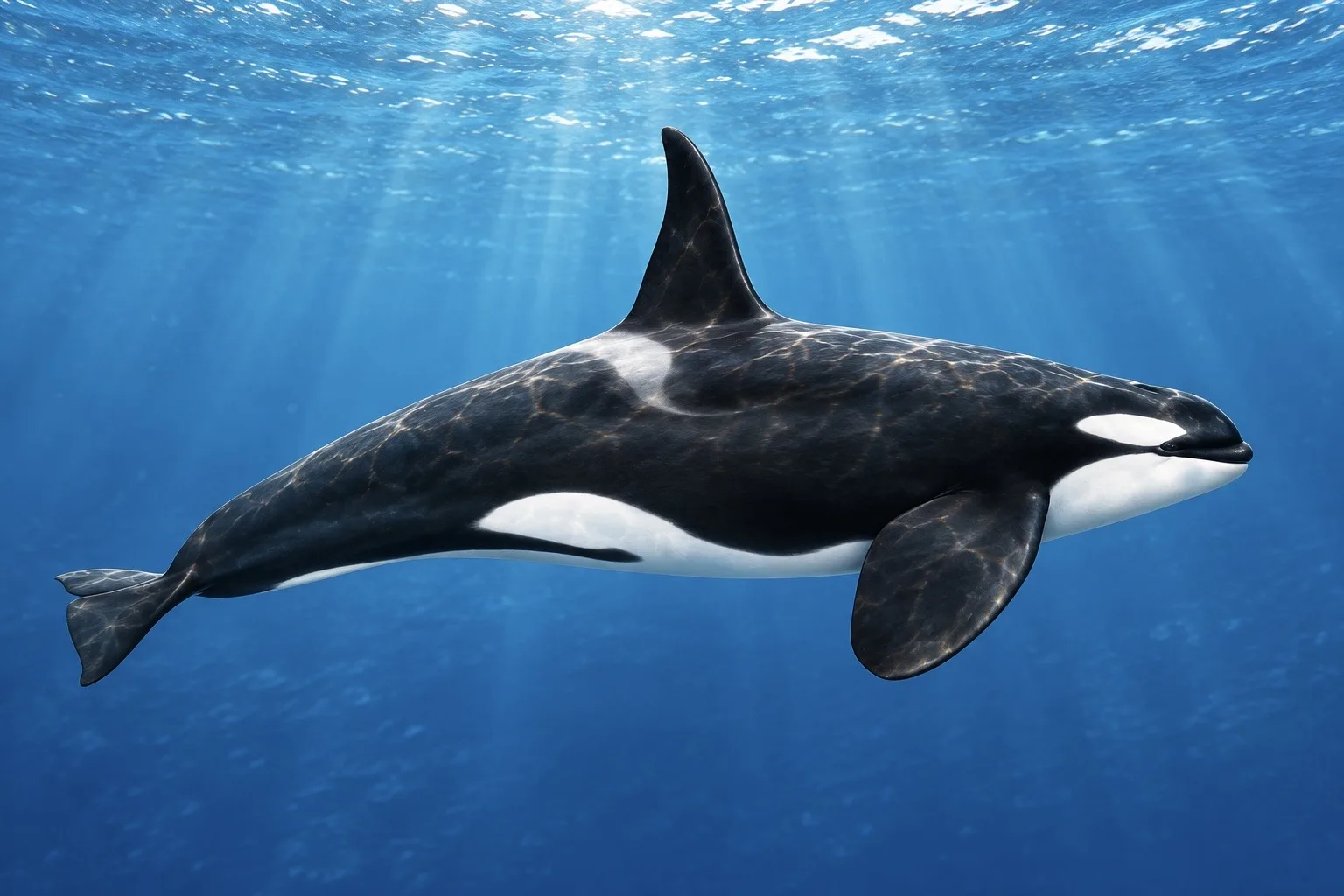
Orcas are rare, unpredictable visitors off Los Cabos, but the Sea of Cortez has its own: a photo-identified pod that hunts rays, bull sharks and even whale sharks, the largest fish on Earth.
Unmistakable: black on top, white underneath, with a white patch behind the eye and a gray or white saddle behind the dorsal fin. Adult males have a much taller dorsal fin, bigger flippers and a bigger tail than females, and each whale’s fin, nicks and scars are as good as a name tag.
The orca is the largest member of the dolphin family and is found in every ocean. Most live in pods of a few to 20 or more whales related through their mothers. Females live about 50 years in the wild and up to at least 90; they’re pregnant for 15 to 18 months, and there’s no fixed calving season. Each population learns its own hunting tactics and calls, so diet depends on culture as much as on what’s around.
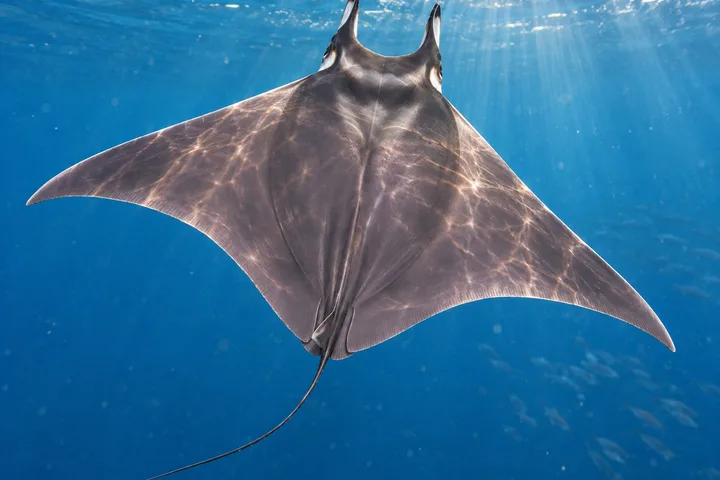
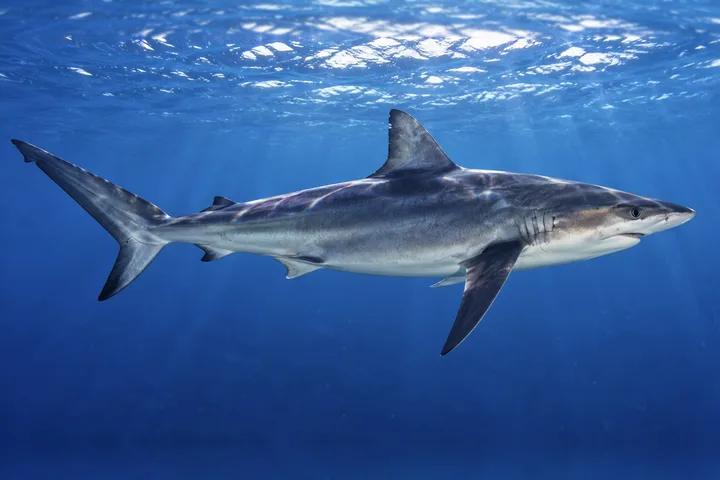
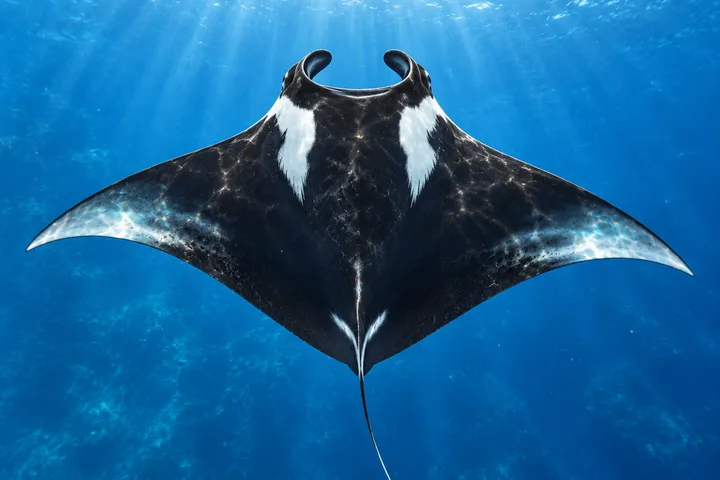
In the Gulf of California, researchers logged orcas in every month of the year with no clear seasonal peak, and photo-identified 86 individuals between 1982 and 1997. Some moved from the Gulf to the Mexican Pacific and California. Today one Gulf pod is known for hunting elasmobranchs: Munk’s devil rays, bull sharks, juvenile white sharks and whale sharks. One of its females, "Niich", was photographed off San José del Cabo in May 2018 while hunting pelagic stingrays.
Between 2018 and 2024, orcas were filmed killing whale sharks four times in the southern Gulf of California. They ram the shark, flip it belly up and attack the pelvic area to reach its lipid-rich liver.
Source ↗An adult male nicknamed Moctezuma took part in three of those four whale shark hunts. He was first photographed in the Gulf in 1992 and has also been seen hunting Munk’s devil rays.
Source ↗In December 2023 a pod of females was filmed eating bull sharks in Cabo Pulmo National Park. In an earlier attack there, a bull shark escaped by hiding against the stern of a dive boat.
Source ↗In August 2020, five female orcas killed two juvenile white sharks in the southwestern Gulf and passed one shark’s liver from whale to whale, while a sea lion tried to steal a piece.
Source ↗On July 31, 2000, eight orcas stranded alive at the southern tip of Isla San José, in the Bay of La Paz. Local fishermen tried to push them back to sea, but all of them died.
Source ↗One adult male was photographed in Magdalena Bay in 1988, in the Bay of La Paz in 1994 and off Pucusana, Peru, in 2001: at least 5,535 km apart.
Source ↗Orcas aren’t something you can plan for off Los Cabos: they show up when they show up, in any month. The recent documented hunts have been between La Paz and Cabo Pulmo, including off San José del Cabo, and most were filmed by people on tour and dive boats.
If a pod appears, slow down, stay well back and let them pass. Never chase them, cut across their path or put people in the water. Mexico sets no specific approach distance for orcas, but they’re a protected species and harassing them is against the law.
| Whale-watching distances (NOM-131) | Don’t apply: the norm defines "ballenas" as baleen whales plus the sperm whale only |
|---|---|
| Closest approach | No specific legal distance for orcas |
| Capture or keeping | Banned for all marine mammals, except authorized scientific research for their conservation (Ley General de Vida Silvestre, art. 60 Bis) |
| Mexico (NOM-059) | Subject to special protection (Pr) |
| IUCN Red List | Data Deficient |
| Good practice | Slow down, keep your distance, never chase, split up a pod or swim with them |
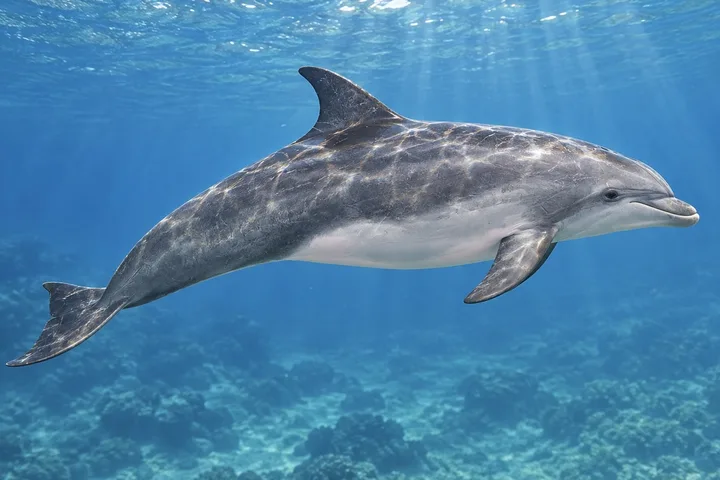
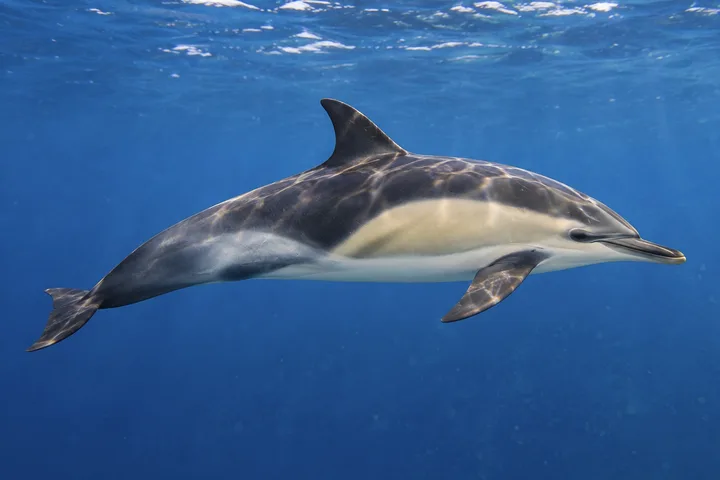
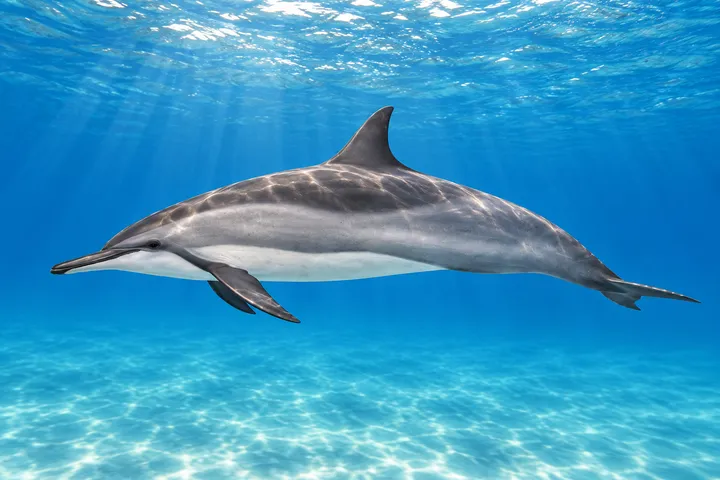
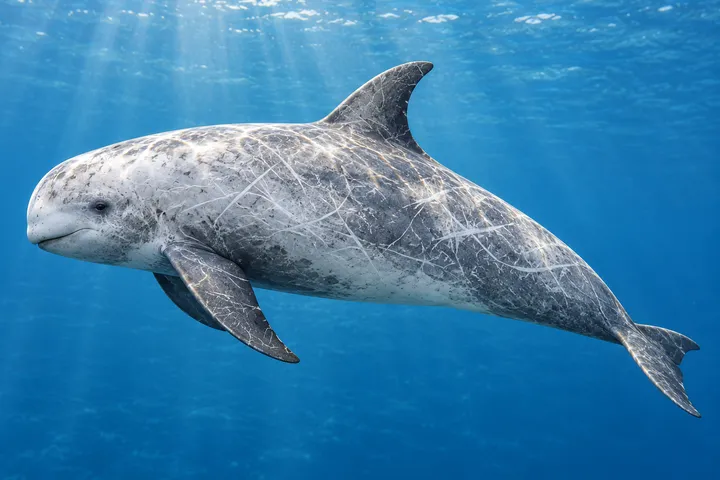
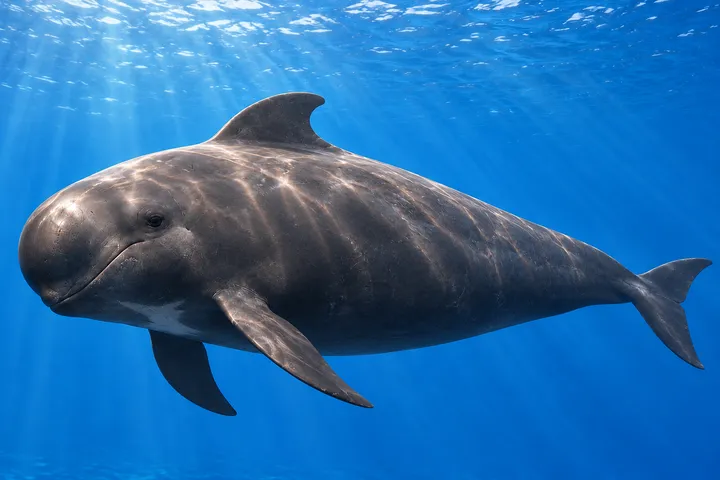
The false killer whale is all dark gray with no white patches, slender, with a small cone-shaped head and S-shaped flippers. The short-finned pilot whale is black with a big round head and a low, wide-based dorsal fin set well forward. Risso’s dolphin is gray to almost white and covered in scratches, with a blunt head and a tall, curved dorsal fin.
Sometimes, but it’s pure luck. In the Gulf of California orcas have been recorded in every month with no clear peak, and recent hunts have been filmed from La Paz to Cabo Pulmo and San José del Cabo.
Gulf orcas have been documented eating devil rays, stingrays, bull sharks, juvenile white sharks and whale sharks. Elsewhere in the eastern tropical Pacific they also take whales, dolphins, sea turtles and fish.
Yes. They’re listed as subject to special protection (Pr) under NOM-059, and Mexican law bans capturing or keeping any marine mammal except for authorized conservation research.

Top illustration: Top Anglers. Photos: iNaturalist contributors, credited on each photo.
Our charters leave the Cabo San Lucas marina every morning. From $799 with license included.