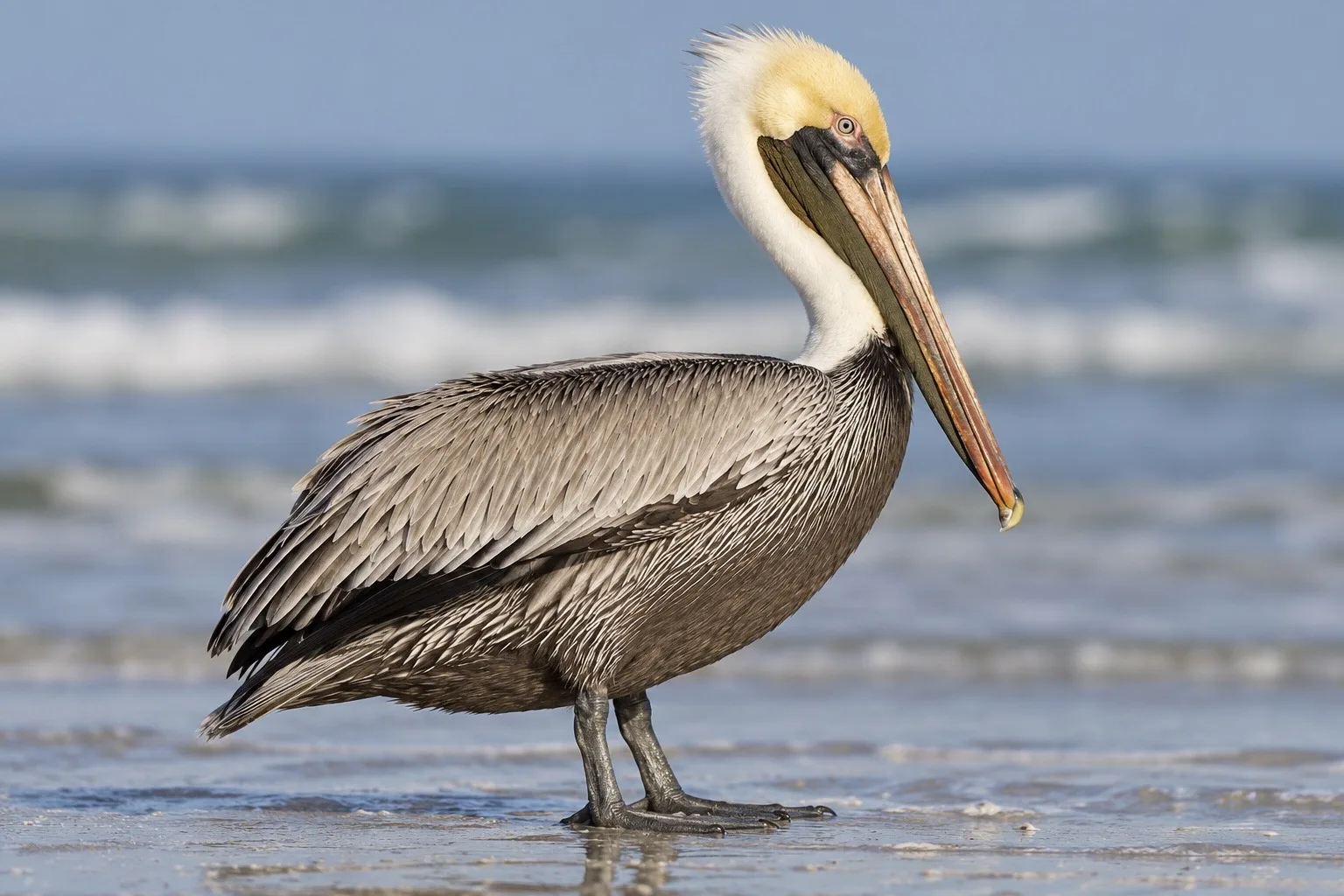
Brown pelican (Pelecanus occidentalis), illustration
Protected Pelecanus occidentalis(Baja subspecies: P. o. californicus)

Brown pelican in Los Cabos

The big gray-brown bird gliding low over the water and crashing headfirst into bait schools is one of the most familiar sights in Cabo. Fifty years ago it nearly vanished from the Pacific coast of North America; today most of its subspecies nests on the islands of the Gulf of California.

100–137 cmLength
~2 mWingspan
2–5 kgWeight
~70,700Breeding pairs, Pacific subspecies (2006)

When to see them

●● best months · ● regular · · occasional. Based on scientific studies and local reports; it changes year to year.

Tap a month to see everything biting in Cabo that month ›

How to recognize it

A huge, dark seabird with a long bill and a big throat pouch. Adults are gray-brown with a yellowish head and white neck; in breeding plumage the back and sides of the neck turn dark reddish-brown, and Pacific birds get a red throat pouch and a reddish bill tip. Outside the breeding season the neck is white and the head only faintly yellow. Young birds are gray-brown above, head and neck included, with a pale belly.

Biology

The Pacific subspecies, the California brown pelican, ranges from California to Colima, Mexico, including the Gulf of California, and nests on dry, rocky offshore islands. A 2006 survey counted about 70,680 breeding pairs across its whole range, 61.5% of them in the Gulf of California. Another 4.4% nested on Baja’s southern Pacific coast, mostly on Isla Santa Margarita in Magdalena Bay. El Niño years mean fewer nests, poor breeding success or skipped seasons.

Brown pelicans eat small schooling fish such as anchovies and herring, usually within about 20 km of shore. They dive headfirst from as high as 20 m, and the pouch can hold up to about 10 liters of water, which is drained before swallowing. They nest in colonies of up to several thousand pairs, lay 2 to 4 eggs, incubate them for 29 to 35 days, and the chicks stay in the nest 77 to 84 days.

Things you probably didn't know

01

Eggs that broke under their parents

DDT upset the pelicans’ calcium metabolism and their eggshells became so thin they cracked under the incubating adult. In 1970, 552 nesting attempts on West Anacapa Island, California, produced a single chick.

Source ↗
02

Off the endangered list

First listed as endangered in the U.S. in 1970, brown pelicans recovered after DDT was banned in 1972 and were removed from the list in November 2009, with more than 650,000 birds across their range.

Source ↗
03

The Gulf is home base

In a 2006 survey, 61.5% of all breeding pairs of the Pacific subspecies nested in the Gulf of California. Two or three islands in the San Lorenzo archipelago alone held about 17,225 pairs, roughly a quarter of the total.

Source ↗
04

A dive like a fighter jet

Brown pelicans enter the water upside down after a counterclockwise roll, a move researchers compared to the split-S turn pilots use. Air sacs under the skin of the belly and neck help cushion the impact.

Source ↗
05

Feet as incubators

Pelicans warm their eggs with the skin of their feet, essentially standing on them. With DDT-thinned shells, that weight was enough to break them.

Source ↗
06

Gulls on their heads

While a pelican drains water from its pouch after a dive, gulls often try to steal the fish, sometimes perching right on the pelican’s head. The oldest brown pelican on record was 43 years old.

Source ↗

Photos

Jay Pruett · iNaturalist · CC BY 4.0
iNaturalist contributor · iNaturalist · CC0
MarvalPhotography19 · iNaturalist · CC BY 4.0
José Javier Barrios Flores · iNaturalist · CC BY 4.0
Bill Levine · iNaturalist · CC BY 4.0

Seeing them from the boat

In Cabo you’ll see brown pelicans every day: flying in lines just above the water, resting on rocks and boats in the marina, and diving on bait schools close to shore. Keep an eye on your bait when they’re around, don’t leave baited lines unattended, and never feed them fish scraps or carcasses: the bones and spines can tear their throat or get stuck.

If a pelican grabs your bait, don’t cut or break the line, because trailing line can entangle it and leave it unable to feed. Reel it in slowly and gently, without lifting it by the line, and get help: seabirds peck at faces and eyes. Control the bill first, cover the head with a cloth to calm it, never pull the hook straight out (cut off the barb first), and remove all the line before letting it go. A seriously injured bird should be reported to the authorities (PROFEPA in Mexico).

Rules & conservation

Mexico (NOM-059)Threatened (A), Pacific subspecies P. o. californicus
Ley General de Vida Silvestre, art. 85Species at risk may only be taken with authorization, giving priority to restoration, repopulation, reintroduction and research
Federal Penal Code, art. 4201 to 9 years in prison for unlawfully capturing, possessing or harming a threatened species
Islas del Golfo de CaliforniaFlora and fauna protection area, part of a UNESCO World Heritage Site (2005) of 244 islands, islets and coastal areas
IUCN Red ListLeast Concern
United StatesRemoved from the endangered list in 2009; still protected by the Migratory Bird Treaty Act

Don't confuse it with

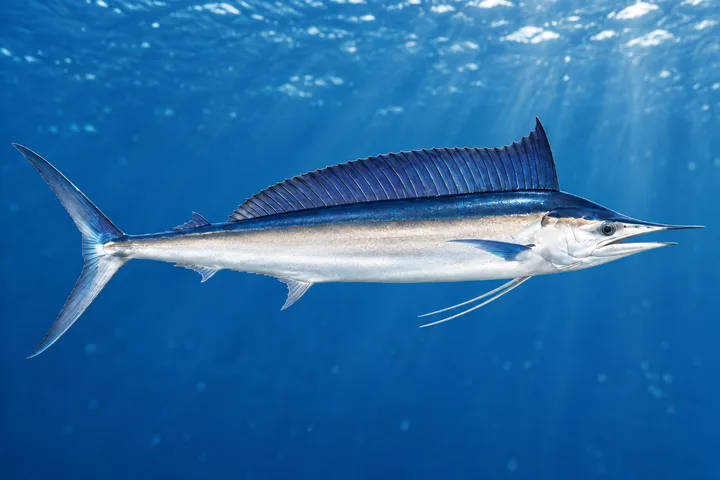
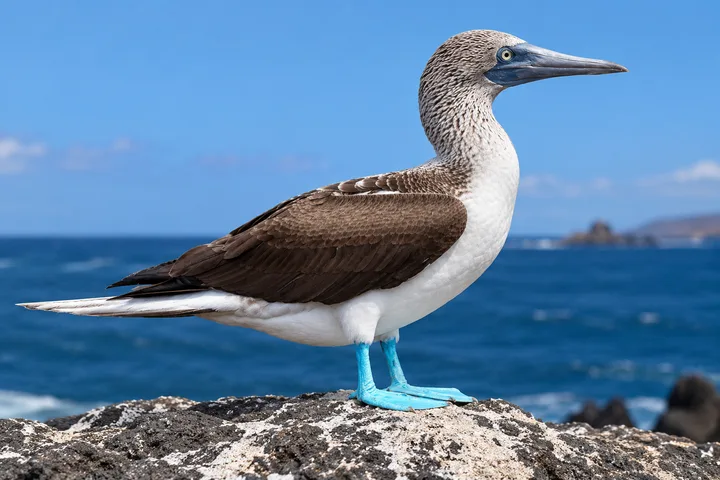
The American white pelican is much larger and white, with black flight feathers, and scoops fish from the surface instead of diving. Boobies also plunge-dive, but they’re much smaller and slimmer, with a pointed, dagger-like bill and no big pouch; the brown booby is dark brown with a sharply white belly.

Questions

Are brown pelicans protected in Mexico?

Yes. The Pacific subspecies is listed as threatened (A) in NOM-059-SEMARNAT-2010, so capturing, possessing or harming one is a federal offense.

Can I feed the pelicans at the marina?

No. Fish scraps and carcasses are often too big to swallow, and their bones and spines can tear a pelican’s throat or get stuck in it.

What should I do if a pelican takes my bait?

Don’t cut the line. Reel it in slowly, control the bill, cover its head, cut off the barb before removing the hook, take off all the line and release it.

By Max VargasTop Anglers, Cabo San Lucas · international judge at big game fishing world championships · reviewed October 2026

Sources

Top illustration: Top Anglers. Photos: iNaturalist contributors, credited on each photo.

See Cabo from the water

Our charters leave the Cabo San Lucas marina every morning. From $453 with license included.
More species

Pacific sierra
Pacific sierra
Scomberomorus sierra
California yellowtail
Seriola dorsalis
Pacific crevalle jack
Caranx caninus
Skipjack tuna
Skipjack tuna
Katsuwonus pelamis
Shortfin mako
Shortfin mako
Isurus oxyrinchus
Leopard grouper
Leopard grouper
Mycteroperca rosacea
Colorado snapper
Colorado snapper
Lutjanus colorado
Striped bonito
Striped bonito
Sarda orientalis
Black skipjack
Black skipjack
Euthynnus lineatus
Finescale triggerfish
Balistes polylepis
Scalloped hammerhead
Sphyrna lewini
Humpback whale
Humpback whale
Megaptera novaeangliae
Gray whale
Gray whale
Eschrichtius robustus
California sea lion
California sea lion
Zalophus californianus
Whale shark
Whale shark
Rhincodon typus
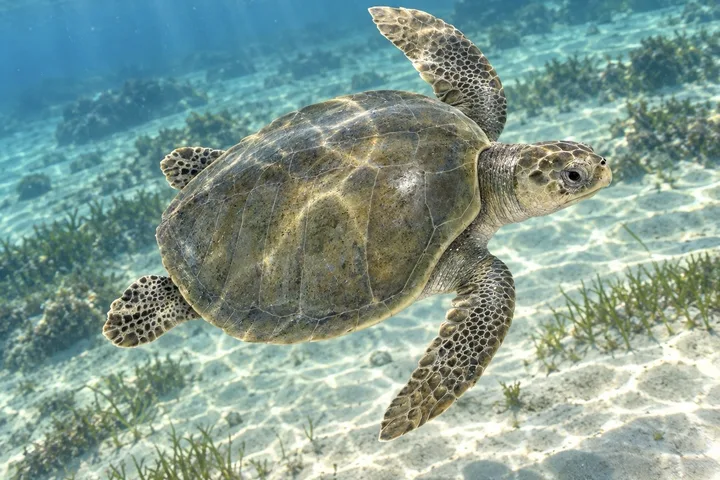
Olive ridley sea turtle
Lepidochelys olivacea
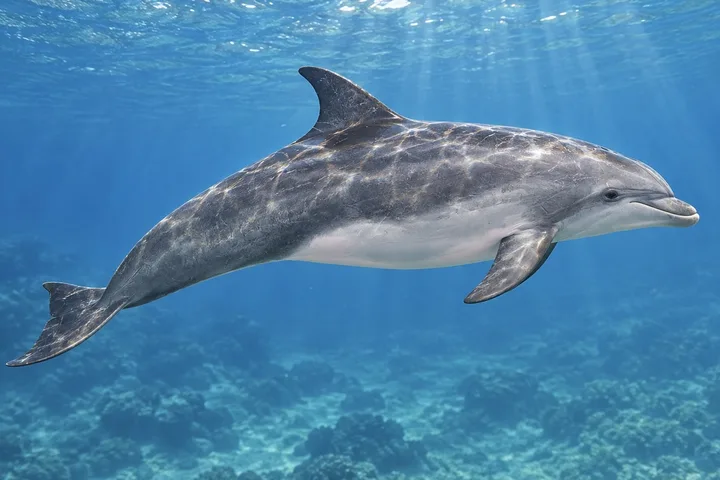
Bottlenose dolphin
Bottlenose dolphin
Tursiops truncatus
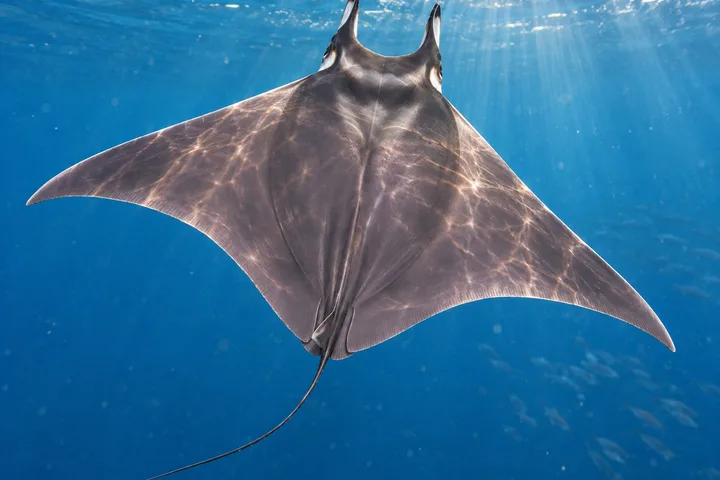
Munk's devil ray (mobula)
Mobula munkiana
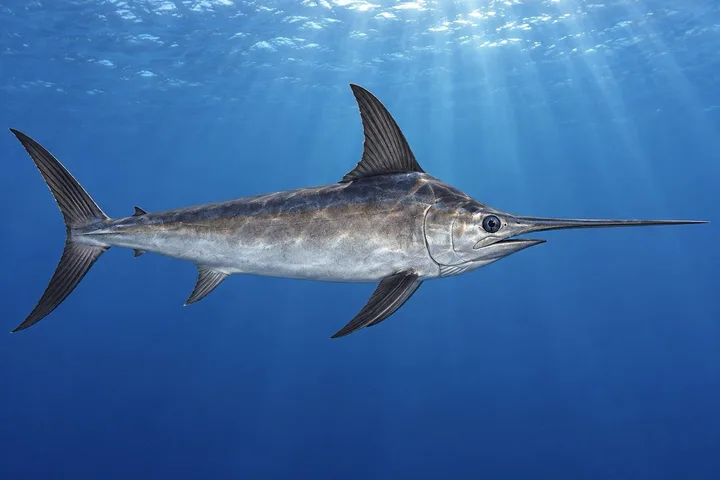
Swordfish
Swordfish
Xiphias gladius
Almaco jack
Almaco jack
Seriola rivoliana
Bigeye trevally
Bigeye trevally
Caranx sexfasciatus
Spotted cabrilla
Spotted cabrilla
Epinephelus analogus
Pacific dog snapper
Pacific dog snapper
Lutjanus novemfasciatus
Barred pargo
Barred pargo
Hoplopagrus guentherii
Blue whale
Blue whale
Balaenoptera musculus
Green sea turtle (black turtle)
Chelonia mydas
Leatherback sea turtle
Dermochelys coriacea
Rainbow runner
Rainbow runner
Elagatis bipinnulata
Gulf grouper
Gulf grouper
Mycteroperca jordani
Yellow snapper
Yellow snapper
Lutjanus argentiventris
Pacific white snook
Pacific white snook
Centropomus viridis
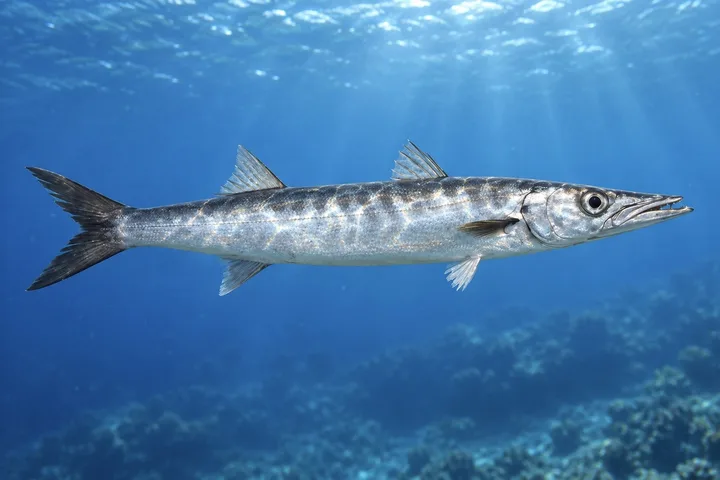
Mexican barracuda
Mexican barracuda
Sphyraena ensis
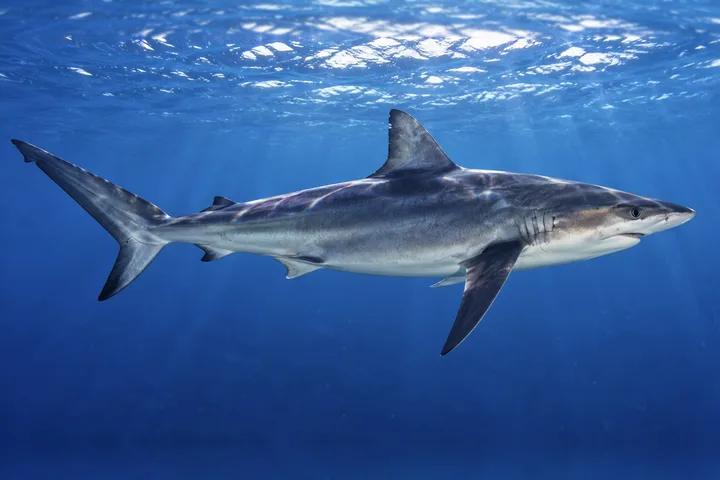
Silky shark
Silky shark
Carcharhinus falciformis
Mexican needlefish
Mexican needlefish
Tylosurus fodiator
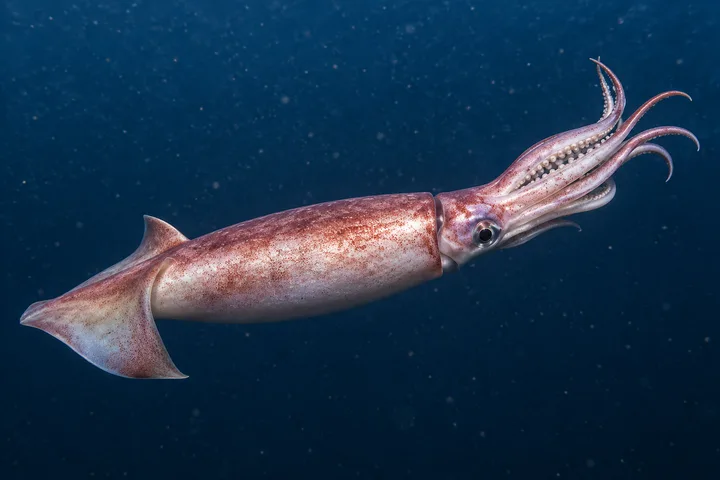
Humboldt squid
Humboldt squid
Dosidicus gigas
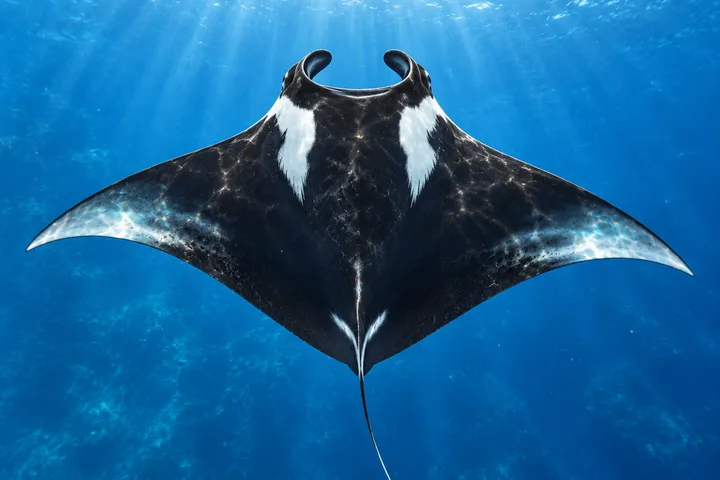
Giant manta ray
Giant manta ray
Mobula birostris
Fin whale
Fin whale
Balaenoptera physalus
Orca (killer whale)
Orca (killer whale)
Orcinus orca
Hawksbill sea turtle (carey)
Eretmochelys imbricata
Magnificent frigatebird
Fregata magnificens
Shortbill spearfish
Shortbill spearfish
Tetrapturus angustirostris
Loggerhead sea turtle (caguama)
Caretta caretta
Osprey
Osprey
Pandion haliaetus
Blue-footed booby
Blue-footed booby
Sula nebouxii
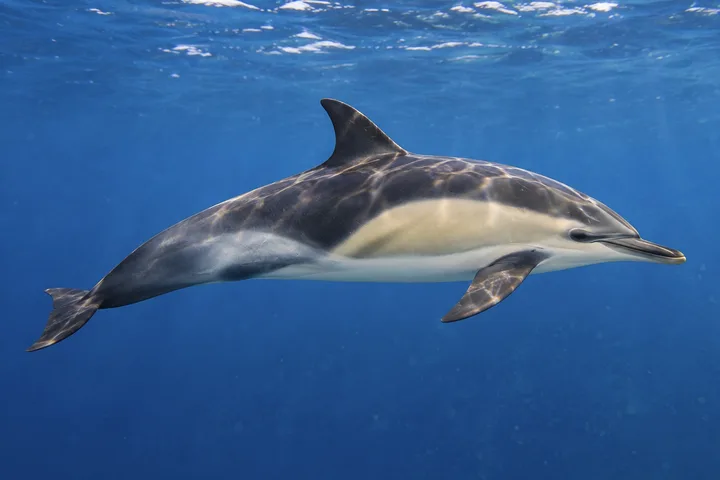
Common dolphin
Common dolphin
Delphinus delphis
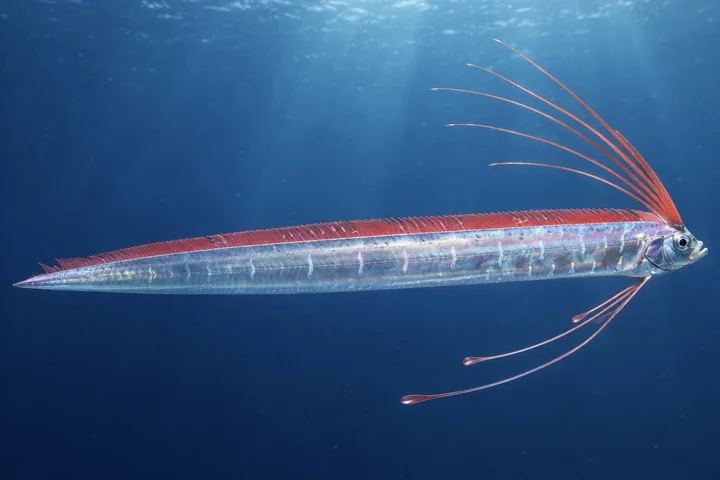
Oarfish
Oarfish
Regalecus russelii
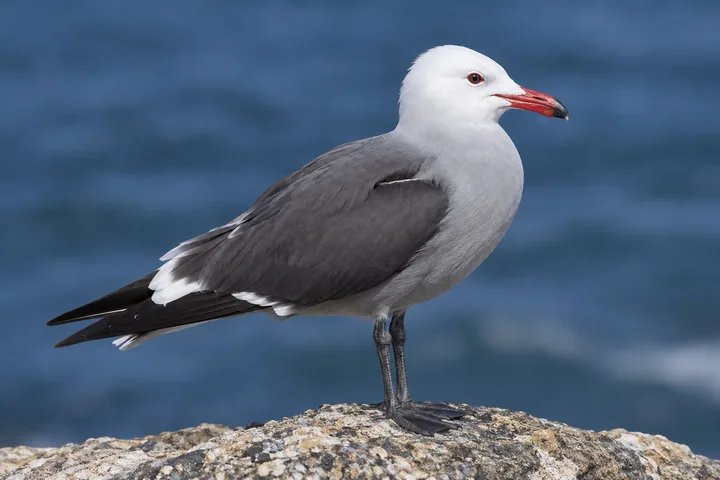
Heermann’s gull
Heermann’s gull
Larus heermanni
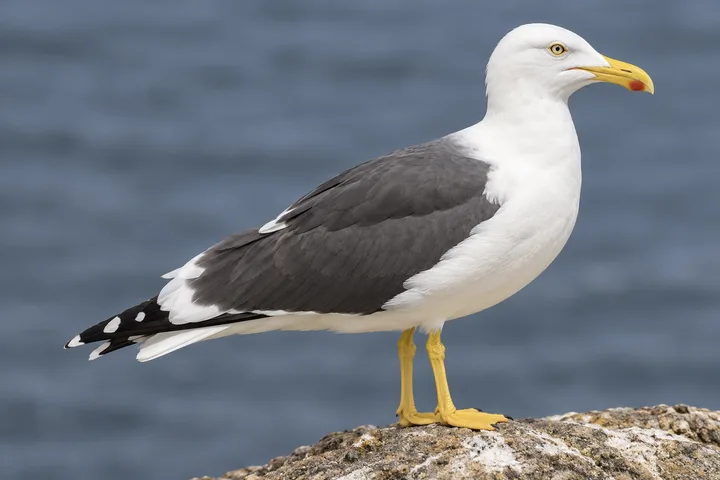
Yellow-footed gull
Yellow-footed gull
Larus livens
Ocean sunfish
Ocean sunfish
Mola mola
Sperm whale
Sperm whale
Physeter macrocephalus
Sally Lightfoot crab
Grapsus grapsus
Blue spiny lobster
Blue spiny lobster
Panulirus inflatus
Chocolate clam
Chocolate clam
Megapitaria squalida
Pelagic red crab
Pelagic red crab
Grimothea planipes
Hubbs’ octopus
Hubbs’ octopus
Octopus hubbsorum
Jewel moray
Jewel moray
Muraena lentiginosa
Panamic green moray
Panamic green moray
Gymnothorax castaneus
Spinner dolphin
Spinner dolphin
Stenella longirostris
Risso’s dolphin
Risso’s dolphin
Grampus griseus
Short-finned pilot whale
Globicephala macrorhynchus
Bigeye tuna
Bigeye tuna
Thunnus obesus
Pelagic thresher
Pelagic thresher
Alopias pelagicus
Blue shark
Blue shark
Prionace glauca
Giant hawkfish
Giant hawkfish
Cirrhitus rivulatus
Pacific bonito
Pacific bonito
Sarda lineolata
Cortez angelfish
Cortez angelfish
Pomacanthus zonipectus
Talk to the family

Questions? Message the family

The Vargas family answers personally. 7 days a week, 5 AM – 6 PM Cabo time.