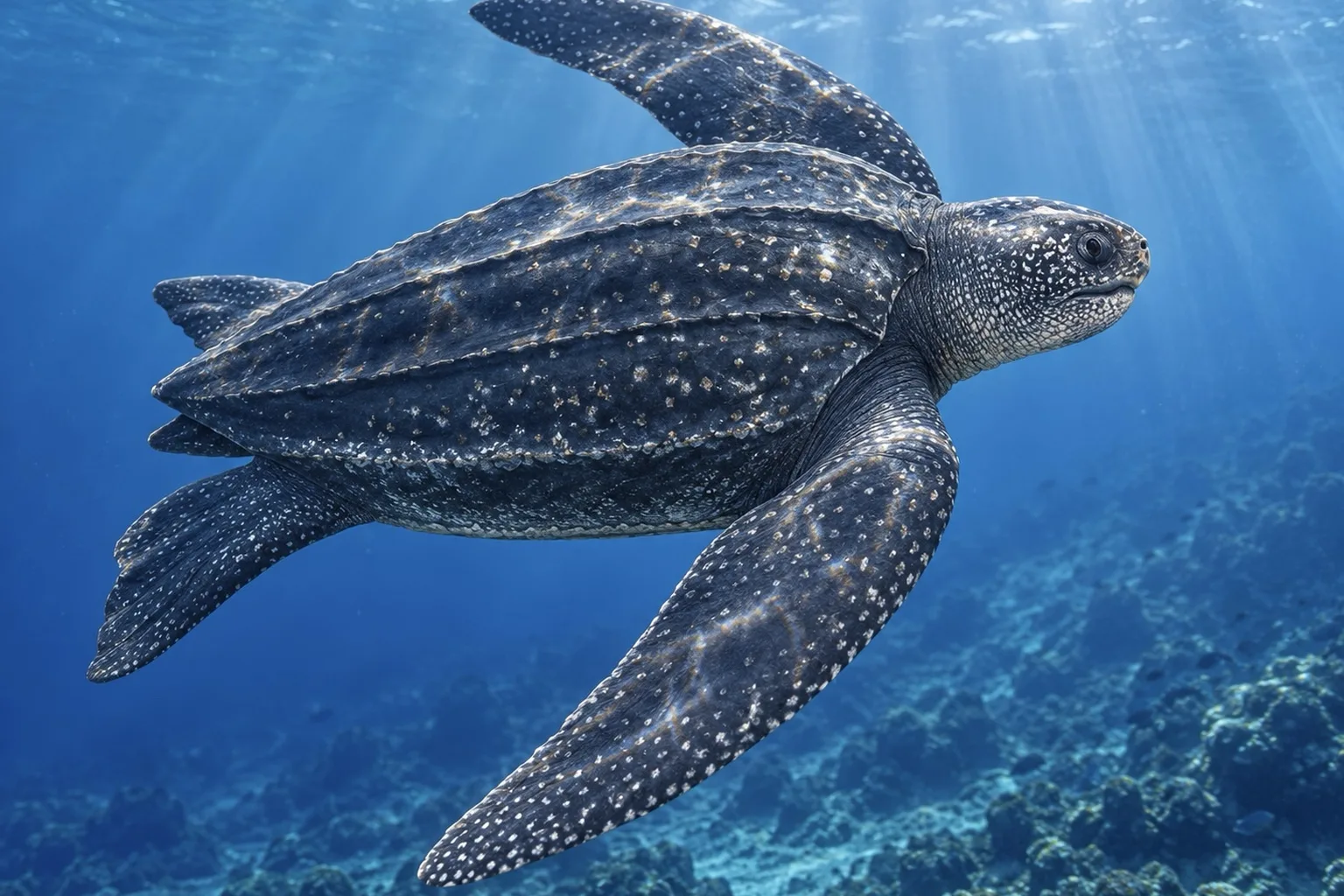
Leatherback sea turtle (Dermochelys coriacea), illustration
Protected Dermochelys coriacea

Leatherback sea turtle in Los Cabos

The largest turtle on Earth has no hard shell, keeps itself warm in cold water and dives deeper than most whales. Its East Pacific population, which nests in Mexico, is one of the most endangered sea turtle populations in the world.

Up to 1.8 mShell length
916 kgLargest ever recorded
~1,200 mDeepest dive
176East Pacific nesting females per year

When to see them

●● best months · ● regular · · occasional. Based on scientific studies and local reports; it changes year to year.

Tap a month to see everything biting in Cabo that month ›

How to recognize it

Huge, with a black, leathery back speckled with white and seven long ridges running from head to tail; there are no scutes or hard plates. The front flippers are very long, the underside is pinkish-white, and many have a pink spot on top of the head.

Biology

Leatherbacks live in every ocean. The East Pacific population nests on beaches in Mexico and Central America from October to March, peaking in December and January. In Mexico the key beaches are Mexiquillo (Michoacán), Tierra Colorada (Guerrero), and Cahuitán and Barra de la Cruz (Oaxaca); CONANP lists Todos Santos and Agua Blanca in Baja California Sur as secondary nesting beaches. On Mexico’s Pacific coast a female lays about five clutches a season, roughly ten days apart, averaging about 62 eggs each, and the eggs hatch in about 60 days.

They feed on soft, gelatinous animals such as jellyfish and salps, which they grab with sharp-edged jaws. Some swim more than 10,000 miles (16,000 km) a year between nesting and feeding areas. They mature at 9 to 20 years. Nesting counts in Mexico and Central America have fallen more than 90% since the 1980s, mainly because of bycatch in fisheries and egg poaching; by 2011–2015 only about 176 females a year were nesting across Mexico, Nicaragua and Costa Rica.

Things you probably didn't know

01

A warm-bodied reptile

Leatherbacks have been measured at 25.5 °C in 7.5 °C seawater. Researchers called it gigantothermy: a huge body, insulating fat and special blood circulation hold the heat in. They suggested big dinosaurs may have stayed warm the same way.

Source ↗
02

Deeper than most whales

The deepest recorded leatherback dive is nearly 4,000 ft (about 1,200 m), and they can stay down for up to 85 minutes.

Source ↗
03

The 916 kg giant

The largest leatherback ever recorded washed up at Harlech, Wales, in 1988: 916 kg and 2.56 m along the shell. It had drowned, and a compacted piece of plastic was blocking its intestine.

Source ↗
04

A highway past the Galápagos

Satellite tags on 46 females that nested at Playa Grande, Costa Rica, showed them leaving along the same narrow corridor every year, past the Galápagos and on to the South Pacific.

Source ↗
05

A fingerprint on the head

Many leatherbacks have a pink spot on top of the head whose shape is different in each turtle, so researchers can use it to recognize individuals.

Source ↗
06

Back in Cabo after 14 years

In late December 2024 a leatherback laid about 80 eggs on a beach in Cabo San Lucas Bay, the first leatherback nest there since 2010. Local turtle protectors moved the eggs to an incubation area to protect them.

Source ↗

Photos

Martín Sánchez Vilchis · iNaturalist · CC BY-SA 4.0
nmoorhatch · iNaturalist · CC BY 4.0
James Telford · iNaturalist · CC BY 4.0
Pam Kleinsasser · iNaturalist · CC BY 4.0
Ángela María Gómez M · iNaturalist · CC BY-SA 4.0

Seeing them from the boat

Seeing a leatherback at sea off Cabo is a rare event. The nearest regular nesting beaches are on Mexico’s mainland Pacific coast, but a few females nest in Baja California Sur between October and March: Los Cabos programs protected leatherback nests on the Pacific beaches in December 2021, in Cabo San Lucas Bay in December 2024 and at La Ribera on the East Cape in November 2025. If you spot one, slow down, keep your distance and let it go its way.

If a leatherback gets hooked or tangled in a line, don’t try to bring it aboard: never lift it out of the water by the line and never use a gaff. Move the boat slowly toward it, keep the line from jerking, take off any line wrapped around it, and if the hook can’t be removed safely, cut the line as close to the hook as possible. Every sea turtle caught by accident must go back to the sea by law; report the encounter to PROFEPA.

Rules & conservation

Mexico (NOM-059-SEMARNAT-2010)In danger of extinction (P)
Total ban (DOF, May 31, 1990)Total, indefinite ban: capturing, chasing or disturbing sea turtles and taking their eggs is prohibited; turtles caught by accident must be returned to the sea
Federal Penal Code, art. 4201 to 9 years in prison and 300 to 3,000 days’ fine for capturing, harming or killing a sea turtle or taking its products; up to 3 more years in protected areas or for commercial ends
Nesting beaches (NOM-162-SEMARNAT-2012)No vehicles on nesting beaches in season except monitoring and protection work; lights must not shine on the beach
IUCN Red ListVulnerable globally (2013); East Pacific subpopulation Critically Endangered (2013)
CITESAppendix I (international commercial trade banned)

The East Pacific population has dropped more than 90% since the 1980s and loses about 15% a year. A 2020 study projected it would disappear in less than 60 years unless adult survival, cut mostly by fishing bycatch, improves by at least 20%.

Don't confuse it with

Every other sea turtle has a hard shell made of plates (scutes) and is far smaller. The olive ridley (golfina), which nests on Los Cabos beaches, has a rounded gray-green shell.

Questions

Do leatherback turtles nest in Cabo San Lucas?

Rarely. A leatherback nested in Cabo San Lucas Bay in December 2024, the first there since 2010, and a few other nests have been found in Los Cabos and the East Cape. Nesting runs from October to March.

Can you see leatherbacks on a fishing trip in Cabo?

It’s possible but rare. If you do, slow down and keep your distance; it’s illegal to chase or disturb any sea turtle in Mexico.

Why are East Pacific leatherbacks in such trouble?

Mainly accidental capture in fisheries and egg poaching. Nesting in Mexico and Central America has fallen more than 90% since the 1980s, and the subpopulation is listed as Critically Endangered.

By Max VargasTop Anglers, Cabo San Lucas · international judge at big game fishing world championships · reviewed October 2026

Sources

Top illustration: Top Anglers. Photos: iNaturalist contributors, credited on each photo.

See Cabo from the water

Our charters leave the Cabo San Lucas marina every morning. From $799 with license included.
More species

Pacific sierra
Pacific sierra
Scomberomorus sierra
California yellowtail
Seriola dorsalis
Pacific crevalle jack
Caranx caninus
Skipjack tuna
Skipjack tuna
Katsuwonus pelamis
Shortfin mako
Shortfin mako
Isurus oxyrinchus
Leopard grouper
Leopard grouper
Mycteroperca rosacea
Colorado snapper
Colorado snapper
Lutjanus colorado
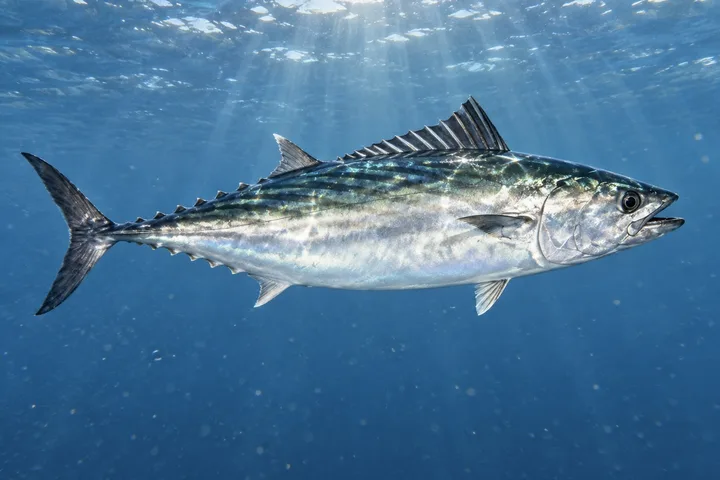
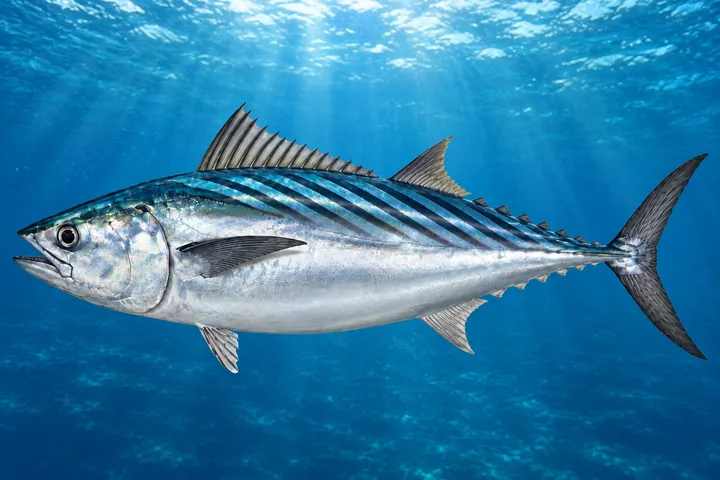
Striped bonito
Striped bonito
Sarda orientalis
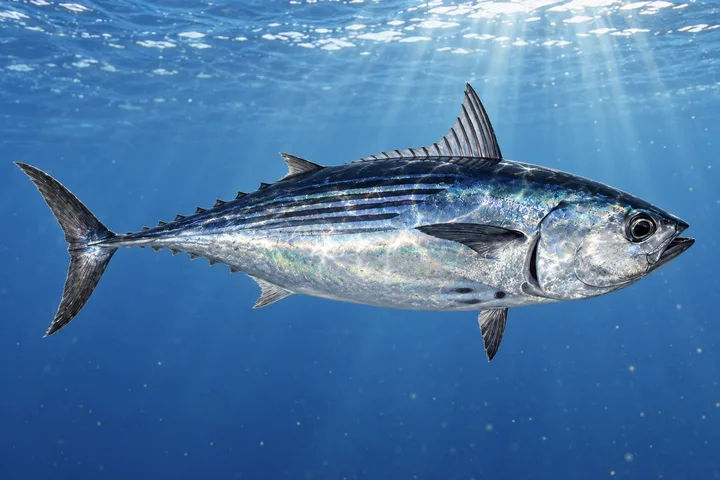
Black skipjack
Black skipjack
Euthynnus lineatus
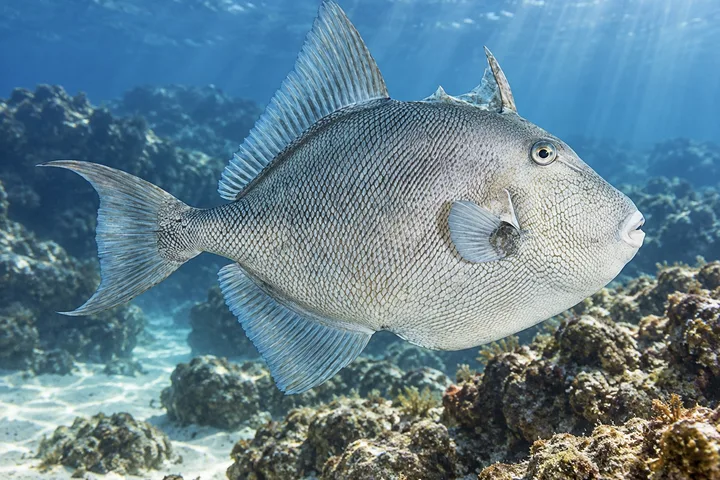
Finescale triggerfish
Balistes polylepis
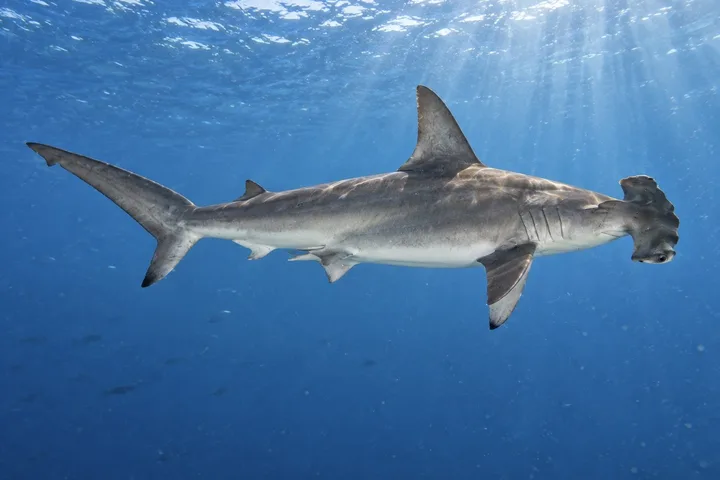
Scalloped hammerhead
Sphyrna lewini
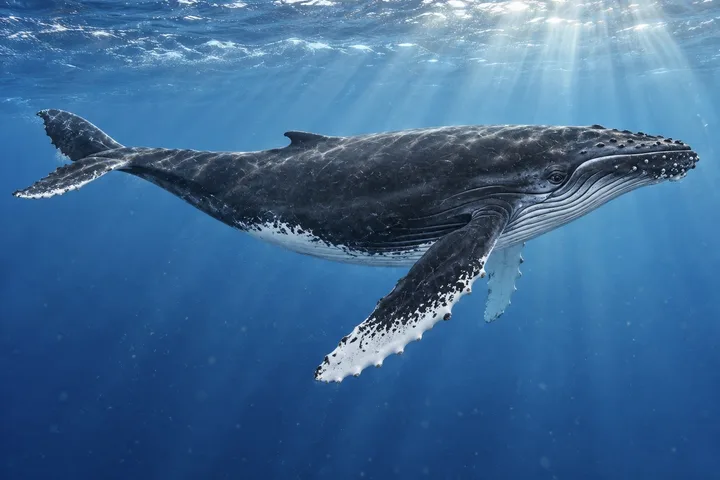
Humpback whale
Humpback whale
Megaptera novaeangliae
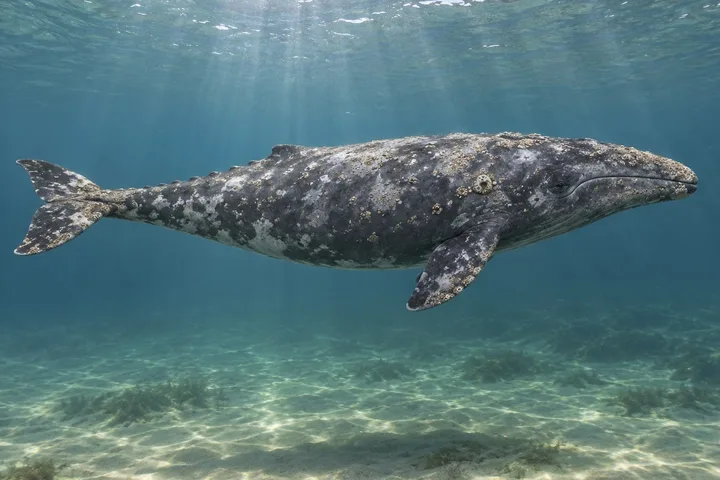
Gray whale
Gray whale
Eschrichtius robustus
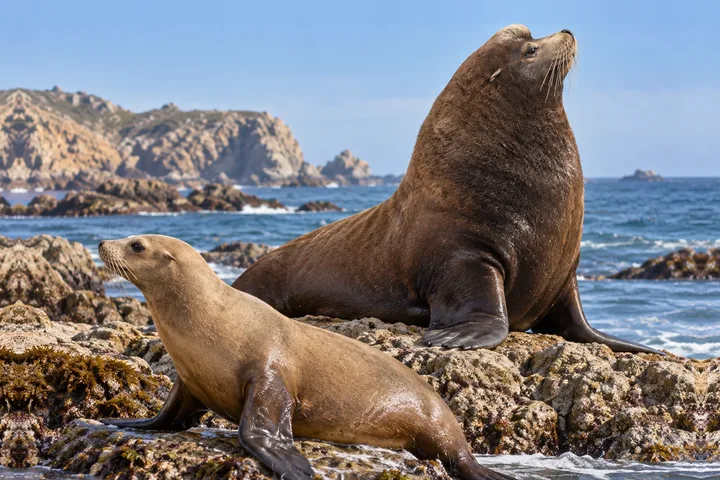
California sea lion
California sea lion
Zalophus californianus
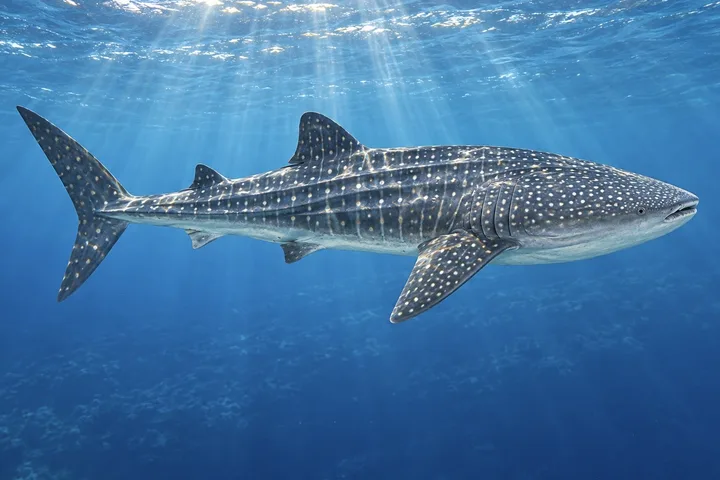
Whale shark
Whale shark
Rhincodon typus
Olive ridley sea turtle
Lepidochelys olivacea
Bottlenose dolphin
Bottlenose dolphin
Tursiops truncatus
Munk's devil ray (mobula)
Mobula munkiana
Swordfish
Swordfish
Xiphias gladius
Almaco jack
Almaco jack
Seriola rivoliana
Bigeye trevally
Bigeye trevally
Caranx sexfasciatus
Spotted cabrilla
Spotted cabrilla
Epinephelus analogus
Pacific dog snapper
Pacific dog snapper
Lutjanus novemfasciatus
Barred pargo
Barred pargo
Hoplopagrus guentherii
Blue whale
Blue whale
Balaenoptera musculus
Green sea turtle (black turtle)
Chelonia mydas
Rainbow runner
Rainbow runner
Elagatis bipinnulata
Gulf grouper
Gulf grouper
Mycteroperca jordani
Yellow snapper
Yellow snapper
Lutjanus argentiventris
Pacific white snook
Pacific white snook
Centropomus viridis
Mexican barracuda
Mexican barracuda
Sphyraena ensis
Silky shark
Silky shark
Carcharhinus falciformis
Mexican needlefish
Mexican needlefish
Tylosurus fodiator
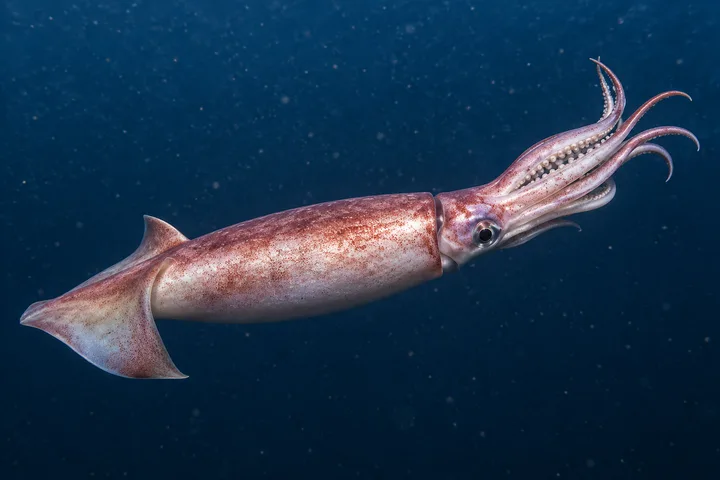
Humboldt squid
Humboldt squid
Dosidicus gigas
Giant manta ray
Giant manta ray
Mobula birostris
Fin whale
Fin whale
Balaenoptera physalus
Orca (killer whale)
Orca (killer whale)
Orcinus orca
Hawksbill sea turtle (carey)
Eretmochelys imbricata
Brown pelican
Brown pelican
Pelecanus occidentalis
Magnificent frigatebird
Fregata magnificens
Shortbill spearfish
Shortbill spearfish
Tetrapturus angustirostris
Loggerhead sea turtle (caguama)
Caretta caretta
Osprey
Osprey
Pandion haliaetus
Blue-footed booby
Blue-footed booby
Sula nebouxii
Common dolphin
Common dolphin
Delphinus delphis
Oarfish
Oarfish
Regalecus russelii
Heermann’s gull
Heermann’s gull
Larus heermanni
Yellow-footed gull
Yellow-footed gull
Larus livens
Ocean sunfish
Ocean sunfish
Mola mola
Sperm whale
Sperm whale
Physeter macrocephalus
Sally Lightfoot crab
Grapsus grapsus
Blue spiny lobster
Blue spiny lobster
Panulirus inflatus
Chocolate clam
Chocolate clam
Megapitaria squalida
Pelagic red crab
Pelagic red crab
Grimothea planipes
Hubbs’ octopus
Hubbs’ octopus
Octopus hubbsorum
Jewel moray
Jewel moray
Muraena lentiginosa
Panamic green moray
Panamic green moray
Gymnothorax castaneus
Spinner dolphin
Spinner dolphin
Stenella longirostris
Risso’s dolphin
Risso’s dolphin
Grampus griseus
Short-finned pilot whale
Globicephala macrorhynchus
Bigeye tuna
Bigeye tuna
Thunnus obesus
Pelagic thresher
Pelagic thresher
Alopias pelagicus
Blue shark
Blue shark
Prionace glauca
Giant hawkfish
Giant hawkfish
Cirrhitus rivulatus
Pacific bonito
Pacific bonito
Sarda lineolata
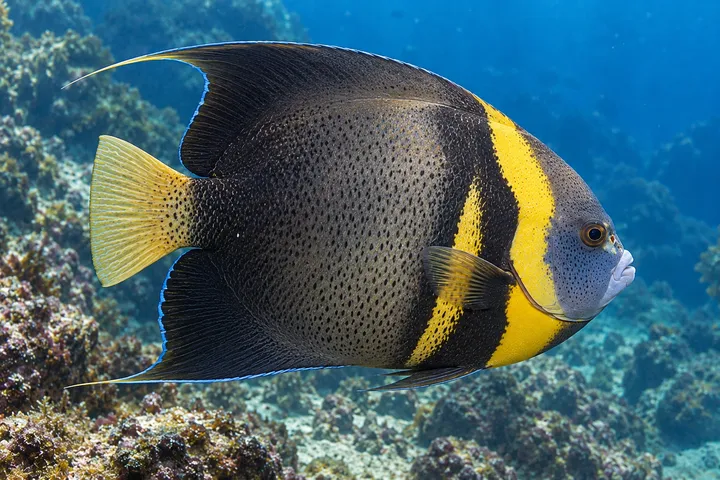
Cortez angelfish
Cortez angelfish
Pomacanthus zonipectus
Talk to the family

Questions? Message the family

The Vargas family answers personally. 7 days a week, 5 AM – 6 PM Cabo time.