A world record from Baja
The all-tackle world record, 11.79 kg, was caught on Thetis Bank, off Baja's Pacific coast, in 1991: heavier than the maximum weight listed by FishBase.
Source ↗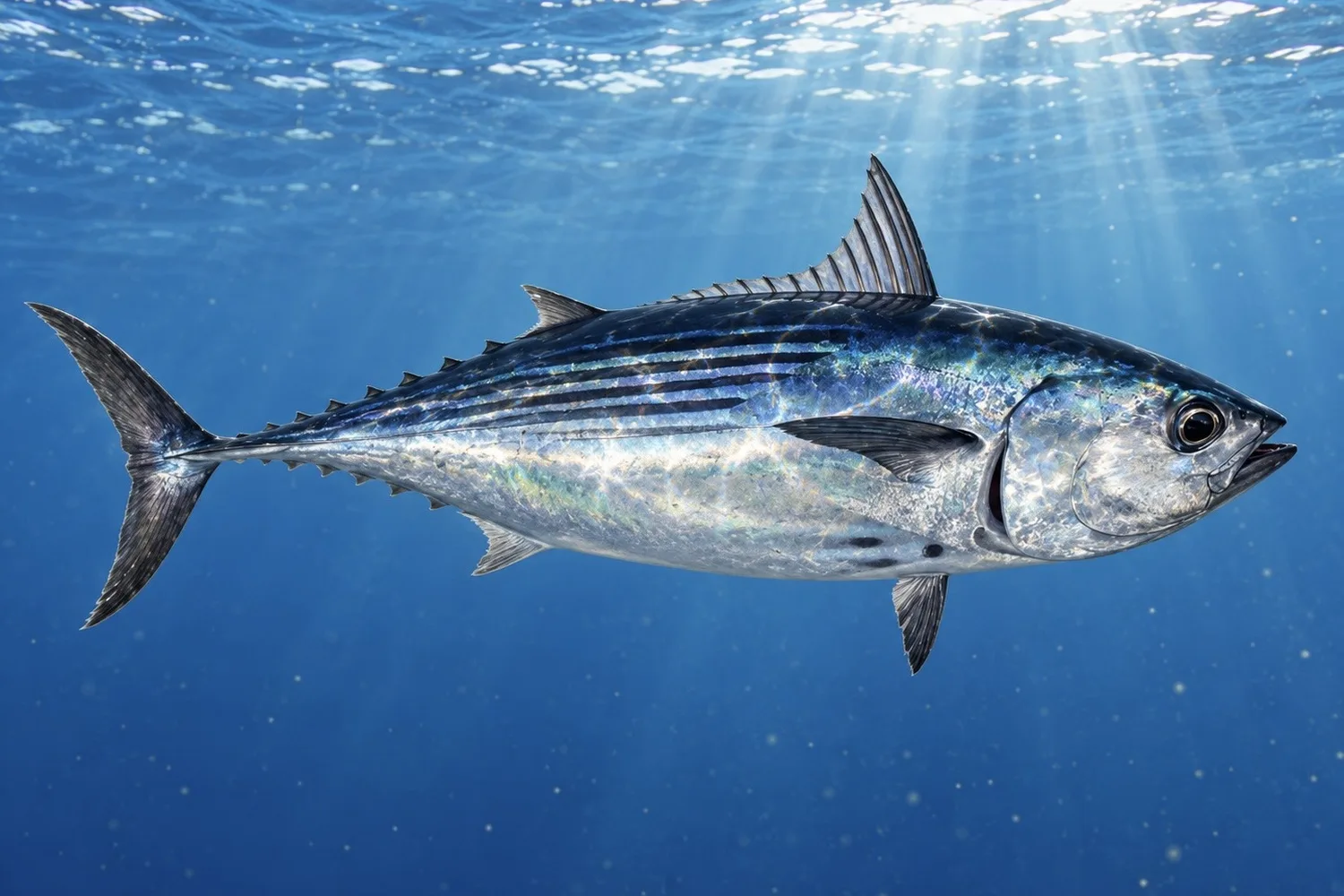
Small, dark-fleshed and everywhere off Cabo. Black skipjack hit almost anything trolled, and their world record was caught on a Baja bank.
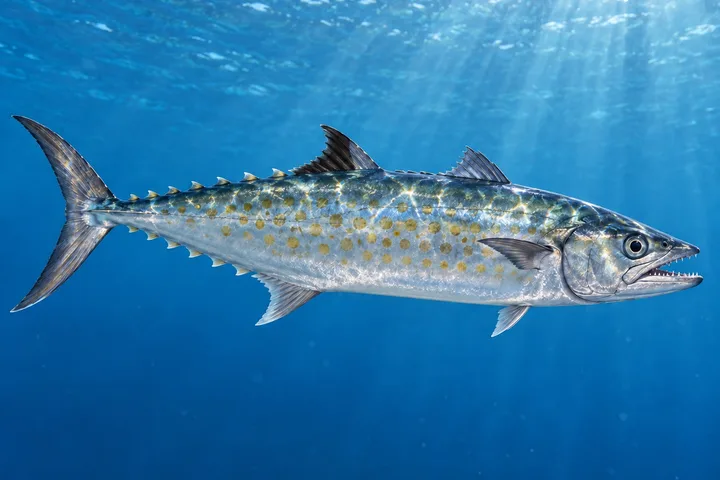
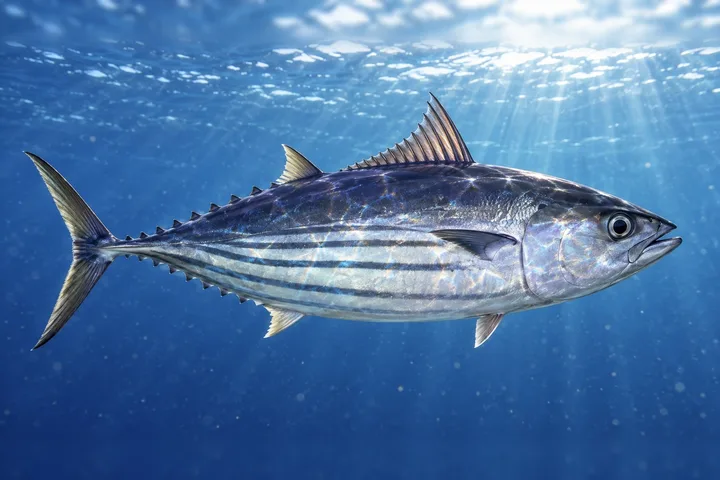
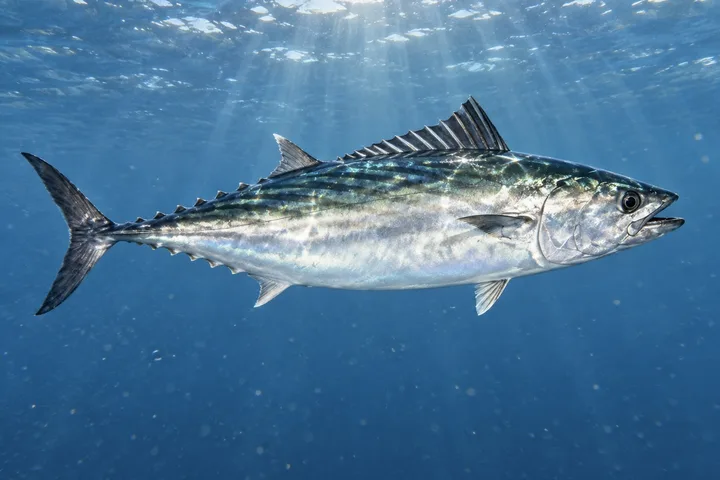
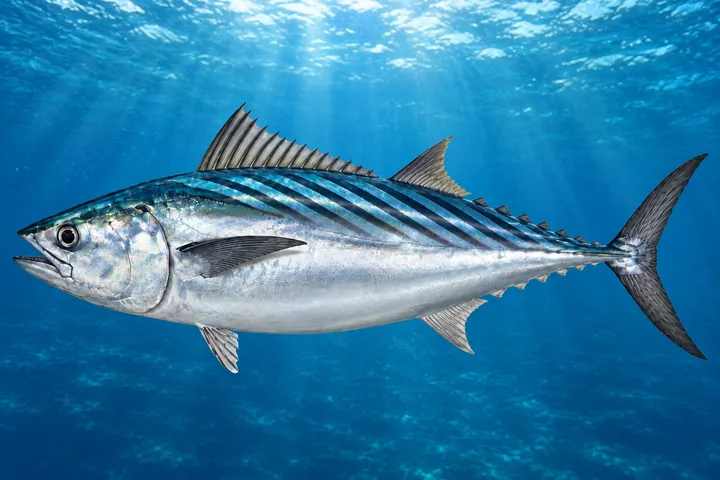
Three to six straight black stripes on the upper back, none on the belly, and usually a few dark spots between the pectoral and pelvic fins (some fish have none). The skin is bare except for a band of scales behind the head and along the lateral line.
Black skipjack live near the surface in coastal and offshore water, from central California to the Galápagos and northern Peru, including the lower half of the Gulf of California and all the offshore islands. They're rare in water cooler than 23 °C.
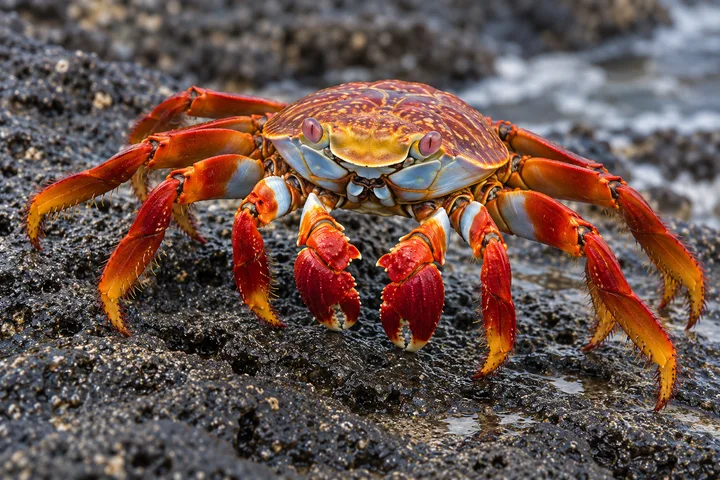
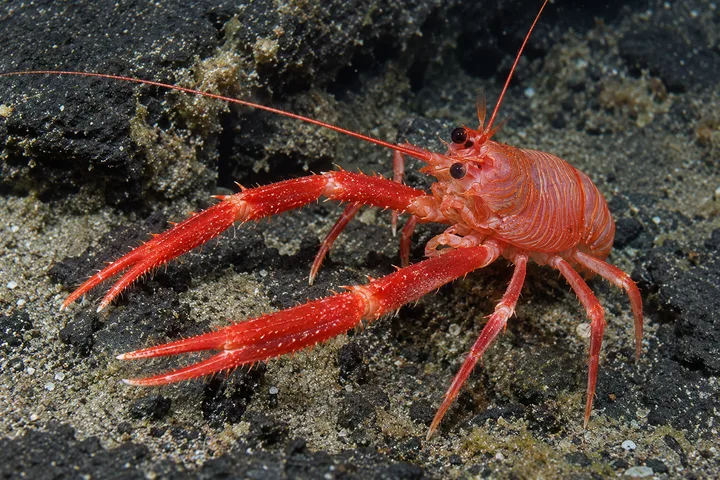
They eat anchovies, sardines, squid and pelagic red crab, and are eaten in turn by yellowfin tuna, striped and blue marlin, sailfish and sharks. Off western Baja they spawn only in summer; at the mouth of the Gulf of California, spawning peaks from October to December.
The all-tackle world record, 11.79 kg, was caught on Thetis Bank, off Baja's Pacific coast, in 1991: heavier than the maximum weight listed by FishBase.
Source ↗It's the only Euthynnus with 37 vertebrae instead of 39, and it has four large bony bumps on its spine.
Source ↗The stripe pattern on the back can be different on the left and right side of the same fish.
Source ↗Young black skipjack kept in tanks at sea refused to eat until they were offered live blenny larvae; then their weight grew elevenfold in ten days.
Source ↗One stomach held 14 small fish and 30 squid; another held 16 frigate tunas, 8 to 13 cm long.
Source ↗Black skipjack have no swim bladder and almost no scales: only a corselet behind the head and the lateral line.
Source ↗Black skipjack hit almost any lure trolled at up to eight or ten miles an hour, as well as live sardines, feathers, hoochies and yo-yo irons. Near the tip of Baja they're caught all year, but local reports show the biggest schools from May to September, when the water is warmest.
Most are used as bait: alive for marlin and big tuna, or as cut bait. It's considered one of the best cut baits for triggerfish.
The meat is very dark compared with other tunas, and most locals consider adults inedible. Most anglers use them as bait.
| Daily limit (NOM-017-PESC-1994) | Up to 5 per angler per day, within the 10-fish total |
|---|---|
| IUCN Red List | Least Concern (2022) |
| IGFA all-tackle record | 26 lb 0 oz (11.79 kg), Thetis Bank, Baja California, 1991 |
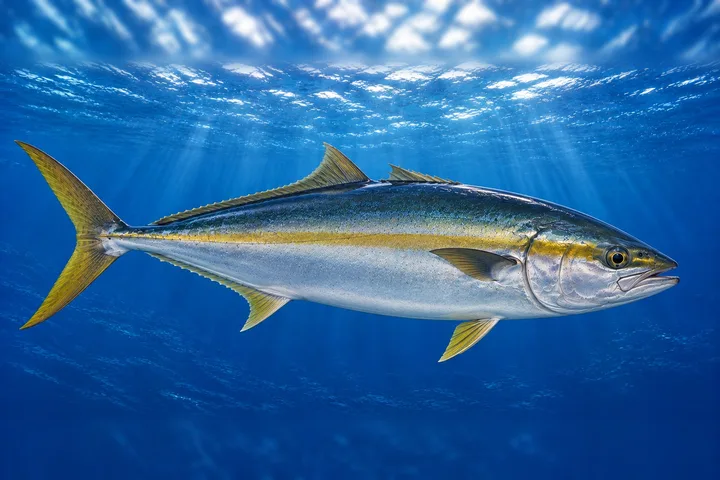
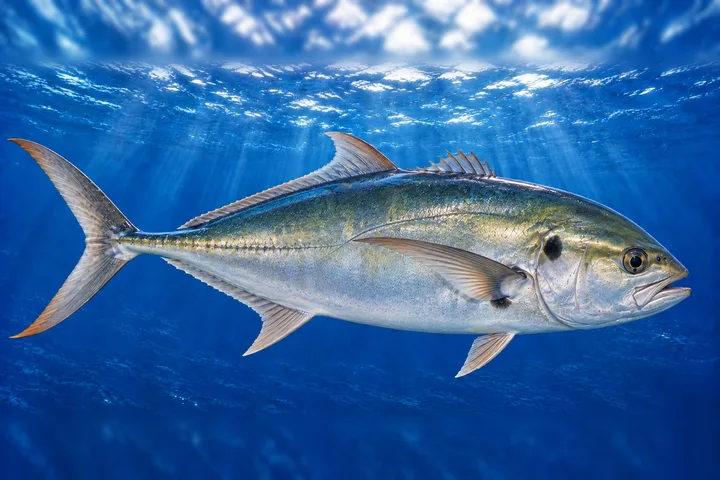
Skipjack tuna have their stripes on the belly and a plain back. Bonito are fully scaled, with stripes on the back and no spots under the pectoral fin. Frigate and bullet tunas have their two dorsal fins far apart.
Black skipjack have stripes on the back and spots under the pectoral fin; skipjack have stripes on the belly.
Its meat is very dark and strong; most people in Cabo use it as bait.
Up to 5 per angler per day, within the overall limit of 10 fish.

Top illustration: Top Anglers. Photos: iNaturalist contributors, credited on each photo.
Sportfishers with the range to reach the offshore banks. From $799 with license included.