The biggest hawkfish
At up to 60 cm, it is the largest member of the hawkfish family. Its local relatives, the coral and longnose hawkfish, stay under about 13 cm.
Source ↗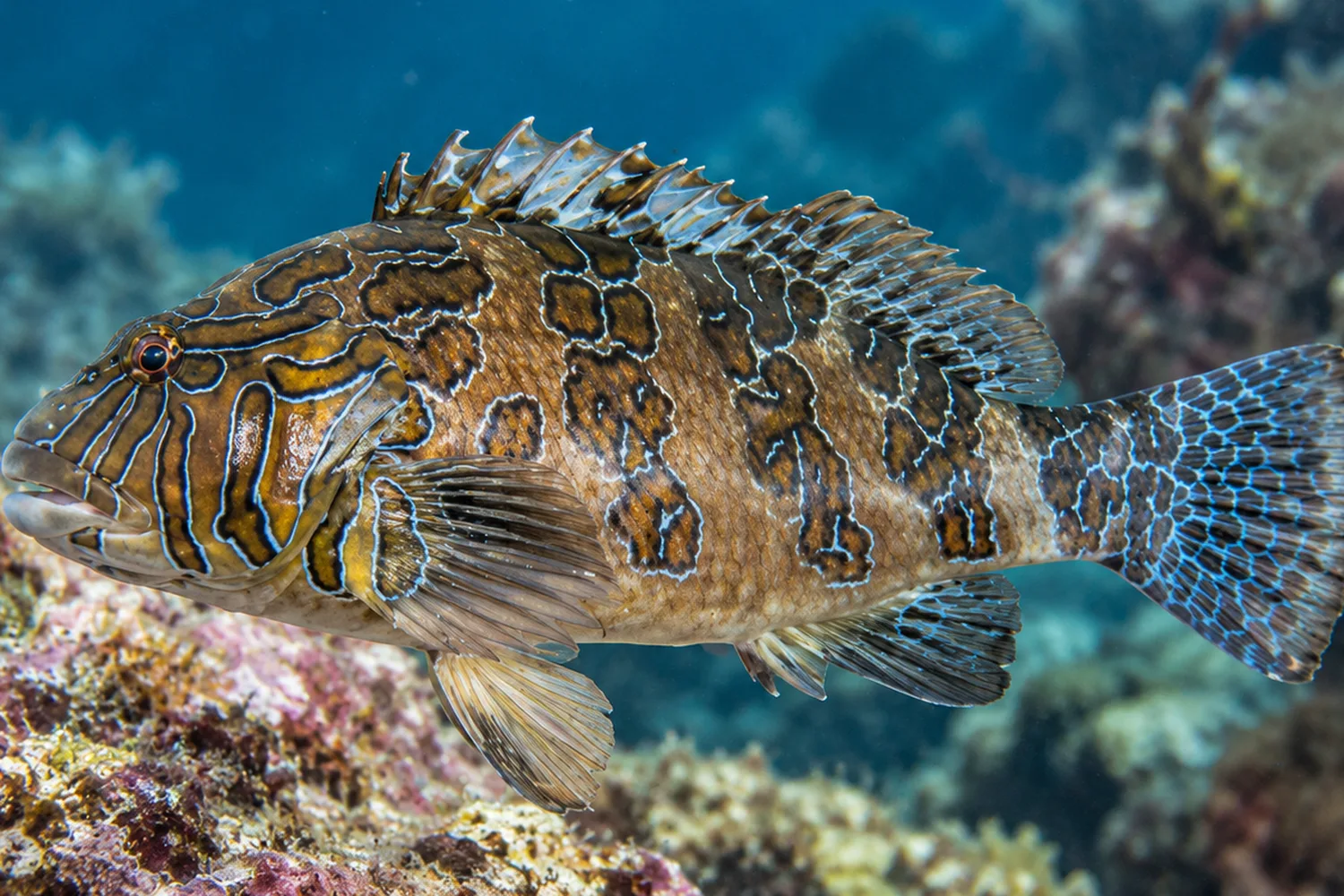
The giant hawkfish sits perfectly still on a rock ledge, camouflaged by a maze of golden-brown markings, and waits for a crab or small fish to pass. At up to 60 cm it is the largest member of its family.
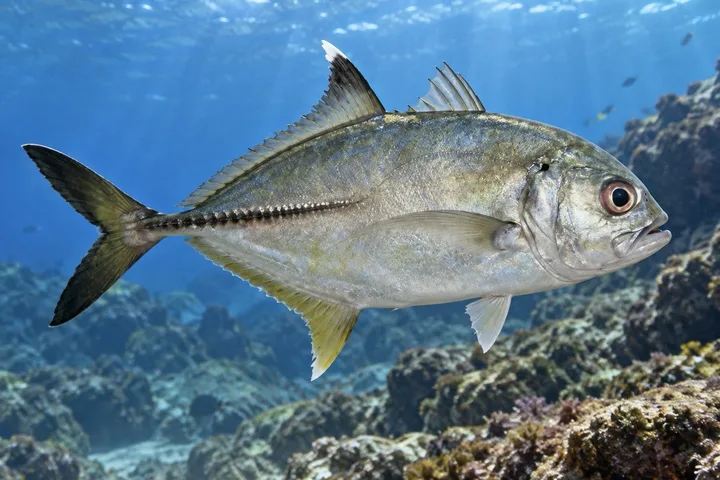
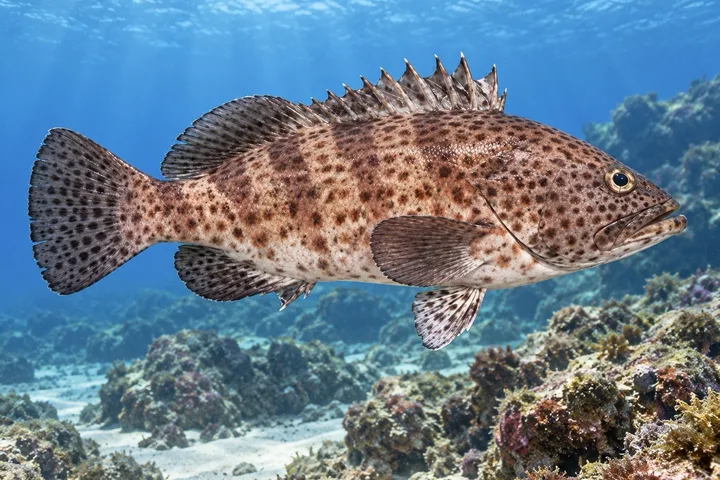
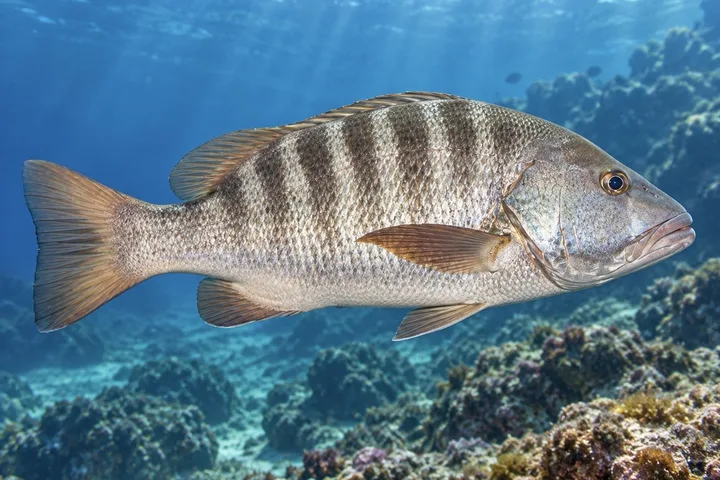
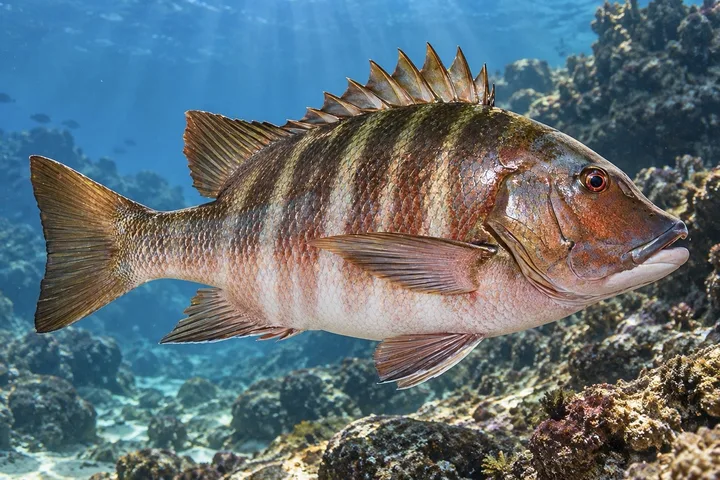
A heavy, deep-bodied fish with a big, blunt head. It is grayish brown with about five bars, each made of a maze of golden-brown markings edged in black and outlined in thin blue. Broad golden-brown bands radiate from the eye like spokes. There are usually 2 to 3 white spots on the upper back. Each dorsal spine ends in a tuft of cirri, and the lower 7 rays of the pectoral fin are thick, unbranched and longer than the rest. Juveniles are white with dark brown bars, reddish bars on the head and a red spiny dorsal fin.
The giant hawkfish lives only in the eastern Pacific, from southern Baja and the northern Gulf of California to northern Peru and the offshore islands. Juveniles live in the shallow surge zone; adults live on rocky reefs from 1 to 30 m deep. It is a solitary bottom fish that lies very still on rock ledges, blending into the rocks.
It is an ambush hunter that eats crustaceans and small fish. Reef Life Survey notes that it can turn its white blotches on and off for camouflage. Around Los Cabos it is reported to become abundant when the water warms, starting in May.
At up to 60 cm, it is the largest member of the hawkfish family. Its local relatives, the coral and longnose hawkfish, stay under about 13 cm.
Source ↗Rivulatus means marked with irregular streaks, for its black-edged, golden-brown markings. In English it's also called the hieroglyphic hawkfish, and its Mexican name chino mero is said to come from markings that look like Asian lettering.
Source ↗The lower 7 pectoral rays are thick and unbranched, with deeply notched membranes. Lacepède, who named the genus in 1803, thought they looked like barbels; the name Cirrhitus comes from the Latin for a lock of hair.
Source ↗Its scattered white blotches can be turned on or off to help it blend in while it sits motionless on the reef.
Source ↗The current IGFA all-tackle record is 5.58 kg (12 lb 5 oz) from Salinas, Ecuador, in 2019. An earlier record of 4.11 kg (9 lb 1 oz) came from San Francisquito, Baja California, in 1992.
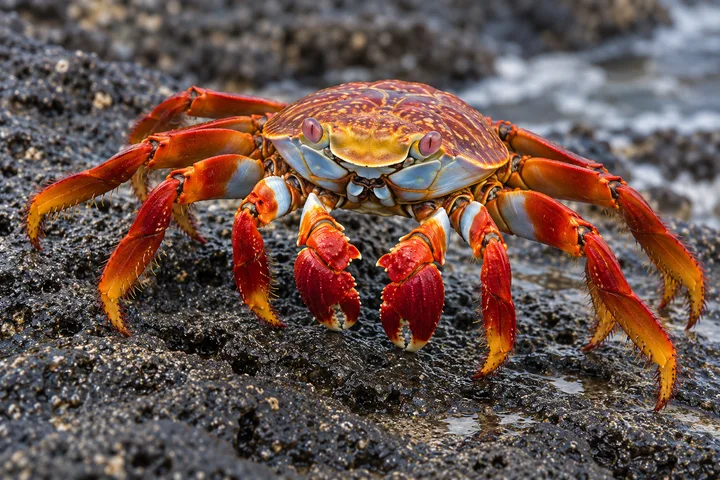
Source ↗The giant hawkfish lives on rocky reefs and boulders close to shore around Los Cabos. Local reports describe it as seasonal there, abundant once the water warms from May, and caught from the beaches before dawn on live flatiron herring or freshly caught Sally Lightfoot crabs.
If you hook one while bottom fishing near the rocks, expect it to dive straight into a crack. Steady, even pressure and patience usually bring it out. It counts within the general limit of 5 per species and 10 fish per angler. Sport fishing is not allowed inside Cabo Pulmo National Park.
Considered a good food fish, and sold in small amounts in markets around Los Cabos.
| Daily limit (NOM-017-PESC-1994) | Up to 5 per angler per day, within the 10-fish total |
|---|---|
| Fish over the limit | You may keep fishing, but must release extras alive and in good condition |
| IGFA all-tackle record | 12 lb 5 oz (5.58 kg), Salinas, Ecuador, 2019 |
| IUCN Red List | Least Concern (assessed 2007) |
| Cabo Pulmo National Park | Sport fishing not allowed |
The coral hawkfish (Cirrhitichthys oxycephalus) only grows to about 10 cm and is whitish or pink with squarish red to brown blotches. The longnose hawkfish (Oxycirrhites typus) reaches about 13 cm, has a long pointed snout and a red cross-hatch pattern, and perches on gorgonians or black coral, usually below 20 m. No other hawkfish in the region comes close to the giant hawkfish's size or its maze-like golden markings.
Yes. Chino mero, halcón gigante and halcón carabalí are Spanish names for Cirrhitus rivulatus.
Up to about 60 cm. The IGFA world record is 5.58 kg (12 lb 5 oz), from Ecuador in 2019.
No. Sport fishing is not allowed in Cabo Pulmo National Park.

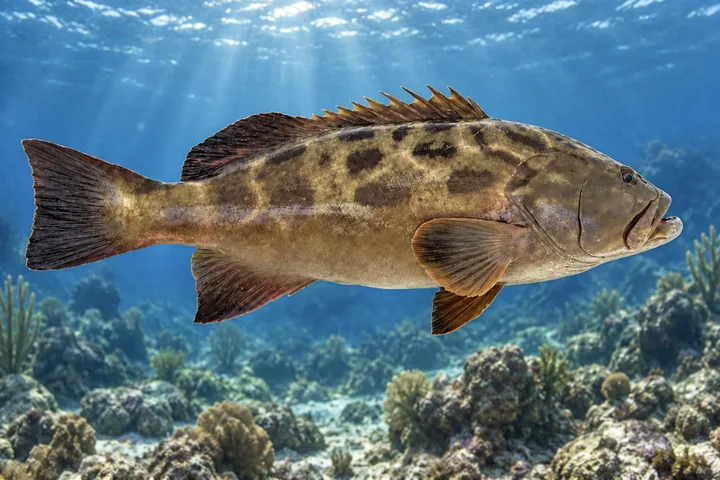
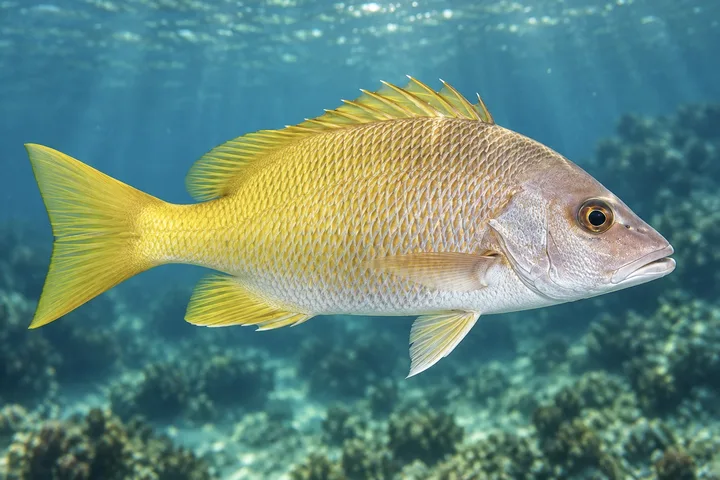
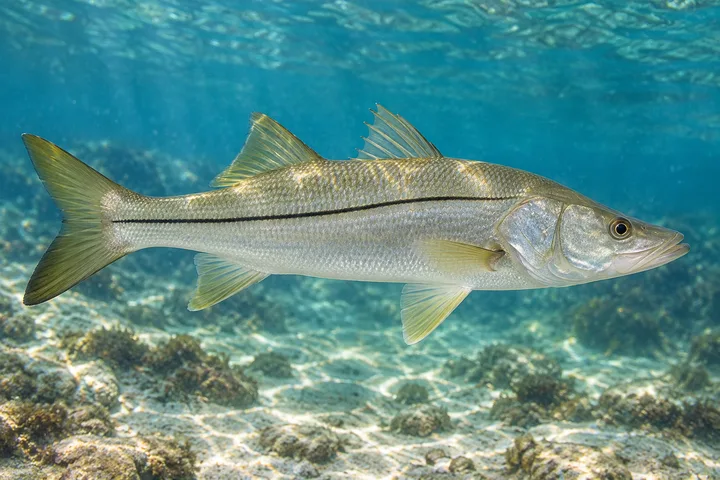
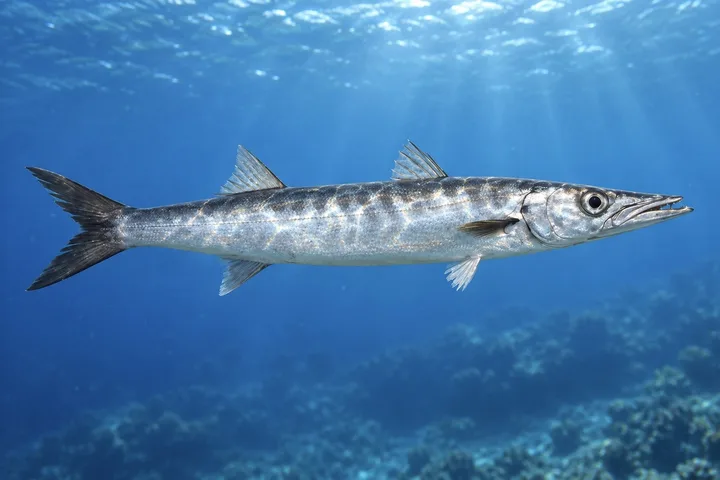
Top illustration: Top Anglers. Photos: iNaturalist contributors, credited on each photo.
Pangas and small boats that work the beaches, points and rocky reefs. From $453 with license included.