~450,000 nesting females
La Escobilla, Oaxaca, hosts an estimated 450,000 nesting females, which come ashore in synchronized arribadas, and nobody knows exactly what triggers them.
Source ↗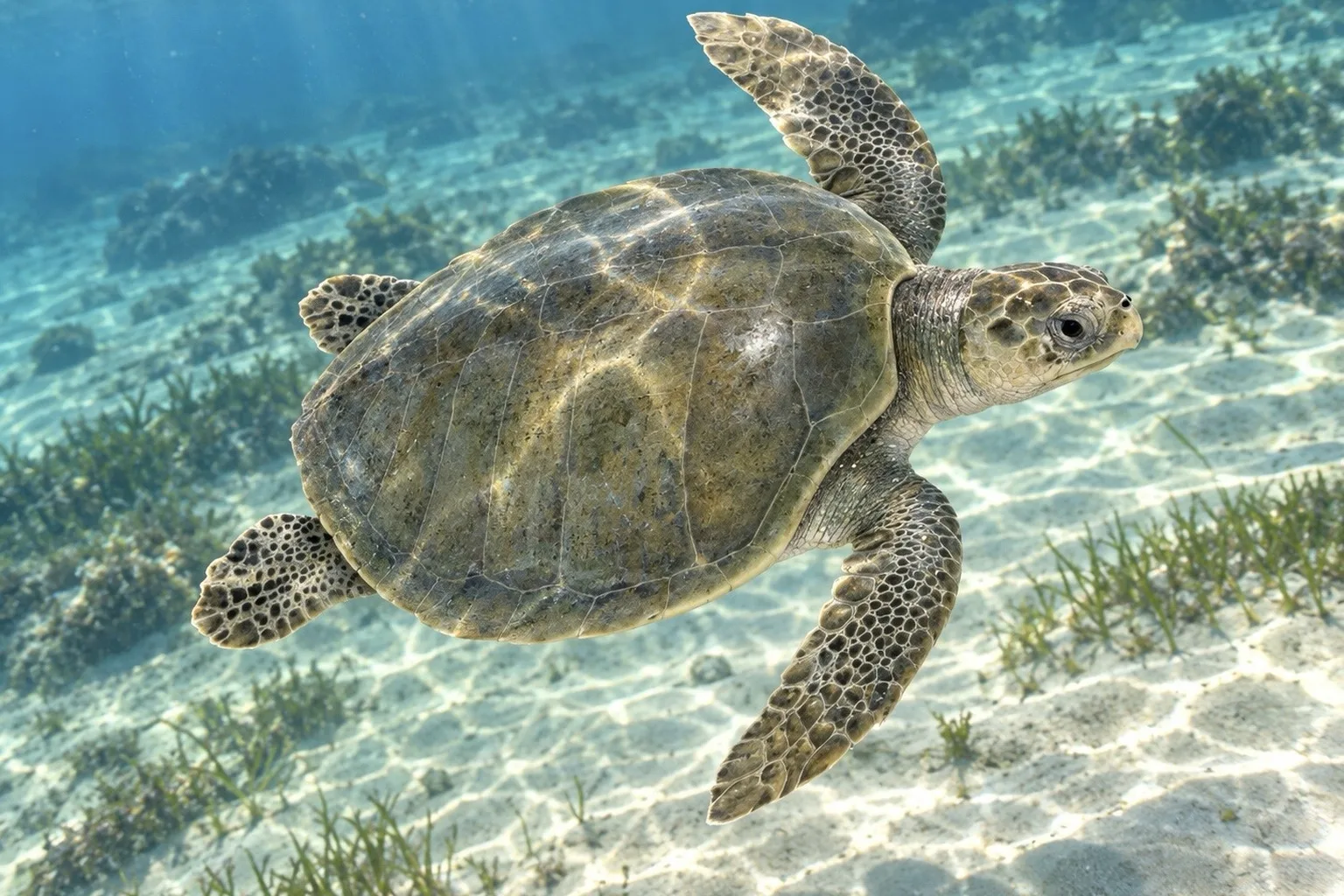
The most abundant sea turtle in the world nests on the beaches of Los Cabos every summer and fall. Each one is protected by Mexican law, and only about one hatchling in a thousand reaches adulthood.
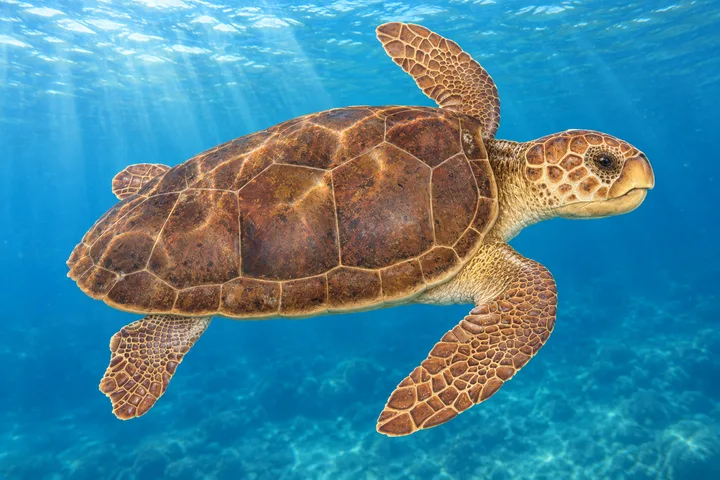
A small sea turtle with a nearly round, gray to olive-green shell. It has 6 to 9 pairs of scutes along the sides of the shell, often a different number on each side, and two pairs of scales between the eyes.
Olive ridleys live in tropical waters around the world and eat both plants and animals: algae, crabs, shrimp, snails, sea urchins, jellyfish and tunicates. They mature at about 14 years and can live 30 to 50 years.
In Los Cabos they nest alone, mainly from summer to December, on beaches such as El Médano, El Suspiro and San Cristóbal. Elsewhere in Mexico, at La Escobilla and Morro Ayuta in Oaxaca, they nest in mass arrivals called arribadas. The temperature of the sand decides whether the hatchlings are male or female.
La Escobilla, Oaxaca, hosts an estimated 450,000 nesting females, which come ashore in synchronized arribadas, and nobody knows exactly what triggers them.
Source ↗After Mexico banned sea turtle hunting in 1990, nests at La Escobilla rose from about 200,000 a year to more than a million by 2000.
Source ↗Whether a hatchling is male or female depends on the temperature of the sand during the middle third of incubation.
Source ↗Lepidochelys means "scaly turtle": it has more shell scutes than any other sea turtle, and the number can differ between left and right.
Source ↗In September 2026 an olive ridley nested at Seal Beach, California, the first sea turtle nest ever recorded on the U.S. West Coast; before that, the nearest nesting was near Todos Santos.
Source ↗Only about one hatchling in a thousand survives to adulthood. In 2025 a small team in Baja California Sur protected 1,147 nests.
Source ↗Olive ridleys are often seen resting at the surface offshore. If one is hooked or tangled: slow the boat, bring it in gently, never use a gaff, lift it aboard with a net if possible, remove the hook or cut the line as close to the hook as you can, and release it head first with the engine in neutral.
If you find a nesting turtle, a nest or hatchlings on a Los Cabos beach, don't touch them, don't use flash or phone lights, and call 911 so the municipality can send a technician.
| Mexico (NOM-059) | Endangered (P), like every sea turtle in Mexico |
|---|---|
| Capture | Banned since 1990 |
| Federal Penal Code, art. 420 | 1 to 9 years in prison for capturing, harming or killing a sea turtle or taking its eggs |
| IUCN Red List | Vulnerable |
| CITES | Appendix I |
| Watching nesting and releases (NOM-162) | Stay 10 m from a nesting turtle and 2 m behind hatchlings; no flash; don't handle hatchlings |
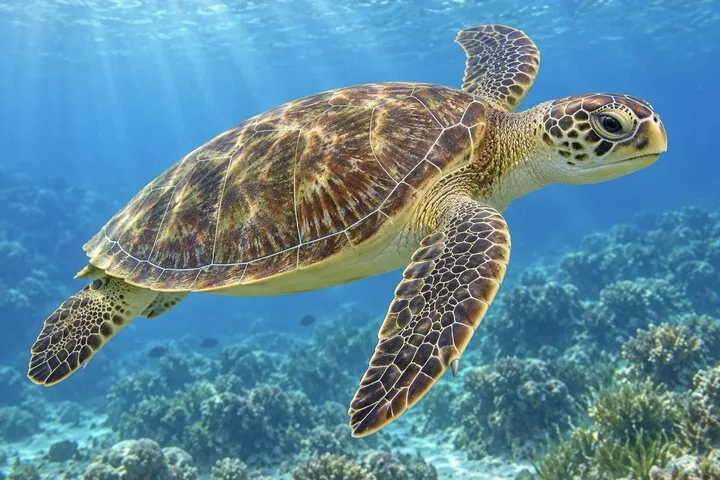
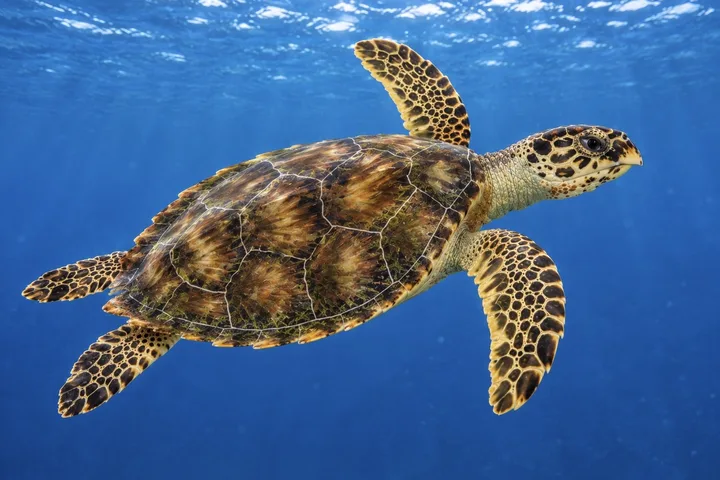
The green turtle has 4 pairs of side scutes and one pair of long scales between the eyes. The hawksbill has 4 pairs of overlapping side scutes and a curved, hawk-like beak.
Mainly from June or July to December, with the most nests in July and August.
Yes, with authorized turtle camps. Stay behind the hatchlings, don't touch them and don't use flash.
Don't touch it, keep lights off and call 911; the municipality sends a technician.

Top illustration: Top Anglers. Photos: iNaturalist contributors, credited on each photo.
Our charters leave the Cabo San Lucas marina every morning. From $799 with license included.