A jaw without teeth
Gnathanodon means jaw without teeth. Adults have no teeth on the jaws, and only small juveniles have a few weak teeth on the lower jaw.
Source ↗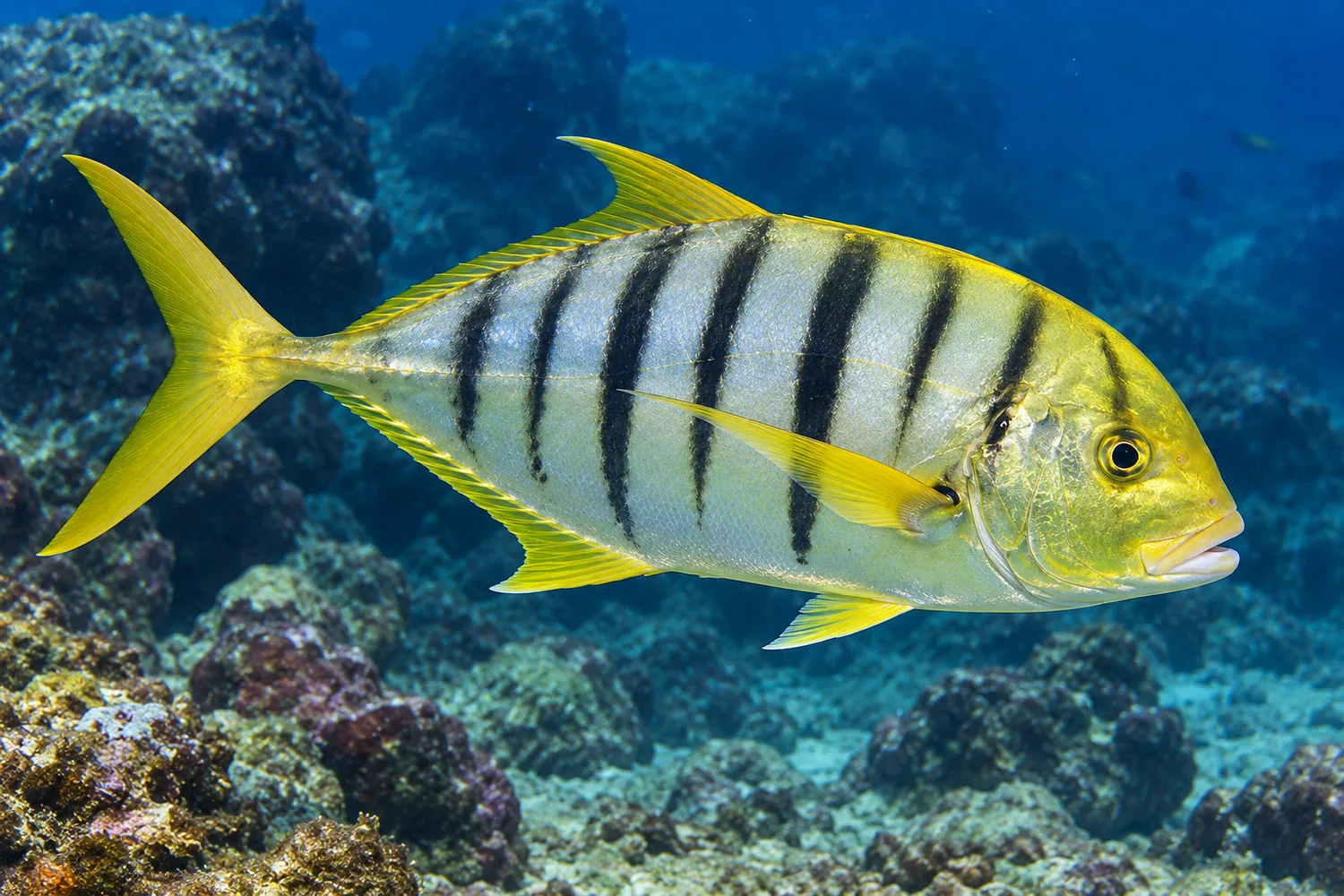
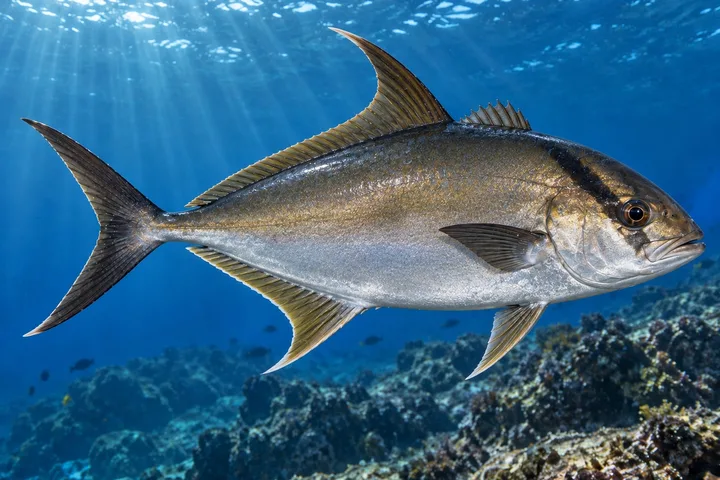
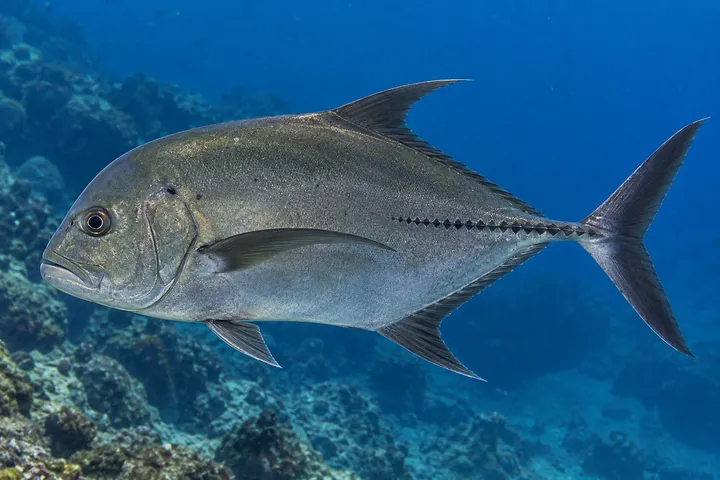
A yellow-finned jack with thick, rubbery lips and no teeth as an adult. Young fish are bright yellow with black bars and like to swim right in front of sharks and other big fish. It lives around Los Cabos, but it is an occasional catch, not an everyday one.
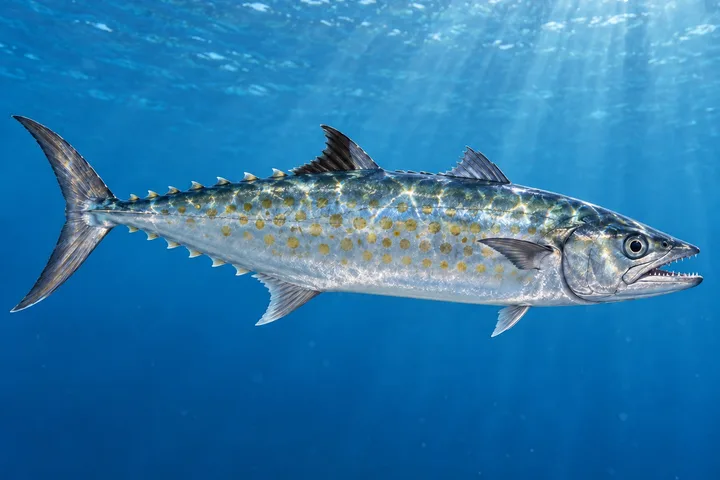
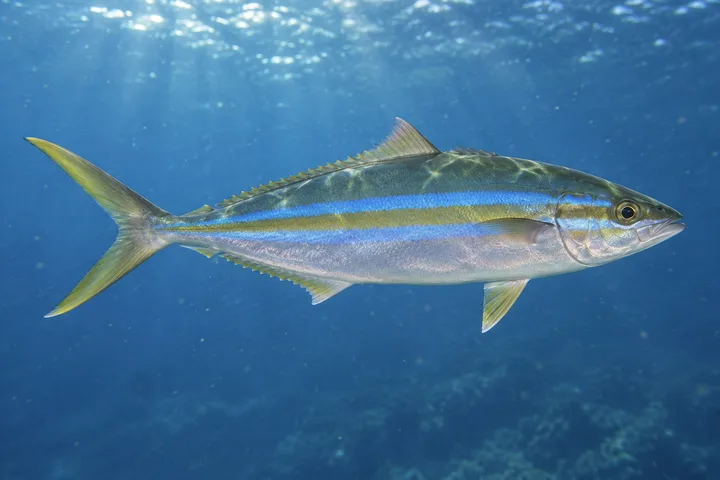
Deep, moderately compressed body with a slender tail base and a strongly forked tail. The lips are thick and fleshy, and adults have no teeth in the jaws. Adults are silver-gray, yellowish on the belly, often with a few scattered black spots or patches on the sides; all fins are yellow and the tips of the tail lobes are black. Juveniles and young adults are golden yellow with 7 to 11 black vertical bars. There is a black spot at the top corner of the gill cover, the body and breast are fully scaled, and the straight rear part of the lateral line carries 17 to 26 scutes.
The golden trevally ranges across the tropical Indian and Pacific Oceans, from East Africa to the Americas. In the eastern Pacific it is found from southern Baja and the southern Gulf of California to Ecuador, including the Revillagigedo Islands, Cocos and Malpelo, and it has been recorded at several localities in Baja California Sur. It lives near the bottom over sand and around reefs, from the surface to about 80 m. Reef Life Survey divers see it at only about 3.5% of the reef sites they survey within its range.
Adults travel in schools and feed by rooting in the sand: the protrusible, rubbery mouth pumps crustaceans and buried invertebrates out of the bottom, and they also take small fish. Small juveniles shelter among jellyfish tentacles, and young fish swim in front of sharks and other large fish, apparently for protection. It matures at about 32.5 cm and reaches 120 cm; the heaviest on record is the 17.45 kg IGFA world record fish.
Gnathanodon means jaw without teeth. Adults have no teeth on the jaws, and only small juveniles have a few weak teeth on the lower jaw.
Source ↗Its mouth is more protrusible and rubbery than other trevallies' and works like a pump to suck food out of the sand.
Source ↗Young golden trevally swim just ahead of sharks and other large fish, and sometimes escort divers the same way.
Source ↗Small juveniles live among the tentacles of jellyfish.
Source ↗The Smithsonian notes that this Indo-Pacific fish has passed through the Panama Canal into the Atlantic.
Source ↗Speciosus means beautiful, probably for the bright yellow, black-barred young and the golden-silver adults.
Source ↗Golden trevally show up around Los Cabos over sand next to reefs and along rocky shorelines, often in small schools. Because they are uncommon here, they are a bonus fish on inshore trips rather than a target you can count on.
They feed on the bottom, so live or dead bait fished near the sand and small jigs worked close to the bottom are the usual way to hook one; they also hit small lures. The soft, toothless mouth tears more easily than other jacks', so keep a steady, moderate drag instead of horsing the fish. Like all jacks it pulls hard and heads for structure. Sport fishing is not allowed inside Cabo Pulmo National Park.
Edible and marketed fresh, salted or dried in its range. FishBase lists it as harmless, with no ciguatera reports for this species.
| Daily limit (NOM-017-PESC-1994) | Up to 5 per angler per day, within the 10-fish total |
|---|---|
| Mexico (NOM-059-SEMARNAT-2010) | Not listed |
| IUCN Red List | Least Concern (2015) |
| IGFA all-tackle record | 38 lb 8 oz (17.45 kg), Gladstone, Australia, 2016 |
| IGFA all-tackle length record | 103 cm, Exmouth, Australia, 2023 |
| Cabo Pulmo National Park | Sport fishing not allowed |
An occasional catch around Los Cabos, not a daily one.
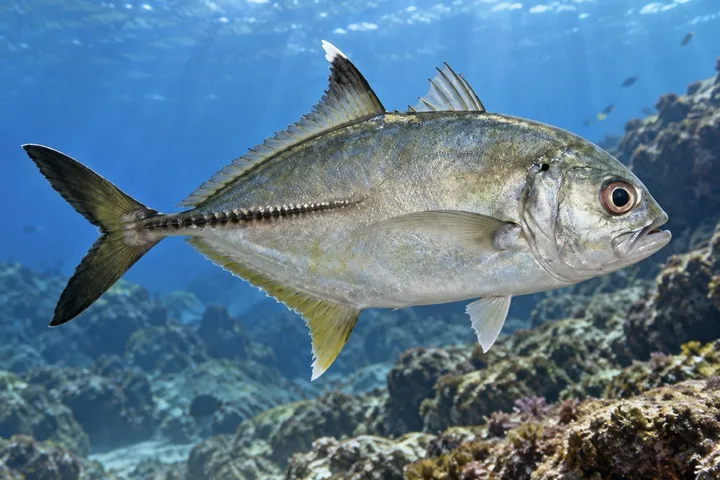
Young bigeye trevally (Caranx sexfasciatus) are also yellow with dark bars, but they have only 4 to 7 bars, normal toothed jaws and a very large eye; adults turn silver with a white-tipped dark dorsal lobe. The jack crevalle (toro, Caranx caninus) has no bars as an adult, a black blotch on the lower pectoral fin and a mostly scaleless breast. The pilotfish (Naucrates ductor) also swims with sharks and has 6 to 7 black bars, but it is slender, has no scutes and has white tips on the tail lobes. Only the golden trevally combines thick toothless lips with all-yellow fins.
It lives here and has been recorded at several places in Baja California Sur, but it is not common. Treat it as a lucky bonus on an inshore trip.
Young golden trevally swim just ahead of sharks and other big fish, which seems to protect them from predators. They sometimes do the same with divers.
Adults have no teeth in the jaws; small juveniles have only a few weak teeth on the lower jaw. They feed by sucking food out of the sand with their rubbery lips.

Top illustration: Top Anglers. Photos: iNaturalist contributors, credited on each photo.
Pangas and small boats that work the beaches, points and rocky reefs. From $698 with license included.