One of a kind
Hoplopagrus has a single species. No other living fish shares its genus.
Source ↗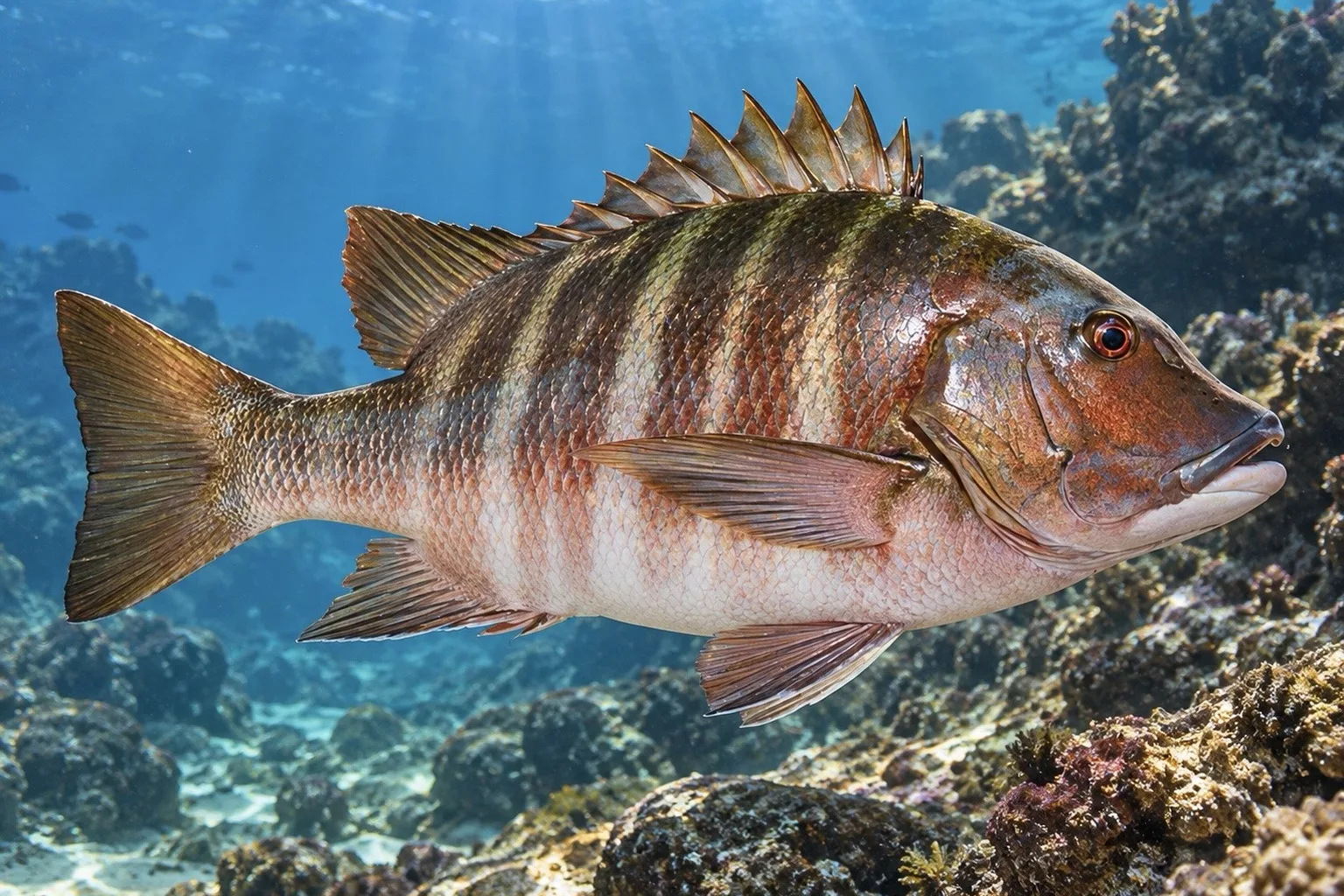
A snapper unlike any other: the only species in its genus, with molar teeth, a snorkel-like nostril and a taste for sea urchins. It lives on the rocky reefs of Los Cabos and the Gulf of California.
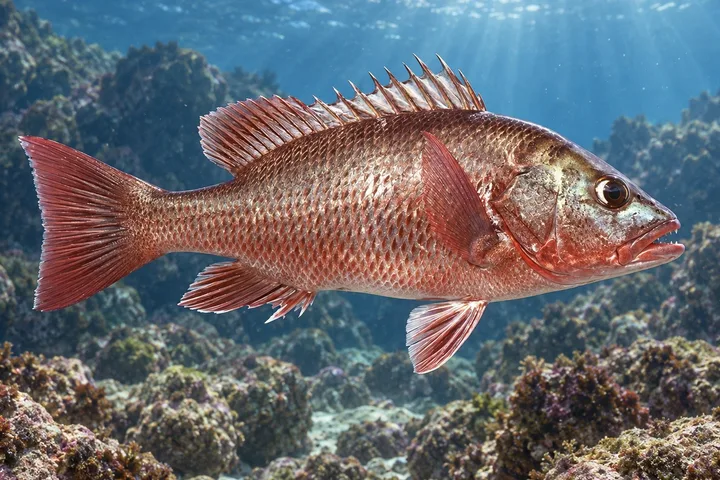
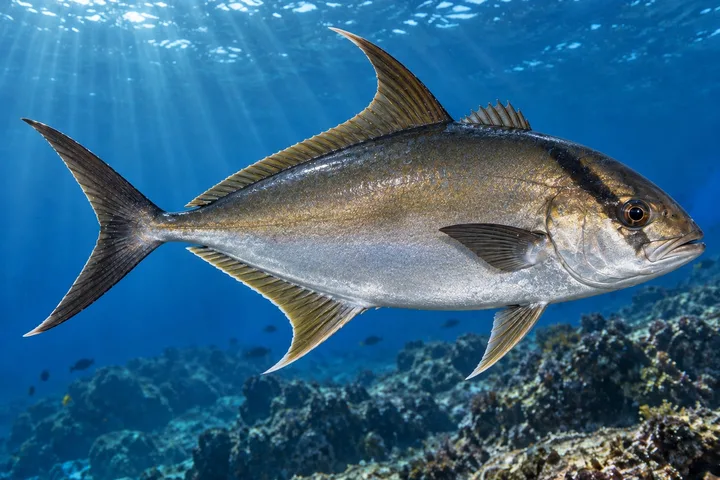
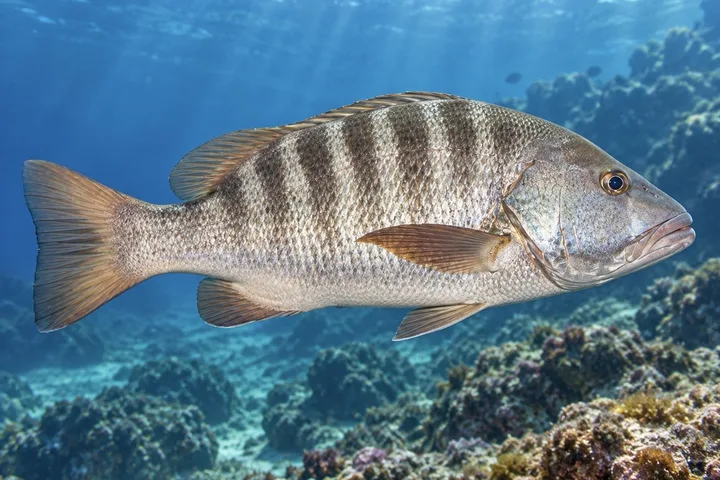
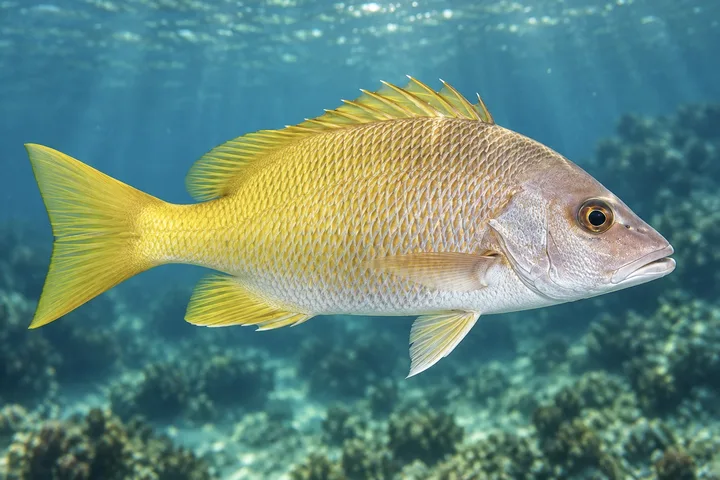
A deep-bodied snapper, gray to dark brown on the head and back, with about six long double brown bars down the sides and small dark spots on the snout and nape. Look for the long, tubular front nostril pointing down, the rear nostril set in a deep groove before the eye, and molar-like teeth on the sides of the jaws. Juveniles have a blackish spot at the end of the dorsal fin.
The barred pargo lives only in the tropical eastern Pacific, from southern Baja and the Gulf of California to Ecuador, including the Revillagigedo, Galápagos, Cocos and Malpelo islands. It is most common at 3 to 10 m but reaches at least 100 m. By day it shelters on rocky reefs; at night it comes out to hunt crustaceans and small fish. Juveniles can turn up in rocky tide pools.
Its diet also includes mollusks, sea urchins, sea stars and other bottom invertebrates, and it changes with the season, sex and breeding stage. In Santa Rosalía, B.C.S., females outnumbered males and fish spawned twice a year, in May and July. Catches there ranged from 28 to 69 cm.
Hoplopagrus has a single species. No other living fish shares its genus.
Source ↗A dated family tree of snappers puts its split from the main Lutjanus group at about 32 million years ago. Its closest known relative is a fossil snapper from the late Eocene limestones of Florida.
Source ↗Researchers from CICIMAR in La Paz studied its stomachs and found a star prey: the sea urchin Echinometra vanbrunti. It also eats crustaceans, mollusks and small fish.
Source ↗Its front nostril is a long tube that points down, and the rear nostril sits in a deep groove in front of the eye.
Source ↗IGFA’s retired records include all-tackle barred pargo from Cabo San Lucas (11 lb 10 oz, 1993) and Solmar Beach (21 lb 2 oz, 1994). The current record, 29 lb 12 oz, came from Puerto Peñasco in 2010.
Source ↗In Santa Rosalía, barred pargo spawned in May and in July, and the average fish caught by local fishers was 42.5 cm long.
Source ↗Local reports from San José del Cabo mention barred pargo in every month of the year, most often in May and June. They come from rocky high spots, rock piles and shallow structure close to shore, mixed with leopard grouper, yellow snapper, amberjack and triggerfish. Local fleets have reported fish up to about 15 lb.
Anglers catch them on yo-yo jigs and on bait fished near the bottom: live sardines, caballitos or chunk bait, often drifting over shallow rocky reefs. Sport fishing is not allowed inside Cabo Pulmo National Park.
A prized food fish in Baja, valued for its flavor and texture. It is sold fresh, whole or filleted, and cooked fried, grilled, in caldo or as ceviche.
| Daily limit (NOM-017-PESC-1994) | Up to 5 per angler per day, within the 10-fish total |
|---|---|
| IUCN Red List | Least Concern (assessed 2007, published 2010) |
| IGFA all-tackle record | 29 lb 12 oz (13.49 kg), Puerto Peñasco, Sonora, 2010 |
| IGFA listing | Listed by IGFA as “greenbar snapper” |
| Cabo Pulmo National Park | Sport fishing not allowed |
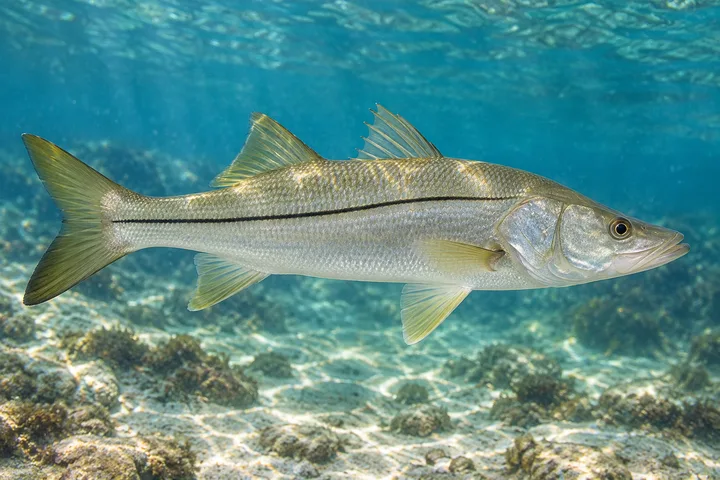
The Pacific dog snapper or pargo prieto (Lutjanus novemfasciatus) has simple, round nostrils, big fang-like front teeth, a pointed snout and bars that can fade in big fish, and it grows much larger. The Colorado snapper (Lutjanus colorado) is mostly dark red; only small ones may show dusky bars. Only the barred pargo has the tubular nostril and molar teeth.
How to tell Cabo’s groupers and snappers apart ›
Yes. It’s one of the most valued food fish in Baja’s small-scale fisheries, sold fresh and cooked many ways.
On rocky reefs and structure close to shore, with yo-yo jigs or bait near the bottom. Local reports mention it year-round, most often in May and June.
No. Pargo prieto is the Pacific dog snapper, a Lutjanus with fang-like teeth and simple nostrils. The barred pargo is the only species in its own genus.

Top illustration: Top Anglers. Photos: iNaturalist contributors, credited on each photo.
Pangas and small boats that work the beaches, points and rocky reefs. From $453 with license included.