A world record from Baja
The IGFA all-tackle record, 7.9 kg (17 lb 7 oz), was caught at Uncle Sam Bank, Baja California Sur, in 2001. That is heavier than the 5.8 kg FishBase lists as the largest published weight.
Source ↗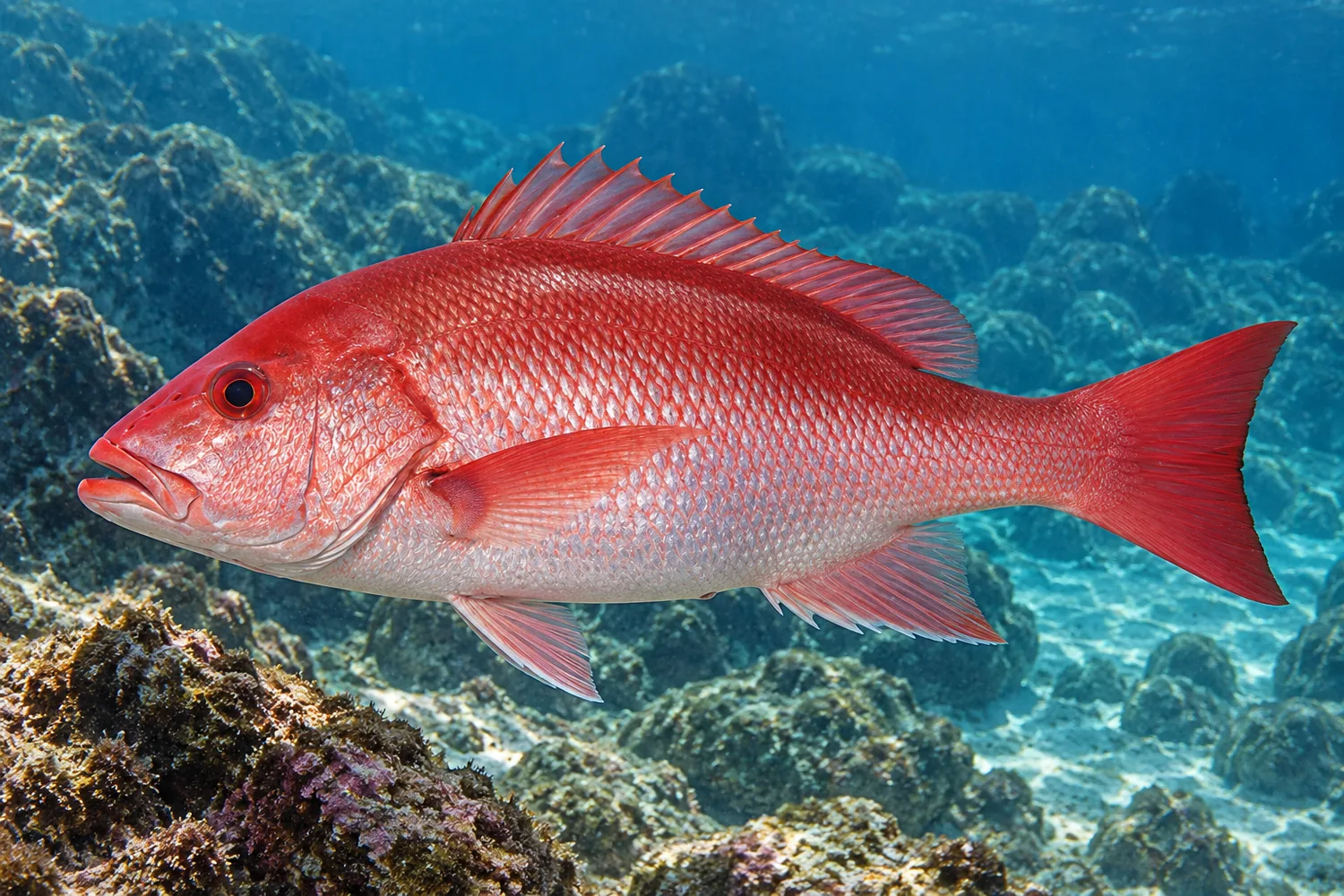
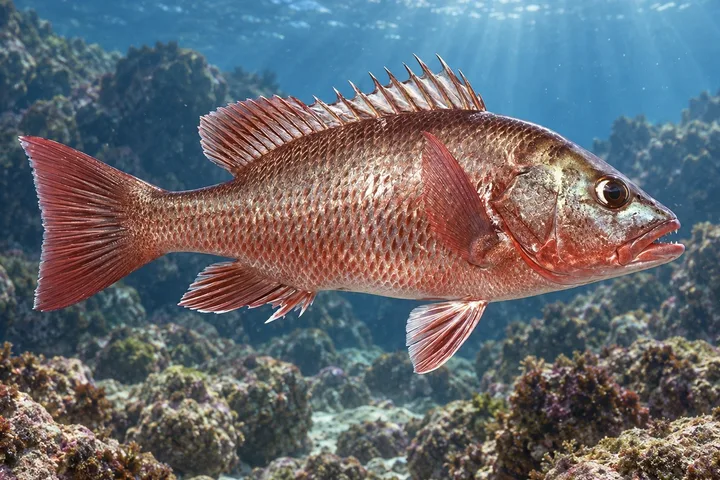
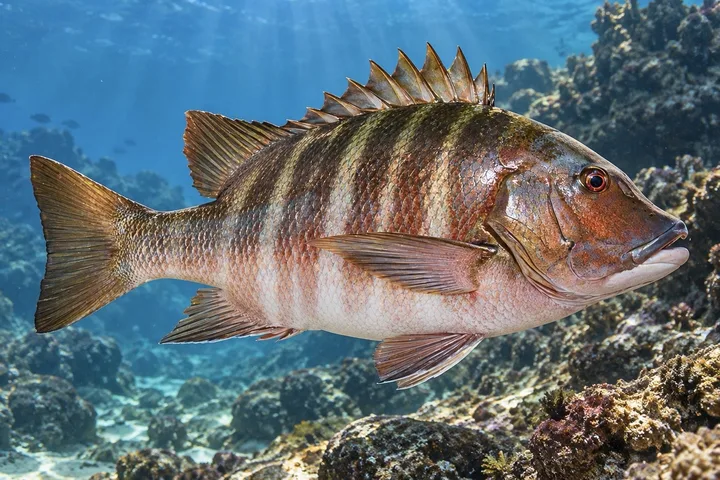
The huachinango is a pink, silvery snapper that lives near the bottom over rock and sand. It can live for decades, and around La Paz it is the fish local small-boat fishermen land most.
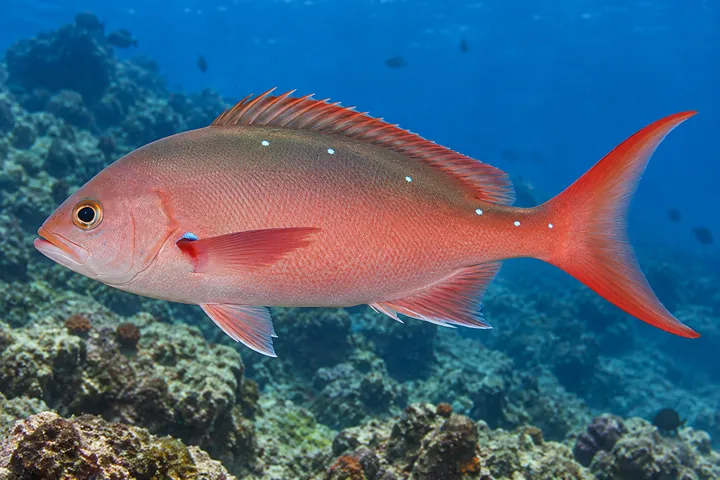
An oval snapper, red to pink with a silvery sheen, and reddish fins. The tail has a concave (slightly forked) edge, the soft part of the dorsal fin ends rounded and the anal fin ends in a point. The scale rows on the upper back run upward at an angle to the lateral line. Large adults develop a groove from the front of the eye to the nostrils and another behind the eye. Juveniles are red with a whitish chest and belly, a faint dark blotch on the lateral line above the front of the anal fin, and rows of small dark spots on the upper back.
The Pacific red snapper lives only in the eastern Pacific, from southern California and the central Gulf of California to Peru, including the Revillagigedo Islands. It stays near the bottom over rocky and sandy ground from close to shore down to about 100 m. It eats bony fish, crabs, shrimp, squid and octopus.
It grows slowly and lives a long time. Fish landed in La Paz and La Ventana bays measured 10 to 99 cm and were 1.5 to 31 years old; they mature at about 33 cm, around three and a half years. Near La Paz the main breeding activity runs from May to September, peaking in July, when a yearly growth ring forms in the fish's ear bones (otoliths).
The IGFA all-tackle record, 7.9 kg (17 lb 7 oz), was caught at Uncle Sam Bank, Baja California Sur, in 2001. That is heavier than the 5.8 kg FishBase lists as the largest published weight.
Source ↗In commercial catches from La Paz and La Ventana bays, fish ranged from 1.5 to 31 years old, although fish older than 20 years made up less than 0.5% of the population.
Source ↗From 1998 to 2005 it was the most caught species in La Paz Bay's small-boat fishery: 43% of the total catch, and one of the best-paid fish at the dock.
Source ↗In La Paz and La Ventana bays, nearly half of the commercial landings were fish under 40 cm, and 94% of those were not yet mature. Young huachinango also turn up as bycatch in shrimp trawls.
Source ↗Huachinango hatched at CIBNOR in La Paz in 2009 matured at four years old, weighing about 2.8 kg and measuring about 54 cm, and spawned on their own in June 2013.
Source ↗In Mexico, "huachinango" and "pargo" are used loosely: FishBase lists huachinango as a Mexican name for both this fish and the spotted rose snapper.
Source ↗Around Los Cabos the huachinango is a bottom fish, caught over rocky reefs, ledges and sandy ground near structure. Local records include fish caught off Cabo San Lucas and Punta Palmilla. Commercial pangueros catch them on hand lines baited with squid or live pelagic red crab.
On a sport trip, drop cut squid, strips of fish or live bait to the bottom on a dropper rig and keep it close to the rocks. Like other snappers it bites and heads straight back into cover, so lift it away from the bottom quickly. Sport fishing is not allowed inside Cabo Pulmo National Park.
Excellent. FishBase notes it is sold fresh or frozen because of the excellent quality of its flesh, and in La Paz Bay it fetched one of the highest dock prices of any fish.
| Daily limit (NOM-017-PESC-1994) | Up to 5 per angler per day, within the 10-fish total |
|---|---|
| Mexico (NOM-059-SEMARNAT-2010) | Not listed |
| IUCN Red List | Least Concern (assessed 2007) |
| IGFA all-tackle record | 17 lb 7 oz (7.9 kg), Uncle Sam Bank, Baja California Sur, 2001 |
| Cabo Pulmo National Park | Sport fishing not allowed |
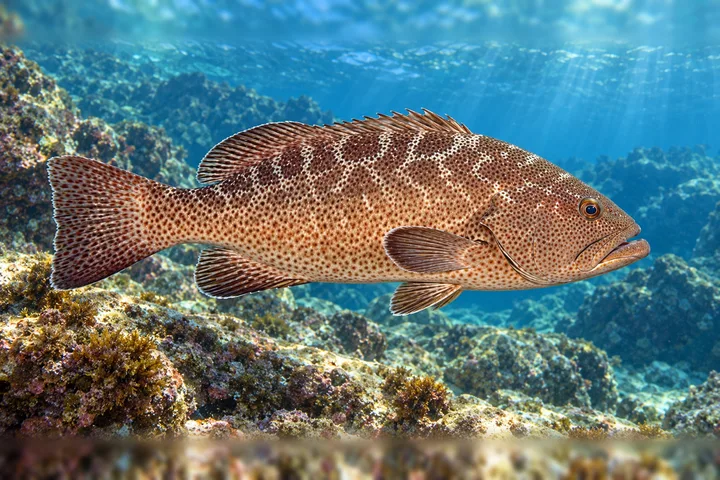
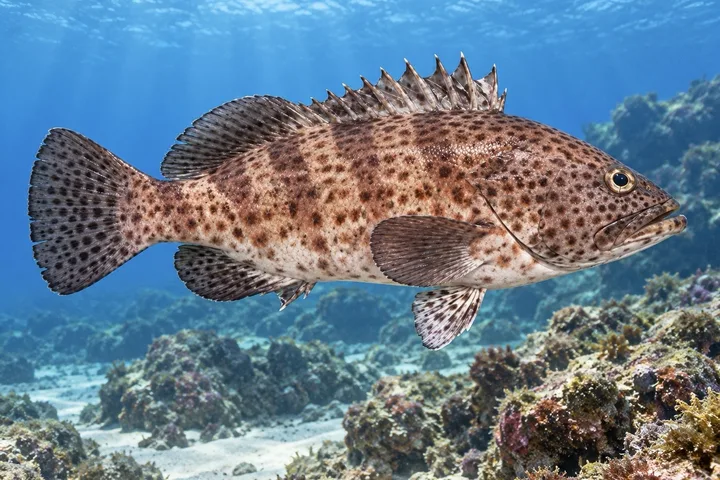
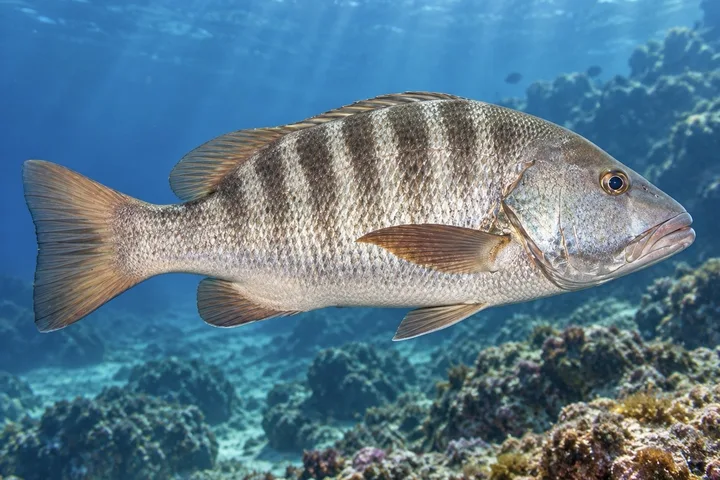
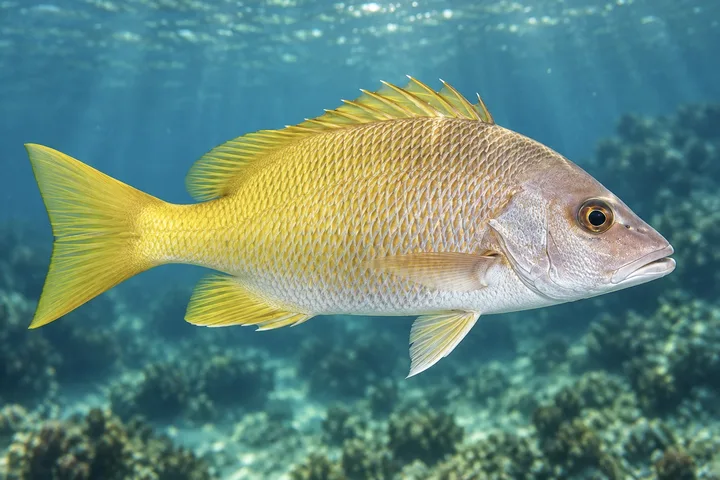
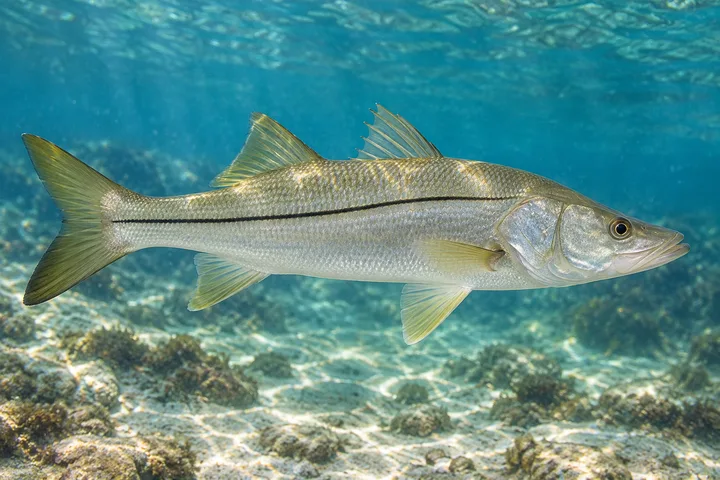
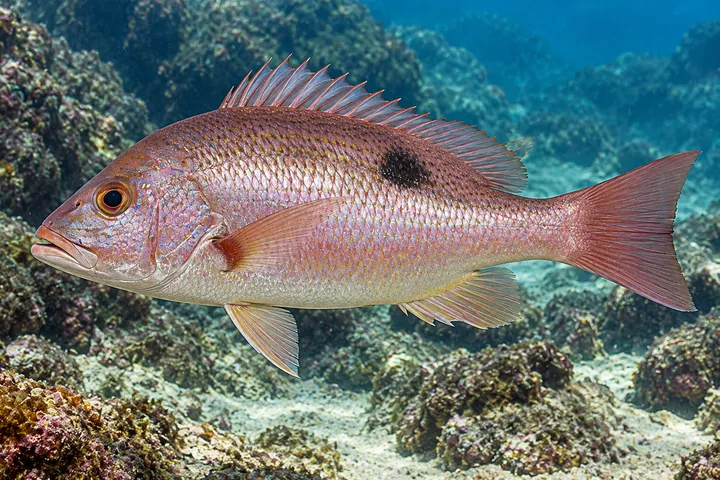
The Colorado snapper (pargo colorado, Lutjanus colorado) is darker red all over, its tail edge is almost straight and the scale rows on its upper back run parallel to the lateral line, not at an angle. The spotted rose snapper (pargo lunarejo) has a black spot on the upper back below the dorsal fin. The yellow snapper (pargo amarillo) turns bright yellow to orange over most of the body. The Pacific dog snapper (pargo prieto) is copper to gray-brown with dark bars and rounded fins.
Huachinango is the Mexican name for the Pacific red snapper, Lutjanus peru. It is a different species from the red snapper of the Gulf of Mexico and the Atlantic.
Huachinango is pinker and more silvery, with a slightly forked tail and scale rows on the upper back that slant upward. Pargo colorado is darker red with an almost straight tail edge.
Up to 5 per angler per day, within the overall limit of 10 fish.

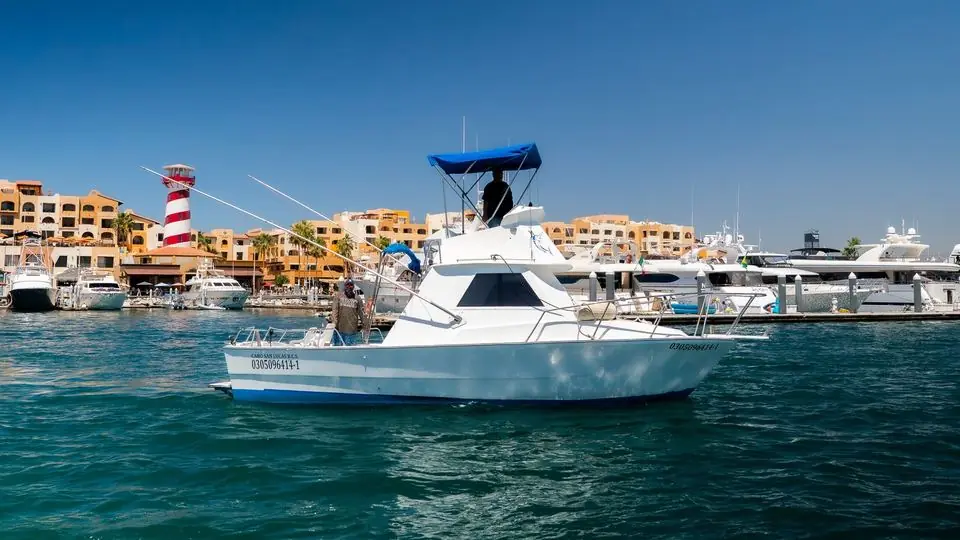
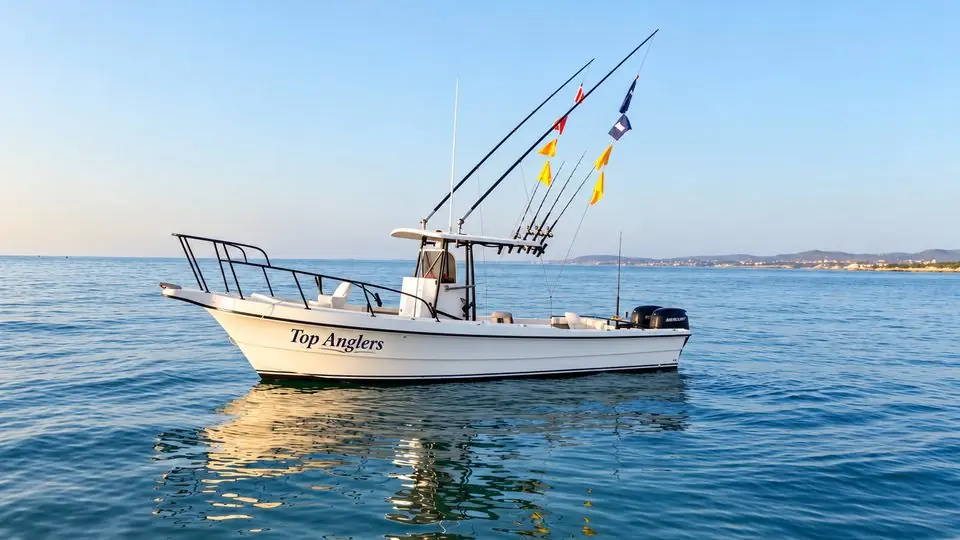
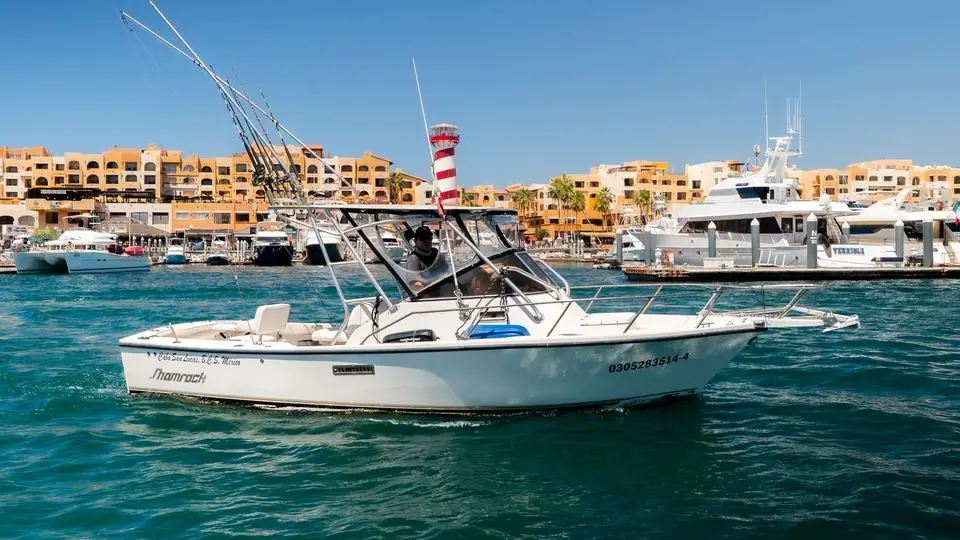
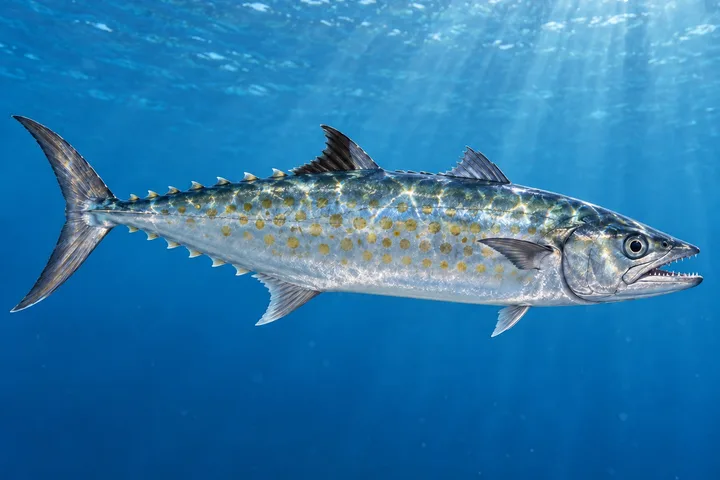
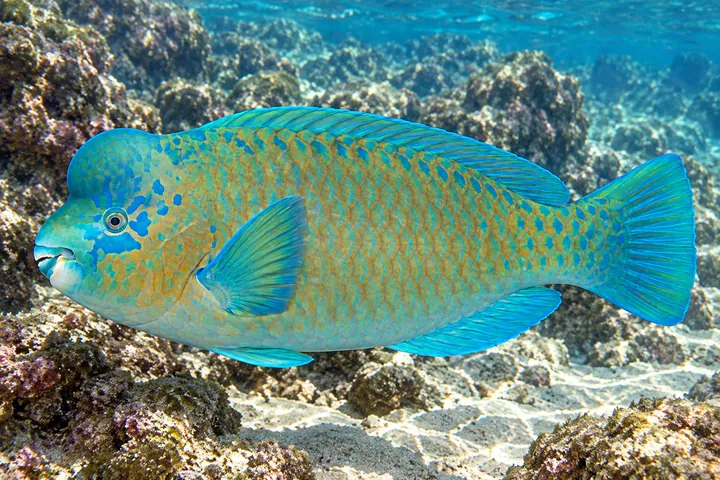
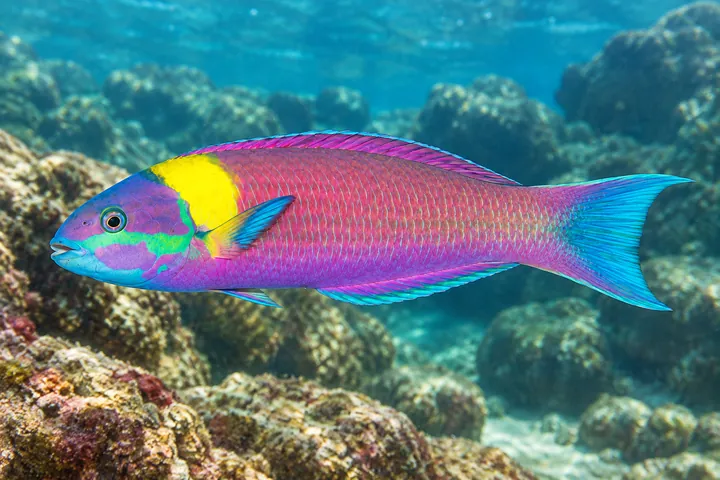
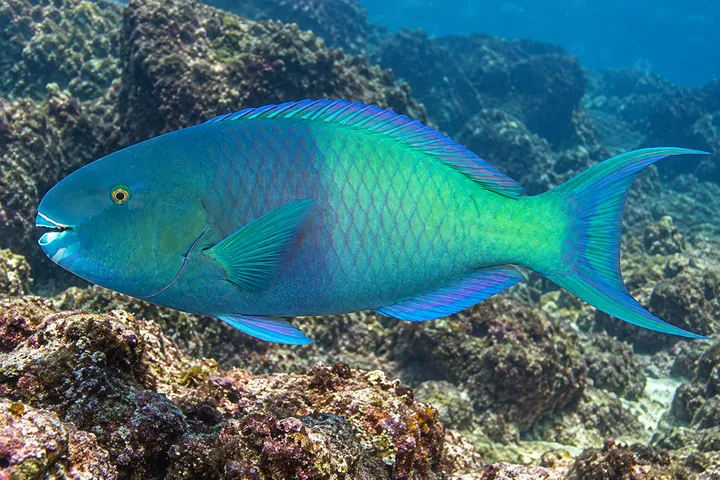
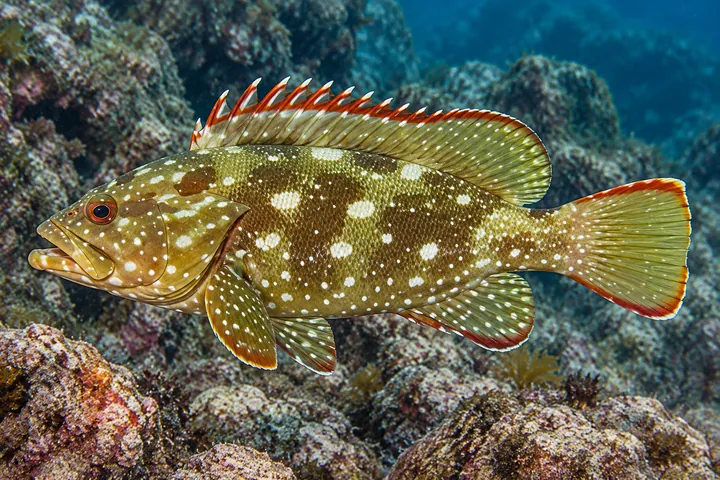
Top illustration: Top Anglers. Photos: iNaturalist contributors, credited on each photo.
Pangas and small boats that work the beaches, points and rocky reefs. From $698 with license included.