Where the name comes from
Its denticles, the tiny tooth-like scales that cover a shark’s skin, are small, tightly packed and overlapping, giving the hide a smooth, silky feel.
Source ↗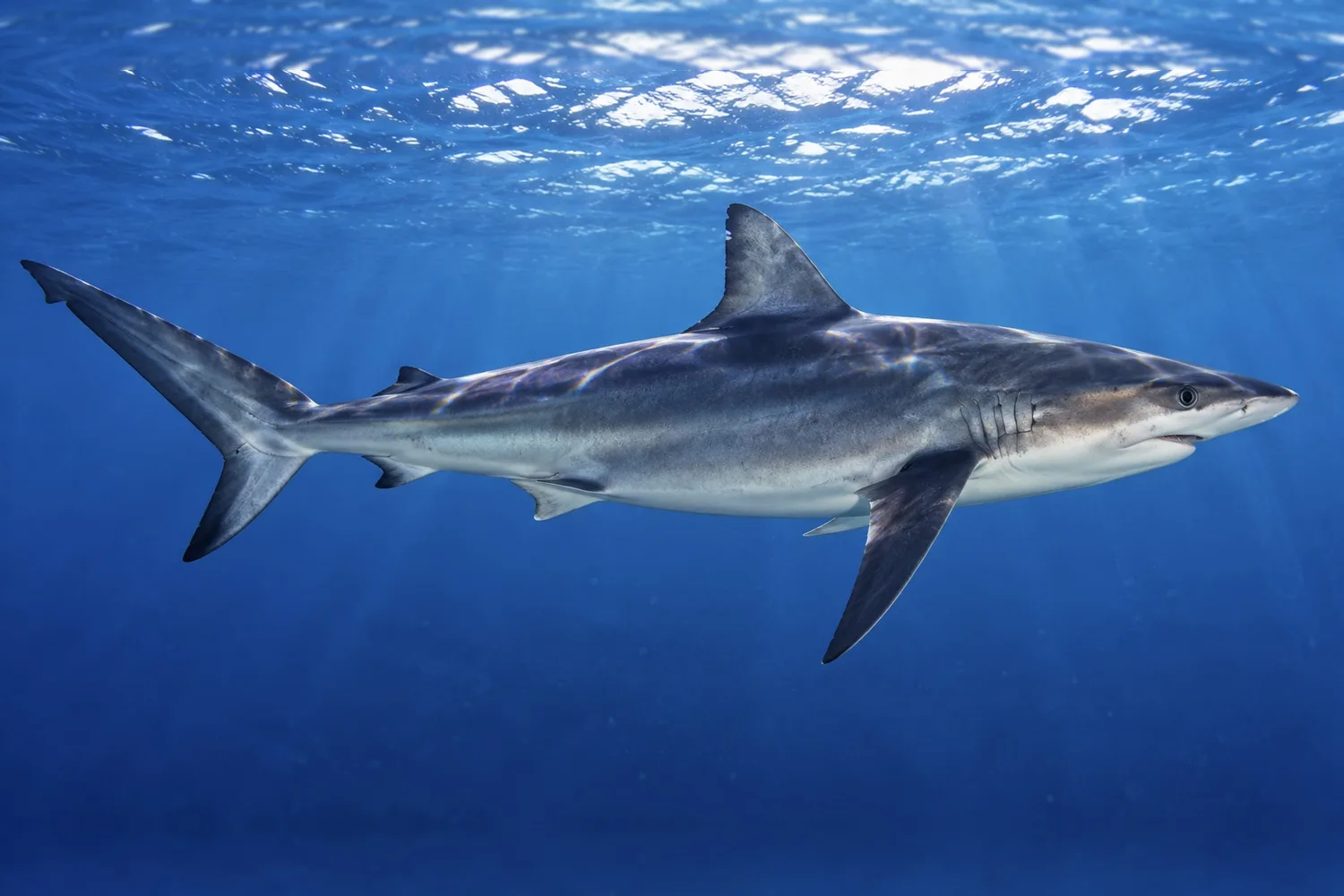
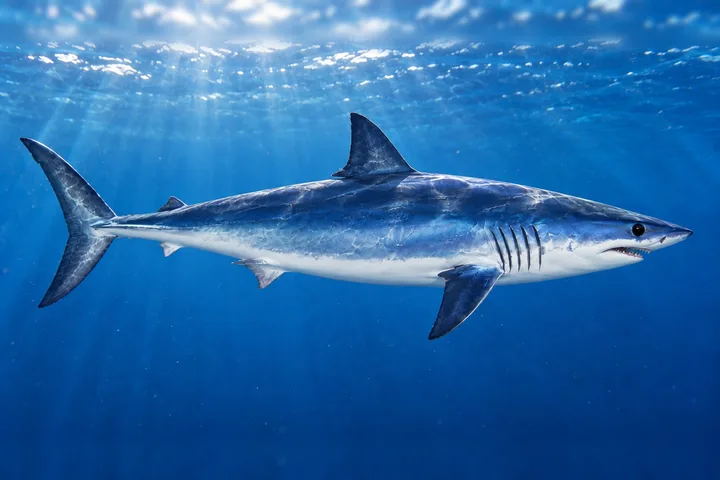
A sleek, bronze-gray shark of the open ocean that shadows tuna schools and floating debris. Off southern Baja it’s mostly a late-spring-to-fall visitor, and a species in decline, which is why we release every one.
Slender and streamlined, plain gray to gray-brown above and white below, with no bold markings. The first dorsal fin is rounded and starts behind the tips of the long, narrow pectoral fins. The second dorsal is tiny, with a very long free rear tip (more than twice its height), and a low ridge of skin runs along the back between the two dorsals.
Silky sharks live in tropical and subtropical seas worldwide, preferring water around 23 °C. They are mainly open-ocean sharks but are common along the edges of continental shelves and over deep reefs, and they range from the surface to 4,000 m, usually staying in the top 500 m. In the eastern Pacific they are found from Baja California and the Gulf of California to Peru, and a study of local catches found them common off Baja California Sur’s Pacific coast from June to November.
They eat bony fish such as tuna and mackerel, squid and pelagic crabs, and they are intensely sensitive to sound, possibly to home in on other animals feeding. Pups grow attached to a placenta for about 12 months, and litters run from 2 to 14 pups of 73 to 87 cm. Off Baja California Sur, females mature at about 180 cm and males at about 182 cm; elsewhere males take 9 to 10 years and females about 12. They live at least 22 to 25 years, a slow pace that can’t keep up with heavy fishing.
Its denticles, the tiny tooth-like scales that cover a shark’s skin, are small, tightly packed and overlapping, giving the hide a smooth, silky feel.
Source ↗In the eastern Pacific it has been called the net-eater shark for its habit of tearing up tuna seine nets.
Source ↗Young silkies gather under drifting fish aggregating devices used by tuna purse seiners and spend nearly all their time in warm surface water of 24–29 °C. In the eastern tropical Pacific, 79–95% of those caught by purse seines die after release.
Source ↗Large-scale tuna fisheries across the Pacific catch hundreds of thousands of silky sharks every year, and the eastern Pacific may hold three separate stocks: northern, central and southern.
Source ↗A silky shark tagged at Roca Partida, in Mexico’s Revillagigedo Archipelago, later turned up at Clipperton Atoll, and another swam from the Galápagos to Clipperton and back.
Source ↗A silky shark tagged in the Galápagos in 2021 logged more than 27,666 km in under two years, swimming halfway to Hawaii twice along a strikingly similar route.
Source ↗Off southern Baja, silky sharks are mostly a late-spring-to-fall fish: commercial fishermen near Todos Santos caught them on longlines set 15 to 35 miles offshore and baited with dorado. Sport anglers usually meet them offshore around floating debris, kelp paddies and schools of tuna and dorado, where, according to local fishing reports, they often take a hooked fish or a bait meant for something else.
We release every silky shark. Best practice: circle hooks that aren’t stainless steel, keep the shark in the water, unhook it quickly or cut the leader close to the hook, and hold it facing forward while the boat moves slowly so water runs over its gills. Never lift a big shark by the tail or gills.
| Daily limit (NOM-017-PESC-1994) | Sharks: 1 per angler per day, and it counts as 5 of the 10 fish |
|---|---|
| Closed season (Pacific) | All shark species, May 1 – July 31; no shark fishing during the closure |
| IUCN Red List | Vulnerable (2017, amended 2021): an estimated 47–54% global decline over three generations |
| CITES | Appendix II since 2017: international trade needs permits |
| IGFA all-tackle record | 762 lb 12 oz (346 kg), Port Stephens, New South Wales, Australia, 1994 |
Top Anglers practices catch-and-release for all sharks.
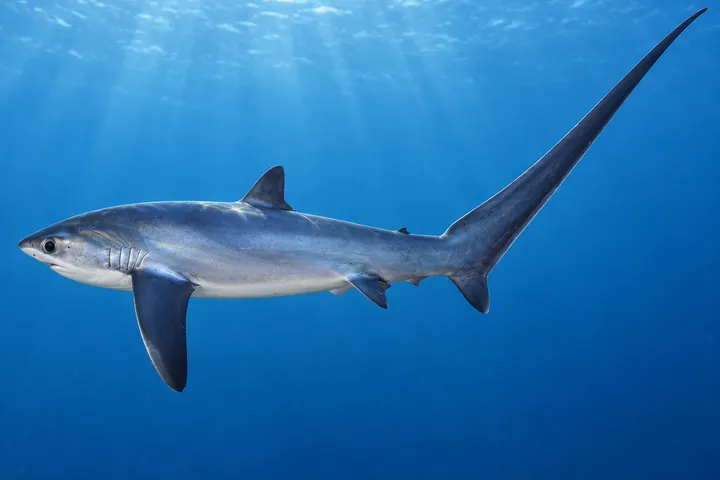
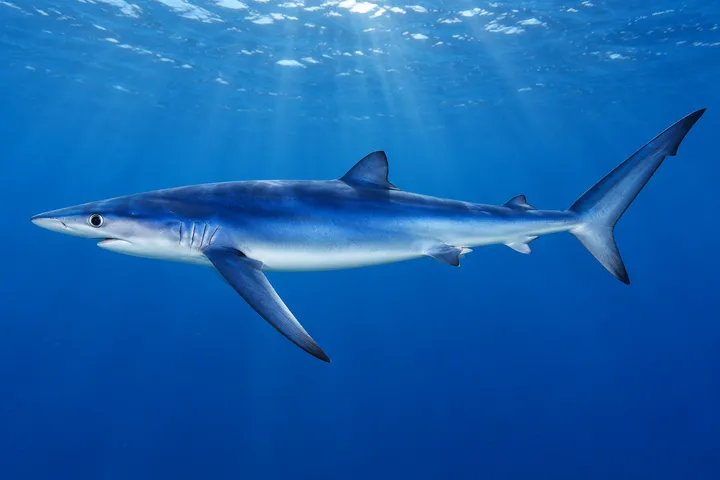
The oceanic whitetip is stockier, with a broadly rounded first dorsal, long paddle-shaped pectoral fins and mottled white fin tips. The blue shark is slender and bright blue, with very long pectoral fins and a long, pointed snout. The dusky and Galápagos sharks look very similar: the dusky’s first dorsal starts over the pectoral fins rather than behind them, and the Galápagos shark’s second dorsal has a much shorter free rear tip.
By law a sport angler may keep one shark per day outside the Pacific closed season (May 1 – July 31). The silky shark is vulnerable, and we release every one.
They are considered potentially dangerous because of their size and have been involved in a few attacks, but they live offshore, so contact with people is rare.
Mostly from May to November. Dive reports from Gordo Banks mention them most from May to August, and a study of local catches found them common off Baja California Sur’s Pacific coast from June to November.

Top illustration: Top Anglers. Photos: iNaturalist contributors, credited on each photo.
Sportfishers with the range to reach the offshore banks. From $799 with license included.