The Gulf’s only endemic bird
The yellow-footed gull is considered the only bird species endemic to the Gulf of California: no other bird breeds exclusively there.
Source ↗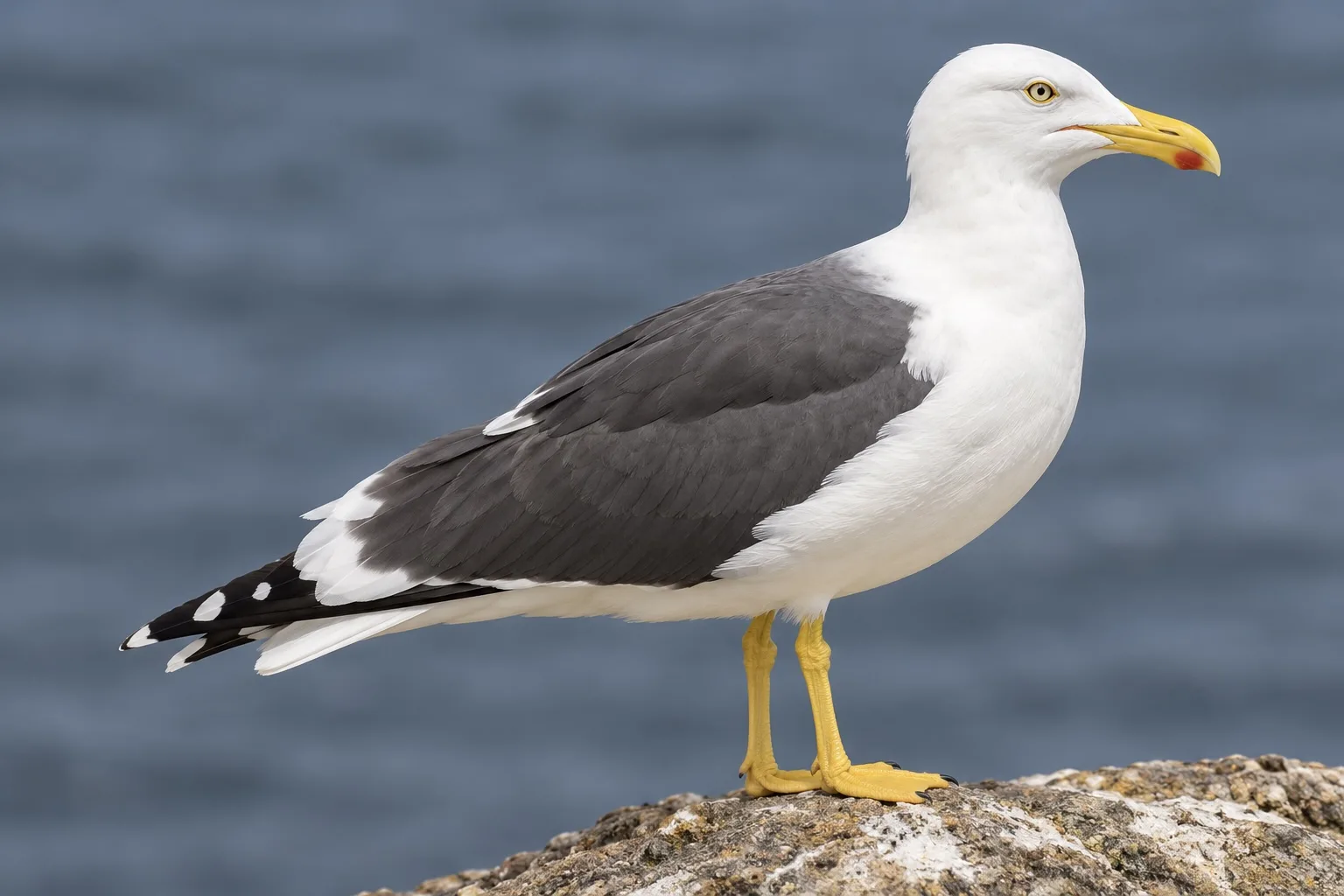
The big, dark-backed gull with bright yellow legs standing on the docks of Cabo San Lucas is a bird you won’t find nesting anywhere else on Earth. It breeds only on the islands of the Gulf of California and has the smallest population of any North American gull.
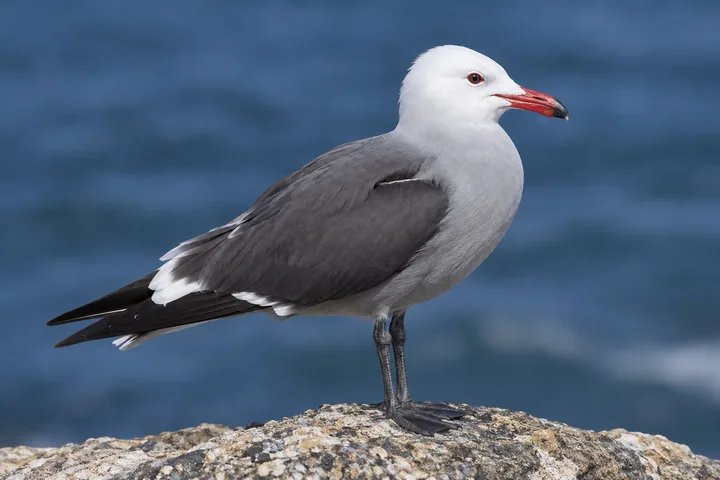
A large, heavy gull with a long neck and a thick bill with a bulbous tip. Adults have a dark slate-gray back and wings, black wingtips with white spots, a white head and underparts, a yellow bill with a red spot near the tip and, above all, bright yellow legs. First-year birds are mostly brown, with a black bill and pinkish legs; second-year birds already look like adults but keep a black mark near the bill tip. Full adult plumage comes at three years.
The yellow-footed gull breeds only on islands in the Gulf of California, with most colonies in the northern and western Gulf, but it also nests in the south: researchers from the Universidad Autónoma de Baja California Sur studied its breeding on Isla Gaviota, in La Paz Bay, and it nests in the Espíritu Santo archipelago. A 1991 review put the breeding population at 10,000 to 20,000 pairs; Cornell estimates about 40,000 breeding birds. It isn’t migratory, but after the breeding season some birds disperse north and south of the colonies.
It is an opportunist that feeds on beaches, rocky shores, harbors and at sea within a few kilometers of shore: fish, crabs, shrimp, clams and squid, small seabirds, eggs and chicks from other colonies, carrion and scraps from docks and dumps, plus food stolen from other birds. Eggs are laid in early to mid-April, usually three (one to five), and both parents incubate for 24 to 28 days and feed the young until they are 11 to 12 weeks old. Most pairs nest in small groups of 12 to 15 (up to 250), and about a quarter nest alone. Egg collecting and human disturbance at the colonies have hurt its breeding success.
The yellow-footed gull is considered the only bird species endemic to the Gulf of California: no other bird breeds exclusively there.
Source ↗On Isla Partida Norte, in the Gulf’s Midriff Islands, the least storm-petrel turned up in 48.3% of 99 regurgitated pellets, making it the gulls’ main prey. Researchers also found bats, bivalves and brown algae in them.
Source ↗It looks almost identical to the western gull except for its yellow legs, but it is a three-year gull: it reaches adult plumage a year sooner than the western gull, so its immatures follow a different sequence.
Source ↗With about 40,000 breeding birds, it has the smallest population of any North American gull. It was considered a subspecies of the western gull until 1982, when molt, plumage and voice differences earned it full species status.
Source ↗After breeding, some birds fly north to California’s Salton Sea, an inland lake in the desert. It was first recorded there in 1965, and up to 200 have been reported at once.
Source ↗Yellow-footed gulls nest on the ground along beaches, just above the tide line, and each pair may defend a narrow territory running from the nest down to the water.
Source ↗Around Los Cabos the yellow-footed gull is present all year but in small numbers, far fewer than pelicans or Heermann’s gulls. Birdwatchers’ records (eBird, via GBIF) place it in every month at Marina Cabo San Lucas, El Arco and Land’s End, the San José del Cabo estuary and Cabo Pulmo. On the docks, look for the yellow legs: that’s the quickest way to pick one out from the other big gulls.
It hangs around docks and fish-cleaning areas looking for scraps, but don’t feed it. If a gull grabs your bait, don’t cut the line: reel it in slowly, get help, control the bill and cover the head with a cloth, cut the barb before backing out the hook and remove all the line before releasing it. A seriously injured bird should be reported to PROFEPA.
| Mexico (NOM-059, 2019 update) | Subject to special protection (Pr), endemic |
|---|---|
| Federal Penal Code, art. 420 | 1 to 9 years in prison for unlawfully capturing, possessing, transporting or harming a species subject to special protection |
| IUCN Red List | Least Concern (2020) |
| Partners in Flight | Yellow Watch List, species of high conservation concern |
The original 2010 NOM-059 list labeled it “not endemic”; the 2019 update corrected it to endemic to Mexico.
The western gull, its closest relative, is nearly identical but has pink legs and takes four years to mature; both are recorded around Cabo, so check the legs. The California gull also has yellow legs, but it’s smaller, with a paler gray back, a slimmer bill with a black ring and red spot, and dark eyes. Adult Heermann’s gulls are unmistakable: dark gray body, white head, red bill and black legs.
Yes. It is listed in NOM-059-SEMARNAT-2010 as subject to special protection (Pr) and endemic, so capturing, possessing or harming one is a federal offense.
Only on islands in the Gulf of California, from the Midriff Islands down to La Paz Bay, in small colonies on beaches just above the tide line.
Look at the legs: bright yellow in the yellow-footed gull, pink in the western gull. Young birds are harder; first-year yellow-footed gulls still have pinkish legs.

Top illustration: Top Anglers. Photos: iNaturalist contributors, credited on each photo.
Our charters leave the Cabo San Lucas marina every morning. From $453 with license included.