Blue Marlin in Cabo San Lucas
The undisputed king of offshore sport fishing. Blue marlin are among the largest fish in the ocean, legendary for their raw power, incredible stamina, and the sheer scale of the fight they deliver. Cabo's Bisbee's Black & Blue, one of the richest purses in sport fishing, is built around this species.
When to fish for blue marlin
Peak season in Cabo San Lucas: July through November.
| Species | Jan | Feb | Mar | Apr | May | Jun | Jul | Aug | Sep | Oct | Nov | Dec | Peak |
|---|---|---|---|---|---|---|---|---|---|---|---|---|---|
| Blue Marlin | Some | Off | Off | Some | Some | Some | Peak | Peak | Peak | Peak | Peak | Some | Jul–Nov |
PeakGoodSomeOff
Month by month: everything biting in Cabo ›How to tell Cabo’s billfish apart ›
Biology
The blue marlin is the largest and most powerful of all billfish species. Females grow significantly larger than males — most fish over 300 pounds are female. Males rarely exceed 300 pounds. The species is found throughout tropical and warm-temperate ocean waters worldwide.
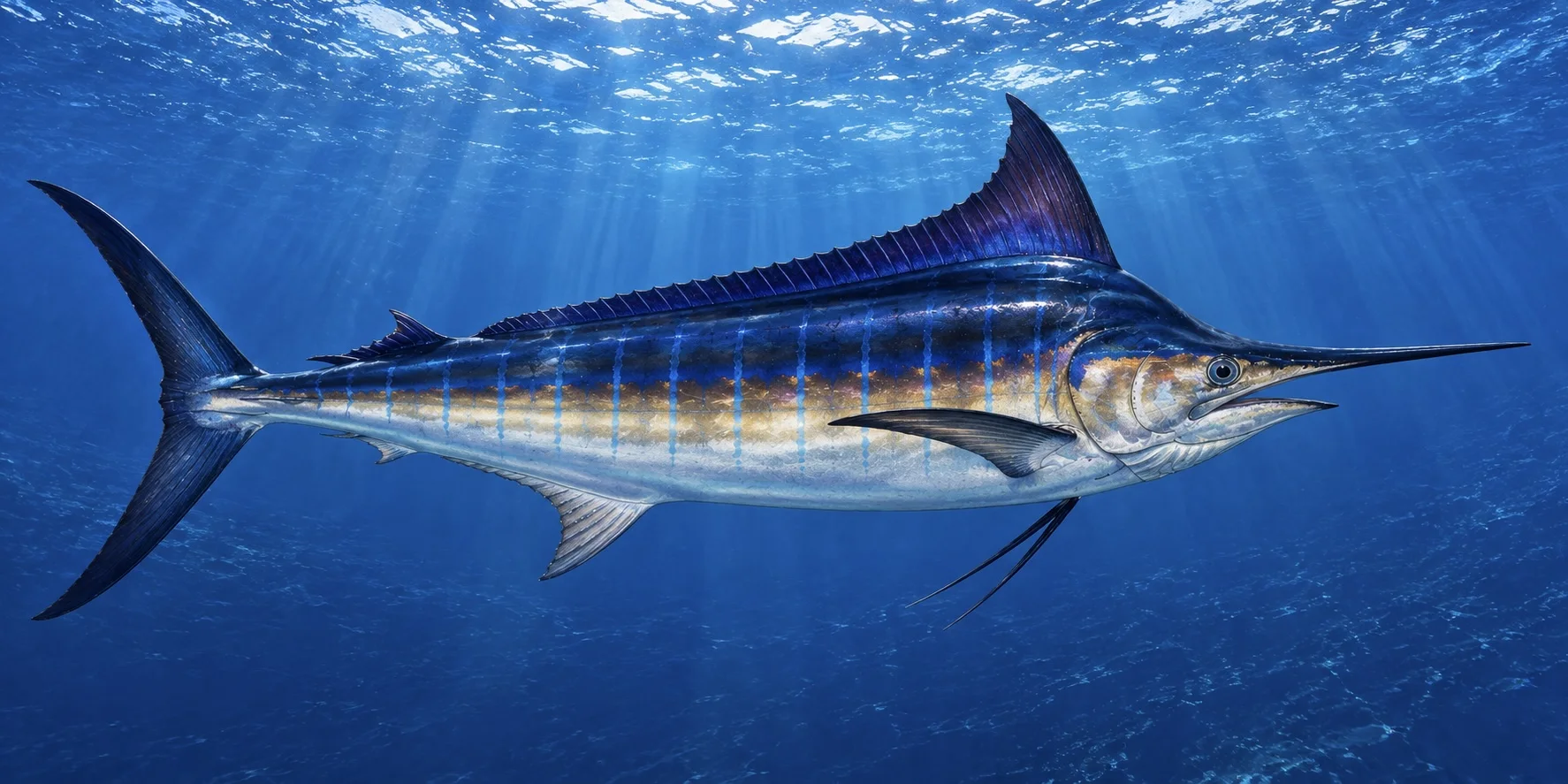
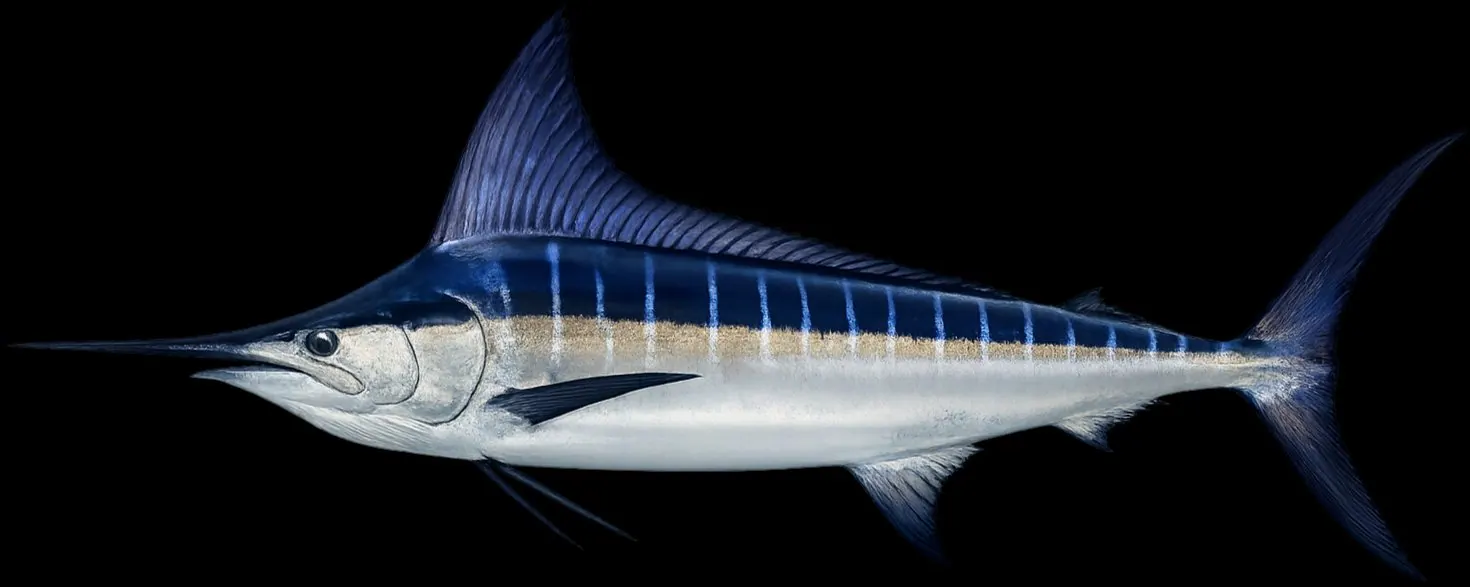
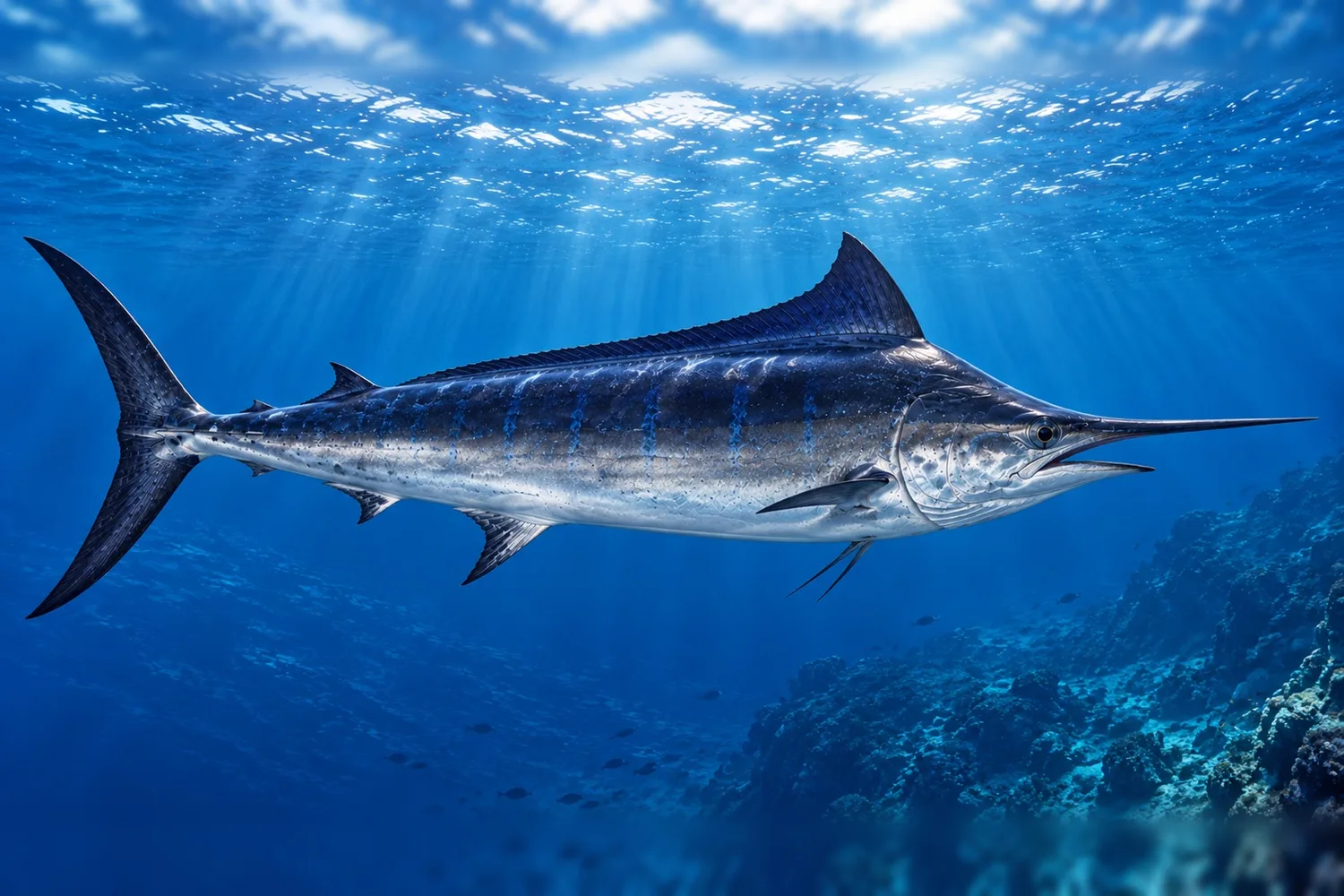
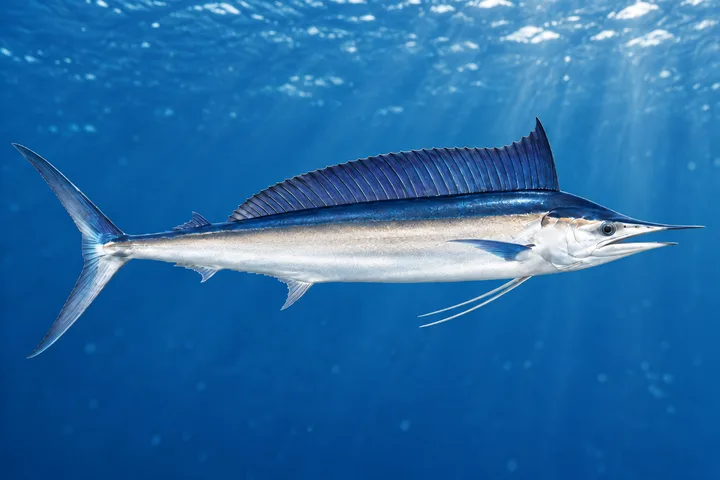
Blue marlin are identifiable by their cobalt blue dorsal surface, silver-white flanks, and retractable pectoral fins (unlike black marlin, whose pectorals are rigid). Their dorsal fin is lower and more rounded than the striped marlin's pointed fin.
In Cabo San Lucas, blue marlin arrive with the warm water in early summer and remain through fall. They are primarily targeted offshore at distances of 10 to 30 miles from the marina, around underwater structure and temperature breaks where bait concentrates.
Taxonomy
| Order | Istiophoriformes |
|---|---|
| Family | Istiophoridae |
| Genus | Makaira |
| Species | M. nigricans (Lacepède, 1802) |
| Common names | Blue marlin, Pacific blue marlin, marlín azul (Spanish), a'u (Hawaiian) |
| Lifespan | Females 20+ years, males ~10 years |
| Diet | Tuna, mackerel, squid, dolphinfish, flying fish |
| Habitat | Tropical and warm-temperate waters of Atlantic, Pacific, and Indian Oceans. Pelagic, usually near the surface but capable of diving to 1,000+ feet. |
How we fish for them
Trolling With Lures
Tournament Standard. Large skirted lures (10–14 inch heads) in blue/white, purple/black, and green/yellow are trolled at 7–10 knots in a spread of 5–7 lures. This is the standard tournament technique used in Bisbee's. Tackle: 50–80 lb class conventional reels on stand-up or chair rods.
Dead Bait Trolling
Traditional. Rigged ballyhoo, mullet, or bonito belly strips trolled behind teasers. This traditional method remains effective and is often combined with a mixed lure-and-bait spread. Tackle: 50 lb class conventional.
Live Bait
Highest Hookup Rate. Large live baits — skipjack tuna, bonito, or caballito — slow-trolled or pitched to raised fish. Circle hooks improve hookup rates and reduce deep hooking. Tackle: 50–80 lb class with heavy fluorocarbon leader.
Records & sizes
IGFA All-Tackle Record (Pacific blue marlin): 1,376 LB. Caught by Jay de Beaubien on May 31, 1982 off Kaaiwi Point, Kona, Hawaii. Fought for 40 minutes on a Kita lure using a Fin-Nor 12/0 reel. The Atlantic blue marlin record is 1,402 lb, caught off Vitória, Brazil, in 1992.
Typical Good Catch: 200-400 lb. Blue marlin in Cabo commonly weigh 200 to 400 pounds, and granders (1,000+ lb fish) are rare anywhere in the world. The Bisbee's tournament regularly weighs fish over 400 pounds.
Top Speed: ~50 mph. Estimated maximum burst speed. Blue Marlin are among the fastest fish in the ocean.
Maximum Recorded Length: ~16 ft (5 m). Approximate maximum total length. Cabo blue marlin typically measure smaller.
Record source: IGFA world records.
Conservation & rules
Mexican sportfishing rules (NOM-017-PESC-1994) allow one billfish per angler per day; in Cabo we follow a local rule of one billfish per boat per day, and Top Anglers strongly encourages catch and release for all billfish. Our captains use circle hooks and proper revival techniques to maximize post-release survival.
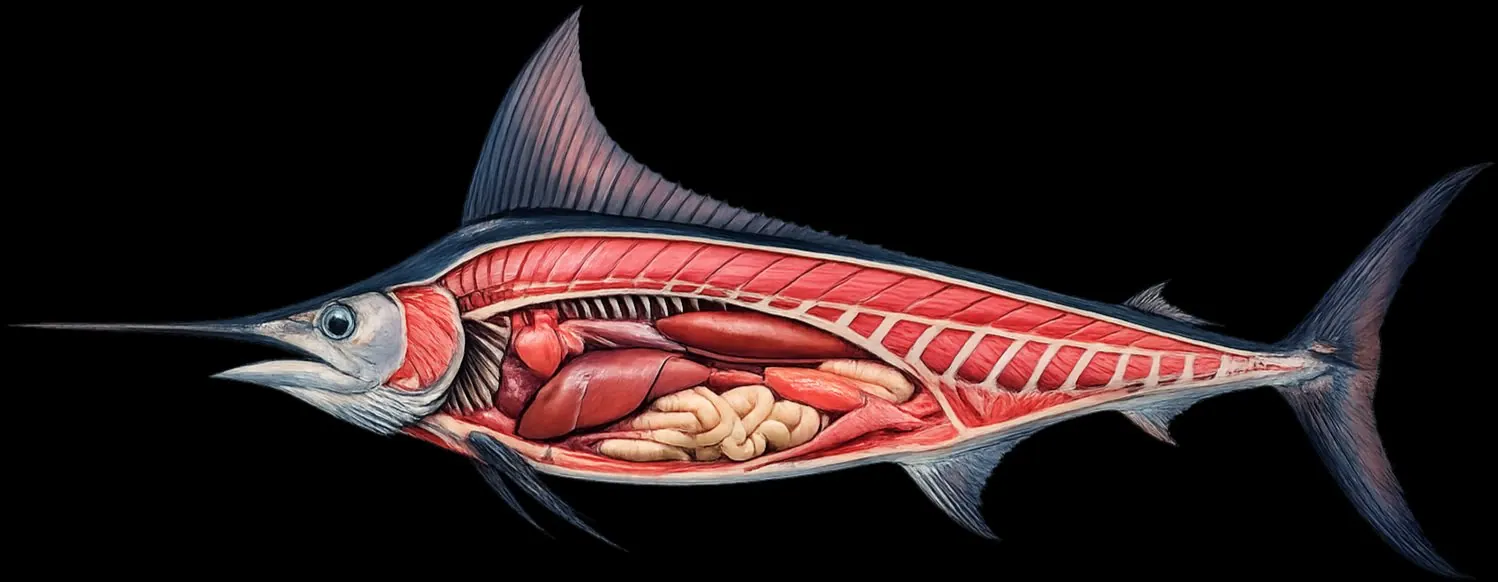
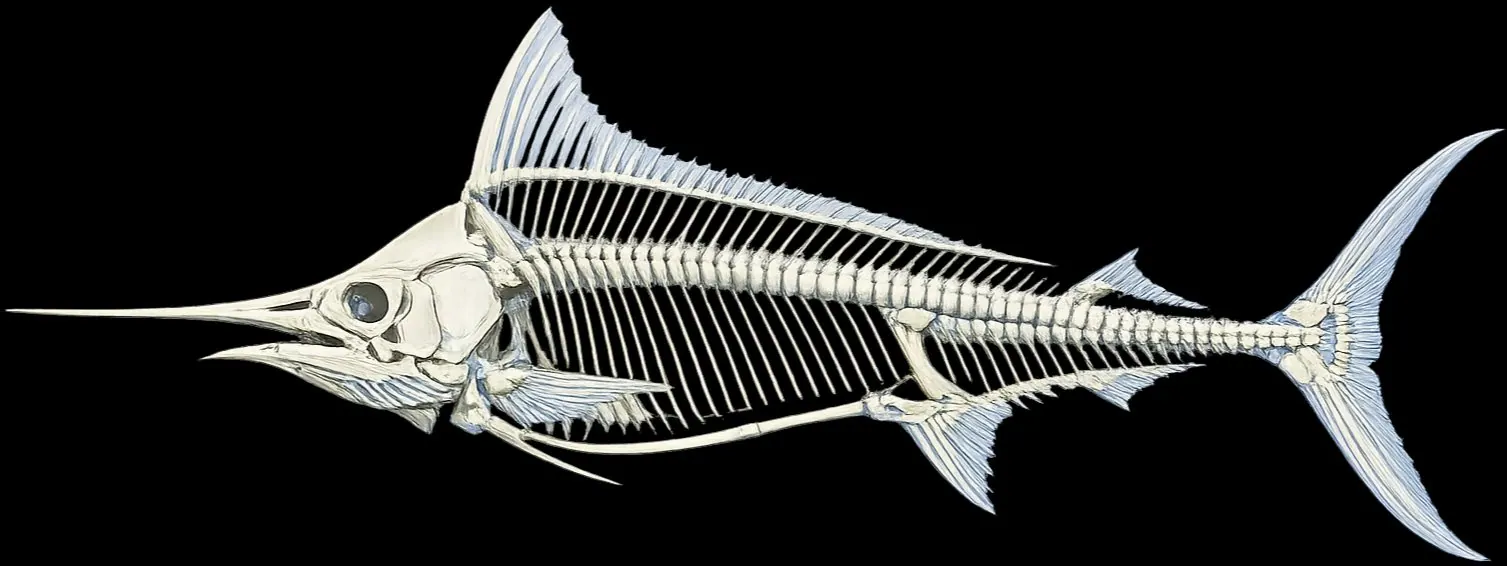
Anatomy
Questions
When is the best time to catch blue marlin in Cabo?
Peak blue marlin season in Cabo runs from July through November, with the largest fish typically appearing in September and October — coinciding with Bisbee's Black & Blue tournament. Water temperatures above 78°F trigger the arrival of blue marlin from the open Pacific.
How big do blue marlin get in Cabo?
Blue marlin in Cabo commonly weigh 200 to 400 pounds, with bigger fish over 500 pounds caught in most seasons. Granders — fish over 1,000 pounds — are rare anywhere in the world. The IGFA all-tackle world record for Pacific blue marlin is 1,376 pounds, caught in Hawaii.
Photos
Other species in Cabo
Boats for blue marlin
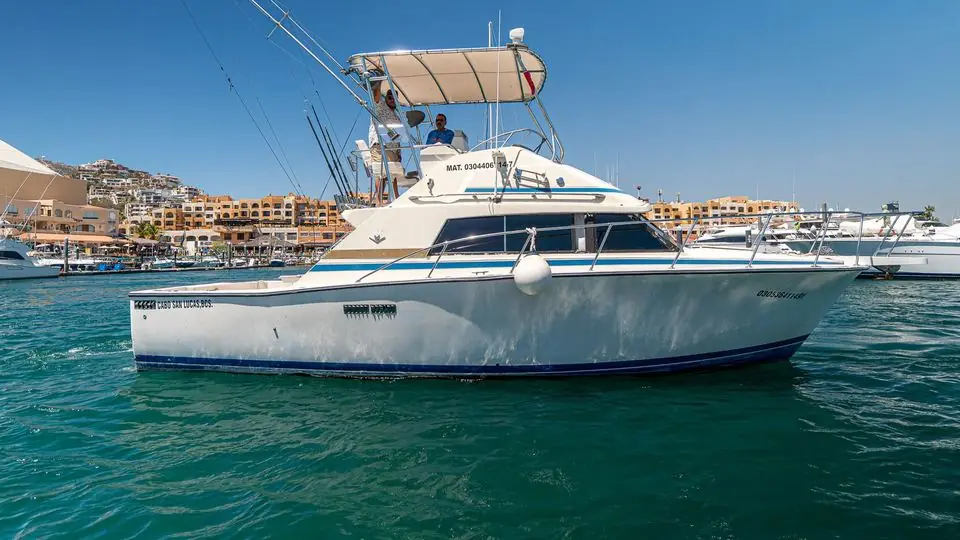
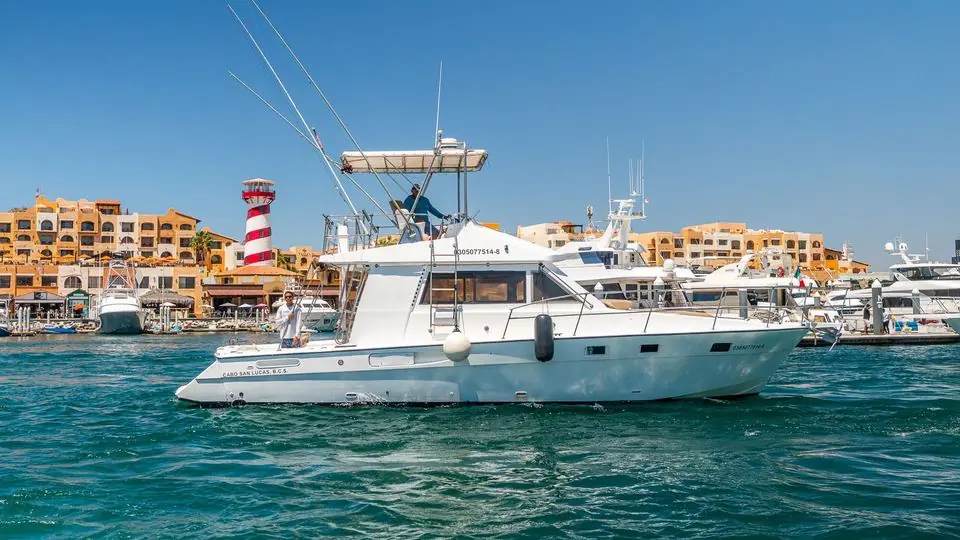
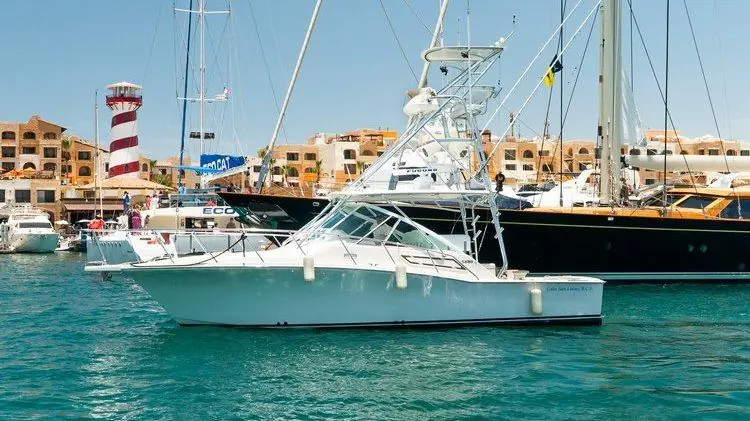
Offshore sportfishers with the range to reach the banks. From $1,174 with license included.