
Home > Species Guide > Yellowfin TunaThunnus Albacares
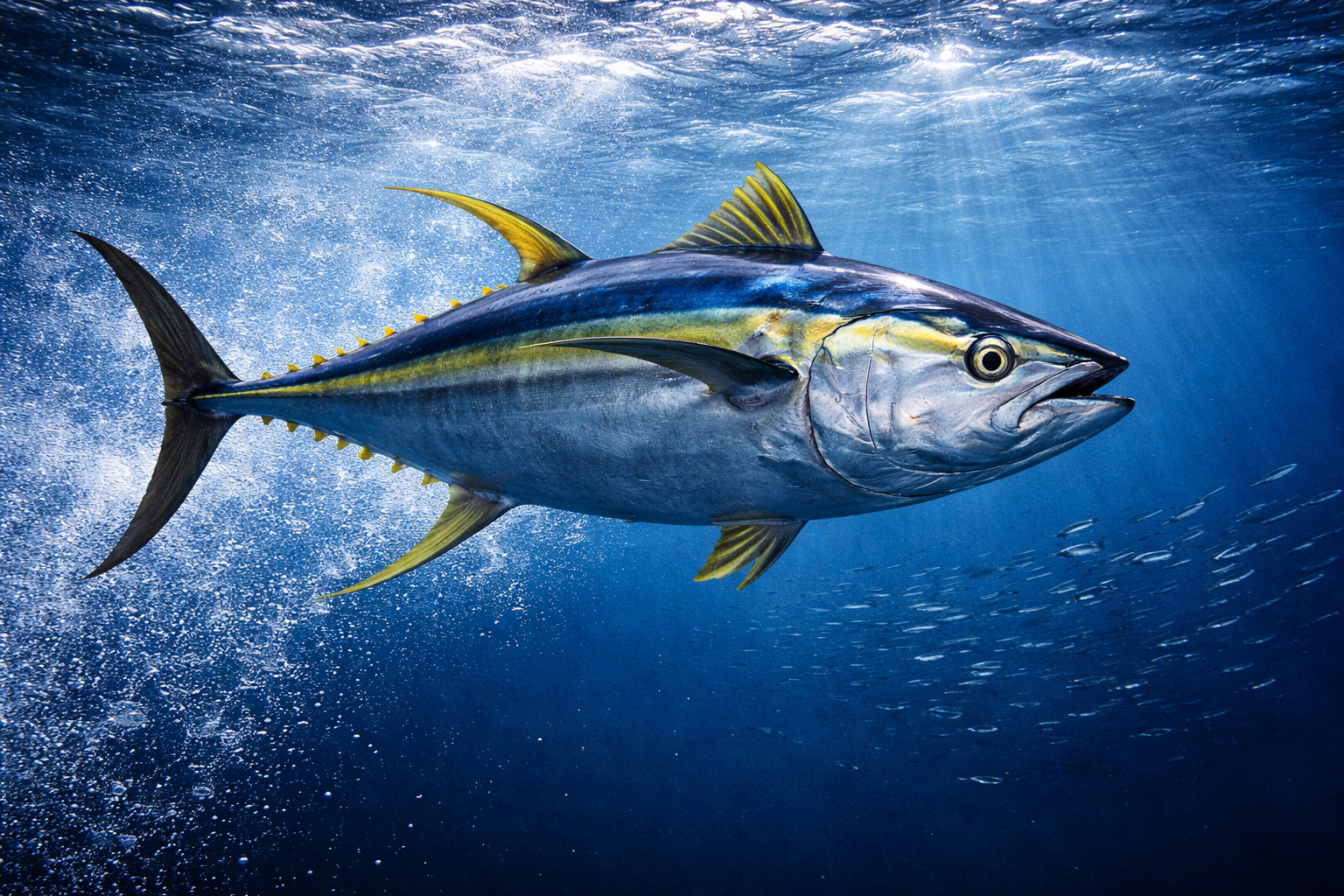
Yellowfin Tuna
Pure power on the line. Yellowfin tuna are one of the hardest-fighting fish in the ocean — their initial run can strip hundreds of yards of line in seconds. They are also the species most often kept by Cabo anglers, with fresh sashimi on the dock being a beloved local tradition. The IGFA world record was caught just south of Cabo.
427 lbs
IGFA WORLD RECORD
~7 ft (2.1 m)
MAX LENGTH
~47 mph
TOP SPEED
Jun-Nov
PEAK SEASON
SCIENTIFIC CLASSIFICATION
Taxonomy & Biology
-
Scombriformes
-
Scombridae
-
Thunnus
-
T. albacares (Bonnaterre, 1788)
-
Yellowfin tuna, ahi (Hawaiian), atún aleta amarilla (Spanish), allison tuna
-
Approximately 6–8 years
-
Squid, crustaceans, small pelagic fish, flying fish
-
Tropical and subtropical waters worldwide. Epipelagic, typically found in the top 100 meters but capable of diving to 1,000+ feet. Often associated with dolphins and floating debris.
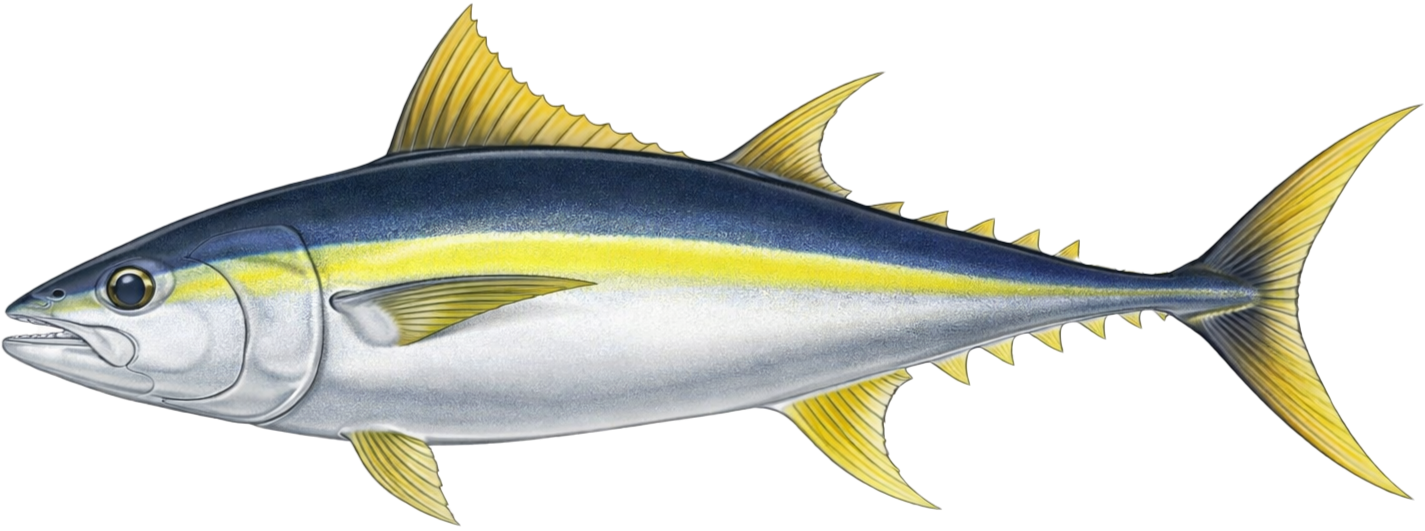
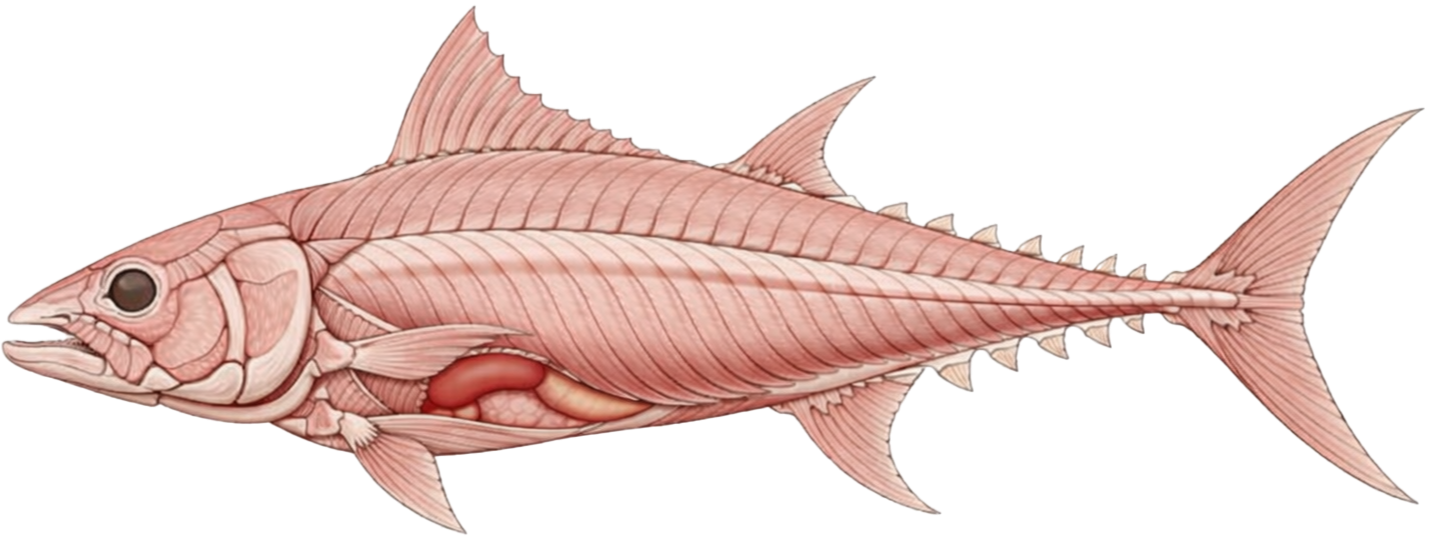
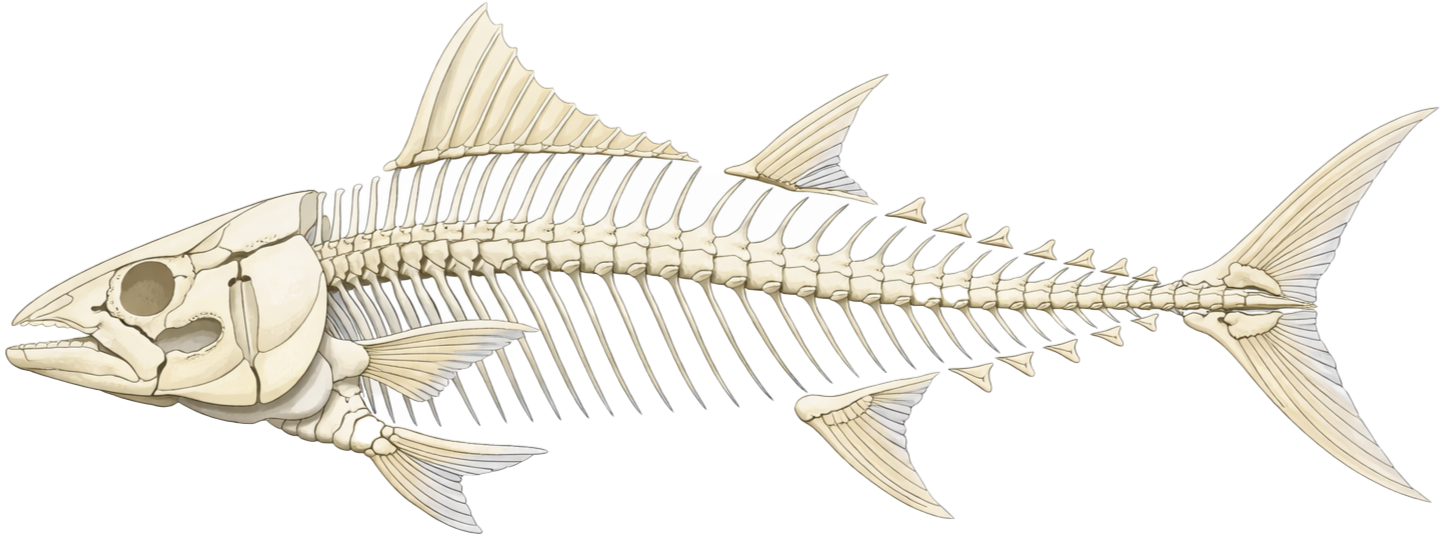
Yellowfin tuna are a schooling pelagic species identifiable by their bright yellow dorsal and anal finlets and the golden lateral band along their flanks. Mature fish develop dramatically elongated second dorsal and anal fins that can reach almost to the tail.
Yellowfin are warm-blooded (endothermic) — they can maintain a body temperature above the surrounding water, which gives them a metabolic advantage for sustained high-speed swimming and deep diving.
The IGFA all-tackle world record of 427 pounds was caught just south of Cabo San Lucas in 2012, making this region one of the most productive yellowfin fisheries on Earth. Yellowfin are often found in association with dolphins — following porpoise schools is a standard Cabo tuna fishing technique.
WHEN TO FISH
Seasonal Patterns in Cabo San Lucas
JAN
--
FEB
--
MAR
★
APR
★
MAY
★★
JUN
★★★
JUL
★★★
AGO
★★★
SEP
★★★
OCT
★★★
NOV
★★
DEC
★★
HOW TO CATCH THEM
Fishing Techniques & Tackle
HIGHEST VOLUME
CHUNK & CHUM
The boat anchors or drifts near a school, and chunks of cut bait are thrown overboard to create a chum slick. When tuna begin feeding in the slick, baited hooks are dropped into the feeding zone. This produces the highest volume of fish. Tackle: 30–50 lb class conventional.
SPORT TECHNIQUE
LIVE BAIT / POPPING
Live sardines or caballito on circle hooks, or surface poppers and stick baits cast to feeding schools. Popping for tuna on spinning tackle is one of the most exciting techniques in sport fishing. Tackle: Heavy spinning or 30 lb conventional.
COVERING GROUND
TROLLING
Cedar plugs, feathers, and skirted lures trolled at 6–8 knots to locate schools. Once fish are found, the boat often switches to chunk or live bait techniques. Effective for covering large areas of water. Tackle: 30–50 lb class.
WORLD RECORDS
IGFA Records & Notable Catches
IGFA ALL-TACKLE WORLD RECORD
427 lb
Caught by Guy Yocom on September 18, 2012, fishing 180 miles south of Cabo San Lucas. Yocom also won a $1 million bonus from Mustad's 'Hook a Million' promotion for the record catch.
TYPICAL GOOD CATCH
30-150 lb
Yellowfin in Cabo typically run 30 to 150 pounds, with trophy fish over 200 pounds caught every season. The species grows rapidly — a 100-pound fish may be only 3–4 years old.
TOP SPEED
~47 mph
Estimated maximum burst speed. Yellowfin Tuna are among the fastest fish in the ocean.
MAXIMUM RECORDED LENGTH
~7 ft (2.1 m)
Approximate maximum total length. Cabo yellowfin tuna typically measure smaller.
QUESTIONS & ANSWERS
Conservation & Regulations
Responsible Fishing in Cabo
Yellowfin tuna are classified as Least Concern by the IUCN but are subject to commercial fishing pressure worldwide. Mexican bag limits allow 5 yellowfin tuna per license per day. Fish cleaning is available at the dock for an additional fee.
QUESTIONS & ANSWERS
Yellowfin Tuna FAQ
-
Yellowfin tuna is considered one of the finest eating fish in the ocean. The firm, deep-red flesh is excellent as sashimi, seared steaks, poke, or grilled. The limit is 5 per license per day. Fish cleaning is available at the dock for an additional fee. Several restaurants near the marina will prepare it fresh for you that same day.
-
Yellowfin tuna are most abundant in Cabo from June through November, with peak fishing in July through October when large schools concentrate around offshore banks and temperature breaks. Trophy-size fish over 100 pounds are most common during this window.
-
Yes. Yellowfin tuna can be kept — the limit is 5 per license per day. Fish cleaning and filleting is available at the dock for an additional fee. Many Cabo restaurants will prepare your fresh tuna as sashimi, ceviche, or grilled — ask us for recommendations.
EXPLORE MORE
Other Species in Cabo
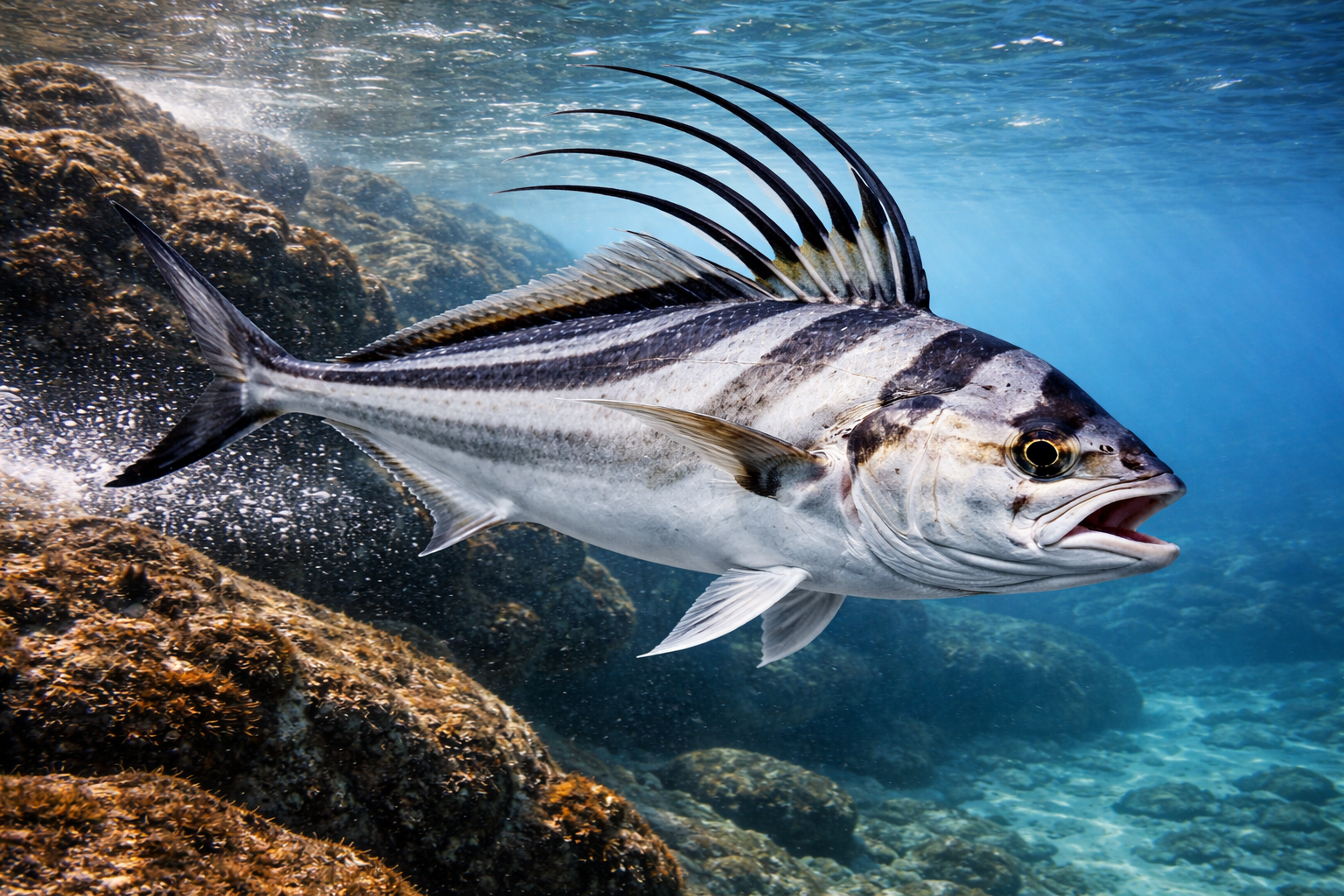
Nematistius Pectoralis
Roosterfish
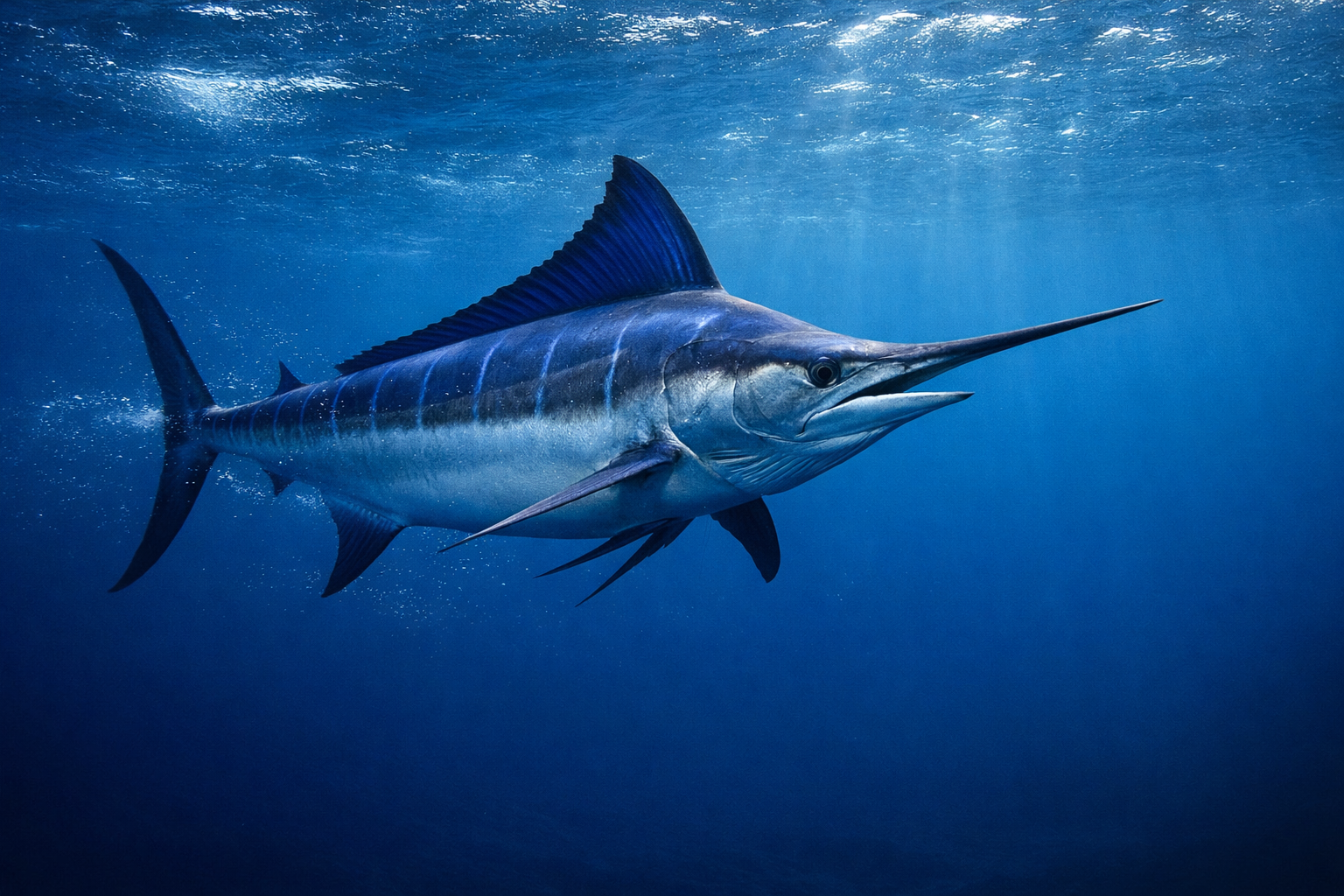
Makaira Nigricans
Blue Marlin
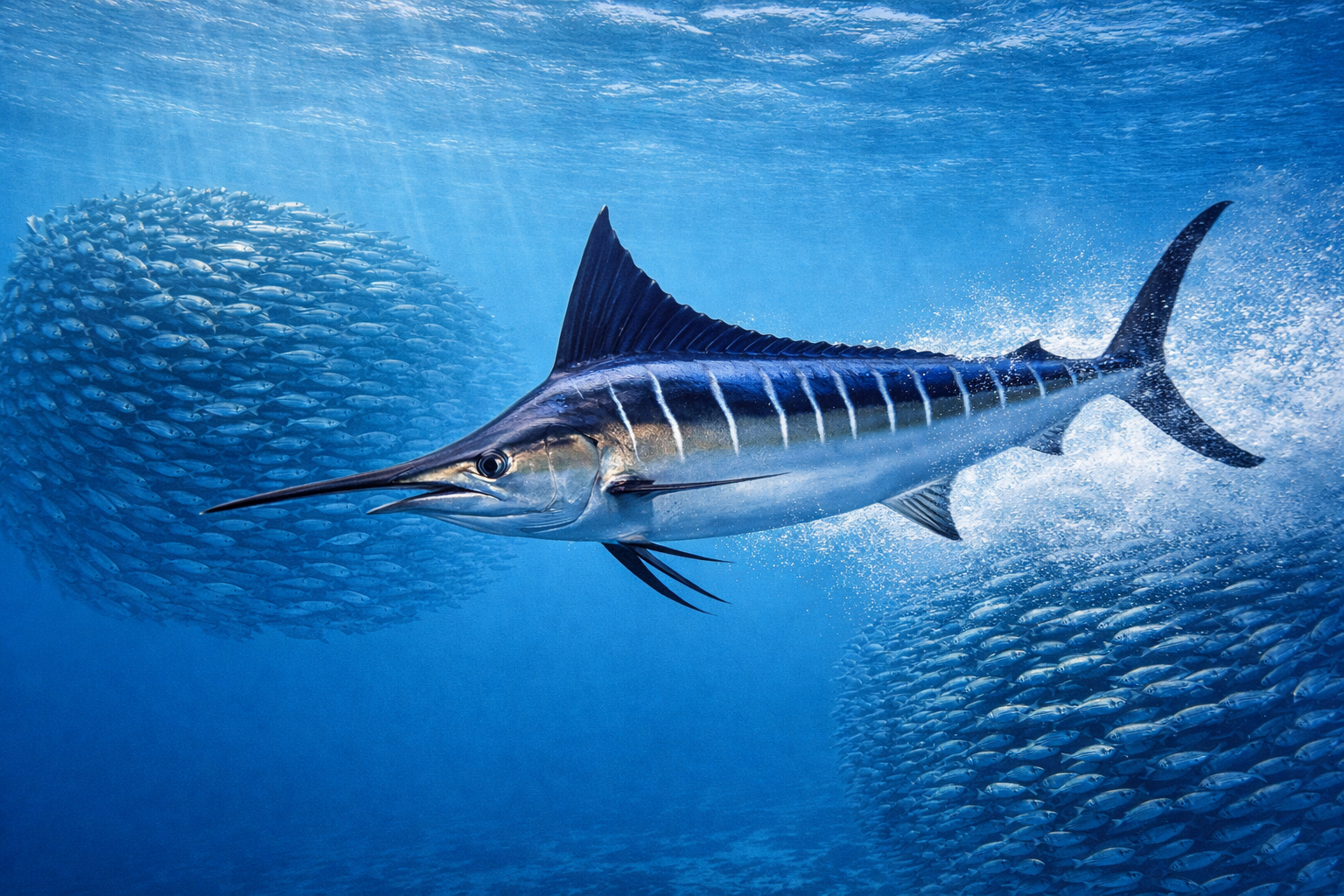
Istiophorus Platypterus
Striped Marlin
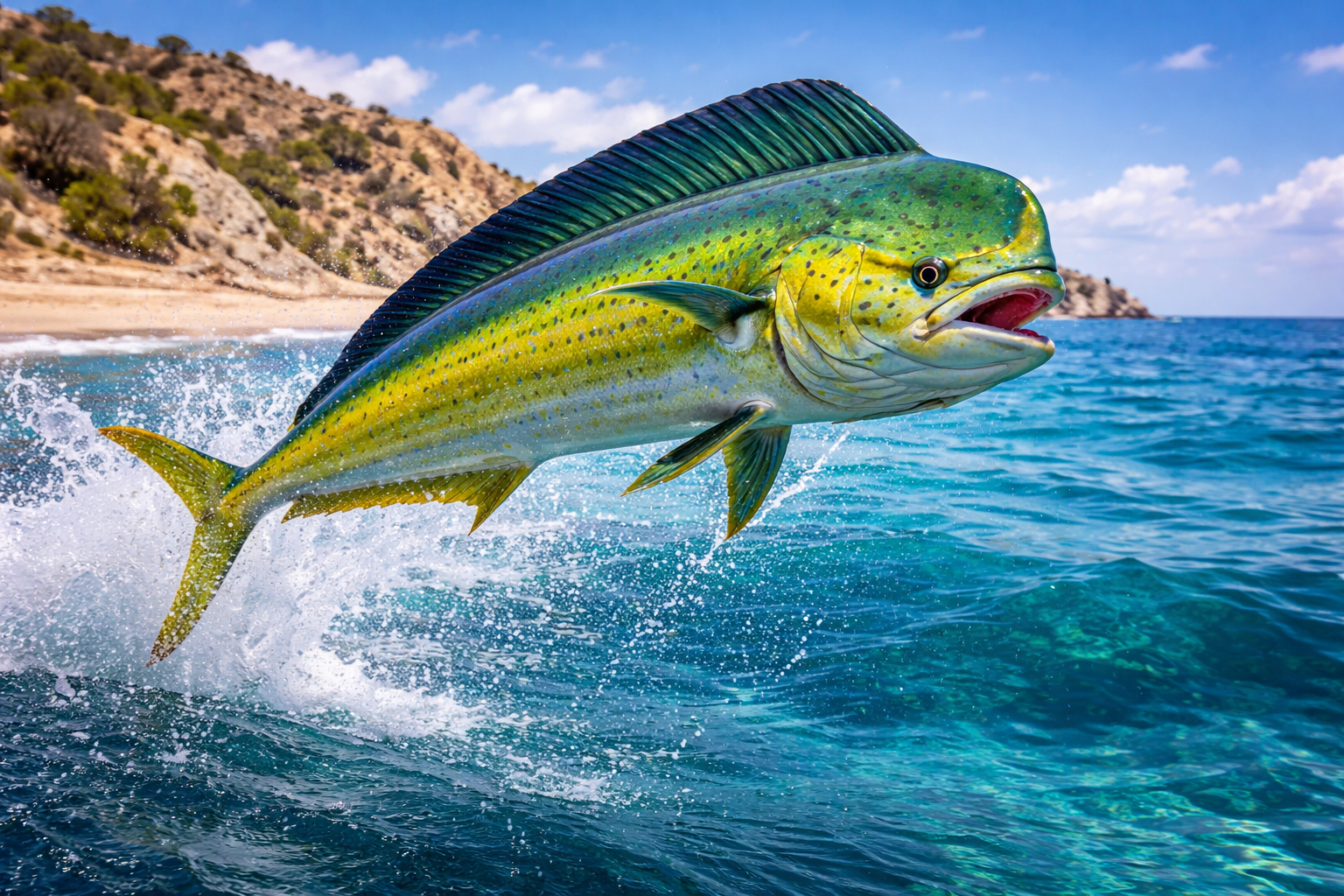
Coryphanea Hippurus
Dorado
Which Boat Should You Book for Yellowfin Tuna?
Any offshore-capable boat works for yellowfin tuna. The 30' California ($854) and 31' Bertram ($899) are popular choices. For large groups targeting tuna and marlin, the 40' ($1,335) or 44' Viking ($1,935) provide more deck space. View all boats →
Target Yellowfin Tuna in Cabo
Our captains know exactly where and when to find yellowfin tuna. Call or email directly — no booking fees, no middlemen.
NO BOOKING FEES · NO COMMISSIONS · DIRECT WITH OUR CABO TEAM