
Home > Species Guide > Striped MarlinKAJIKIA AUDAX
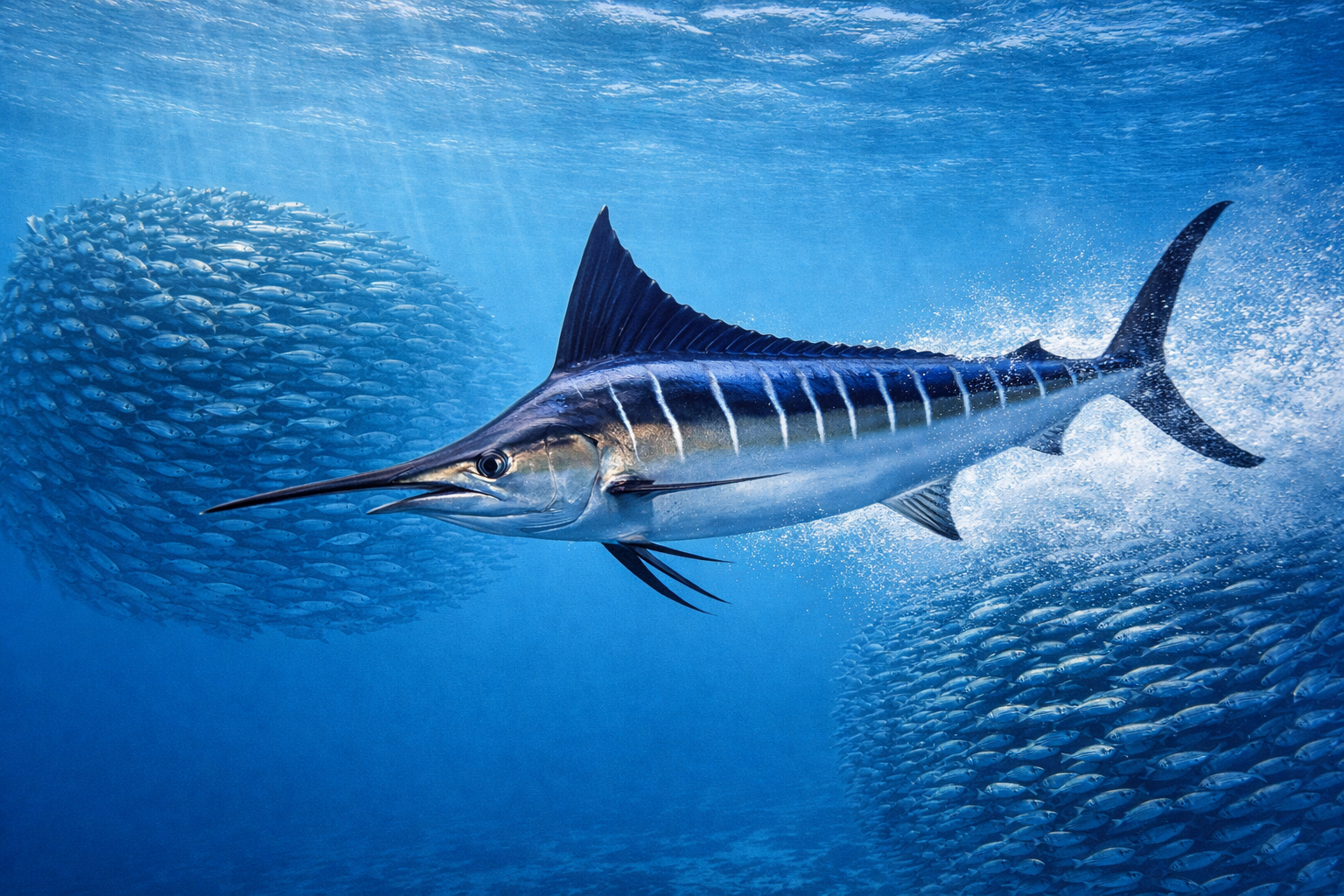
Striped Marlin
Cabo's signature billfish and the most commonly caught marlin species in the Eastern Pacific. Known for aggressive surface feeding, spectacular aerial displays, and their willingness to eat live bait, lures, and even fly patterns.
495 lbs
IGFA WORLD RECORD
~13 ft (4 m)
MAX LENGTH
~50 mph
TOP SPEED
Oct-Apr
PEAK SEASON
SCIENTIFIC CLASSIFICATION
Taxonomy & Biology
-
Istiophoriformes
-
Istiophoridae
-
Kajikia
-
K. audax (Philippi, 1887)
-
Striped marlin, striper, marlín rayado (Spanish), nairagi (Hawaiian)
-
Approximately 10–12 years
-
Sardines, anchovies, mackerel, squid, flying fish
-
Tropical and warm-temperate waters of the Indian and Pacific Oceans, typically near the surface in the upper 100 meters
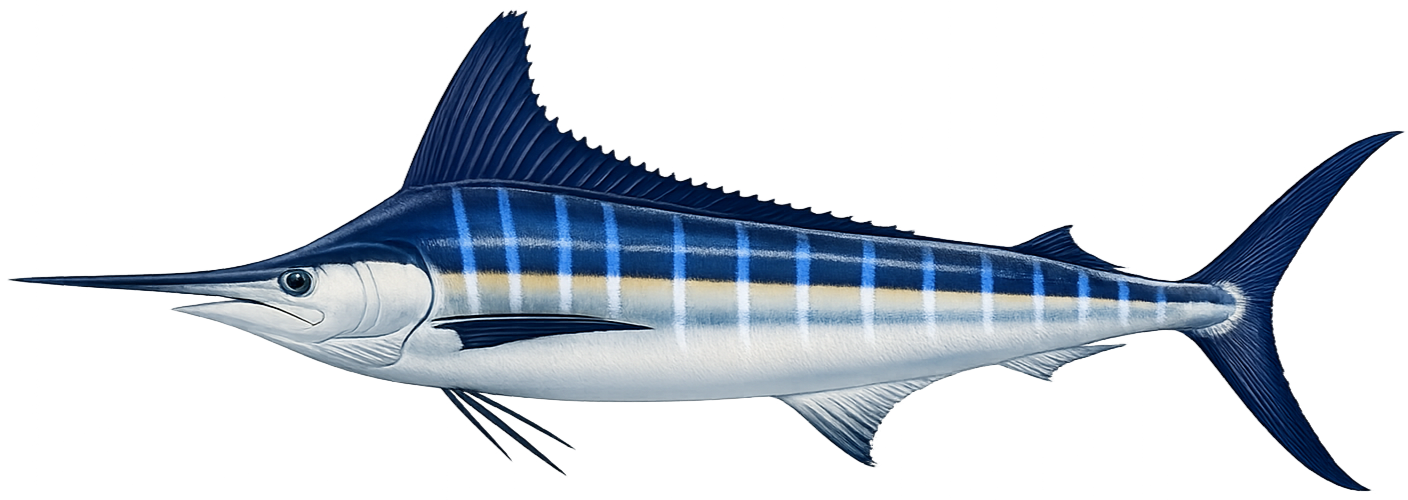
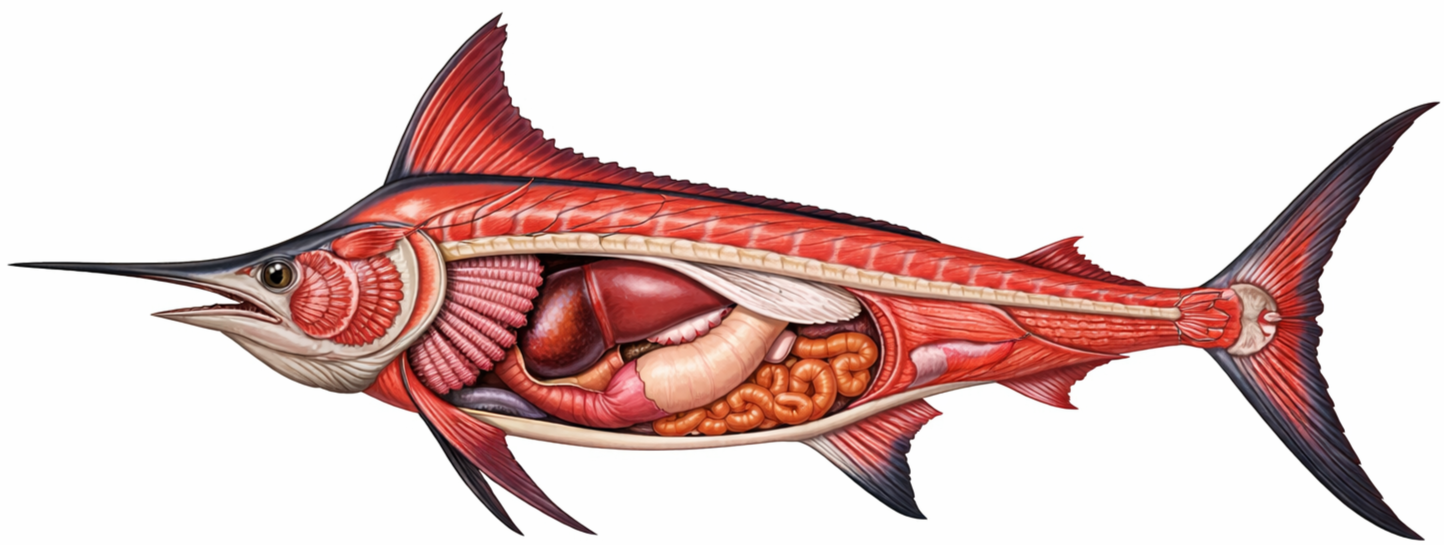
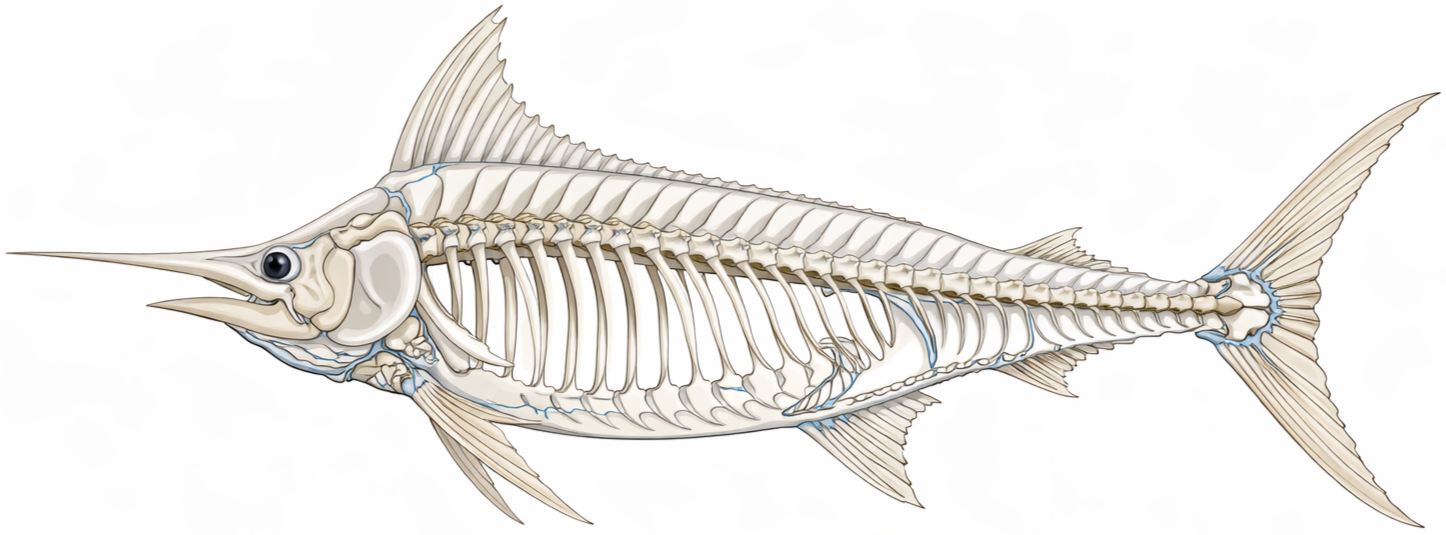
The striped marlin is a pelagic billfish found throughout the tropical and warm-temperate zones of the Indian and Pacific Oceans. It is the most commonly caught billfish species in the Eastern Pacific and the species most closely associated with Cabo San Lucas sport fishing.
Striped marlin are identifiable by their high, pointed dorsal fin — which is typically taller than the body depth — and the prominent vertical stripes along their flanks that remain visible after death (unlike blue marlin, whose stripes fade quickly). Their body color ranges from dark blue on the dorsal surface to silver-white on the ventral surface.
Unlike blue and black marlin, striped marlin are relatively slender and lightweight, which makes them one of the most acrobatic billfish species when hooked. They are known for greyhounding — a behavior where they leap repeatedly across the surface in long, low arcs — and for tail-walking during the fight.
Striped marlin are a highly migratory species. Populations in the Eastern Pacific follow seasonal patterns driven by water temperature and bait availability. In the Cabo San Lucas region, striped marlin concentrate during the cooler months (January through April) when water temperatures drop to the 68–75°F range that these fish prefer.
WHEN TO FISH
Seasonal Patterns in Cabo San Lucas
JAN
★★★
FEB
★★★
MAR
★★★
APR
★★★
MAY
★★
JUN
★
JUL
★
AGO
★
SEP
★★★
OCT
★★★
NOV
★★★
DEC
★★★
HOW TO CATCH THEM
Fishing Techniques & Tackle
MOST COMMON METHOD
TROLLING WITH LURES
The standard approach in Cabo. A spread of 4–6 skirted lures in various sizes and colors are trolled at 6–9 knots. Purple and black, blue and white, and green and yellow are proven color combinations. Medium-size lures (7–10 inch heads) work best for stripers. Tackle: 30–50 lb class conventional reels (Penn International, Shimano Tiagra) on stand-up or chair rods.
ADVANCED / SPORT
FLY FISHING
Striped marlin are one of the most accessible billfish species on fly. The technique involves raising a fish on teasers (hookless lures), then switching to a large fly pattern when the fish is close to the boat. This is a specialty technique — not all boats are equipped for it. 12-weight fly rods with large arbor saltwater reels and intermediate sinking lines. Contact us in advance if you want to fly fish for marlin.
HIGHEST SUCCESS RATE
LIVE BAIT FISHING
Live caballito (green jack) or sardinas are the deadliest baits for Cabo striped marlin. The boat slow-trolls or drifts the live bait on a circle hook, allowing the marlin to eat the bait before setting the hook. This technique produces the highest hookup-to-catch ratio. Tackle: 30 lb class spinning or conventional gear with fluorocarbon leader.
WORLD RECORDS
IGFA Records & Notable Catches
IGFA ALL-TACKLE WORLD RECORD
495 LB (224 kg)
Caught by Bill Boniface on January 16, 1986 off Tutukaka, New Zealand. Fought for one hour on 50-pound-test line using a Penn International reel.
TYPICAL GOOD CATCH
100-200 lb
Most striped marlin caught in Cabo waters weigh between 100 and 200 pounds, with exceptional fish exceeding 250 pounds.
TOP SPEED
~50 mph (80 km/h)
Striped marlin are among the fastest fish in the ocean. Their speed, combined with their tendency to leap and tailwalk, makes them one of the most exciting sport fish on light tackle.
MAXIMUM RECORDED LENGTH
~13 ft (4 m)
Approximate maximum total length including bill. Cabo striped marlin typically measure 7 to 10 feet.
QUESTIONS & ANSWERS
Conservation & Regulations
Responsible Fishing in Cabo
Mexican fishing permits allow one billfish per boat per day, including striped marlin. Top Anglers strongly encourages catch and release for all billfish. Striped marlin are classified as Near Threatened by the IGFA, and responsible catch-and-release practices are essential for maintaining healthy populations in Cabo waters.
Top Anglers captains and crew are trained in responsible billfish release techniques designed to maximize post-release survival rates. These include keeping fight times short (under 20 minutes when possible), never gaffing billfish, using circle hooks to reduce deep hooking, handling fish in the water without removing them from the ocean, and reviving tired fish by motoring slowly forward to push water through their gills before release.
The IGFA rates the striped marlin as Near Threatened on its conservation status. The species faces pressure from commercial longlining in the open Pacific. Responsible sport fishing with proper catch-and-release techniques is considered compatible with healthy population management by fisheries scientists.
QUESTIONS & ANSWERS
Striped Marlin FAQ
-
The peak season for striped marlin in Cabo San Lucas runs from October through April. Striped marlin are present year-round in Cabo waters but are most abundant during the cooler months when water temperatures range from 68°F to 75°F. During peak season, it is not uncommon for boats to raise 5 to 15 striped marlin in a single day.
-
Striped marlin caught in Cabo San Lucas typically weigh between 100 and 200 pounds, with exceptional fish exceeding 250 pounds. The IGFA all-tackle world record is 494 pounds, caught off New Zealand. Striped marlin can reach lengths of approximately 13 feet and are capable of speeds exceeding 50 mph.
-
Mexican permits allow one billfish per boat per day, including striped marlin. However, Top Anglers strongly encourages catch and release. Our captains practice careful release techniques to maximize post-release survival rates.
-
Striped marlin are most commonly caught by trolling with lures or rigged dead bait at 6–9 knots. Live bait fishing with caballito is also highly effective. Standard tackle is 30- to 50-pound-class conventional gear with Penn or Shimano reels. For fly fishing enthusiasts, striped marlin are accessible on 12-weight fly tackle using teasers to draw fish within casting range.
EXPLORE MORE
Other Species in Cabo
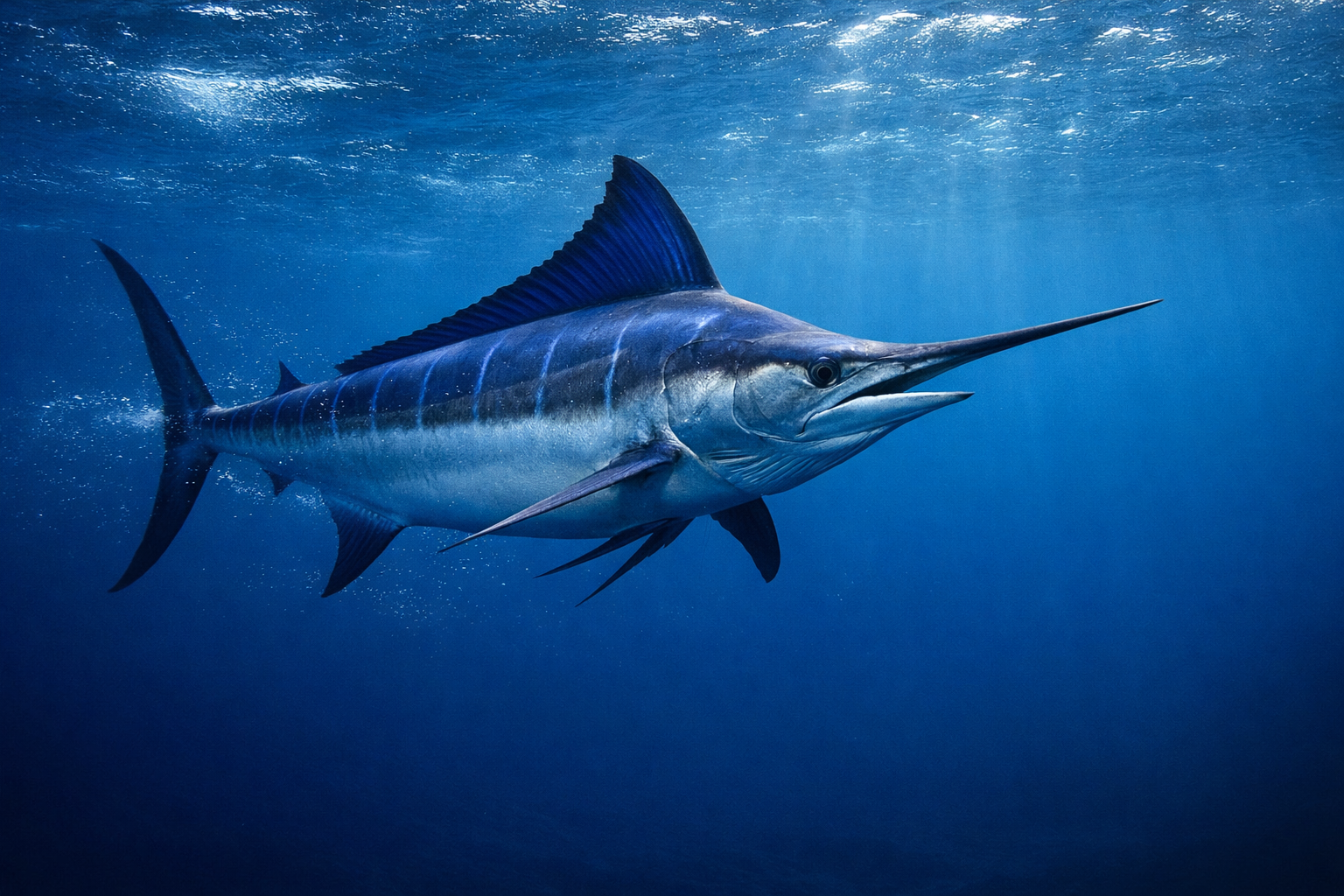
Makaira Nigricans
Blue Marlin
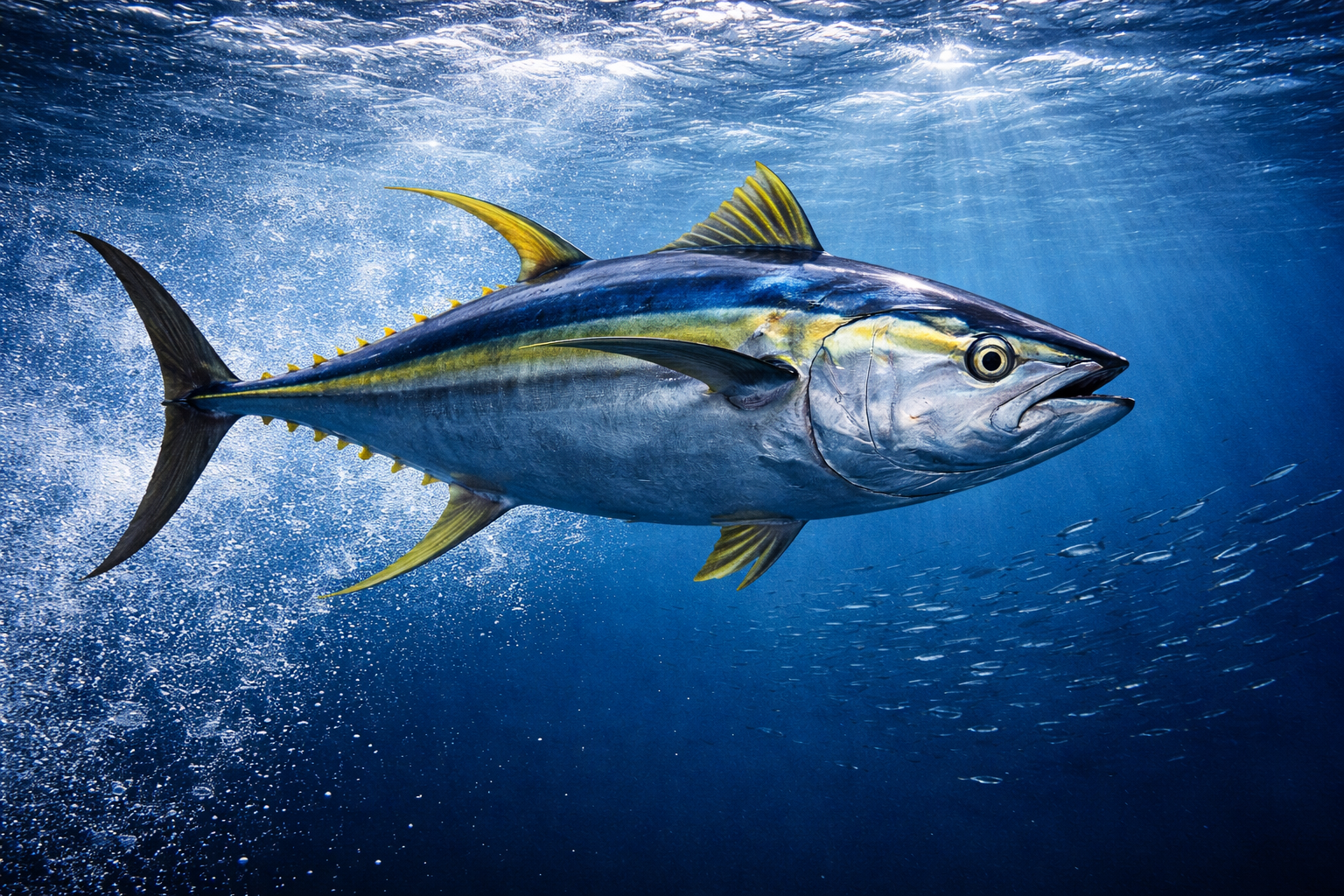
Thunnus Albacares
Yellowfin tuna
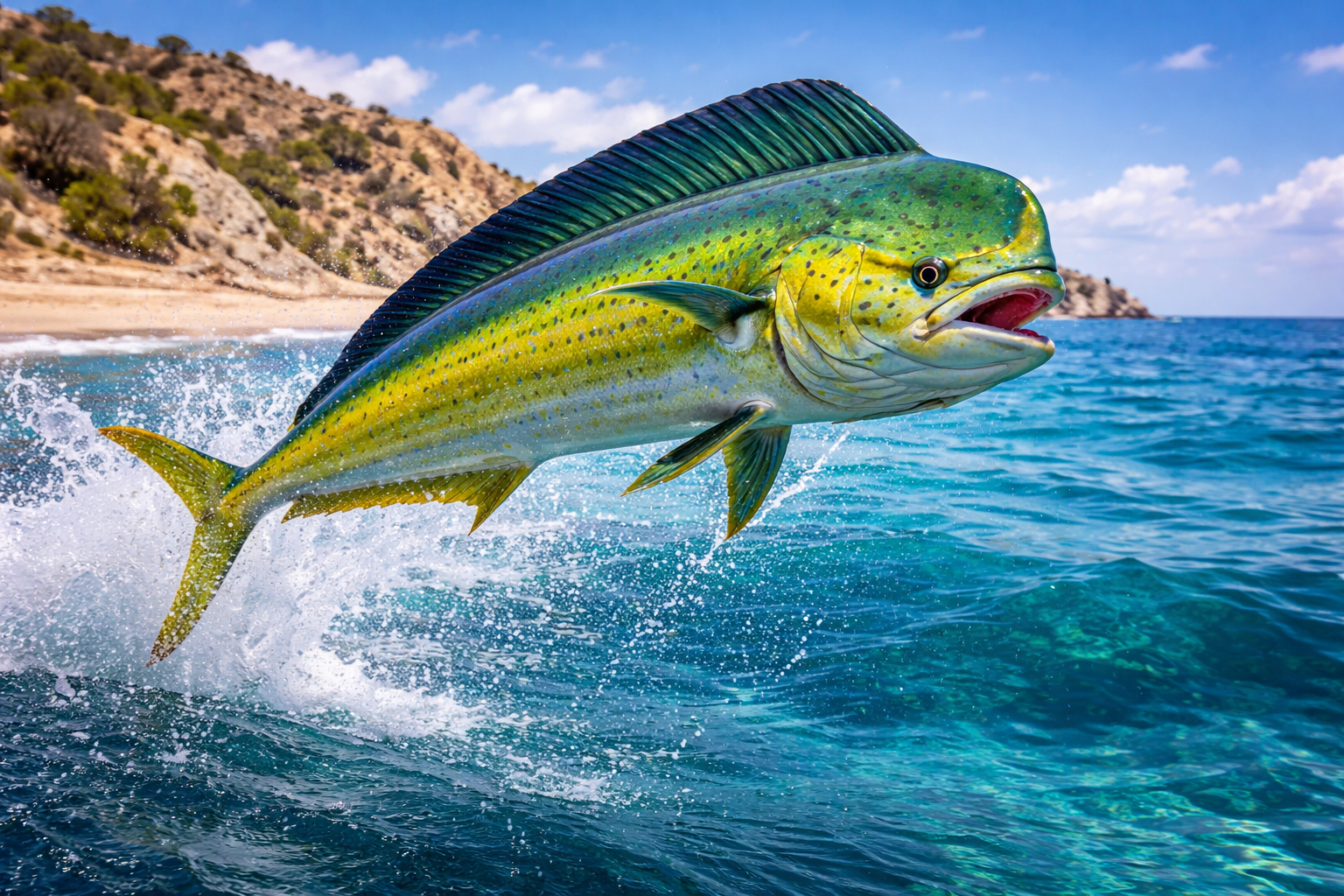
Coryphaena Hippurus
Dorado
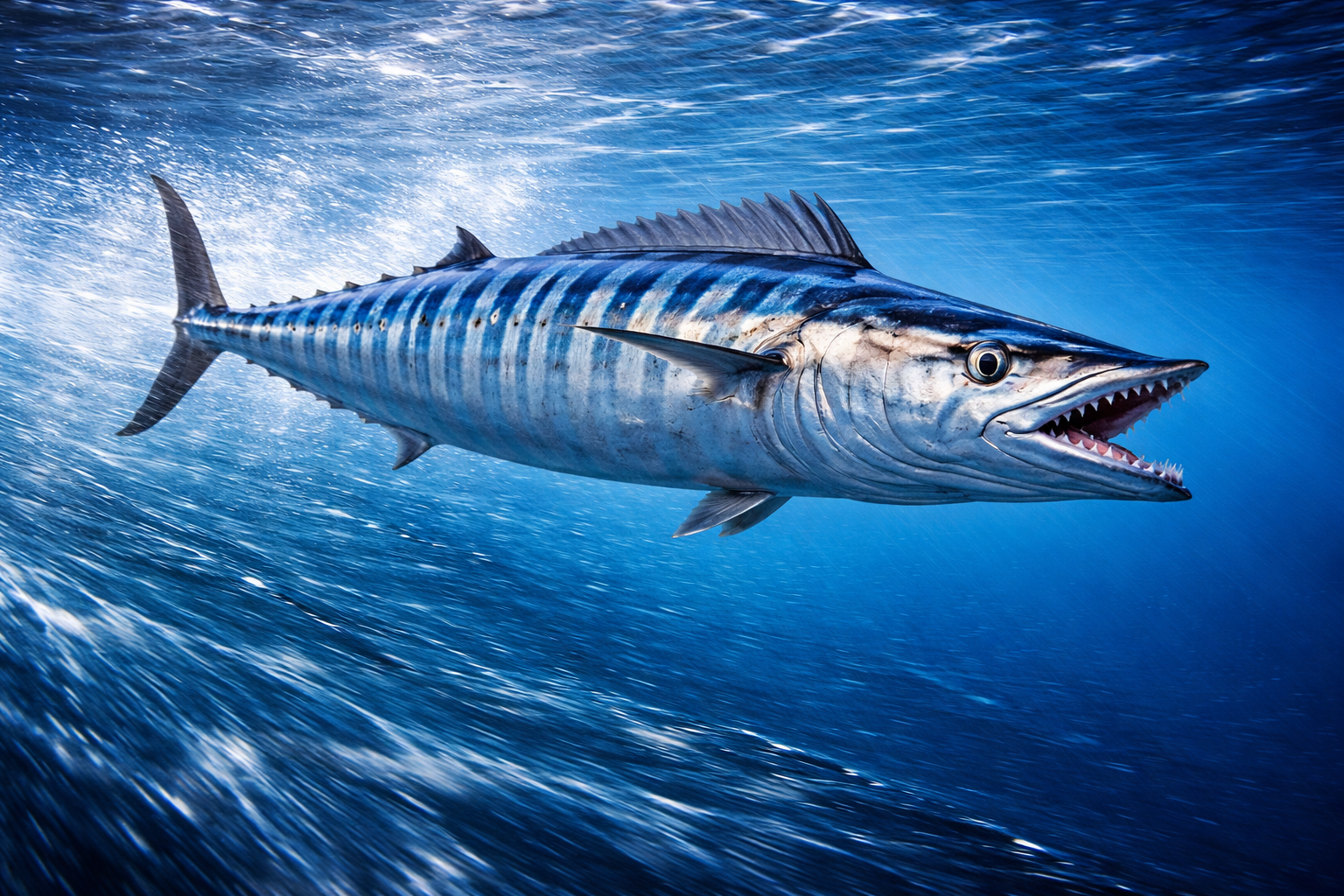
Acanthocybium Solandri
Wahoo
Which Boat Should You Book for Striped Marlin?
For striped marlin, we recommend the 30' California or larger for full-day trips ($854 + half-day). During peak season (Jan–Apr), half-day trips on the 26' Shamrock ($714) can also produce results as fish are often found closer to shore. View all boats →
Target Striped Marlin in Cabo
Our captains know exactly where and when to find striped marlin. Call or email directly — no booking fees, no middlemen.
NO BOOKING FEES · NO COMMISSIONS · DIRECT WITH OUR CABO TEAM