Black Marlin in Cabo San Lucas
The strongest of all billfish. Black marlin are among the largest bony fish on Earth, distinguished by their rigid pectoral fins and raw brute power. Less common than blues or stripers in Cabo, a black marlin hookup is a rare and unforgettable event.
When to fish for black marlin
Peak season in Cabo San Lucas: August through September.
| Species | Jan | Feb | Mar | Apr | May | Jun | Jul | Aug | Sep | Oct | Nov | Dec | Peak |
|---|---|---|---|---|---|---|---|---|---|---|---|---|---|
| Black Marlin | Off | Off | Off | Off | Some | Some | Good | Peak | Peak | Good | Good | Some | Aug–Sep |
PeakGoodSomeOff
Month by month: everything biting in Cabo ›How to tell Cabo’s billfish apart ›
Biology
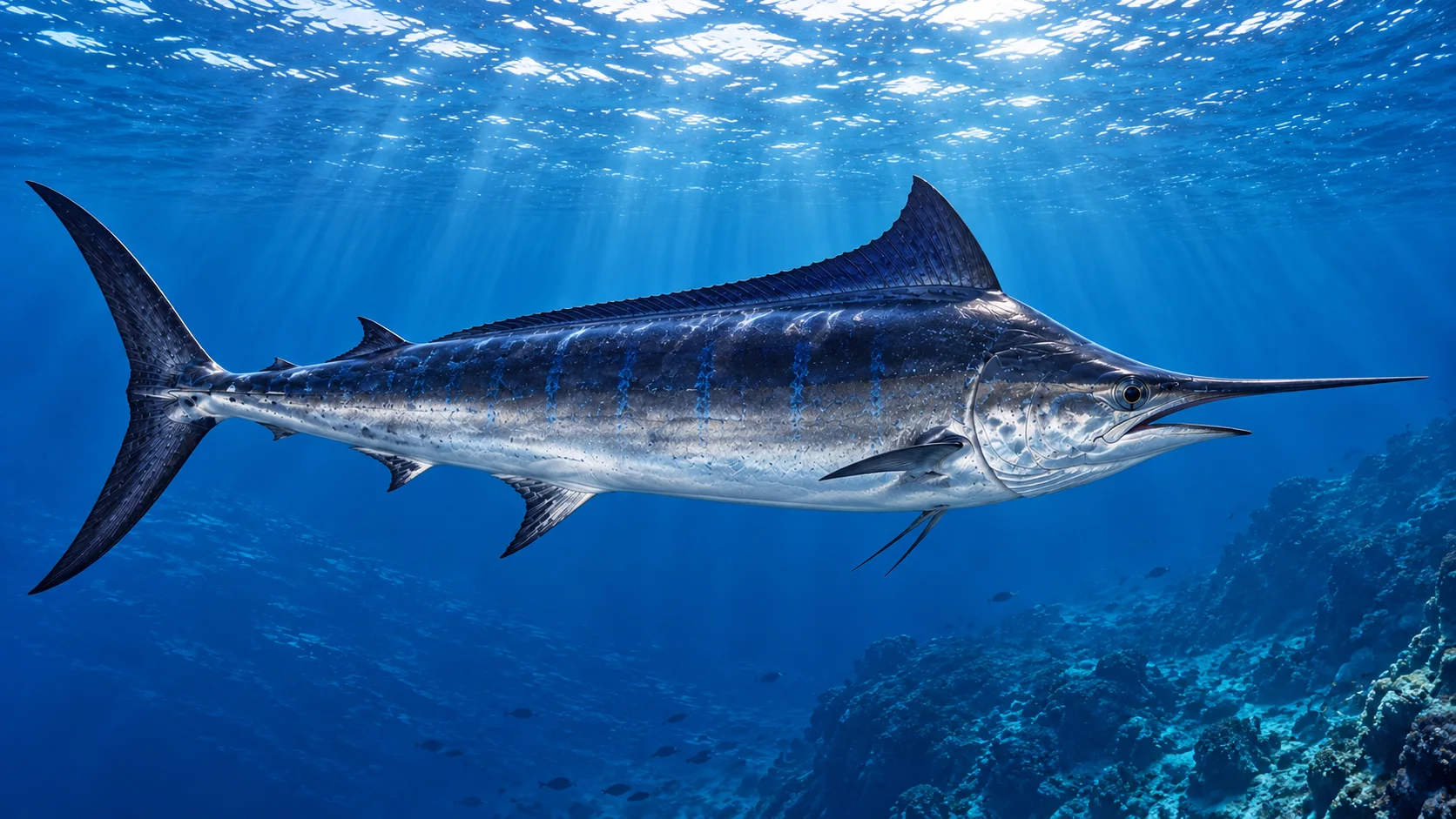
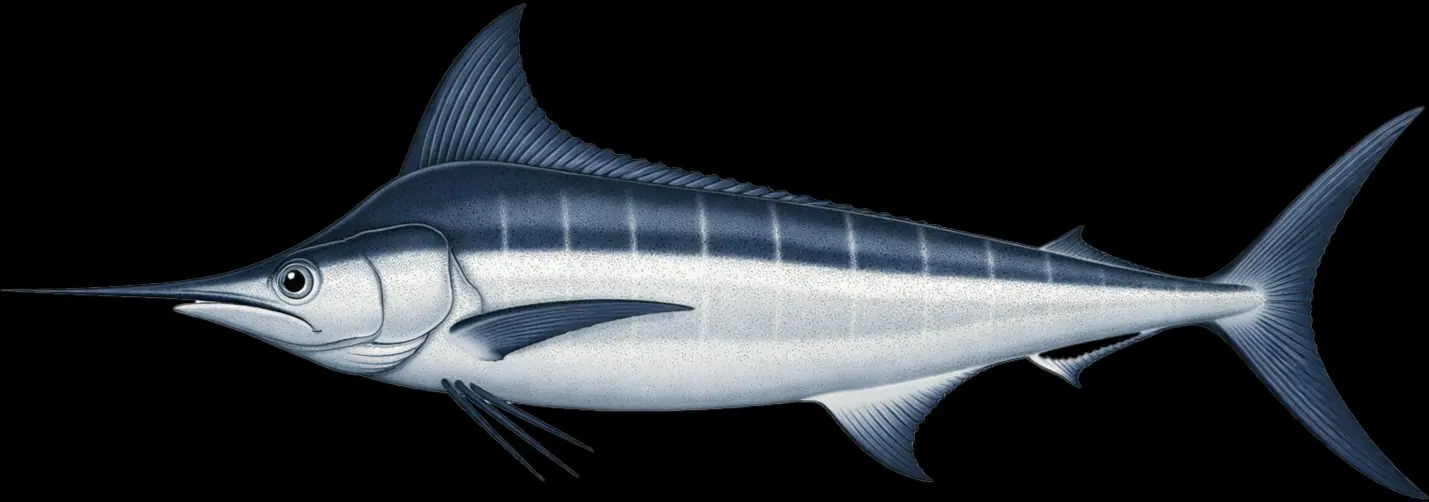
The black marlin is the only billfish with rigid pectoral fins that cannot be folded flat against the body — this is the key identification feature. They are more heavily built than blue marlin and are considered the strongest pound-for-pound of all billfish.
Black marlin prefer slightly warmer water than striped marlin and are more commonly associated with structure — underwater ridges, seamounts, and the edges of continental shelves. In Cabo, they appear during the warmest months when water temperatures peak.
While less abundant in Cabo than striped or blue marlin, black marlin are a prized catch. The IGFA all-tackle world record of 1,560 pounds has stood since 1953, one of the longest-standing records in IGFA history.
Taxonomy
| Order | Istiophoriformes |
|---|---|
| Family | Istiophoridae |
| Genus | Istiompax |
| Species | I. indica (Cuvier, 1832) |
| Common names | Black marlin, white marlin (Hawaii), marlín negro (Spanish), silver marlin |
| Lifespan | Approximately 10–15 years |
| Diet | Large pelagic fish, squid, cuttlefish, octopus |
| Habitat | Tropical and subtropical waters of the Indian and Pacific Oceans. More coastal than blue marlin, often found near reef systems and continental shelves. |
How we fish for them
Trolling Heavy Tackle
Standard Method. Large skirted lures or rigged skip baits trolled at 7–9 knots. Black marlin respond well to large, noisy lures with strong smoke trails. Tackle: 80–130 lb class conventional with heavy-duty fighting harness.
Switch Bait / Teaser
Advanced. Teasers are deployed to raise a black marlin, then a pitch bait or fly is presented when the fish approaches the boat. Requires coordination between captain, crew, and angler.
Live Bait Drifting
Structure Fishing. Large live baits drifted near underwater structure where black marlin patrol. This technique is less common in Cabo but effective when fish are located near banks and ridges.
Records & sizes
Igfa All-Tackle World Record: 1560 LB. Caught by Alfred Glassell Jr. on August 4, 1953 off Cabo Blanco, Peru. Fought for 1 hour 45 minutes. One of the longest-standing records in IGFA history.
Typical Good Catch: 150-400 lb. Black marlin in Cabo typically run 150 to 400 pounds when encountered. They appear less frequently than blues but can exceed 500 pounds.
Top Speed: ~50 mph. Estimated maximum burst speed. Black Marlin are among the fastest fish in the ocean.
Maximum Recorded Length: ~15 ft (4.6 m). Approximate maximum total length. Cabo black marlin typically measure smaller.
Record source: IGFA world records.
Conservation & rules
Mexican sportfishing rules (NOM-017-PESC-1994) allow one billfish per angler per day, and in Cabo we follow a local rule of one billfish per boat per day. Given their low abundance, catch and release is especially important for this species. Top Anglers strongly encourages releasing all black marlin.
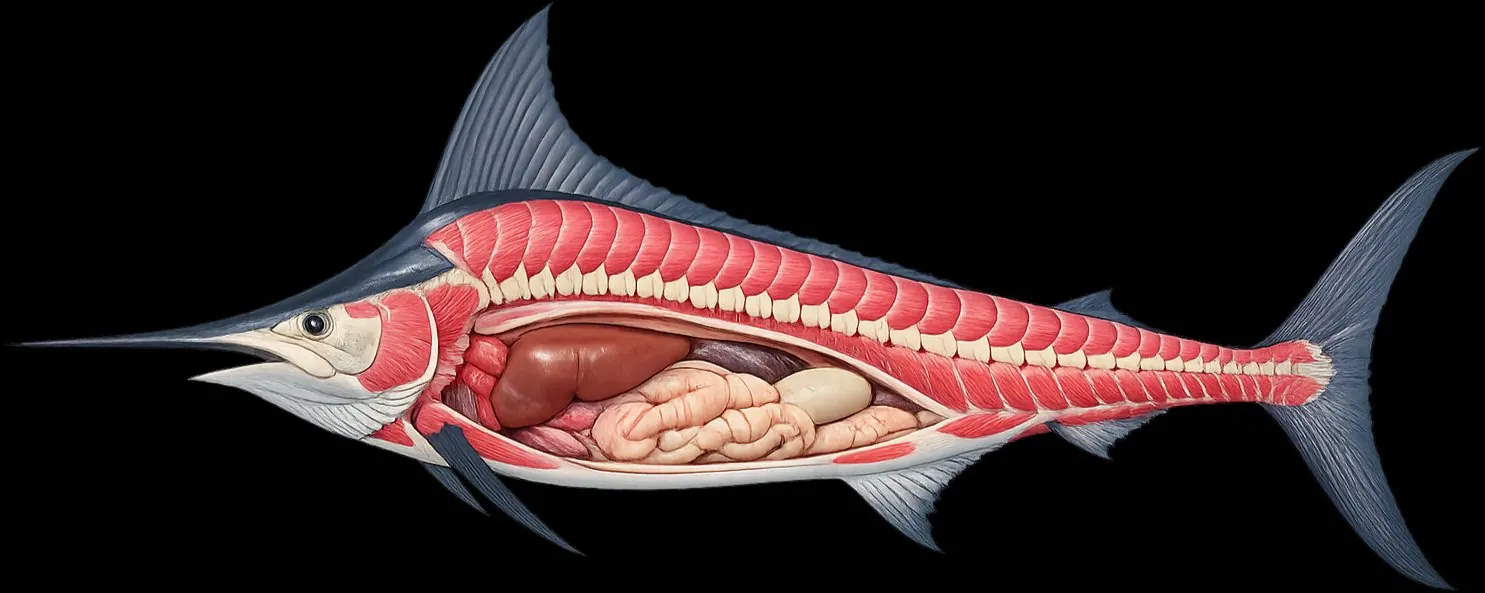
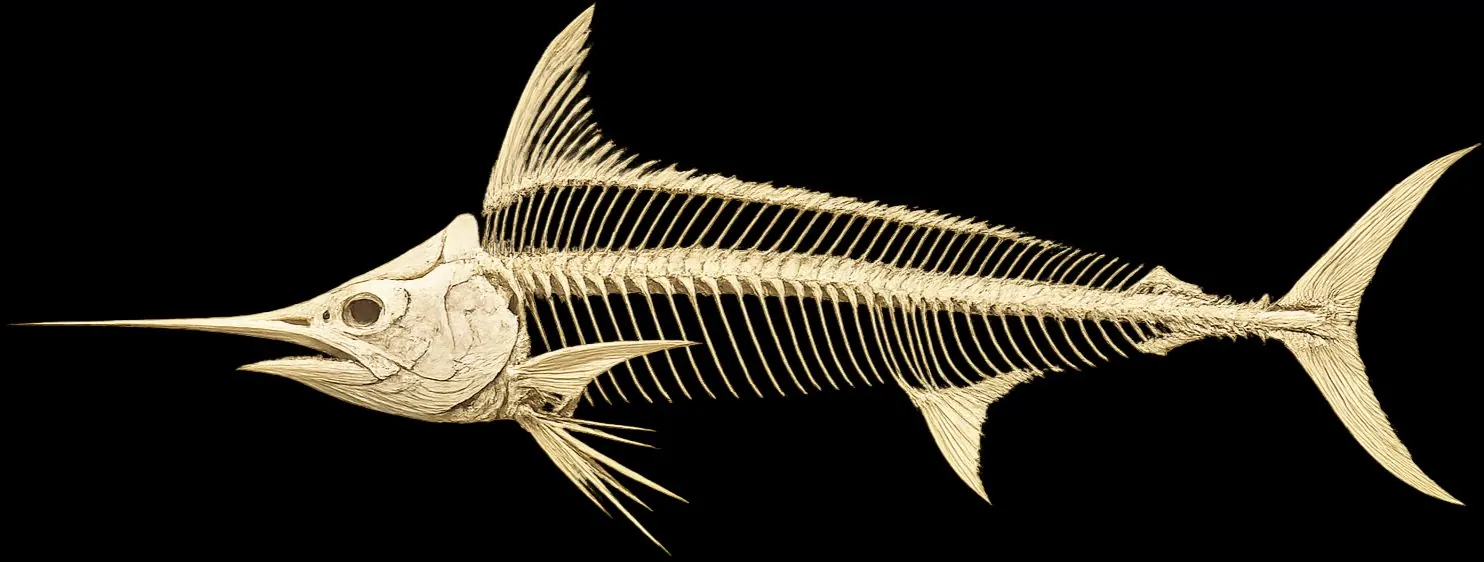
Anatomy
Questions
When do black marlin appear in Cabo?
Black marlin are most likely to appear in Cabo in August and September, when water temperatures are at their warmest. They are less predictable than blue or striped marlin and are considered a bonus catch rather than a targeted species in most Cabo seasons.
How do you identify a black marlin?
Black marlin are identified by their rigid pectoral fins, which cannot be folded flat against the body. This is unique among marlin species. They also tend to be more heavily built than blue marlin and have a shorter, thicker bill.
Photos
Other species in Cabo
Boats for black marlin
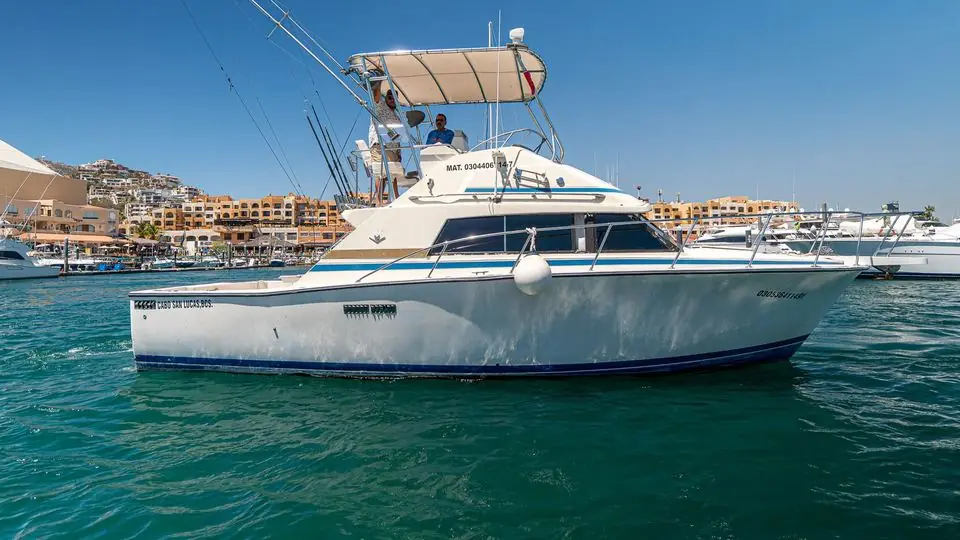
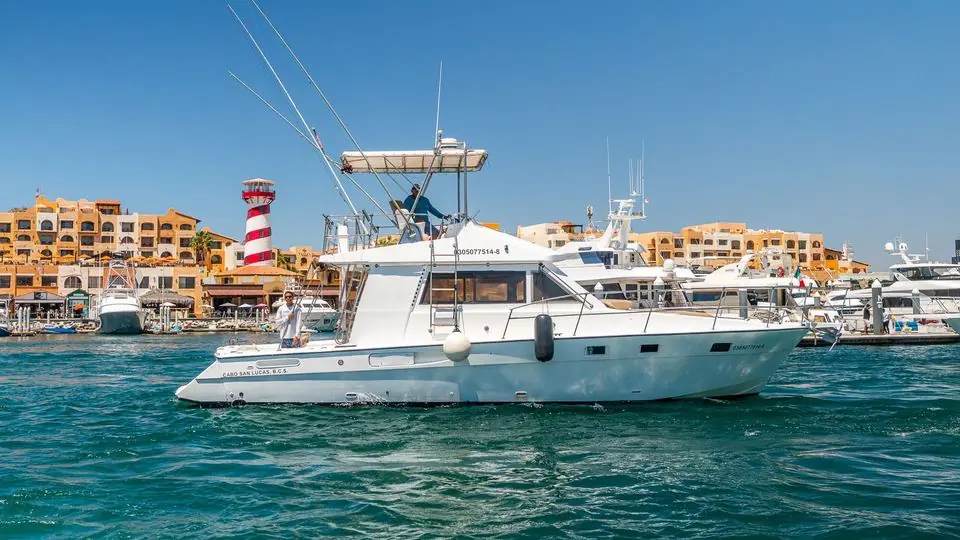
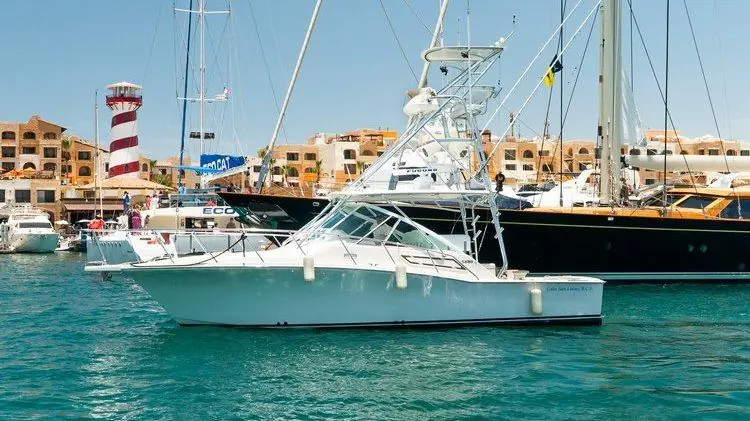
Offshore sportfishers with the range to reach the banks. From $1,174 with license included.