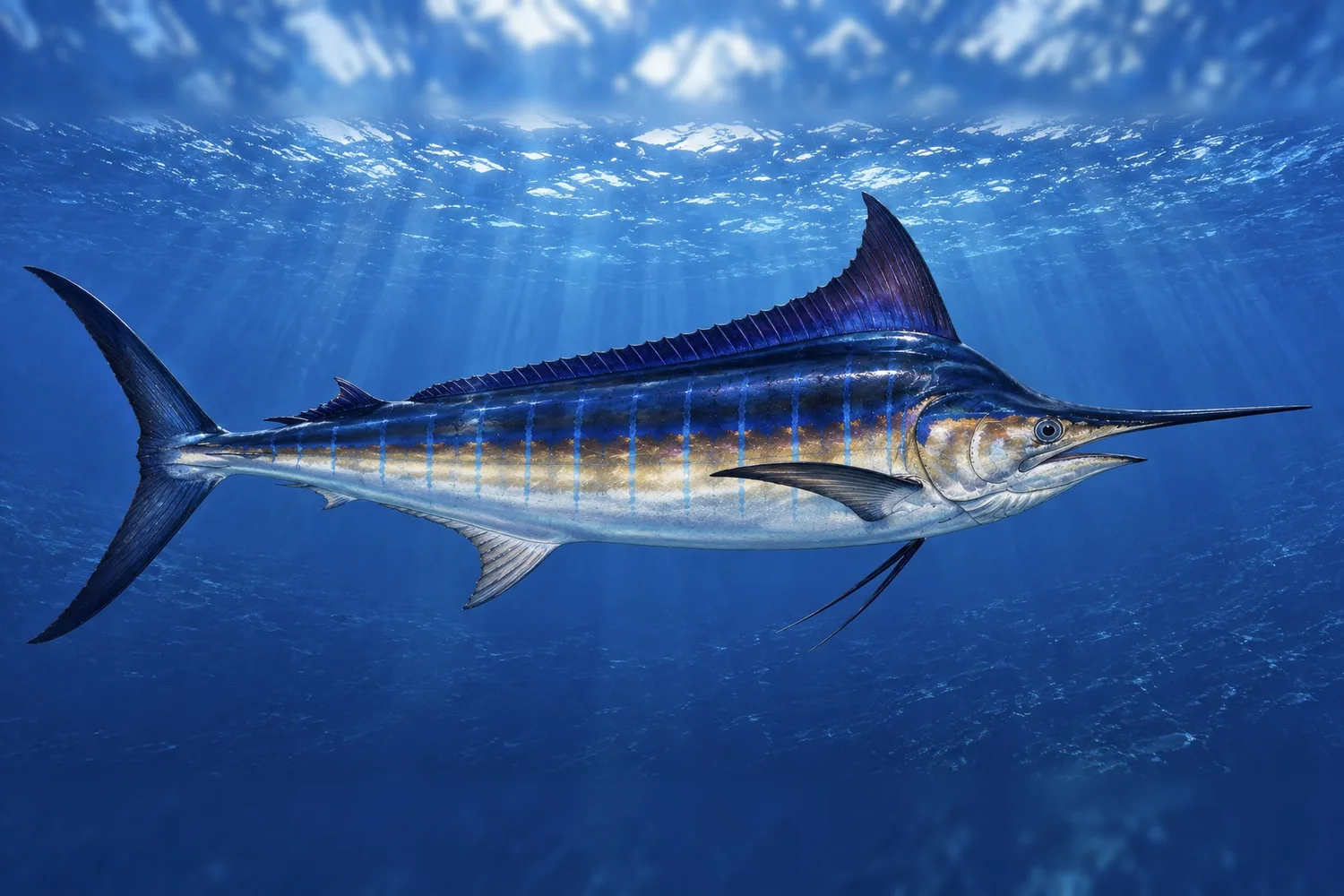
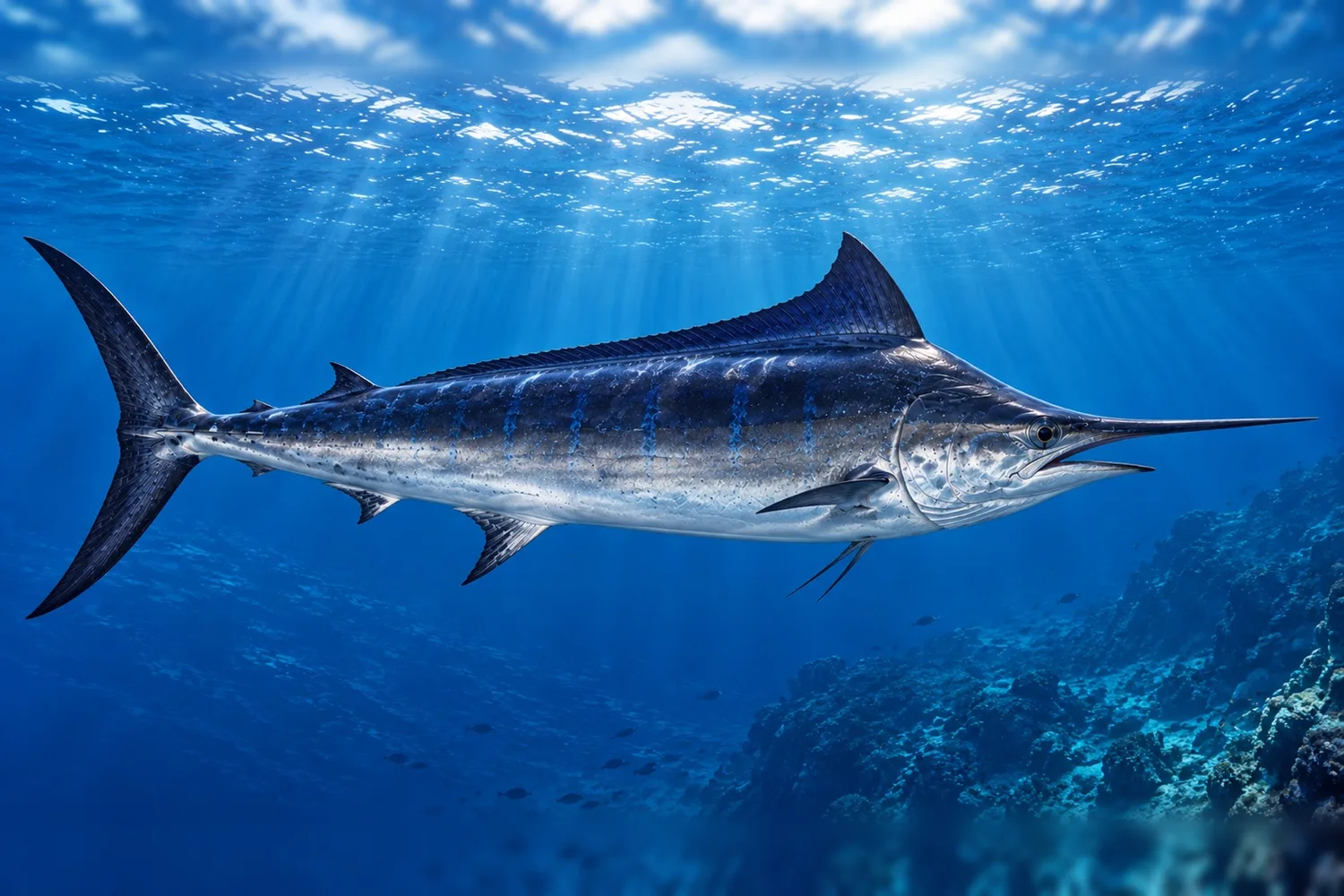
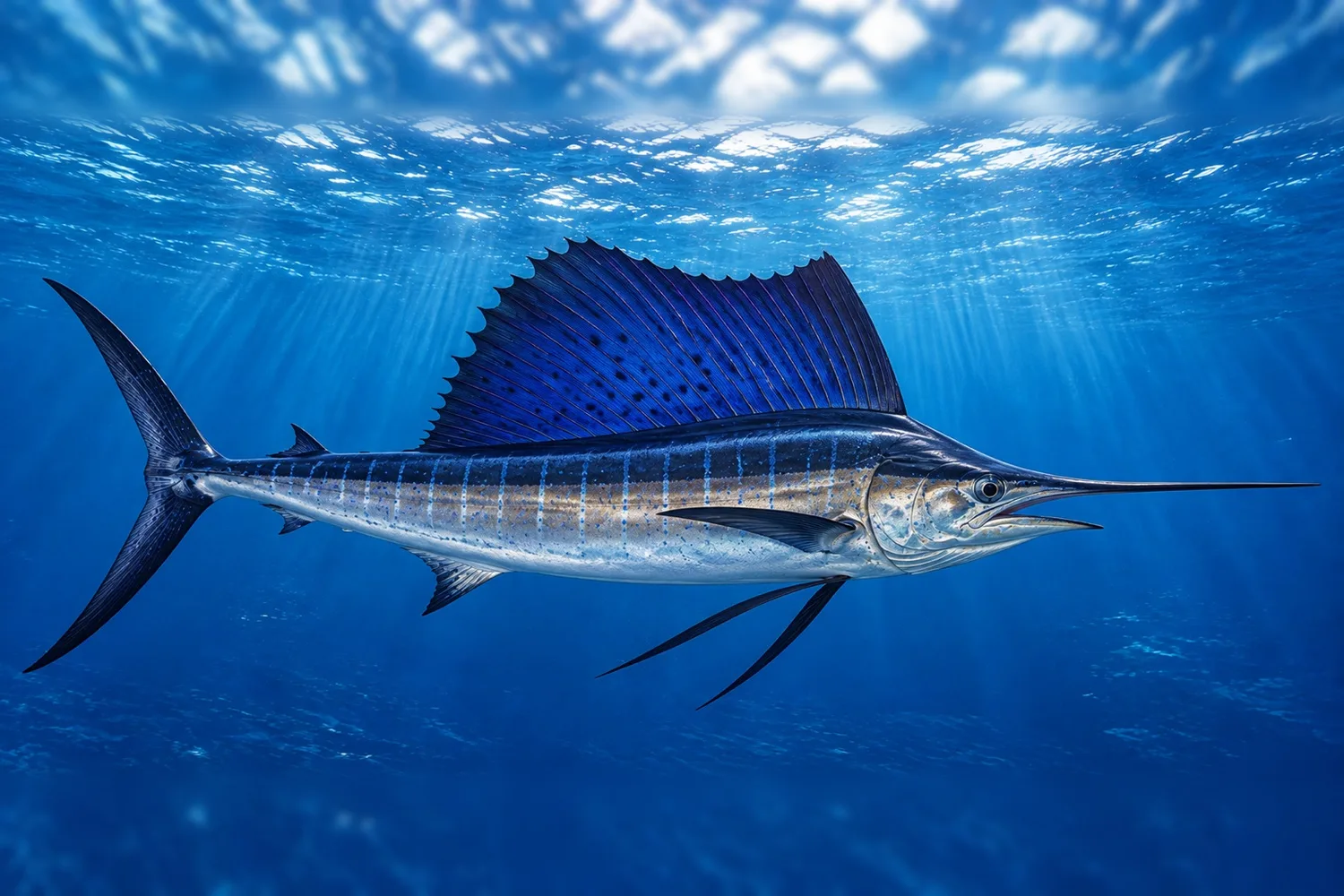
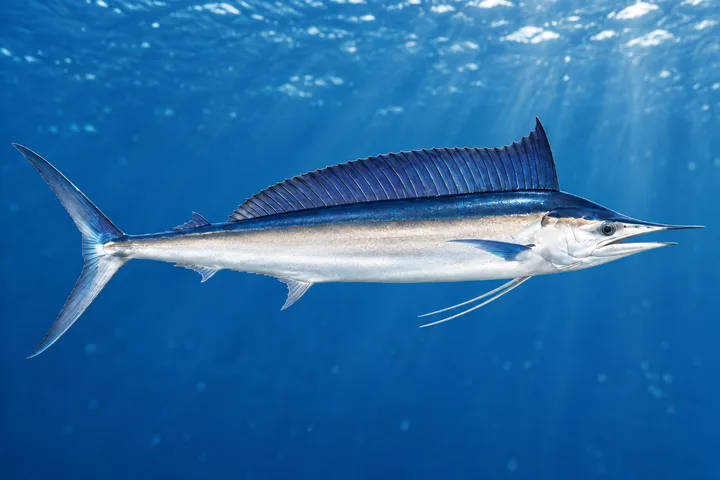
Tips for identifying them
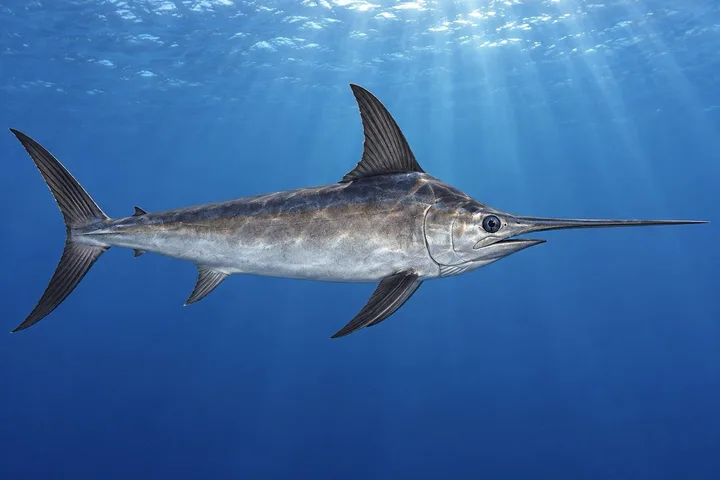
Expect fins to be hidden. Billfish fold their pelvic fins into a groove on the belly, and filmed sailfish kept the dorsal and pelvic fins folded down while swimming and raised them only near prey (Marras et al., 2015). A fish crossing the spread at speed may show no useful fins at all, so don’t call it until the dorsal goes up: in a jump, as it slows near the boat, or alongside before release.
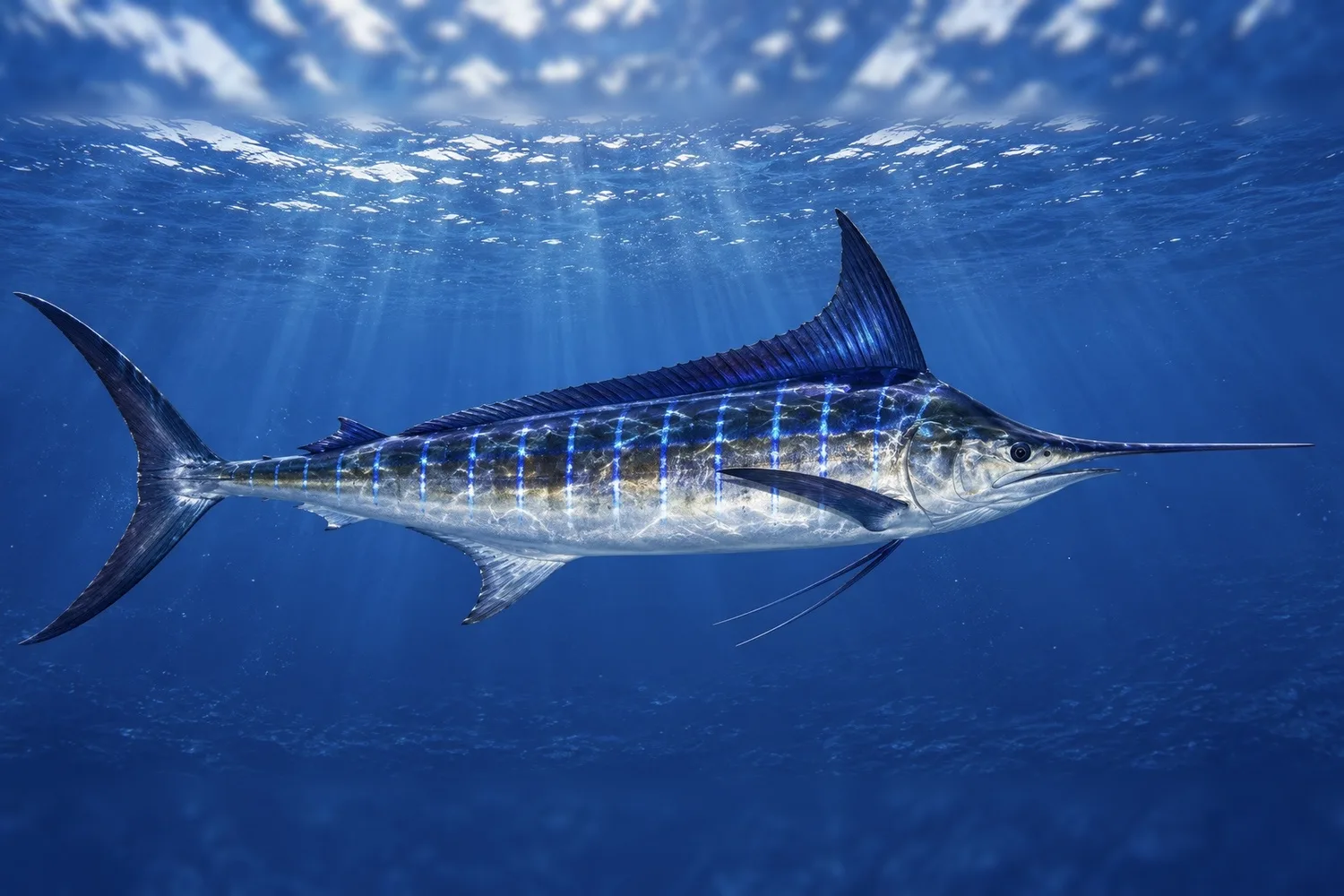
Don’t trust the color of a lit-up fish. Striped marlin make their stripes more contrasting right before they strike a bait ball and dim them again afterwards (Burns et al., 2024), black marlin can show light blue bars when feeding or leaping, and a blue marlin’s bars fade soon after death. Bars tell you the fish is excited. The dorsal height, the pectorals, the pelvic length and the bill tell you which species it is.
Practical advice for the boat: glare off the water flattens colors and hides how high the dorsal is, so wear polarized glasses, and if you can, watch from the side the fish is on rather than looking down into the sun. The most reliable check is the dorsal’s height against the body’s depth, so make it as the fish swims level next to the boat, not while it is twisting on the leader.
In tournaments, get the evidence in the photo or video. IGFA asks record applicants for extra photos of fins and other details on fish that are hard to identify, and the same habit protects a release in a tournament. Film the fish side-on with the dorsal raised, show whether the pectorals lie flat or stick out, and on a small, slim fish get the bill and the vent area in the shot. Those details separate a black from a blue and a spearfish from a striped marlin when the fish is no longer there to check.
Questions
Can you tell a black marlin from a blue marlin by color?
No. Despite the name, a live black marlin is dark slate-blue above and silver below, and after death it turns whitish. A blue’s bars fade soon after death as well. The reliable check is the pectoral fins: rigid in an adult black, fold flat in a blue.
Do striped marlin always show their stripes?
No. IGFA notes the stripes may or may not be prominent, but they are usually the boldest of any marlin and stay visible after death. Drone footage of striped marlin hunting sardine schools showed that they brighten their stripes just before attacking and dim them afterwards.
Is the blue marlin’s ‘chicken-wire’ lateral line a useful field mark?
Not on an adult at the boat. The FAO catalog and IGFA both say it is clear on young fish but buried in the skin of adults, and seen only once the skin or scales are removed. FAO also describes Pacific fish as having simpler loops than Atlantic ones, and taxonomists still disagree on whether they are one species or two.
Can a small black marlin fold its pectoral fins?
It can. IGFA’s identification guide says the pectorals are rigid in black marlin over about 120 lb. On a smaller fish, look at the low, blunt dorsal, the very short pelvic fins and the down-curved lower jaw before calling it a blue.

By Max VargasTop Anglers, Cabo San Lucas · international judge at big game fishing world championships · reviewed October 2026
Sources
Fish for them with us →